

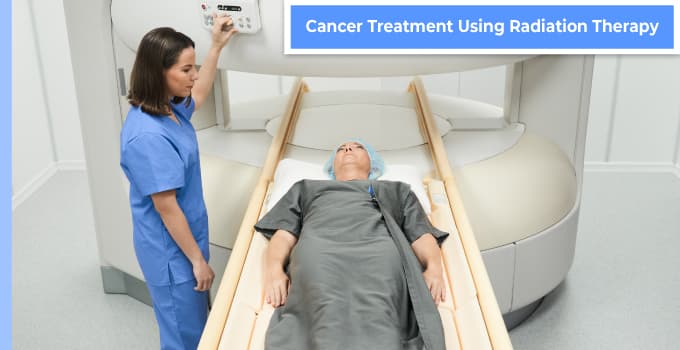
Cancer Treatment Using Radiation Therapy: All You Need To Know





Last updated on 07 May 2026
Radiation therapy, otherwise also known as Radiotherapy, is a type of cancer treatment done using high beams of X-rays and protons. Radiotherapy destroys or shrinks the cancer cells, slowing down their growth.
Radiation therapy is given to the area affected by the tumor or to the place where the tumor was removed by surgery. Radiation therapy often aims to destroy the cancerous cells, but it might also destroy healthy cells.
Radiation therapy is given alone or combined with other treatments such as chemotherapy. Radiation therapy is used to treat both benign and malignant tumors.
How Radiation Therapy Works Against Cancer?
Radiation therapy uses high beams of X-rays or protons to break and damage the DNA of the cancer cells. This damage prevents the cancerous cells from proliferating. The cells with damaged DNA die and are broken and eliminated by the body.
Different Types Of Radiotherapy
Depending upon certain factors, the doctor chooses the type of radiation therapy. The choice of radiation therapy depend on the following factors:
The type and size of the cancer
Spread and area of location of the cancer
Overall patient health
Age and other medical history
Types Of Radiation Therapy
Radiation therapy is of two types. They are:
External Beam Radiation Therapy
Internal Radiation Therapy
A. External Beam Radiation Therapy:
External beam radiation therapy is a type of radiation treatment that uses an external machine to focus high-energy beams on cancer-affected areas, thereby destroying the cancer cells.
The various types of external beam radiation therapy used to treat cancer are:
Intensity Modulated Radiotherapy (IMRT)
Image Guided Radiotherapy (IGR)
4 – dimensional Radiotherapy (4D-RT)
Conformal Radiotherapy
Stereotactic radiosurgery (SRS)
Adaptive Radiotherapy
Types of cancer treated by external beam radiation therapy are certain types of cancers like brain cancer, head cancer, neck cancer, prostate cancer, liver cancer, and lung cancer.
B. Internal Radiation Therapy
Internal Radiotherapy or Internal Radiation Therapy is a type of treatment in which the radiation is given by placing the radiation source within the body, i.e., radiation is provided inside the body.
The two types of internal radiation treatments are:
Brachytherapy (radioactive therapy using implants)
Radioactive liquid treatment (given as either radioisotope or radionuclide therapy)
Types of cancer treated by external beam radiation therapy are certain types of cancers like prostate cancer, endometrial cancer, cervical cancer, vaginal cancer, and breast cancer.
Radiation Therapy Combined With Other Treatments
Radiation therapy can be given or combined with other cancer treatments like chemotherapy, surgery, and immunotherapy. Radiotherapy is either given prior to, during or after the administration of different cancer treatments.
Radiation therapy and surgery:
Radiation therapy is given prior to surgery so that the cancer cells would shrink, facilitating its easy removal through surgery
Radiation therapy is given during surgery by intraoperative radiation, which helps the doctor in protecting the surrounding tissues from radiation
Radiation therapy is given post surgery to remove any remaining cancer cells
Benefits Of Radiation Therapy
Radiation therapy is essential in cancer treatment to destroy cancer cells, thereby stopping their growth. The significant benefits of radiation therapy are:
Aids in shrinking cancerous cells
Helps in destroying the cancer cells
Prevents cancer from recurring
Side Effects Of Radiation Therapy
Side effects are common in any treatment and vary from person to person, and not everyone would experience them. The severity and occurrence of the side effects depend upon the type and spread of cancer and the patient's general overall health. It might occur during or after the treatment.
The common side effects seen associated with radiation therapy are:
Feeling fatigued
Skin changes at the site of radiation ( irritation, swelling, redness, blisters, dryness, flaking, peeling)
Decreased count of blood ycells
Pain
Apart from these common side effects, certain site specific side effects are also seen. They are:
Dryness of mouth, jaw stiffness, tooth decaying, sores in mouth and tongue, taste change, problem in swallowing
Hair loss
Headache, vomiting, nausea
Discomfort while swallowing
Stiffness in muscles and joints
Loss of appetite
Diarrhea
Infertility
Radiation therapy is an essential part of cancer treatment. Depending upon the type of cancer, its location of affection, its spread, the overall health of the patient, and the type and duration of the radiotherapy regime are chosen by the doctor. Regular follow-ups with the doctor after radiation therapy are extremely essential. A doctor may advise external or internal radiation depending upon the patient's condition.
Disclaimer: The content in this blog is for general informational purposes only and is not a substitute for professional medical advice, diagnosis, or treatment. Always consult your doctor or a registered dietitian before making any changes to your medicines or diet, especially if you have a medical condition or are taking prescribed medication. While the information is based on trusted sources, individual needs and results may vary. MrMed does not promote or endorse any specific food or treatment mentioned unless explicitly stated.












Comments