

Cervical Cancer Awareness Month





Last updated on 05 May 2026
Key Takeaways
|
"Deal the Teal, Feel the Heal"
Many women put their own health at the bottom of the priority list. Family, work, and daily responsibilities often come first. Cervical cancer is one of those conditions that quietly grows when regular health checks get postponed. This is exactly why Cervical Cancer Awareness Month exists. It is meant to start conversations, clear confusion, and remind women that prevention and early detection can save lives.
As Cervical Cancer Awareness Month 2026 approaches, this is the right time to understand cervical cancer in simple terms, learn how it develops, recognise early warning signs, and know what steps truly help in prevention.
What Is Cervical Cancer and Why Is Awareness Important
Cervical cancer develops in the cervix, which is the lower part of the uterus that connects the uterus to the vagina. In many cases, cervical cancer grows slowly over several years. This slow growth gives a valuable window to detect problems early, long before cancer becomes serious.
Cervical cancer awareness matters because:
Most women do not feel symptoms in the early stage
Many women believe cancer always causes pain early, which is not true
Regular screening can find cell changes before cancer starts
Awareness helps women understand that feeling “healthy” does not always mean everything is fine. Screening checks what the body cannot feel.
Cervical Cancer in India: Why the Risk Remains High
Cervical cancer is a significant problem for many Indian women due to a variety of factors. Cervical cancer has been estimated to occur in India at a much higher rate due, in part, to several women not being screened. Some of the primary causes are:
Not being aware of cervical cancer screening tests.
Being afraid or reluctant to consult a doctor about cervical cancer.
The stigma associated with gynaecological health, culture or religion.
Variations in access to healthcare across India.
As a result, cervical cancer awareness month in India focuses not only on public education about the disease and screening for prevention but also encourages women to seek care without fear or embarrassment when they have questions about their health.
A baseline analysis published on PubMed (2023) as part of the WHO Global Cervical Cancer Elimination work reported that cervical cancer still causes a major number of cases and deaths globally, with a larger burden in low- and middle-income settings. This supports why cervical cancer in India remains a public health priority.
Cervical Cancer Awareness Month 2026 and Its Significance
Cervical Cancer Awareness Month plays a large part in raising awareness about cervical cancer and serves as a reminder that cervical cancer is highly preventable. For Cervical Cancer Awareness Month 2026, our goal is to increase awareness of cervical cancer by encouraging early screening, raising awareness about the importance of vaccination against the HPV virus, and creating an environment for women to publicly discuss their health issues. Cervical Cancer Awareness Month colours that represent hope, strength, and awareness: Teal and White.
While the theme for Cervical Cancer Awareness Month 2026 will vary from campaign to campaign, the same message remains the same - Early detection is critical to saving women's lives from cervical cancer.
Cervical Cancer Causes: What Really Leads to the Disease
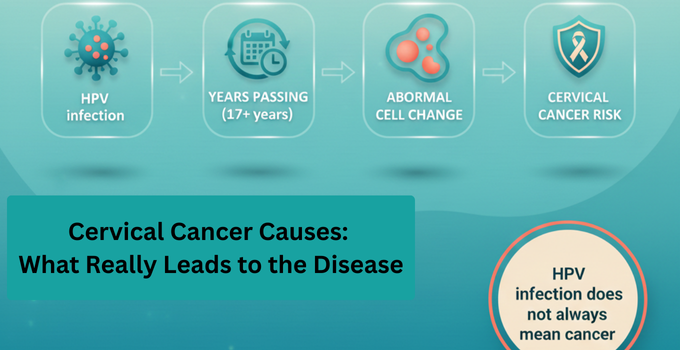
Knowledge about the cause of cervical cancer diminishes fear and confusion about this disease. Human Papillomavirus (HPV) is the primary cause of cervical cancer.
HPV is simply the virus that causes cervical cancer because it takes many years (17+) for normal cervical cells to change into abnormal cervical cells. Most people will become infected with HPV at some point in his/her lifetime. Many people will clear this virus from their bodies naturally.
The problem occurs when:
Infection with high-risk HPV remains active for many years without being treated,
High-risk HPV is not treated,
Regular screening for cervical cancer does not occur.
Having an HPV infection does not mean that you have cancer. Changes may take many years before they become noticeable, and by that time, it could be too late!
Cervical Cancer Symptoms and Signs to Watch For
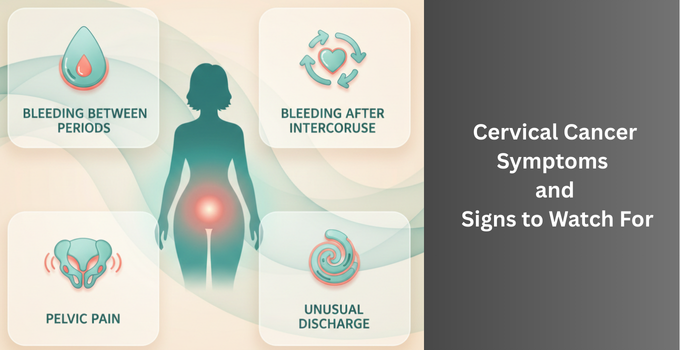
One of the biggest challenges with cervical cancer is that early stages usually show no symptoms. As the disease progresses, cervical cancer symptoms may start appearing.
Common signs of cervical cancer include:
Bleeding between periods
Bleeding after sexual intercourse
Pelvic pain or discomfort
Unusual vaginal discharge
These symptoms can also occur due to other conditions, but they always need medical evaluation. Early detection of cervical cancer often begins when women pay attention to these warning signs and seek help promptly.
HPV Vaccine: A Strong Tool for Cervical Cancer Prevention
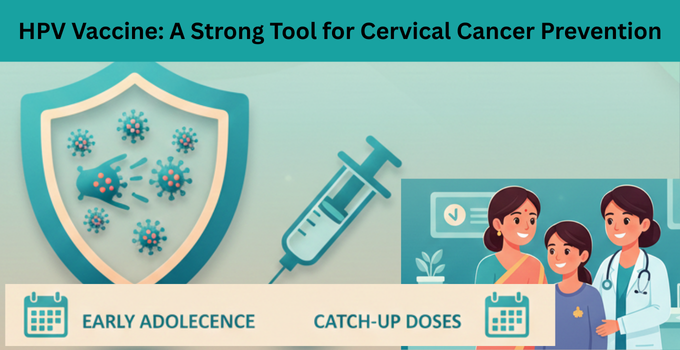
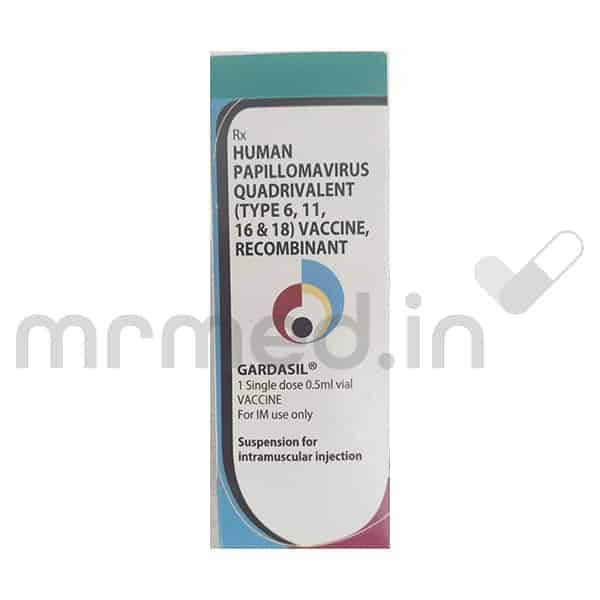
The HPV vaccine protects against the most common HPV types responsible for cervical cancer. It plays a major role in cervical cancer prevention.
The recommended HPV vaccine schedule usually includes:
Vaccination in early adolescence
Catch-up doses for eligible age groups
The vaccine works best before HPV exposure, but it still offers protection later. It does not replace screening, but it greatly reduces the risk of developing cervical cancer.
Pap Smear Test and Cervical Cancer Screening Guidelines
The pap smear test checks cervical cells for early changes before cancer develops. This test is simple, quick, and usually painless.
According to cervical cancer screening guidelines:
Screening should start at a specific age based on medical advice
Regular follow-up helps track changes over time
Screening detects problems early, often years before symptoms appear. This is why routine testing is one of the most effective ways to prevent cervical cancer.
A systematic review and meta-analysis published on PubMed Central (PMC) showed that women invited for cervical screening (Pap smear/HPV testing) had a significantly lower risk of dying from cervical cancer compared to those not offered screening. This strengthens the point that pap smear test and screening save lives through early detection cervical cancer.
Why Early Detection Changes Everything
The early identification of cervical cancer provides a noticeable improvement in the treatment of this disease. A physician who diagnosed cervical cancer in a woman at an earlier stage than later stages would give the patient less complicated treatments and an earlier recovery period, with a much better chance of surviving the disease.
The benefits of early detection include:
Elimination of advanced-stage treatment options
Lower levels of emotional and physical distress
Improved long-term quality of life.
With the use of regular screening, a condition that could be life-threatening, cervical cancer, subsequently becomes a preventable condition.
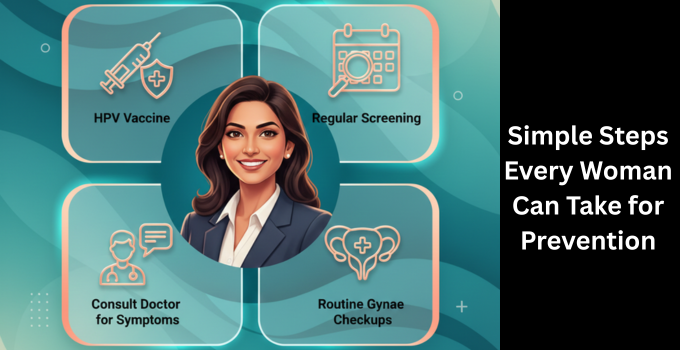
Simple Steps Every Woman Can Take for Prevention
Cervical cancer prevention does not require complicated actions. Small, consistent steps make a big difference.
Important preventive measures include:
Getting the HPV vaccine if eligible
Following recommended screening schedules
Seeking medical advice for unusual symptoms
Attending regular gynaecological checkups
These steps work together to protect health across different life stages.
Why Cervical Cancer Awareness Month Still Matters
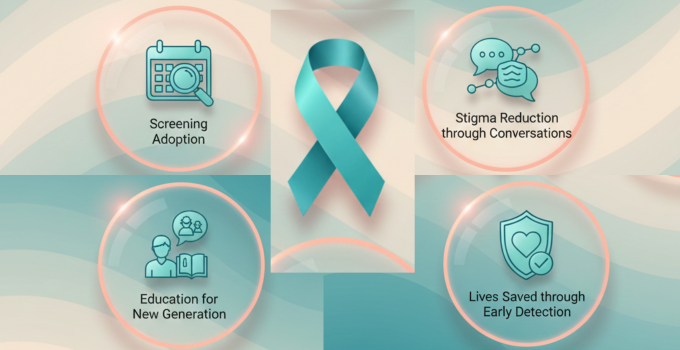
Cervical Cancer Awareness campaigns may be seen by some as an annual recycling of the same message. Nevertheless, Cervical Cancer Awareness Month provides reasons that cervical cancer awareness continues to be important.
New generations require accurate and dependable information
Many women are still not taking advantage of screening opportunities
Early detection has saved lives on numerous occasions.
Cervical Cancer Awareness Month keeps this important discussion evolving and motivates women to act rather than put things off.
FAQs
1. What is Cervical Cancer Awareness Month?
Cervical Cancer Awareness Month is observed every year to spread awareness about cervical cancer, its causes, symptoms, and prevention. The goal is to encourage women to get screened regularly and understand that cervical cancer can often be prevented through vaccination and early detection.
2. Why is Cervical Cancer Awareness Month important in India?
Cervical cancer remains one of the most common cancers among women in India. Many cases are detected late because women do not undergo regular screening. Cervical cancer awareness month in India focuses on education, early screening, and removing fear or stigma around women’s health.
3. What are the early signs of cervical cancer?
In the early stages cervical cancer may not cause any symptoms. As it progresses, signs of cervical cancer can include abnormal vaginal bleeding, bleeding after intercourse, pelvic pain, or unusual discharge. Any of these symptoms should be checked by a doctor.
4. How does HPV cause cervical cancer?
HPV causes cervical cancer by slowly changing healthy cervical cells into abnormal cells over many years. Most HPV infections clear on their own, but long-term infection with high-risk HPV types can lead to cancer if not detected early through screening.
5. Who should get the HPV vaccine?
The HPV vaccine is recommended mainly for adolescents before exposure to the virus, but eligible adults can also benefit. The HPV vaccine schedule depends on age and medical advice. Vaccination helps reduce the risk of cervical cancer but does not replace regular screening.
6. What is a Pap smear test and why is it needed?
A pap smear test checks cells from the cervix to look for early changes that could lead to cancer. It helps detect problems long before symptoms appear. Regular Pap smears play a key role in early detection and prevention of cervical cancer.
Final Thoughts
Cervical cancer does not develop suddenly, and it does not need to take lives quietly. Awareness, vaccination, and regular screening form a strong shield against this disease. As Cervical Cancer Awareness Month 2026 approaches, it is a reminder that informed choices today protect health tomorrow.
Cervical cancer prevention starts with awareness, continues with screening, and succeeds through early detection.
"Your journey with cervical cancer is a chapter in your life, not the whole story."
Read Also
References
Singh D, Vignat J, Lorenzoni V, Eslahi M, Ginsburg O, Lauby-Secretan B, et al.
Global estimates of incidence and mortality of cervical cancer in 2020: a baseline analysis of the WHO Global Cervical Cancer Elimination Initiative.
Lancet Glob Health. 2023;11(2):e197-e206.Peirson L, Fitzpatrick-Lewis D, Ciliska D, Warren R.
Screening for cervical cancer: a systematic review and meta-analysis.
Prev Med. 2013;57(3):141-153.Lei J, Ploner A, Elfström KM, Wang J, Roth A, Fang F, et al.
HPV vaccination and the risk of invasive cervical cancer.
N Engl J Med. 2020;383(14):1340-1348.
Disclaimer: The content in this blog is for general informational purposes only and is not a substitute for professional medical advice, diagnosis, or treatment. Always consult your doctor or a registered dietitian before making any changes to your diet, especially if you have a medical condition or are taking prescribed medication. While the information is based on trusted sources, individual needs and results may vary. MrMed does not promote or endorse any specific food or treatment mentioned unless explicitly stated.




















Comments