

Does Sunscreen Prevent Skin Cancer? How to Choose and Use Sunscreen in India





Last updated on 02 Jul 2026
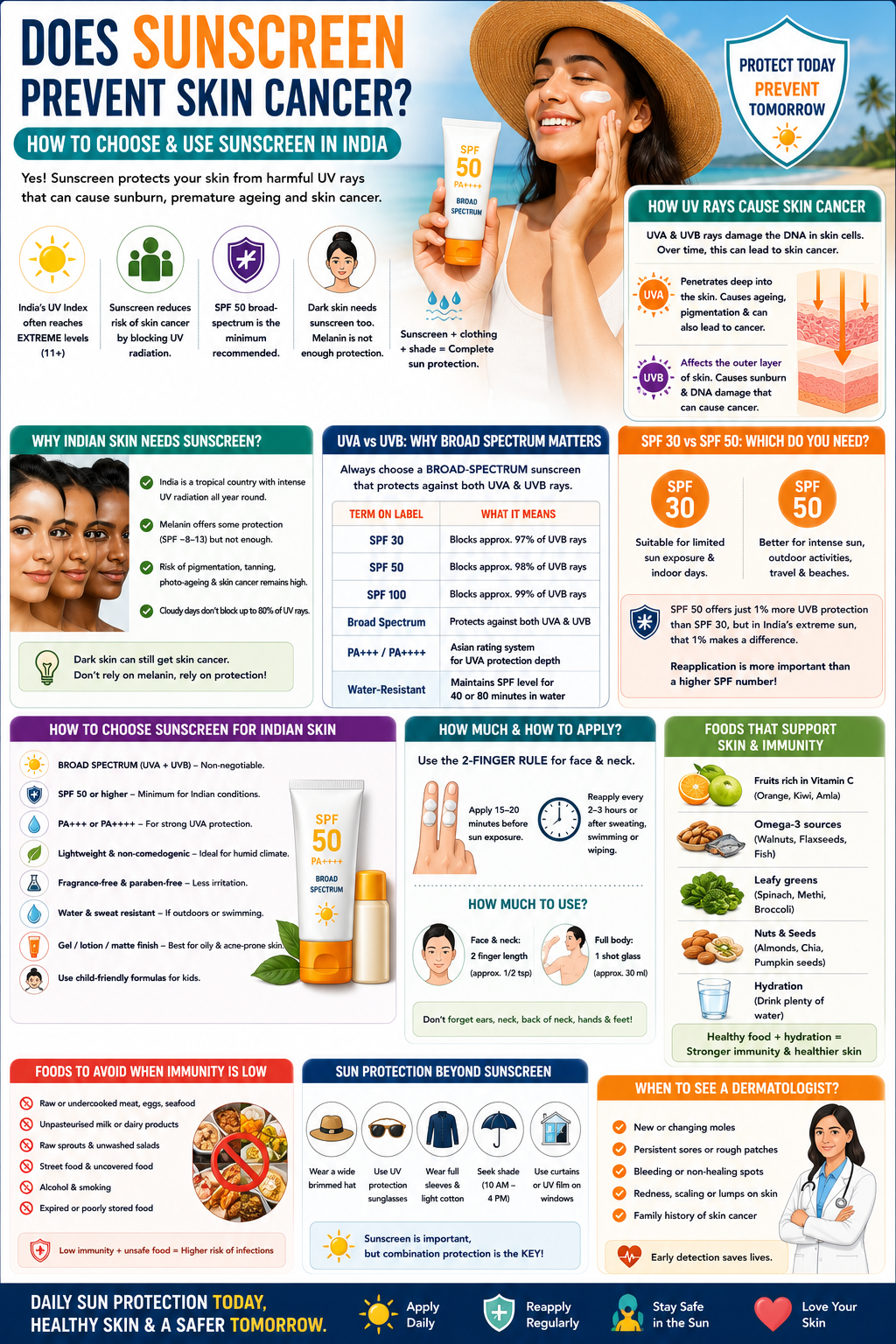
Sunscreen is often purchased by Individuals in India to avoid tanning. While this is a valid reason to use sunscreen, there is a greater issue underneath (literally) that needs to be addressed. Does sunscreen prevent skin cancer?
The answer to that question is yes, but only if the right product is used, applied properly, and combined with other protection methods. This blog provides comprehensive information on the nature and characteristics of UV rays, how to read an SPF label on a tube of sunscreen, and the specific requirements for Indian skin for effective sunscreen use.
Key Takeaways
|
How UV Rays Cause Skin Cancer
Your skin receives two kinds of ultraviolet radiation from sunlight: UVA & UVB. UVB rays cause sunburn. These rays damage the top layers of skin, directly harm cellular genetics, and lead to mutations in skin cells that could result in skin cancer over the years. On the other hand, UVA rays penetrate deeper than UVB rays, are responsible for skin ageing, produce pigmentation in the skin, and can also damage the genetic material in skin cells. Both UVA and UVB rays are present throughout India year-round, even on cloudy days.
The effect of these rays is cumulative. Every hour you are exposed to the sun without appropriate protection (whether you are driving, walking, or just sitting by a window) during your lifetime adds to your body's cumulative potential exposure, which affects your lifetime risk of developing skin cancer.
For example, a single blistering sunburn when you are young may increase your lifetime risk of melanoma by as much as 80%. In cities in India such as Chennai, Mumbai, Bengaluru, and Hyderabad, the UV index regularly exceeds 11 between 10:00 am and 4:00 pm during peak periods from March to September.
Why Indian Skin Needs Sunscreen
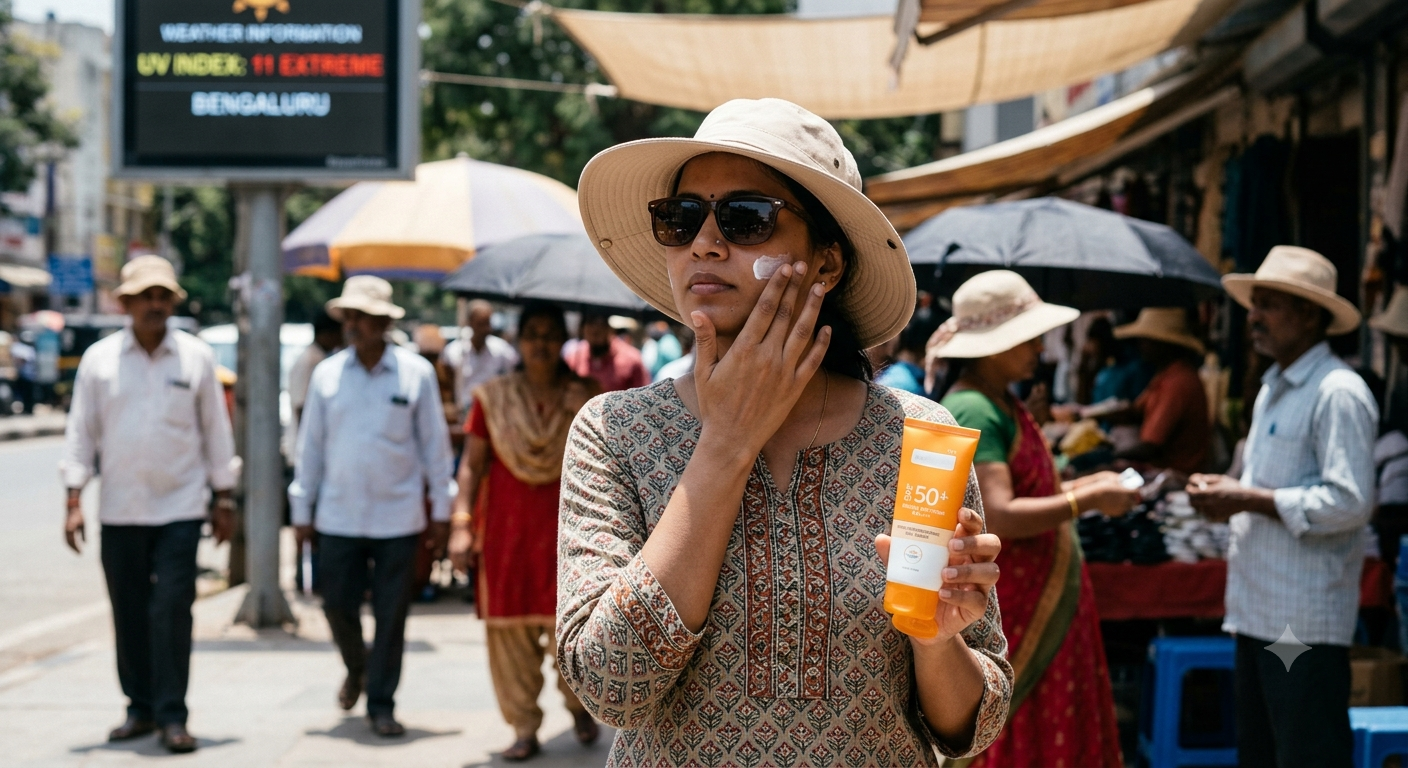
This is probably the most common misconception in Indian skincare: the belief that darker skin tones do not need sun protection.
Does dark skin need sunscreen? Certainly! Melanin does offer some natural defence against UV rays; Fitzpatrick levels IV-VI have an intrinsic SPF of approximately 8-13. However, this is not nearly adequate to shield from the levels of UV radiation typically present in India. Dark skin has also been shown to be associated with an increased risk of specific outcomes of ultraviolet light exposure, such as pigmentation, uneven skin texture, and certain types of malignant skin cancers, particularly those found on non-sun-exposed areas and identified later on.
Why Indian skin needs sunscreen? This is primarily due to geographic location: southern states tend to experience greater UV exposure than northern regions; likewise, because India is situated at a tropical latitude, sunlight is generally more perpendicular for most of the year, leading to greater intensity of ultraviolet radiation than in Europe or North America.
Dr Aparna Santhanam, Head Medical Dermatologist and Vice President at Kaya Clinic and one of India's most widely cited skin experts, highlights a key reason why sunscreen choice matters for Indian skin specifically: "Indian skin's thinner barrier makes it more reactive. Fragrance can trigger inflammation, worsening pigmentation", which is why dermatologists consistently recommend fragrance-free, broad-spectrum formulations for everyday Indian use.
UVA vs UVB: Why Broad Spectrum Matters
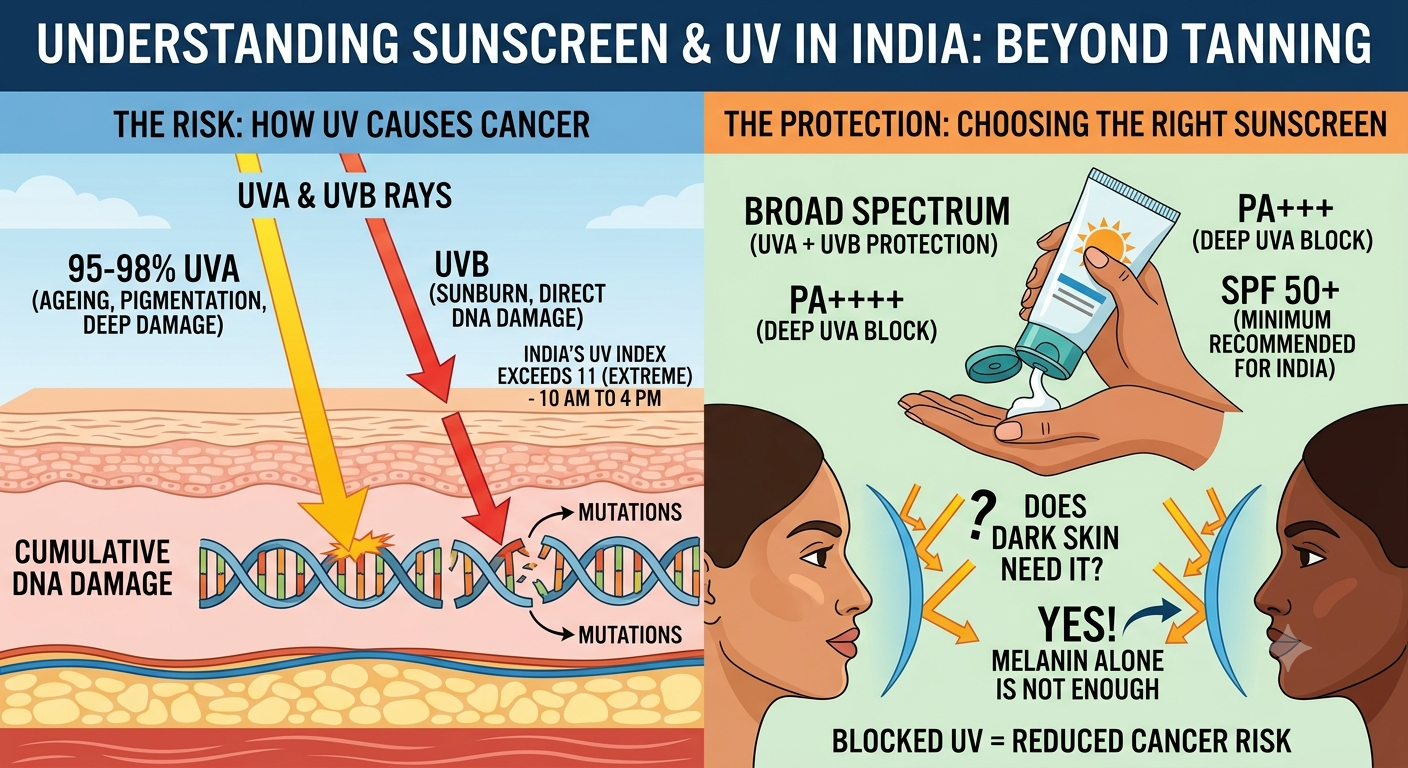
When choosing a sunscreen for the face or body, the most important label to look for is broad-spectrum. This tells you the product blocks both UVA and UVB rays. An SPF number alone only tells you how much UVB is blocked; it says nothing about UVA.
The reason PA rating matters as much as SPF comes down to what the Indian sun actually emits. As research published in the Indian Journal of Dermatology, Venereology and Leprology confirms, 95 to 98 per cent of UV radiation reaching skin at sea level is UVA the rays that SPF alone does not measure, and the primary driver of pigmentation and collagen breakdown in Indian skin.
Term on Label | What It Means |
SPF 30 | Blocks approximately 97% of UVB rays |
SPF 50 | Blocks approximately 98% of UVB rays |
SPF 100 | Blocks approximately 99% of UVB rays |
Broad spectrum | Protects against both UVA and UVB |
PA+++ / PA++++ | Asian rating system for UVA protection depth |
Water-resistant | Maintains SPF level for 40 or 80 minutes in water |
SPF 30 vs SPF 50: Which Do You Need in India?
What SPF 15, 30, 50, and 100 mean is a source of genuine confusion. The difference between SPF 30 and SPF 50 is just one per cent of UVB blocked, but in a country like India, where UV exposure is extreme and prolonged, that one per cent matters.
Is SPF 30 enough in India? The clinical minimum for kids will be met with SPF 30 broad-spectrum sunscreen in cases of limited outdoor activity and many indoor days. The practical recommendation for those engaged in significant outdoor physical activities, such as sports or being near water, is SPF 50 sunscreen. SPF 100 may provide slightly more protection than SPF 50; however, the benefits of SPF 100, beyond those of SPF 50, depend mainly on proper application and reapplication frequency.
How to Choose Sunscreen for Indian Skin
The best sunscreen for Indian skin is one you will actually use every single day, and that means texture matters as much as SPF.
Skin Type | Recommended Formula | What to Look For |
Oily Skin | Gel-based, aqua gel, matte finish | Sunscreen for oily skin India: labelled non-comedogenic, oil-free |
Dry Skin | Cream or lotion with moisturising ingredients | Hyaluronic acid, glycerin, ceramides, alongside SPF |
Sensitive Skin | Mineral (zinc oxide or titanium dioxide) | Fragrance-free; fewer chemical filters |
Children | Mineral broad spectrum SPF 50 | Sunscreen for children India: physical blockers preferred; avoid oxybenzone |
Normal / combination | Lightweight fluid or gel-cream | Any well-formulated broad-spectrum SPF 30-50 |
When in doubt, look for PA++++ alongside SPF 50. This dual-rating system, common on products marketed in India and Japan, gives you the clearest picture of UVA and UVB protection on a single label.
How to Use Sunscreen Properly
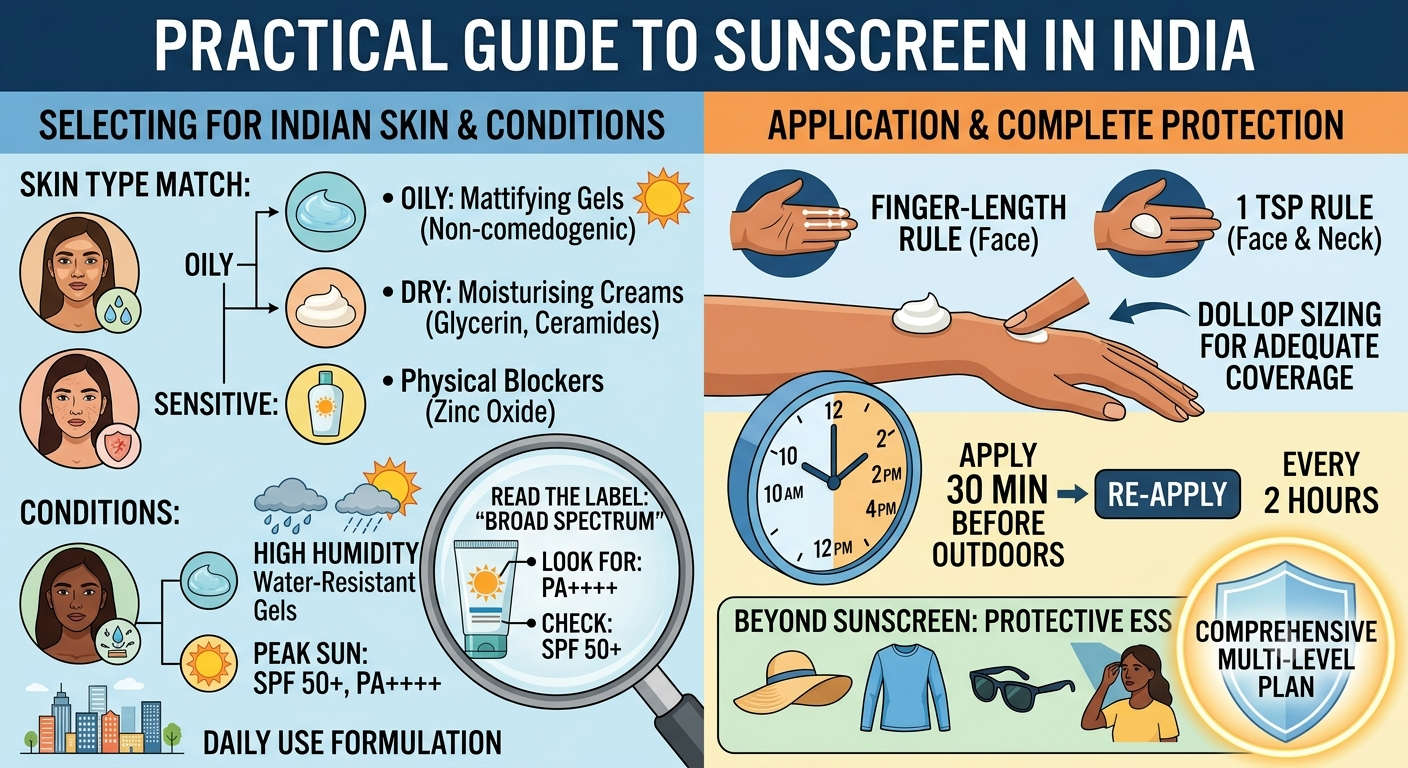
Getting the SPF number right means nothing if the application is wrong. Most people apply roughly a quarter of the amount needed, which can effectively halve the protection.
Apply 30 minutes before going outdoors to allow it to bind to the skin.
Use approximately a full teaspoon for the face alone, and about two tablespoons for the body.
Reapply every 2 hours when outdoors or immediately after swimming or sweating, even if the label says water-resistant.
Water-resistant sunscreen in India is not waterproof; it maintains its SPF rating for 40 or 80 minutes in water, not indefinitely.
Sunscreen for Different Scenarios
Scenario | Recommended SPF | Key Feature |
Daily commute and office | SPF 30-50 | Lightweight, non-greasy |
Outdoor sports/exercise | SPF 50+ | Water-resistant, sweat-proof |
Swimming | SPF 50+ | Water-resistant (80 minutes) |
Beach / high-altitude trekking | SPF 50+ | Reapply every 60-90 minutes |
Children playing outdoors | SPF 50 broad spectrum | Mineral formula preferred |
Can Sunscreen Completely Prevent Skin Cancer?
Can sunscreen completely prevent skin cancer? Sunscreens are not the sole solution for long-term protection against skin cancer from UV light, but they significantly reduce accumulated UV-induced DNA damage during chronic UV exposure. A landmark randomised study showed that daily sunscreen application reduced the incidence of squamous cell carcinoma by 40% and the overall incidence of melanoma by 50% after 10 years. That is a significant benefit provided by sunscreen alone. However, sunscreen does not provide complete protection on its own; therefore, it should be part of a multiple-level protection plan against chronic UV exposure.
Prevention Beyond Sunscreen
The most effective approach to UV protection in India combines sunscreen with:
Seeking shade during peak UV hours (10 am to 4 pm)
Wearing protective clothing, long sleeves, wide-brimmed hats, and UV-protective fabrics
Sunglasses with UV400 protection. UV damages the eyes and the delicate skin around them
Avoiding tanning beds entirely is classified as a Group 1 carcinogen by IARC
Annual skin checks, particularly if you have a history of sunburns, many moles, or a family history of skin cancer
FAQs
Q1. Does sunscreen prevent skin cancer?
Yes, significantly. Daily use has been shown to reduce the risk of squamous cell carcinoma by 40% and melanoma by 50% over time. It does not eliminate risk entirely but is the most accessible and evidence-backed form of UV protection available.
Q2. Is SPF 30 enough in India?
For mostly indoor days, yes. For outdoor exposure in India's high UV environment, SPF 50 broad-spectrum is the safer and more practical choice.
Q3. Does dark skin need sunscreen?
Yes. Melanin offers some natural protection, but nowhere near enough to block India's extreme UV levels. Pigmentation, DNA damage, and skin cancer risk are all real across all skin tones.
Q4. How often should sunscreen be reapplied?
Every two hours outdoors, or immediately after sweating heavily or swimming, even with water-resistant formulas.
Q5. What is the best sunscreen for oily skin in India?
Look for gel-based, non-comedogenic, matte-finish, broad-spectrum SPF 50 formulas. Labelled "oil-free" or "aqua gel," these textures sit well on oily skin without adding shine or clogging pores.
Final Thoughts
Wearing sunscreen shouldn't be considered just hype, but rather something that has been proven repeatedly throughout history to be an important part of maintaining good health. The fact that there is an extremely high level of harmful radiation produced throughout India in any given month puts at great risk anyone who walks around without protective gear from the sun. You may have dark or white skin, but each individual is susceptible to the same damage from the sun.
To prevent potential injuries to yourself, be sure to use the correct SPF level of sunscreen, apply an adequate amount to your skin, reapply every couple of hours as needed, wear protective clothing, and take cover in shaded areas when possible.
Read Also
References
Green AC, Williams GM, Logan V, Strutton GM. Reduced melanoma after regular sunscreen use: randomised trial follow-up. J Clin Oncol [Internet]. 2011 Jan 20 [cited 2026 Jun 25];29(3):257–263. Available from: https://pubmed.ncbi.nlm.nih.gov/21135266/
Kulothungan V, Sathishkumar K, Leburu S, Ramamoorthy T, Stephen S, Basavarajappa D, et al. Burden of cancers in India: estimates of cancer crude incidence, YLLs, YLDs and DALYs for 2021 and 2025 based on the National Cancer Registry Program. BMC Cancer [Internet]. 2022 May 11 [cited 2026 Jun 25];22:527. Available from: https://pmc.ncbi.nlm.nih.gov/articles/PMC9092762/
World Health Organisation [Internet]. Geneva: WHO; 2023 [cited 2026 Jun 25]. Ultraviolet radiation (UV): key facts. Available from: https://www.who.int/news-room/fact-sheets/detail/ultraviolet-radiation
Disclaimer: This article is for general informational and awareness purposes only and is not a substitute for professional medical advice. If you have concerns about skin cancer risk or are looking for personalised sunscreen recommendations, consult a qualified dermatologist.















Comments