

World Brain Tumour Day 2026: Know Inside Out About Brain Tumours





Last updated on 04 Aug 2026
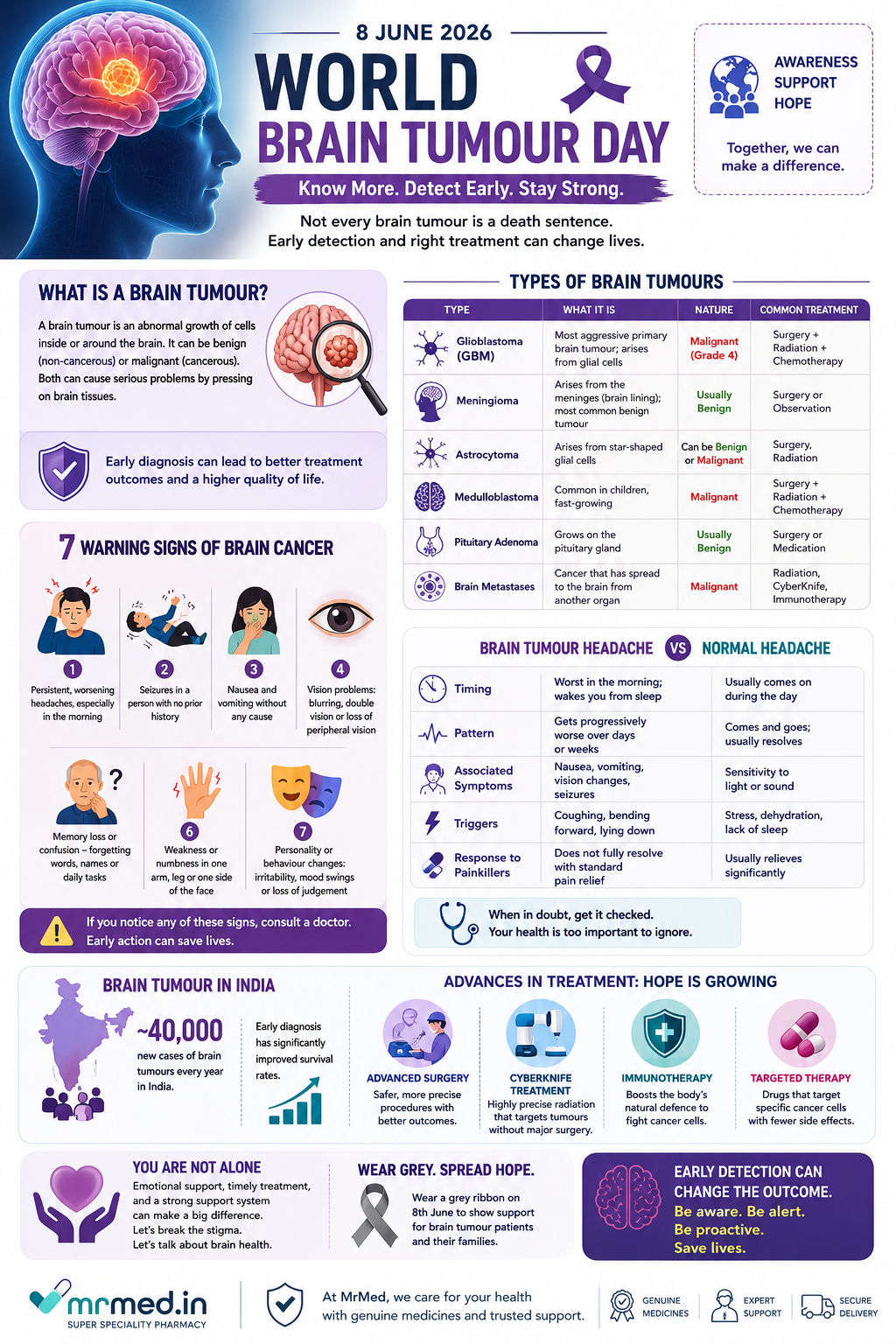
Every year on 8 June, the world pauses to acknowledge one of the most feared yet least openly discussed medical conditions, brain tumours. World Brain Tumour Day 2026 is a moment to replace fear with facts. Because the truth is, not every brain tumour is a death sentence. Early detection, the right treatment, and timely medical care are changing outcomes in ways that were not possible even a decade ago.
This blog breaks down everything you need to know about brain tumours, what they are, the warning signs, how they are treated in India, and when to seek help in plain, simple language.
Key Takeaways
|
What Is World Brain Tumour Day?
World Brain Tumour Day is observed on 8 June every year to raise awareness and educate people about brain tumours. It was first observed in 2000 by the German Brain Tumour Association, a Leipzig-based non-profit organisation. Over the past two decades, the day has grown into a global movement supported by organisations including the International Brain Tumour Alliance (IBTA) and the World Health Organisation (WHO).
As of now, an official theme for World Brain Tumour Day 2026 has not been formally announced by most major awareness organisations. However, the overarching aim remains consistent each year: to promote early diagnosis, reduce the stigma surrounding neurological illness, and support patients and their families.
Wearing a grey ribbon is one of the most recognised ways to show support for brain tumour awareness on this day.
What Is a Brain Tumour?
A brain tumour is an abnormal growth of cells inside or around the brain. The skull is a fixed, enclosed space. When abnormal cells begin multiplying and occupying that limited space, pressure builds, and symptoms begin to appear.
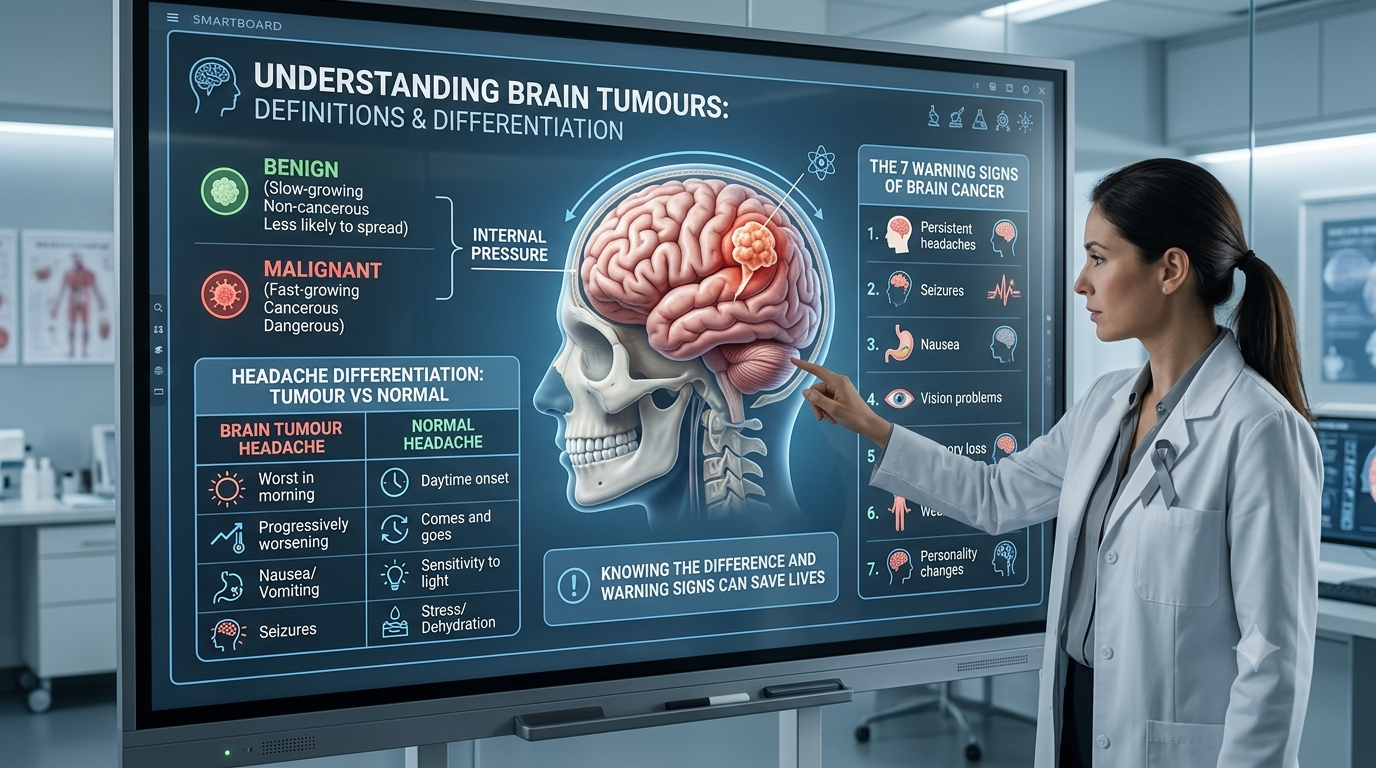
Brain tumours are either benign (slow-growing, non-cancerous, less likely to spread) or malignant (fast-growing, cancerous, and more dangerous). Both types can cause serious harm simply by pressing on surrounding brain tissue.
Types of Brain Tumours: A Quick Guide
Type | What It Is | Nature | Common Treatment |
Glioblastoma (GBM) | Most aggressive primary brain tumour; arises from glial cells | Malignant (Grade 4) | Surgery + radiation + chemotherapy |
Meningioma | Arises from the meninges (brain lining); most common benign tumour | Usually benign | Surgery or observation |
Astrocytoma | Arises from star-shaped glial cells | It can be benign or malignant | Surgery, radiation |
Medulloblastoma | Common in children, fast-growing | Malignant | Surgery + radiation + chemo |
Pituitary Adenoma | Grows on the pituitary gland | Usually benign | Surgery or medication |
Brain Metastases | Cancer that has spread to the brain from another organ | Malignant | Radiation, CyberKnife, immunotherapy |
The 7 Warning Signs of Brain Cancer: Do Not Ignore These
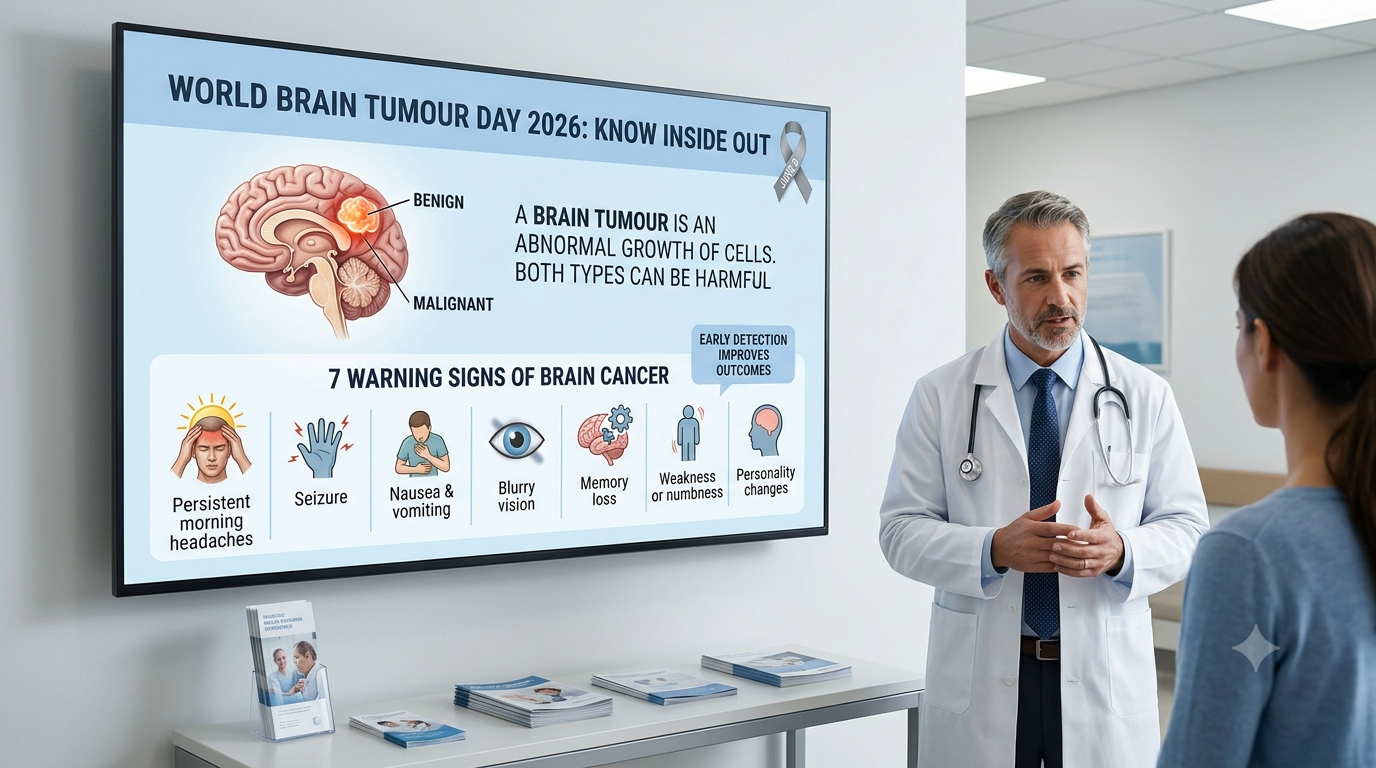
One of the most important reasons brain tumours are diagnosed late is that early symptoms are often dismissed as routine health issues. Here are the 7 warning signs of brain cancer that every adult should know:
Persistent, worsening headaches: particularly in the morning or on waking
Seizures in a person with no prior history of epilepsy
Nausea and vomiting without any digestive cause
Vision problems: blurring, double vision, or loss of peripheral vision
Memory loss or confusion: forgetting common words, names, or daily tasks
Weakness or numbness in one arm, leg, or one side of the face
Personality or behaviour changes: unusual irritability, mood swings, or loss of judgement
Brain Tumour Headache vs Normal Headache: How to Tell the Difference
This is one of the most frequently searched and genuinely important questions. Not every headache is a sign of a brain tumour, but there are real differences to watch for.
Feature | Brain Tumour Headache | Normal Headache |
Timing | Worst in the morning; wakes you from sleep | Usually comes on during the day |
Pattern | Gets progressively worse over days or weeks | Comes and goes; usually resolves |
Associated symptoms | Nausea, vomiting, vision changes, seizures | Sensitivity to light or sound |
Triggers | Coughing, bending forward, lying down | Stress, dehydration, lack of sleep |
Response to painkillers | Does not fully resolve with standard pain relief | Usually relieves significantly |
If your headaches follow the pattern in the left column, especially when accompanied by any of the 7 warning signs listed above, do not wait. See a neurologist.
Can a Benign Brain Tumour Become Malignant?
Yes, in some cases. While most benign brain tumours remain stable for years, certain types, such as low-grade astrocytomas, can transform into higher-grade, malignant tumours over time. This is why regular MRI monitoring is essential even for patients diagnosed with "non-cancerous" brain tumours. A benign tumour that grows large enough can also cause the same damage as a malignant one, simply by pressing on critical brain areas.
What Famous Person Died from Glioblastoma?
Glioblastoma has claimed several well-known lives and brought the disease into global conversation. US Senator John McCain died from glioblastoma in 2018. So did Senator Ted Kennedy in 2009 and Beau Biden, son of former US President Joe Biden, in 2015. In India, the disease has also affected prominent figures, underscoring that brain tumours do not discriminate by age, profession, or background.
Glioblastoma is the most commonly occurring primary malignant brain tumour, accounting for 13.7 per cent of all tumours and 52.2 per cent of all malignant tumours. The five-year relative survival rate for glioblastoma is only 7 per cent, and the median survival is approximately 8 months.
Brain Tumour Survival Rate: What the Numbers Really Mean
Survival rates are averages; they do not define any individual's outcome. But they do give a realistic picture of the medical challenge involved.
The incidence of brain tumours in India ranges from 5 to 10 cases per 100,000 population every year. In top hospitals across India, doctors report 70 to 90 per cent success rates in treating benign brain tumours. For glioblastoma in adults, the average survival is approximately 12 to 16 months when full treatment, including surgery, radiation, and chemotherapy, is received.
The five-year relative survival rate for all patients with primary brain tumours is 75.8 per cent, though this varies significantly by tumour type and age at diagnosis.
The critical takeaway is that early detection improves outcomes significantly across all tumour types.
Brain Cancer Treatment in India: What Is Available Today
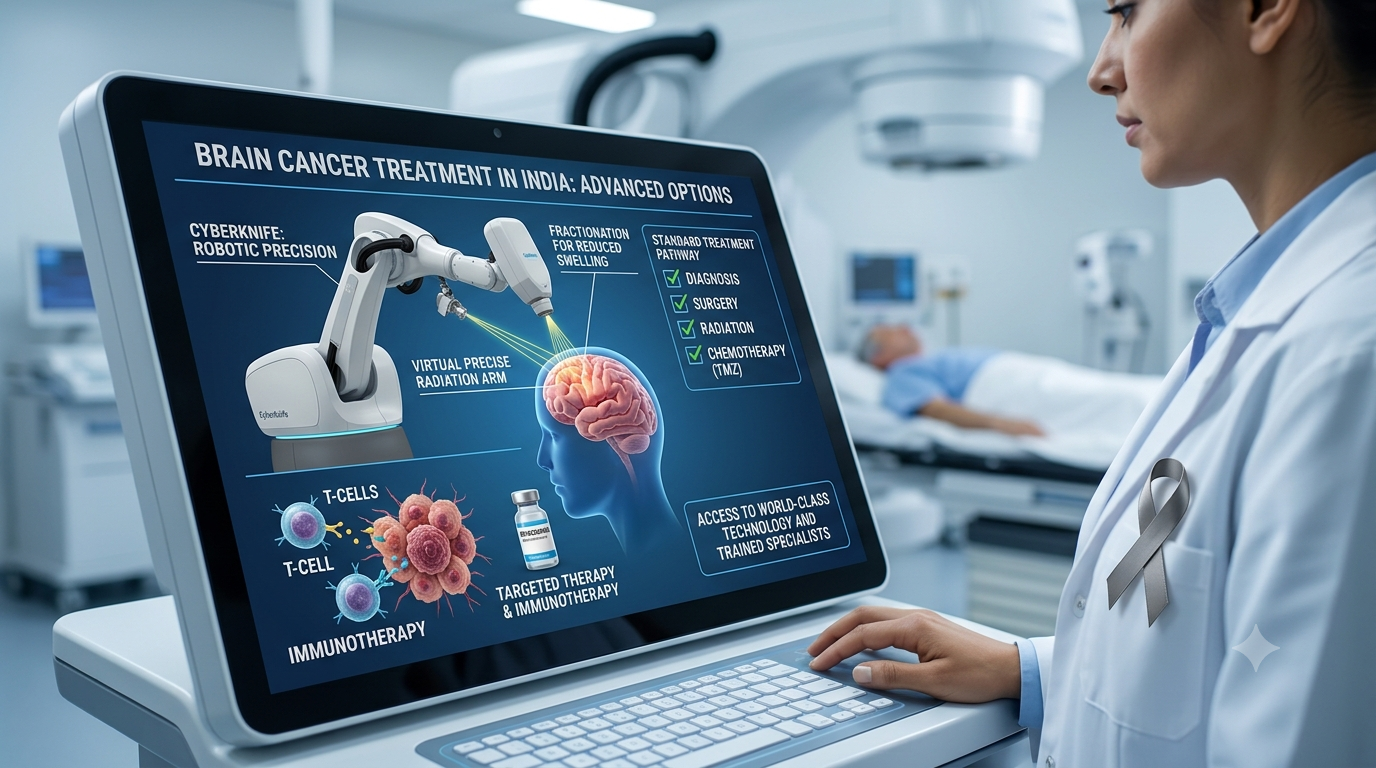
Neuro-oncology has been advancing in India, and more treatment options are now available (i.e., a combination of the world's technology and trained specialists).
The standard treatment pathway for patients with brain cancer generally includes:
Step 1: Diagnosis: Diagnosing the brain cancer through MRI, CT scan, PET scan, and biopsy to confirm the type and grade of the brain cancer.
Step 2: Surgery:Surgical intervention (surgical excision of as much of the cancer as safely possible) when possible (by a neurosurgeon).
Step 3: Radiation therapy: The use of radiation therapy to kill any cancer cells that remain after surgery.
Step 4: Chemotherapy:The use of chemotherapy; the most common chemotherapeutic agent used to treat glioblastoma in conjunction with radiation therapy is temozolomide (TMZ).
Step 5: Monitoring: Follow-up evaluation with MRI to assess whether the brain cancer has recurred.
Advanced Options in India
CyberKnife treatment for brain tumours is now available at several major hospitals in India. CyberKnife allows for fractionation, breaking the radiation dose into smaller parts, which significantly reduces the risk of radiation-induced swelling in healthy brain tissue. Experts like Dr Aditya Gupta, trained at AIIMS and Wake Forest University in the USA, have pioneered the use of CyberKnife in India for managing complex brain tumours.
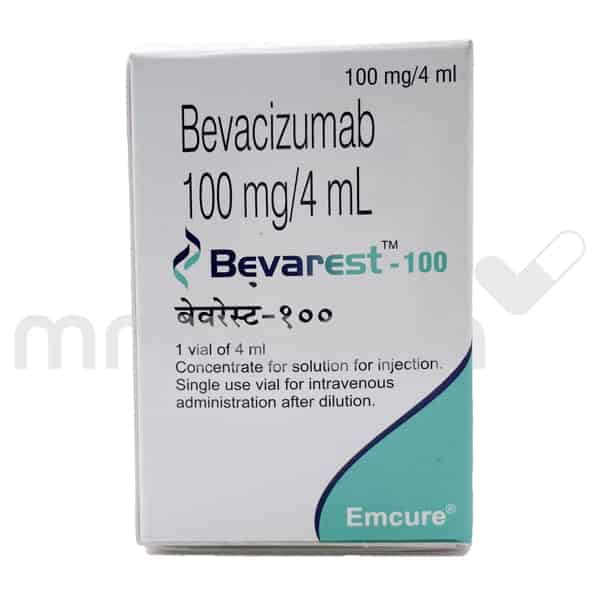
Brain cancer immunotherapy in India is also advancing rapidly. For recurrent glioblastoma, immunotherapy or targeted therapy is used, with the drug bevacizumab playing a central role, supported by steroids for reducing brain swelling and anti-seizure medications.
Brain Tumour Stage 4 Life Expectancy: An Honest Answer
Stage 4 or Grade 4 brain tumours, of which glioblastoma is the most common, carry the most serious prognosis. The five-year survival rate for glioblastoma is 22 per cent for patients aged 20 to 44, dropping to 9 per cent for those aged 45 to 54, and 6 per cent for those aged 55 to 64.
However, survival rates are population averages. Younger patients, those with fully resectable tumours, and those responding well to immunotherapy or targeted therapy can and do exceed median survival estimates. The numbers are not a verdict; they are a starting point for an informed conversation with your medical team.
FAQs
Q1. What are the first signs of a brain tumour?
The most common early signs are persistent morning headaches, unexplained nausea, sudden seizures, and gradual vision changes. If any of these appear together or worsen over time, see a doctor promptly.
Q2. Can a benign brain tumour become malignant?
In some cases, yes. Certain low-grade tumours can progress to higher grades over time. Regular MRI monitoring is essential even for patients with benign tumours.
Q3. What famous person died from glioblastoma?
US Senator John McCain and Beau Biden are among the most well-known glioblastoma deaths. The disease affects people across all walks of life and age groups.
Q4. Is CyberKnife treatment for brain tumours available in India?
Yes. CyberKnife is available at several leading hospitals in India. It is non-invasive, highly precise, and allows patients to go home the same day in most cases.
Q5. Is a brain tumour headache different from a normal headache?
Yes. A brain tumour headache is typically worst in the morning, worsens progressively, and is often accompanied by nausea or neurological symptoms. It does not fully respond to standard painkillers.
Final Thoughts
A brain tumour diagnosis is frightening, but it is not the end of the story. Awareness, early action, and access to the right care change outcomes. World Brain Tumour Day 2026 is a reminder that understanding the warning signs of brain cancer, knowing the difference between a brain tumour headache and a normal headache, and not putting off a neurological consultation can genuinely save lives.
If you or someone you love has symptoms that worry you, do not wait for them to pass. Speak to a neurologist. Ask for a scan. The earlier a brain tumour is found, the more treatment options are available and the better the chances of a good outcome.
Read Also
References
National Brain Tumour Society. Brain tumour facts [Internet]. Boston: NBTS; 2026 [cited 2026 May 30]. Available from: https://braintumor.org/brain-tumors/about-brain-tumors/brain-tumor-facts/
National Cancer Institute. SEER cancer stat facts: brain and other nervous system cancer [Internet]. Bethesda: NCI; 2025 [cited 2026 May 30]. Available from: https://seer.cancer.gov/statfacts/html/brain.html
American Cancer Society. Cancer facts and figures 2026 [Internet]. Atlanta: ACS; 2026 [cited 2026 May 30]. Available from: https://www.cancer.org/cancer/types/brain-spinal-cord-tumors-adults/key-statistics.html
Disclaimer: This article is for general informational purposes only and is not a substitute for professional medical advice. Always consult a qualified neurologist or neurosurgeon before making any medical decisions related to brain tumours or brain cancer

















Comments