

World Lung Cancer Day





Last updated on 14 Aug 2026
Lung cancer is often thought of as a disease for smokers, but the reality is complicated. While tobacco use remains the primary cause, lung cancer can also affect non-smokers.
The good news is that lung cancer care has come a long way over the past few years. Early diagnosis, better screening for high-risk individuals, and newer treatments like targeted therapy and immunotherapy have helped people live longer with a better quality of life.
That is why World Lung Cancer Day serves as an important reminder to learn about symptoms, risks, and the need for timely medical care.
Key Takeaways
|
What Is World Lung Cancer Day?
Every year on August 1st, World Lung Cancer Day is celebrated to create awareness about lung cancer and promote prevention, early diagnosis, prompt treatment, and continuous research. The event can be observed in India and all over the globe through educational programs, community activities, screening programs, and patient support.
The Indian Council of Medical Research (ICMR)–National Cancer Registry Programme (NCRP) suggests that lung cancer is the second most prevalent form of cancer among men in India, with an estimated 79,279 new cases in 2024.
An NCRP study also found that 44.8% of patients were diagnosed only when cancer had progressed to distant organs, highlighting the importance of recognising symptoms early and seeking timely medical care.
What Is Lung Cancer?
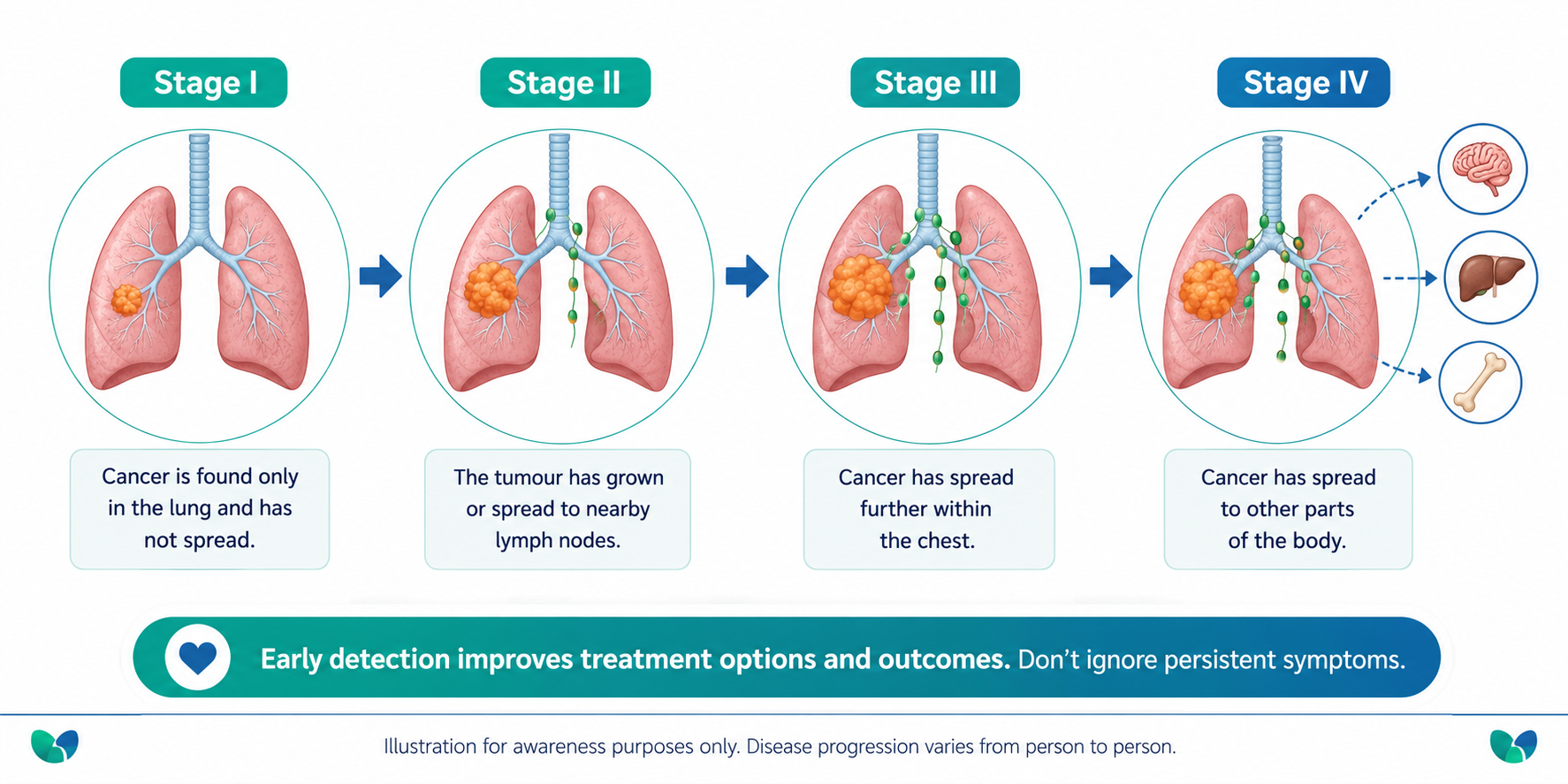
Lung cancer occurs when abnormal cells in the lungs grow uncontrollably and form a tumour. As the tumour continues growing, it can lead to changes in lung function, and if not treated on time, it may spread to other parts of the body.
Types of lung cancer include:
The more common non-small cell lung cancer
The less common but faster-growing small-cell lung cancer.
No matter which type it is, early detection is important for better treatment outcomes.
What Causes Lung Cancer?
Some of the most common risk factors include:
Smoking: The biggest risk factor for lung cancer. The more a person smokes, the greater their likelihood of developing the disease.
Second-hand smoke: If you are around someone who smokes frequently, it can be another risk factor for lung cancer.
Air pollution: Long exposure to contaminated air over a long period of time might injure your lungs, especially if you live in busy places or industrial zones.
Workplace exposure: Exposure to potentially dangerous substances such as asbestos, silica, or diesel fumes while working in certain jobs poses an increased danger of this cancer.
Older age: Lung cancer is commonly diagnosed in older people, although it can occur at any age.
Family history of certain lung diseases: Having a close family member with lung cancer or COPD may increase your risk.
Previous radiation therapy to the chest: People who have undergone radiation therapy to their chest may be at a slightly higher risk later in life.
Early Signs and Symptoms of Lung Cancer
Lung cancer rarely shows any symptoms in the early stages. As a result, it is usually diagnosed after it has metastasised. If you experience any of these signs, in particular if they last for several weeks, you should speak to your doctor:
A persistent cough that doesn’t go away or gets worse
Coughing up blood
Chest pain that doesn't go away
Shortness of breath
Unexplained weight loss
Persistent fatigue
Frequent or recurring chest infections
Hoarseness or wheezing
While these symptoms do not mean that you have lung cancer, you should follow up with your doctor if they continue or worsen. If you are at high risk for lung cancer, for example, if you are a long-term smoker or a past heavy smoker, ask your health care provider if low-dose CT (LDCT) screening is recommended for you. Early screening can identify lung cancer before symptoms develop, when cancer treatment is very effective.
How Is Lung Cancer Treated
To confirm lung cancer, doctors may use imaging tests such as an X-ray or CT scan of the chest, and then they may request a biopsy if necessary. In addition, more tests may be conducted to determine the extent or stage of the disease, as well as to discover genetic changes that can help guide treatment.
Lung cancer treatment varies with the kind of lung cancer, how far it has progressed, and the patient's overall health. Many people receive a combination of treatments.
Common lung cancer treatment options include:
Surgery: When the cancer is diagnosed early, surgery can be performed to eliminate the tumour. This is the best way to increase the chances of survival in patients with early lung cancer.
Radiation Therapy: High-energy rays are used to destroy cancer cells. This can be done independently or together with other courses.
Chemotherapy: Uses medicines to kill cancer cells or slow their growth. It may be given after surgery or when the cancer has spread.
Targeted Therapy: Targeted medicines can treat lung tumours that have certain genetic defects, allowing more accurate treatment.
Immunotherapy: Helps the body's immune system recognise and fight cancer cells. It may be used alone or in combination with chemotherapy, particularly for advanced lung cancer.
Can Lung Cancer Be Cured?
Whether lung cancer can be cured depends largely on how early it is diagnosed. Survival varies from individual to individual depending on:
Cancer stage and diagnosis
Lung cancer type
Health condition of the patient
Response to treatment
Early detection is still one of the most important survival factors. Advances in targeted therapy, immunotherapy, and personalised treatment have also improved outcomes, giving many people with lung cancer more treatment options and greater hope than ever before.
What Can You Do to Protect Your Lung Health?
Not every lung cancer case can be prevented, but healthy habits and early action can help lower your risk and improve the chances of early diagnosis.
Here are some practical steps you can take:
Avoid smoking and secondhand smoke.
Limit exposure to air pollution.
Follow workplace safety measures.
Know the early signs of lung cancer.
Ask your doctor about lung cancer screening.
Share awareness
Every small step matters. This World Lung Cancer Day, taking care of your own lung health and encouraging others to do the same can help reduce stigma, promote earlier diagnosis, and support better outcomes for everyone affected by lung cancer.
Expert Advice
Dr C. S. Pramesh, Director of Tata Memorial Centre, emphasises that lung cancer is not only a smoker's disease and that a growing number of people who have never smoked are also being diagnosed. He has also highlighted that many patients reach cancer specialists at an advanced stage, when treatment becomes more challenging, reinforcing the importance of early diagnosis and timely medical evaluation.
FAQs
1. When is World Lung Cancer Day 2026?
World Lung Cancer Day 2026 is celebrated on 1 August 2026 in India and all over the world.
2. What is the theme of World Cancer Day in 2026?
The World Cancer Day 2026 theme continues the "United by Unique" campaign, which focuses on people-centred cancer care and recognising every individual's unique cancer journey.
3. What are the 5 symptoms of lung cancer?
The five common symptoms of lung cancer include:
Persistent cough
Shortness of breath
Chest pain
Coughing up blood
Unexplained weight loss or fatigue
4. How long can you live with lung cancer?
Life expectancy varies depending on the cancer stage, health condition, and treatment. With early diagnosis, people usually live longer, and advances in modern treatment methods allow people to survive the disease.
5. How can you improve lung cancer survival?
Lung cancer life expectancy can be improved through early detection of the signs and symptoms of cancer, timely treatment, adherence to the treatment plan, quitting smoking and regular follow-up with a doctor.
6. Can you be cured of lung cancer?
Yes. Lung cancer can often be cured if diagnosed and treated in its early stages. Even in advanced cases, newer treatments can help control the disease, relieve symptoms, and improve quality of life.
Read Also
References
https://www.who.int/news-room/fact-sheets/detail/lung-cancer
https://sansad.in/getFile/loksabhaquestions/annex/184/AU3588_qwWYK4.pdf?source=pqals
Disclaimer: This article is intended for educational purposes only and should not be considered a substitute for professional medical advice, diagnosis, or treatment. Lung cancer symptoms can vary from person to person, and many respiratory conditions may cause similar signs. If you experience a persistent cough, unexplained weight loss, coughing up blood, or any other concerning symptoms, consult a qualified healthcare professional promptly. Never delay seeking medical advice or change your treatment plan based solely on information from this article.













Comments