

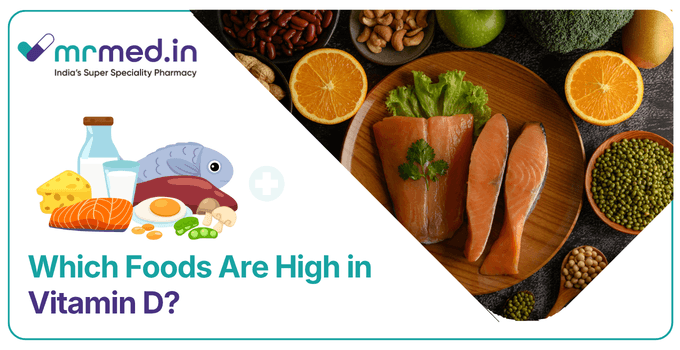
Which Foods Are High in Vitamin D?





Last updated on 21 Mar 2026
Vitamin D is one of the most essential nutrients your body needs, yet one of the most commonly deficient. A recent study found that three out of every four Indians suffer from Vitamin D deficiency. Weak bones are often the first sign, but the consequences stretch far beyond that. While sunlight remains the most natural source, your diet plays an equally important role in keeping your levels topped up. Here are the best food sources of Vitamin D to include in your daily meals.
Key Takeaways
|
Why Do You Need Vitamin D?
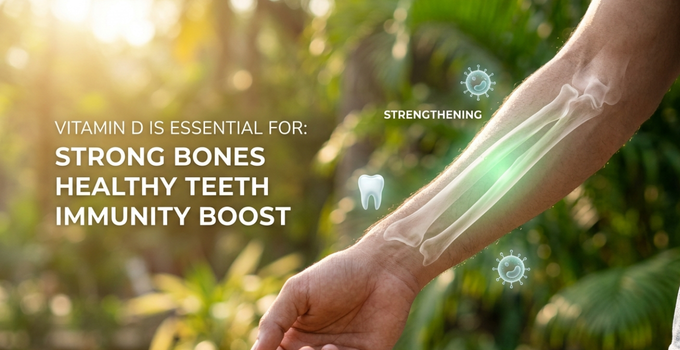
Vitamin D regulates calcium and phosphorus levels in the body, keeping bones and teeth strong and supporting a healthy immune system. Getting enough of Vitamin D daily also helps prevent a range of health conditions linked to deficiency. Given how widespread deficiency is across India, actively seeking out dietary sources of Vitamin D is one of the most important nutritional habits you can build.
What Is the Recommended Daily Intake?
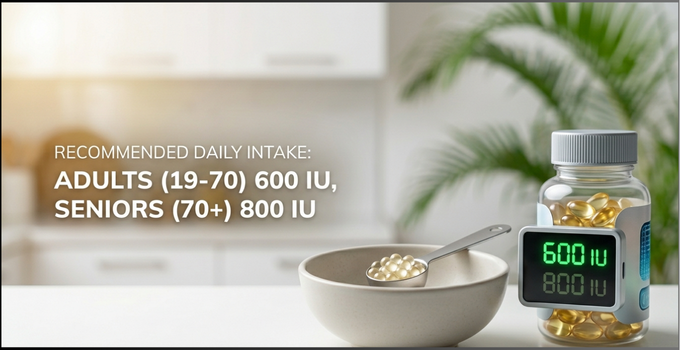
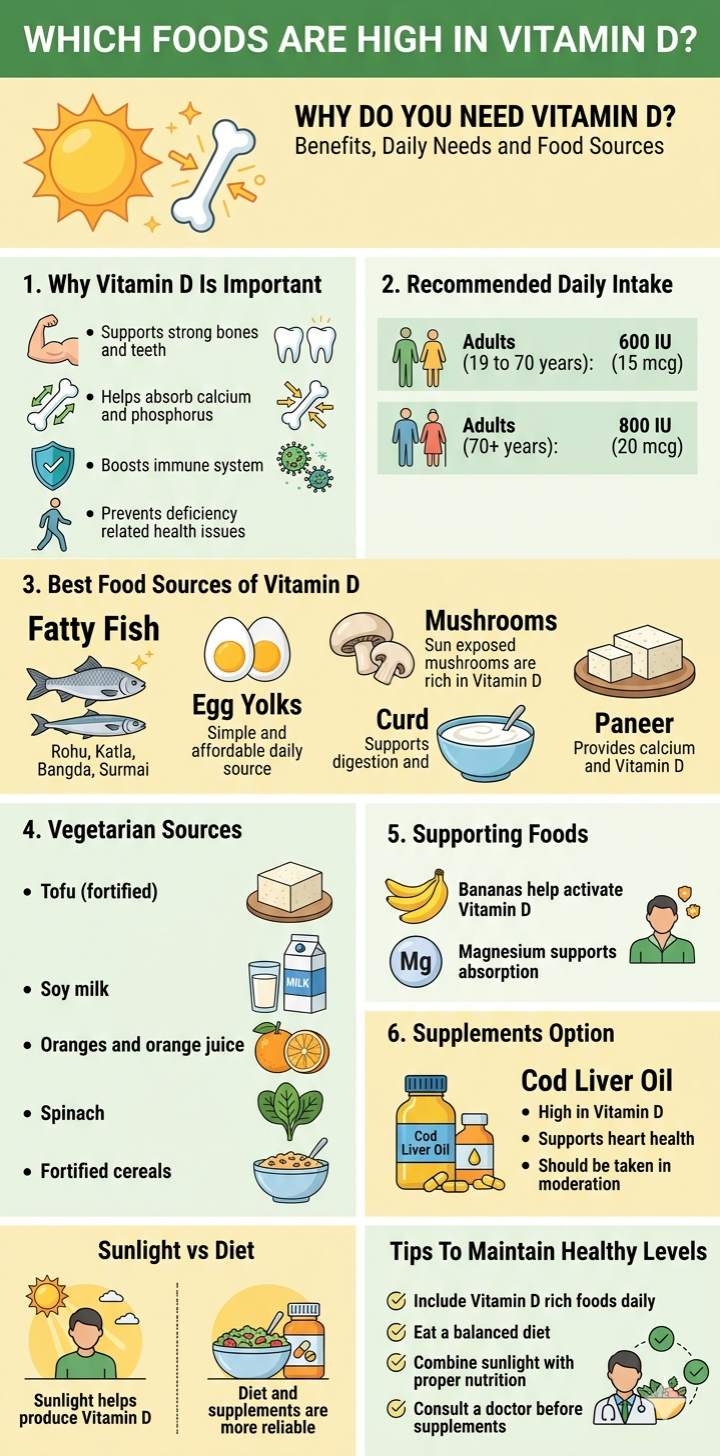
The National Institute of Health recommends a dietary allowance (RDA) for Vitamin D is 600 IU (15 mcg) for adults aged 19 to 70, and 800 IU (20 mcg) for those aged 70 and older.
Which Foods Are High in Vitamin D?
Fatty Fish
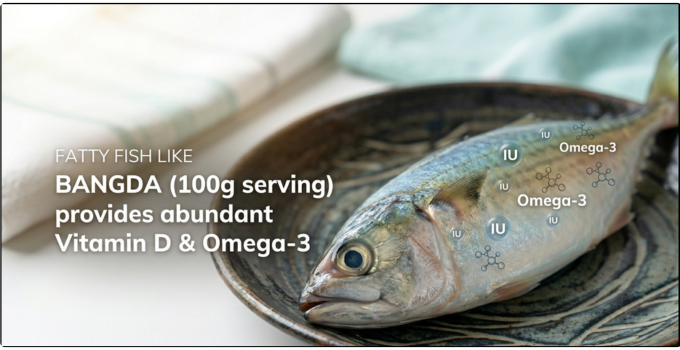
Rohu, Katla, Bangda (Indian mackerel), and Surmai (kingfish) are among the most commonly consumed fish across India and are good sources of Vitamin D. Bangda is particularly rich, with 100 grams providing a significant contribution to your daily needs. Whether prepared as a curry, Tawa Fry, or Steamed, including oily fish two to three times a week actively supports healthy Vitamin D levels.
Cod Liver Oil
Not a staple in most Indian households, but worth considering as a supplement. One teaspoon delivers 450 IU of Vitamin D and a useful dose of omega-3 fatty acids that support heart health and reduce inflammation. Its high Vitamin A content means moderation is essential. Consult your doctor before adding it to your routine.
Egg Yolks
Eggs are affordable, widely available, and a practical everyday source of Vitamin D across India. A standard egg yolk provides around 37 IU. Eggs from desi hens raised outdoors tend to contain more Vitamin D than those from battery farms. Adding 2 eggs daily to your diet through curries, bhurji, or boiled preparations is a simple and effective way to contribute.
Mushrooms
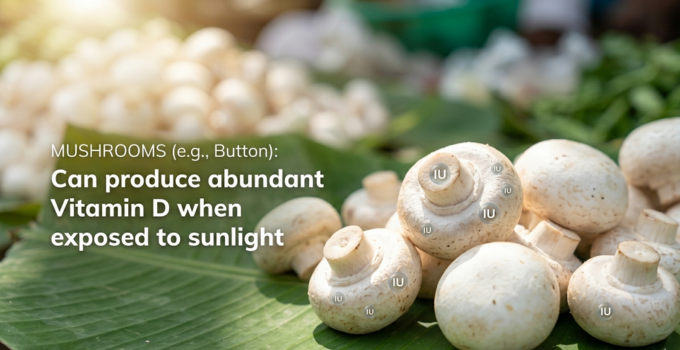
Button mushrooms and oyster mushrooms, both widely available in Indian markets, naturally produce Vitamin D when exposed to sunlight. Placing mushrooms in direct sunlight for 15 to 20 minutes before cooking significantly boosts their Vitamin D content, with up to 2,300 IU per 100 grams possible. They work well in sabzis, pulao, soups, and stir-fries.
Oranges and Orange Juice
Fresh oranges are affordable, seasonal, and widely eaten across India. A glass of fresh orange juice or a whole orange delivers about 100 IU of Vitamin D, along with calcium. It is an especially practical option for vegetarians and those who do not eat fish or eggs.
Bananas
A staple across Indian households, bananas are rich in magnesium, a mineral the body needs to activate Vitamin D. Eating one to two bananas daily helps the body use the Vitamin D it absorbs from food and sunlight more effectively.
Spinach
Palak is one of the most versatile and nutritious greens in Indian cooking. It provides both Vitamin D and calcium, supporting bone health alongside a wide range of other nutrients. Whether used in palak paneer, dal palak, or a simple sabzi, half a cup of cooked spinach daily makes a worthwhile dietary contribution.
Curd
Dahi is a daily staple in most Indian homes and one of the most accessible sources of Vitamin D in the Indian diet. Fortified dahi also delivers calcium, protein, and probiotics that support gut health. One to one and a half cups daily supports Vitamin D intake and digestive health simultaneously.
Tofu
Fortified tofu is particularly valuable for vegetarian and vegan Indians looking to boost Vitamin D intake. Around 100 grams provides approximately 100 IU. It works well in Indian curries, bhurji-style preparations, and as a paneer substitute in many dishes.
Soy Milk
Soy milk is a practical dairy-free alternative for lactose-intolerant individuals, a significant proportion of India's population. It provides 107 to 117 IU of Vitamin D per cup, along with iron, Vitamin C, and comparable protein to cow's milk. Up to 500 ml daily contributes significantly to overall intake.
Paneer (Indian Cottage Cheese)
Paneer, the most widely consumed cheese in India, is a good source of Vitamin D, calcium, and phosphorus. Around 40 grams daily fits comfortably into most Indian diets through sabzis, parathas, or snacks. Processed and aged cheeses provide slightly more Vitamin D per serving, but should be consumed in moderation due to their higher fat and sodium content.
Anaaj (Fortified Cereals and Grains)
Many packaged breakfast cereals available in India are fortified with Vitamin D and provide 40-100 IU per 100 grams. Ragi (finger millet) and Jowar are traditional Indian grains that support bone health through their calcium content, complementing Vitamin D intake from other sources. A daily portion of 30 to 45 grams for adults works well as part of a balanced breakfast.
Should You Rely on Sunlight Alone?
Sunlight naturally raises Vitamin D levels, but depending on it entirely is not always safe or practical.
The Centres for Disease Control and Prevention (CDC) highlights the importance of protecting skin from UV radiation to reduce the risk of skin cancer. Dietary sources and Vitamin D supplements offer a more reliable and safer way to meet your daily requirements, particularly in India, where deficiency rates remain high despite year-round sun exposure.
Frequently Asked Questions
1. Why are so many Indians vitamin D-deficient despite abundant sunlight?
Several factors, such as spending more time indoors, covering skin for cultural or practical reasons, higher melanin levels and diets low in Vitamin D-rich foods. Urban air pollution also reduces the quality of UV rays reaching the skin.
2. Can you get enough Vitamin D from food alone?
It is challenging but possible. It would require a varied diet that includes fatty fish, fortified foods, eggs, and mushrooms. Most people benefit from combining dietary sources with safe sun exposure and,n where needed, supplementation.
3. What are the signs of Vitamin D deficiency?
Common signs include weak or aching bones, muscle weakness, fatigue, frequent infections, and low mood. In children, severe deficiency can cause rickets. A simple blood test confirms the efficiency.
4. Is Vitamin D supplementation safe?
Yes, when taken at recommended doses. Always consult a doctor before starting supplementation, as excessive Vitamin D intake can lead to toxicity over time.
5. Which is the best plant-based source of Vitamin D?
Sun-exposed mushrooms are the richest plant-based source, providing up to 2,300 IU per 100 grams. Fortified soy milk, tofu, and cereals also offer reliable plant-based options.
What’s Worth Remembering
Vitamin D plays a vital role in maintaining strong bones, supporting immunity, and regulating the levels of essential minerals in the body. Despite abundant sunlight, deficiency remains extremely common, especially in India. Relying only on sun exposure is not always practical or safe, so including Vitamin D-rich foods in your daily diet is important. Fatty fish, egg yolks, fortified foods, and sun-exposed mushrooms are some of the most reliable sources. Plant-based options are available but often require careful planning. Consistency matters more than occasional intake, and in some cases, supplements may be needed under medical guidance to maintain healthy levels.
Read Also
References
National Institutes of Health. Vitamin D fact sheet for health professionals [Internet]. 2024 [cited 2026 Mar 21]. Available from: https://ods.od.nih.gov/factsheets/VitaminD-HealthProfessional/
National Health Service. Vitamin D [Internet]. 2023 [cited 2026 Mar 21]. Available from: https://www.nhs.uk/conditions/vitamins-and-minerals/vitamin-d/
Harvard T H Chan School of Public Health. Vitamin D and health [Internet]. 2023 [cited 2026 Mar 21]. Available from: https://www.hsph.harvard.edu/nutritionsource/vitamin-d/
Disclaimer: The content in this blog is for general informational purposes only and is not a substitute for professional medical advice, diagnosis, or treatment. Always consult your doctor or a registered dietitian before making any changes to your diet, especially if you have a medical condition or are taking prescribed medication. While the information is based on trusted sources, individual needs and results may vary. MrMed does not promote or endorse any specific food or treatment mentioned unless explicitly stated.












Comments