

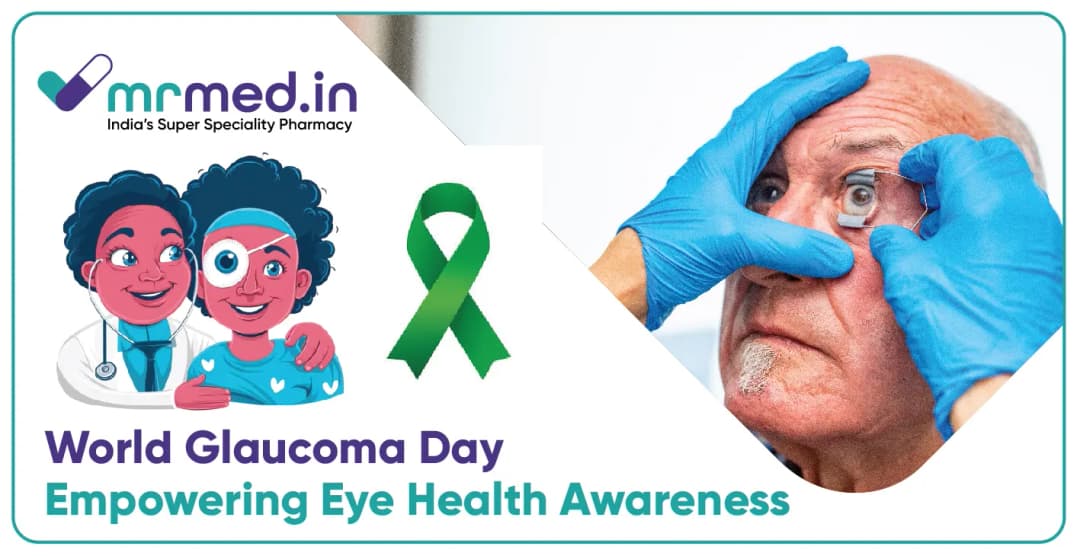
World Glaucoma Day





Last updated on 05 May 2026
Our eyes often convey feelings that words cannot. Through them, we express emotions, build connections, and reflect our inner world without speaking a single word. It is our responsibility to protect these vital organs that help us see and feel the world around us. One of the biggest threats to our eye health is Glaucoma, a silent condition that can cause irreversible blindness if ignored. World Glaucoma Day 2025 serves as a global reminder to prioritize eye health and create awareness about this preventable cause of blindness. Let’s dive deeper into the significance of this day.
Uniting for a Glaucoma-Free World: The Theme for 2025
The theme for World Glaucoma Day 2025 is "Uniting for a Glaucoma-Free World." This year, the focus continues to emphasize collaborative efforts among eye care professionals, policymakers, patients, and the public to tackle Glaucoma globally.
Glaucoma remains one of the leading causes of blindness worldwide, yet most cases can be prevented or managed with early detection and timely treatment. Unfortunately, blindness caused by Glaucoma is permanent, making early diagnosis critical.
A Day Dedicated To Glaucoma
Did you know there’s a dedicated day for Glaucoma awareness? March 12 is observed as World Glaucoma Day each year. Additionally, the entire week leading up to this day (March 9 to 15, 2025) is recognized as World Glaucoma Week.
This initiative, led by the World Glaucoma Association (WGA), aims to increase global awareness. In 2025, campaigns are focusing on encouraging communities, media, healthcare providers, and policymakers to promote regular eye screenings and proactive Glaucoma management.
Why Do We Celebrate World Glaucoma Day?
Glaucoma damages the optic nerve – the essential connection between your eyes and your brain. Over time, it causes gradual, painless vision loss. What makes it more dangerous is that many people remain unaware until significant damage has already occurred.
The mental, emotional, and economic burden of losing vision can deeply affect an individual’s quality of life. The rising number of Glaucoma cases globally, especially in low and middle-income countries like India, makes it essential to dedicate a day to spreading awareness, encouraging preventive care, and advocating for better healthcare access.
4 Major Global Challenges Of Glaucoma
Despite growing awareness efforts, several critical challenges continue to hinder the fight against Glaucoma. Here are the top issues we still face in 2025:
1. Late Detection of Glaucoma
Most people with Glaucoma experience no warning signs until the disease has already advanced. As a result, ophthalmologists struggle to preserve remaining vision.
Glaucoma typically affects both eyes, though it may start in one. The slow progression and minor early vision changes often go unnoticed. By the time many people seek help, their eyesight is already compromised.
2. Limited Access to Eye Care Services
Access to timely eye care remains a significant challenge in many parts of the world, especially in rural and underserved regions of India.
According to 2025 WHO estimates, nearly 50% of Glaucoma cases in developing countries remain undiagnosed due to poor healthcare infrastructure, financial limitations, and a shortage of trained eye care professionals.
3. Poor Treatment Adherence
Even when patients receive a diagnosis, continuing treatment remains difficult for many. Challenges in 2025 include:
Rising costs of eye medications
Irregular follow-up visits
Fear of side effects
Lack of understanding about the importance of lifelong treatment
Discontinuing medications without consulting an ophthalmologist often leads to disease progression and irreversible vision loss.
4. Common Misconceptions About Glaucoma
Misconceptions continue to hinder awareness and timely treatment. Let’s debunk some widespread myths in 2025:
Myth: “Glaucoma only affects the elderly.”
Fact: While the risk increases with age, Glaucoma can affect people of any age, including infants and young adults.Myth: “If I have normal eyesight, I can’t have Glaucoma.”
Fact: Many Glaucoma patients have perfect vision until the disease reaches advanced stages. Regular eye checkups are crucial.Myth: “Glaucoma has no treatment.”
Fact: While vision loss from Glaucoma cannot be reversed, its progression can be controlled with medications, laser procedures, and surgery.Myth: “If drops don’t work, nothing else will.”
Fact: Alternative treatments like laser therapy and surgical interventions are available and highly effective in controlling intraocular pressure (IOP).
5 Common Diagnostic Tests For Glaucoma
Early detection is the most effective way to prevent vision loss due to Glaucoma. Here are five commonly performed tests in 2025:
1. Tonometry
This test measures intraocular pressure (IOP). Modern non-contact tonometers and Goldmann applanation tonometry remain standard tools to screen for elevated eye pressure.
2. Ophthalmoscopy
Ophthalmologists examine the optic nerve for any damage, focusing on the nerve’s shape, color, and contour using specialized magnifying lenses and ophthalmoscopes.
3. Pachymetry
This test measures corneal thickness. A thinner cornea increases the risk of Glaucoma. Ultrasound pachymeters and optical devices are commonly used in 2025.
4. Perimetry (Visual Field Test)
This test maps your field of vision to detect blind spots and peripheral vision loss. Newer automated perimeters provide faster and more accurate results.
5. Gonioscopy
This procedure evaluates the angle where the cornea meets the iris to check the eye’s internal drainage system. It helps distinguish between open-angle and angle-closure Glaucoma.
What Can You Do On This World Glaucoma Day 2025?
You can make a difference by spreading awareness in your community. Here’s how you can get involved this year:
Participate in Local Events: Many organizations host free eye screening camps, awareness walks, and educational workshops.
Support Social Media Campaigns: Share posts, infographics, and videos about Glaucoma to educate your followers.
Host Fundraisers: Support local eye hospitals by raising funds to sponsor Glaucoma screening and treatment for underprivileged patients.
Educate Your Family and Friends: Encourage regular eye checkups, especially for people above 40 or those with risk factors like diabetes, hypertension, or a family history of Glaucoma.
Frequently Asked Questions (FAQs) About Glaucoma in 2025
1. What is the main cause of Glaucoma?
The primary cause of Glaucoma is increased intraocular pressure (IOP) that damages the optic nerve. However, not all Glaucoma patients have high eye pressure. Genetics, age, medical conditions like diabetes, and previous eye injuries can also increase the risk.
2. Can Glaucoma be completely cured?
Unfortunately, Glaucoma cannot be cured. However, with early detection and treatment, its progression can be slowed or halted to preserve remaining vision.
3. Who is at risk of developing Glaucoma?
People over 40, those with a family history of Glaucoma, individuals with diabetes, hypertension, severe nearsightedness (myopia), or those who have suffered eye injuries are at higher risk.
4. How often should I get my eyes checked for Glaucoma?
If you are over 40 or have risk factors, get a comprehensive eye exam once a year. Younger individuals with no risk factors can get checked every 2 to 3 years.
5. What are the early signs of Glaucoma?
Glaucoma often shows no early symptoms. By the time vision loss occurs, the disease may already be in an advanced stage. Some people may notice loss of peripheral vision, halos around lights, or eye pressure discomfort, but these usually appear later.
Final Thoughts
World Glaucoma Day 2025 is a powerful reminder that vision is precious and protecting it starts with awareness and action. Glaucoma may be a silent threat, but with regular eye check-ups, early diagnosis, and timely treatment, its progression can be controlled. Communities, healthcare providers, and individuals must come together to spread knowledge and encourage preventive eye care. If you or your loved ones are over 40 or have risk factors like diabetes or a family history of Glaucoma, schedule an eye screening today. Let’s work together towards a glaucoma-free world by prioritizing eye health and embracing preventive care.
Read Also
Disclaimer: The content in this blog is for general informational purposes only and is not a substitute for professional medical advice, diagnosis, or treatment. Always consult your doctor or a registered dietitian before making any changes to your medicines or diet, especially if you have a medical condition or are taking prescribed medication. While the information is based on trusted sources, individual needs and results may vary. MrMed does not promote or endorse any specific food or treatment mentioned unless explicitly stated.













Comments