

World Pharmacists Day





Last updated on 16 Sep 2026
Most of us think of a pharmacist as the person who hands over our medicines at the counter. But a great deal happens between a prescription and the first dose: checking that the dose is right, spotting possible interactions, and making sure you know exactly how and when to take what you have been given.
World Pharmacists Day, observed every year on 25 September, is a chance to recognise this work and the wider role pharmacists play in keeping communities healthy.
The day was established by the International Pharmaceutical Federation (FIP) in 2009. FIP chose 25 September because it marks the anniversary of the federation's founding in 1912. In 2026, the day falls on a Friday.
Key Takeaways
|
Theme of World Pharmacists Day 2026
The World Pharmacists Day 2026 theme is “Empowering pharmacists for healthier futures.” The theme focuses on giving pharmacists the skills, recognition, and support they need to contribute fully to patient care and stronger healthcare systems.
The theme also recognises pharmacists' contributions to areas such as access to medicines, disease prevention, public health, and safe medicine use. As healthcare needs continue to change, their role is becoming increasingly important.
Why World Pharmacists Day matters
Pharmacists are often among the most accessible healthcare professionals. They help patients understand prescriptions, explain how to take medicines, identify possible medicine-related problems, and advise on common health concerns.
The importance of pharmacists extends beyond dispensing medicines. They can contribute to vaccination, health screening, medicine safety, patient education, and public health initiatives. Pharmacists also play an important role in monitoring medicine-related problems and supporting the safe use of treatments.
World Pharmacists Day therefore helps raise awareness of the role of pharmacists in society and encourages greater recognition of their contribution to healthcare.
Responsibilities of a Pharmacist
A pharmacist's responsibilities can vary depending on their workplace and area of practice. Some common responsibilities include:
Dispensing medicines: Pharmacists prepare and supply prescribed medicines accurately.
Explaining medicines: They explain how, when, and for how long medicines should be taken.
Checking prescriptions: Pharmacists review prescriptions for potential dosing problems, interactions, allergies, or other concerns.
Advising patients: They provide guidance on medicine use, side effects, and precautions.
Supporting vaccination: In many healthcare settings, pharmacists may administer vaccines and support immunisation programmes.
Store and manage medicines correctly: Pharmacists ensure medicines are stored at the right temperature, monitor expiry dates, and confirm products come from reliable, authorised sources.
Monitoring treatment: Clinical pharmacists may monitor how patients respond to medicines and identify medicine-related concerns.
Supporting public health: Pharmacists participate in health education, screening, and disease-prevention activities.
Contributing to research: Pharmacists can work in pharmaceutical research, clinical research, drug development, and pharmacovigilance.
Working with healthcare teams: Pharmacists collaborate with doctors, nurses, and other healthcare professionals to support appropriate medicine use.
These responsibilities show why pharmacists are an important part of modern healthcare, not simply professionals who dispense medicines.
The Role of Pharmacists in a Hospital
The role of a pharmacist in a hospital involves much more than supplying medicines to patients. Hospital pharmacists work with healthcare teams to support the safe and appropriate use of medicines.
They may review medication orders, check doses, identify possible drug interactions, advise doctors about medicine selection, and help monitor patients receiving complex treatments. They can also contribute to medication reconciliation, which involves comparing a patient's medicines during transitions in care to reduce medication errors.
Clinical pharmacists may work closely with patients with chronic conditions or who require specialised treatments. Their input can be especially valuable when patients take multiple medicines or are at higher risk of medication-related problems.
What are the four types of pharmacists?
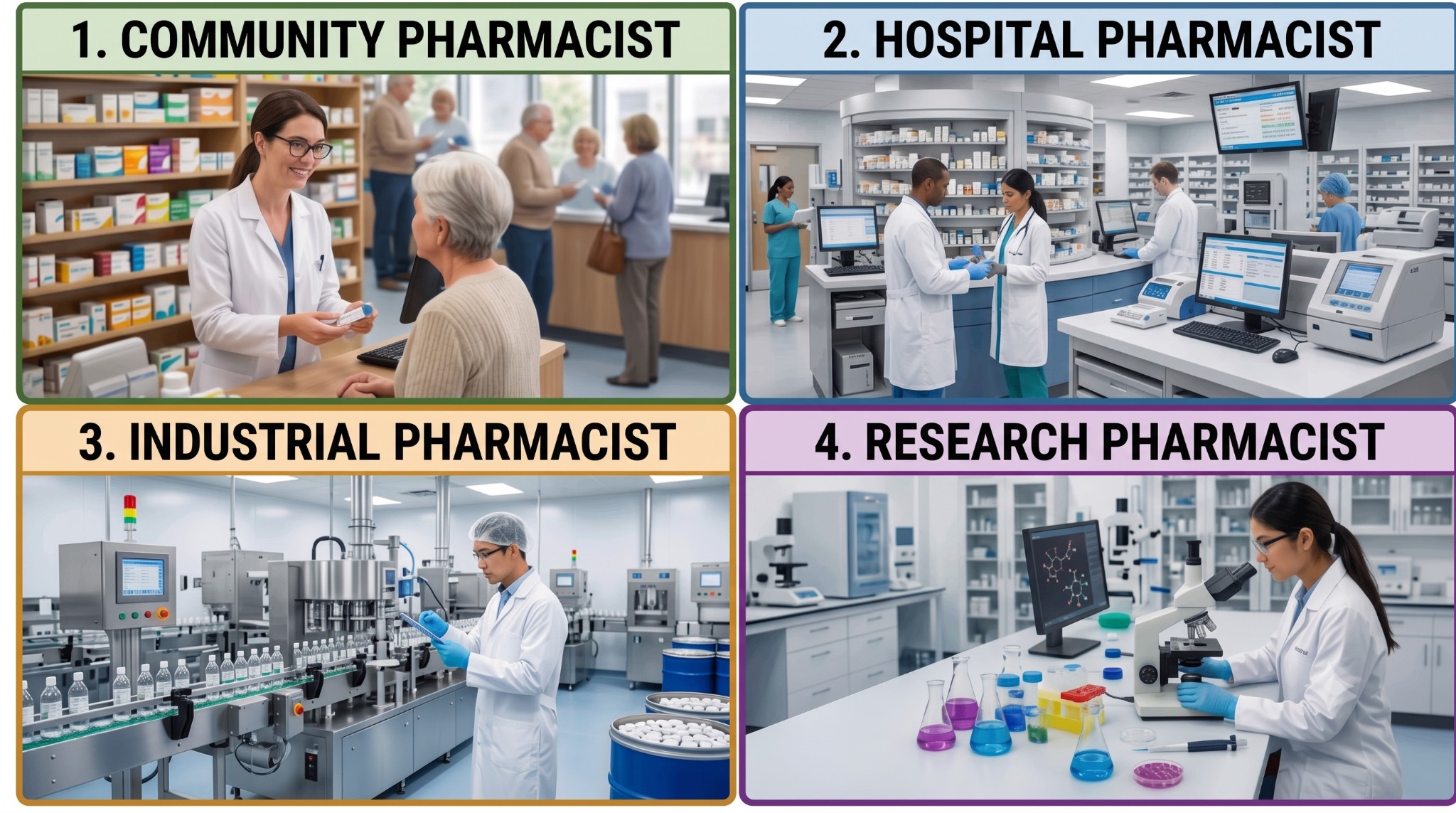
Pharmacy roles vary by country and healthcare system. However, four commonly recognised areas of pharmacy practice are:
Community pharmacists: Work in community pharmacies and provide medicines, health advice, and patient counselling.
Hospital or clinical pharmacists: Work in hospitals and healthcare facilities as part of patient-care teams.
Industrial pharmacists: Work in pharmaceutical companies in areas such as drug development, manufacturing, quality control, and regulatory affairs.
Research pharmacists: Contribute to pharmaceutical research, clinical research, drug development, and related scientific activities.
Many pharmacists also specialise in areas such as oncology, paediatrics, infectious diseases, pharmacovigilance, or regulatory affairs.
Looking ahead
This year's theme reminds us that appreciation alone is not enough. For pharmacists to meet the health challenges ahead, they need the right training, a clear place within healthcare teams and the recognition that allows them to use their full expertise. On 25 September, it is worth pausing to thank the pharmacists who help us use our medicines safely, and to support the changes that will let them do even more.

FAQs
Q1. Who established World Pharmacists Day, and when?
The International Pharmaceutical Federation (FIP) established World Pharmacists Day in 2009. It chose 25 September because it marks the anniversary of FIP's establishment in 1912.
Q2. What is the main objective of World Pharmacists Day?
The main objective of World Pharmacists Day is to recognise and raise awareness of pharmacists' contributions to healthcare and public health.
Q3. Which country is called the “Pharmacy of the World”?
India is commonly referred to as the “Pharmacy of the World” because of its major role in the global supply of affordable generic medicines and vaccines.
Q4. Who is called the father of pharmacy?
Galen (Claudius Galenus) is commonly called the father of pharmacy. The ancient physician and scholar contributed to medicine preparation and formulation.
Q5. What day is National Pharmacist Day?
National Pharmacist Day is observed on 12 January, particularly in the United States. It is separate from World Pharmacists Day, which is observed internationally on 25 September.












Comments