


Learn About 5 Common Lab Tests for Cancer Diagnosis





Last updated on 27 Apr 2026
The journey toward a cancer diagnosis often begins with a simple vial of blood or a urine sample. While no single test can definitively confirm a diagnosis on its own, cancer lab tests serve as essential early warning systems. They help your medical team identify potential health problems, stage the disease, and monitor how well your body responds to treatment.
For those navigating serious illness or chemotherapy, understanding the different types of cancer diagnostic tests reduces the emotional load of the unknown. This guide breaks down the most common laboratory investigations and imaging tests used to detect and monitor cancer.
Key Takeaways
|
How is Cancer Diagnosed Early?
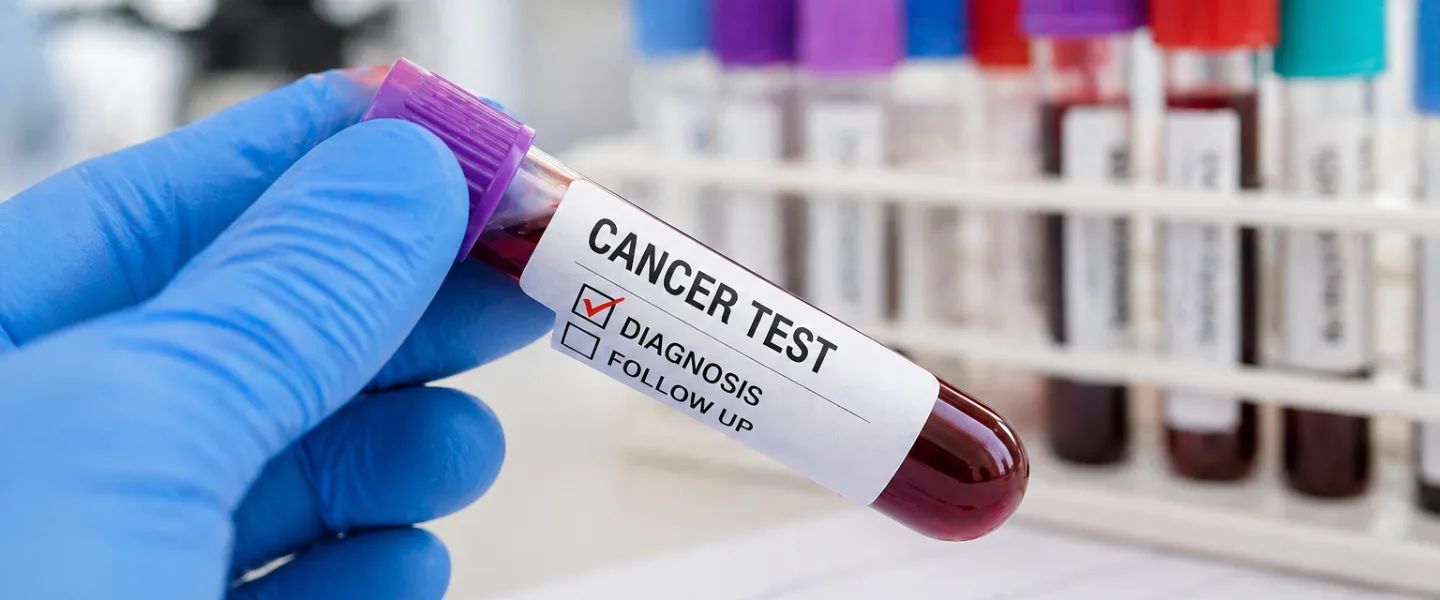
One of the most frequent questions patients ask is, "How is cancer diagnosed early?" Early detection often involves a sequence of screenings. It starts with blood tests for cancer detection or urinalysis, followed by more specific cancer diagnosis tests like imaging or a biopsy test for cancer. These steps ensure that any abnormality is investigated thoroughly before it progresses.
Types of Lab Tests Used in Cancer Detection
According to a landmark study by the Indian Council of Medical Research (ICMR), published in JAMA, India is staring at 1.56 million new cancer cases and 874,404 deaths in 2024. The same study, Cancer Incidence and Mortality Across 43 Cancer Registries in India, projected that India could see 2.46 million cancer cases by 2045 if current trends continue.
1. Complete Blood Count (CBC)
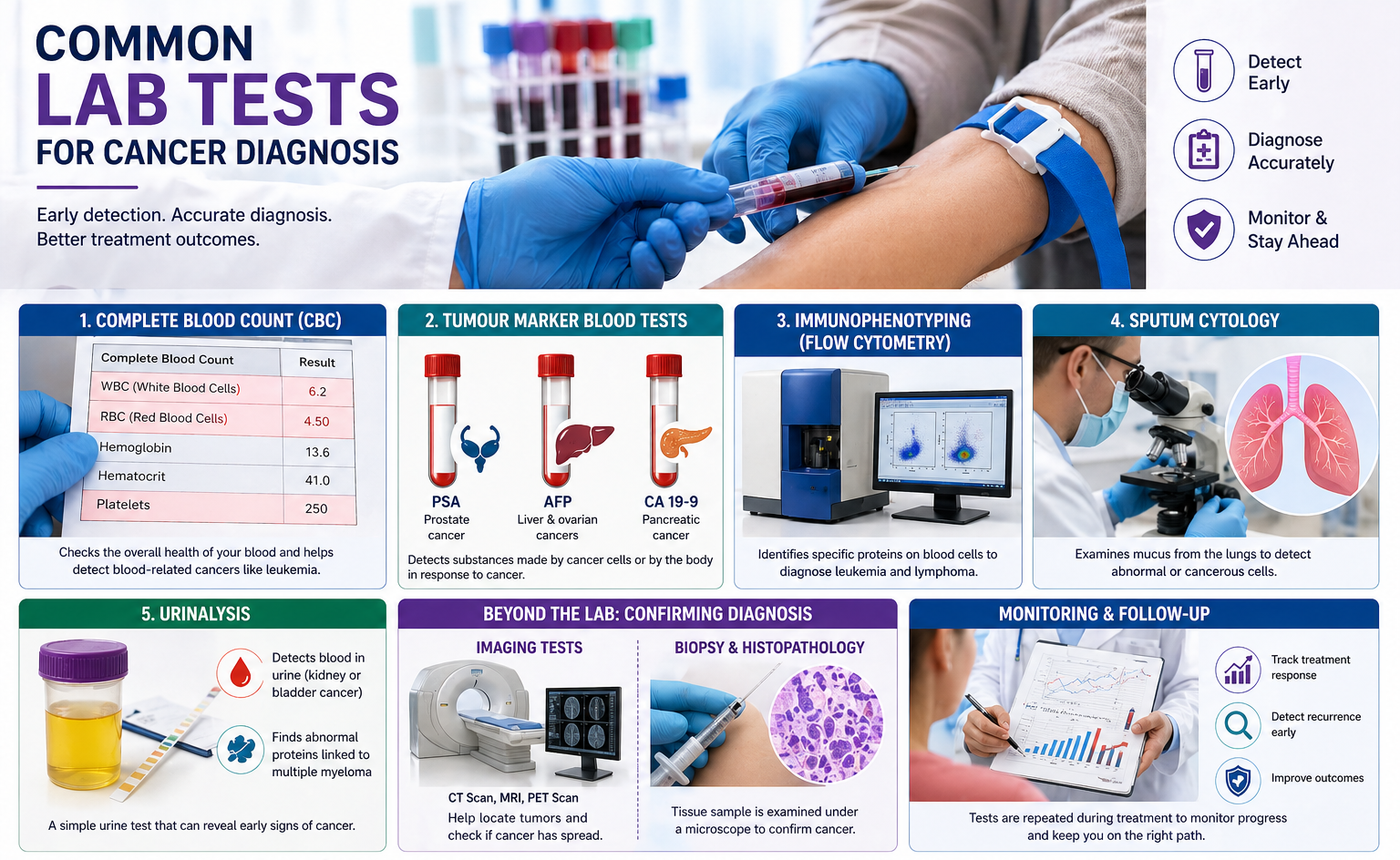
A Complete Blood Count (CBC) is one of the most basic and commonly performed blood tests. It gives a detailed overview of your blood health by measuring different components such as white blood cells (WBCs), red blood cells (RBCs), platelets, and haemoglobin levels.
This test is especially useful for detecting blood-related cancers, such as leukaemia, because these conditions often cause abnormal changes in blood cell counts. For example, very high or very low white blood cell counts may indicate a problem in the bone marrow, while low haemoglobin levels can point to anaemia, which is often seen in cancer patients.
If a CBC shows significant abnormalities, doctors may recommend further tests, such as a bone marrow biopsy, to confirm the diagnosis and understand the underlying cause.
2. Tumour Marker Blood Tests
Tumour marker tests are specialised blood tests that look for certain substances produced either by cancer cells or by the body in response to cancer. These substances are known as biomarkers.
Common tumour markers include:
PSA (Prostate-Specific Antigen): linked to prostate cancer.
AFP (Alpha-fetoprotein): associated with liver and some ovarian cancers.
CA 19-9: often used in pancreatic cancer evaluation.
These tests are useful for supporting diagnosis, monitoring treatment response, and detecting recurrence after treatment. However, tumour markers alone cannot confirm cancer, as their levels may also rise due to non-cancerous conditions. That is why doctors always interpret these results alongside other tests, such as imaging and clinical findings.
3. Immunophenotyping (Flow Cytometry)
Immunophenotyping, also known as flow cytometry, is an advanced laboratory test primarily used to diagnose blood cancers such as leukaemia and lymphoma.
This test analyses cells from blood or bone marrow and identifies specific proteins (surface markers) present on those cells. These markers help doctors determine the exact type and subtype of cancer.
This level of detail is very important because different subtypes of blood cancer require different treatment approaches. By accurately identifying the cancer type, doctors can choose targeted therapies that are more effective and personalised.
4. Sputum Cytology
Sputum cytology is a non-invasive test that examines mucus (phlegm) coughed up from the lungs under a microscope. It is mainly used to detect abnormal or cancerous cells in the respiratory tract.
This test is particularly helpful for individuals who have a persistent cough, a long-term smoking history, or symptoms related to lung disease. It can provide early clues about lung cancer without the need for invasive procedures.
However, sputum cytology may not always detect early-stage cancers, so it is often used alongside imaging tests such as chest X-rays or CT scans to improve accuracy.
5. Urinalysis
Around 70% of these cases are potentially preventable through lifestyle changes and addressing modifiable risk factors like tobacco use and infections, emphasising the critical need for prioritising preventive strategies, including timely lab-based screening.
Urinalysis is a simple urine test that can reveal signs of cancer in the urinary system, including the kidneys and bladder.
This test can detect:
Blood in the urine (hematuria), which may be an early sign of kidney or bladder cancer.
Abnormal proteins, such as Bence Jones proteins, are associated with multiple myeloma.
Although urinalysis is not a confirmatory test for cancer, it plays an important role in early detection and screening. If any abnormalities are found, doctors may recommend additional tests, such as imaging or specialised blood tests, to investigate further.
Beyond the Lab: Biopsy and Imaging
Dr. S. Sharma Department of Surgical Oncology, Amrita Institute of Medical Sciences & Research Centre, Ernakulam, Kerala outlined that tumour markers are assuming a growing role in all aspects of cancer care from screening to follow-up after treatment and their judicious application in clinical practice requires thorough understanding of pathophysiology, testing techniques, reasons for out-of-range levels, as well as knowledge of evidence of their role in any given malignancy.
While many ask, "Can blood tests detect cancer?", the truth is they usually point the way rather than provide the final answer. For a definitive diagnosis, doctors rely on:
Biopsy and Histopathology: A biopsy test for cancer involves taking a small tissue sample. Biopsy and histopathology are then used to examine cells under a microscope and confirm whether they are malignant.
Imaging Tests for Cancer Diagnosis: Tools such as CT scans, MRIs, and PET scans provide a visual map of the body to locate tumours and assess whether they have spread.
A Steady Hand in Your Care
Navigating the complexities of a cancer diagnosis is a significant task. True healthcare is about more than just medicine; it is about providing a steady hand in the face of uncertainty. At MrMed, we understand the weight of these results and are here to support you with the specialised medications and information you need.
By staying informed about the various types of cancer diagnostic tests, you can navigate your journey with confidence. We handle the logistics of your care so you can focus on your recovery.
Frequently Asked Questions
1. Can blood tests detect cancer on their own?
While blood tests for cancer detection are highly useful, they are rarely used in isolation. They give your doctor a "signal" that something is wrong, which is then confirmed through a biopsy or imaging.
2. What are the most common types of cancer diagnostic tests?
The most common include the complete blood count (CBC), tumour marker blood tests, urinalysis, and biomarkers and genetic testing.
3. Is a biopsy always necessary?
In most cases, yes. While lab and imaging tests show that a mass exists, a biopsy test for cancer is the only way to know for sure exactly what kind of cells are present.
Read Also
References
Jena D, Padhi BK, Zahiruddin QS, Ballal S, Kumar S, Bhat M, et al. Estimation of burden of cancer incidence and mortality in India: based on the Global Burden of Disease study 1990–2021. BMC Cancer. 2024 Oct 15;24(1):1278. doi:10.1186/s12885-024-13035-6 https://link.springer.com/article/10.1186/s12885-024-13035-6
Sathishkumar K, Chaturvedi M, Das P, Stephen S, Mathur P; ICMR-NCDIR-NCRP Investigator Group. Cancer incidence estimates for 2022 & projection for 2025 from the National Cancer Registry Programme, India. Indian J Med Res. 2022;156(4–5):598–607. doi:10.4103/ijmr.ijmr_1821_22 https://pmc.ncbi.nlm.nih.gov/articles/PMC10231735/.
Ministry of Health and Family Welfare, Government of India; Indian Council of Medical Research. Operational Framework for Screening and Management of Common Cancers [Internet]. New Delhi: MoHFW/ICMR; 2016 [cited 2025 Apr] https://nhsrcindia.org/sites/default/files/2021-03/Operational%20Framework%20Management%20of%20Common%20Cancers.pdf.
Disclaimer: The content in this blog is for general informational purposes only and is not a substitute for professional medical advice, diagnosis, or treatment. The information about lab tests is provided to improve general awareness and should not be used for self-diagnosis or decision-making without medical supervision. Always consult your doctor or a qualified healthcare professional before undergoing any medical tests or making changes to your medicines or diet, especially if you have a medical condition or are taking prescribed medication. While the information is based on trusted sources, individual health needs and clinical decisions may vary. MrMed does not promote or endorse any specific test, food, or treatment mentioned unless explicitly stated












Comments