

Tricks to Lower Blood Pressure Instantly: What Should You Do?




Last updated on 24 Oct 2026
A blood pressure reading higher than expected can be worrying, especially if you've checked it at home and aren't sure what to do next. A sudden BP spike can happen for several reasons, and one high reading does not automatically mean you have hypertension. Stress, recent activity and the way you measure your blood pressure can all affect the result.
High blood pressure is common in India, but keeping it under control remains a challenge. The World Health Organization estimated that 30% of Indian adults aged 30–79 had hypertension in 2024. Of those affected, only 17% had their blood pressure under control.
Key Takeaways
|
What should you do if your blood pressure reading is high?
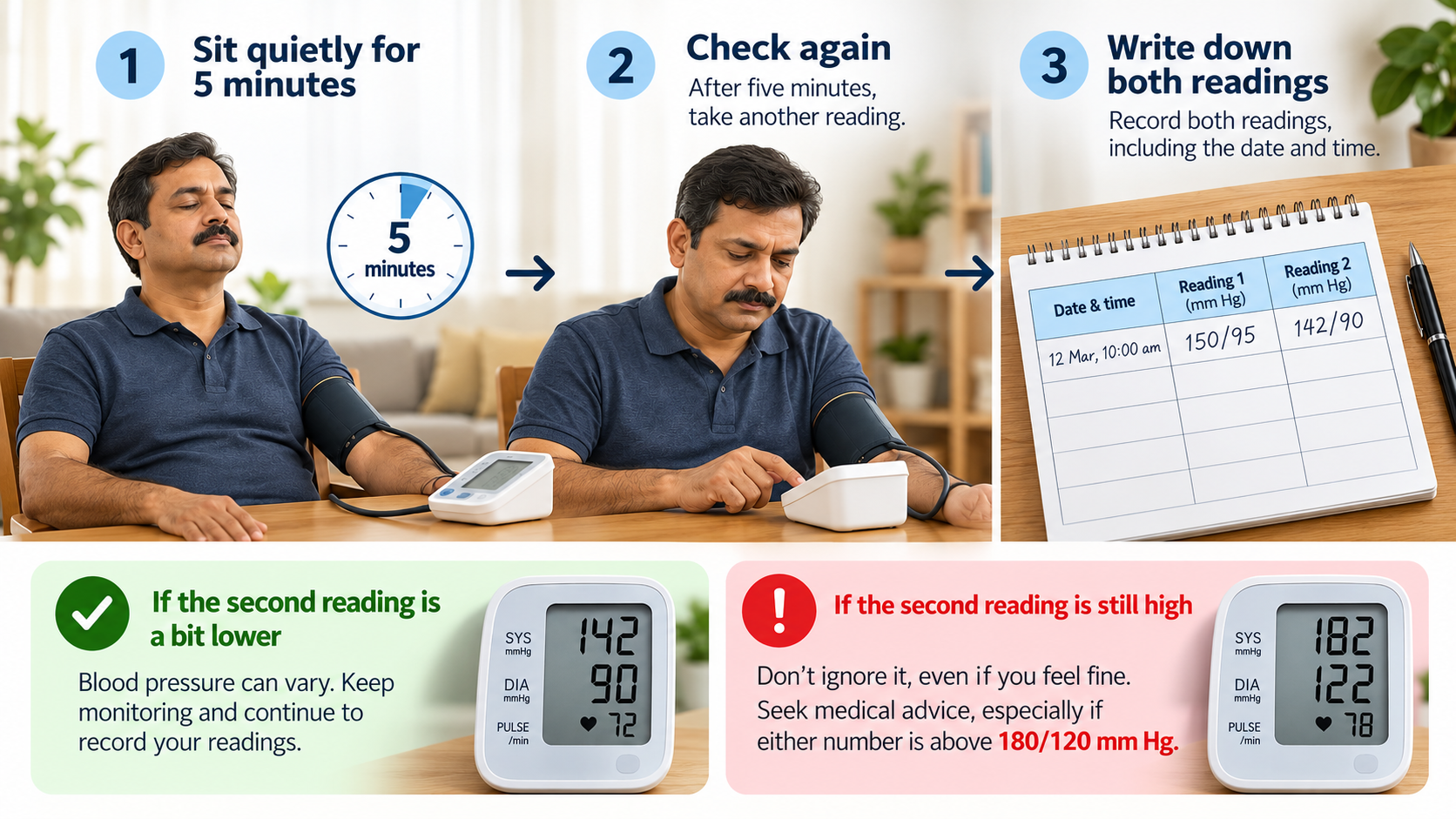
If your BP machine shows a higher reading than usual, sit quietly for five minutes before checking again. What to do when BP is high depends partly on the numbers and whether you have any symptoms.
Write down both readings. If the second one is still high, don't brush it aside just because you feel fine. How high it is matters, particularly if either number is above 180/120 mm Hg.
How do you check your blood pressure correctly?
Feeling nervous during a blood pressure check can affect the result. The CDC notes that some people have higher readings in a healthcare setting but normal readings at home. This is known as white coat hypertension.
When checking your blood pressure at home, a few details can make a difference:
Avoid caffeine, smoking and exercise for at least 30 minutes before a planned measurement.
Empty your bladder before measuring.
Sit quietly for at least five minutes, with your back supported, feet flat on the floor and legs uncrossed.
Place the cuff on your bare upper arm, using the correct size.
Support your arm on a table at heart level.
Avoid talking or moving while the monitor takes the reading.
Take two readings about one minute apart and record both.
If you've already obtained a high reading, don't delay urgent care just to complete these steps.
What can temporarily raise your blood pressure reading?
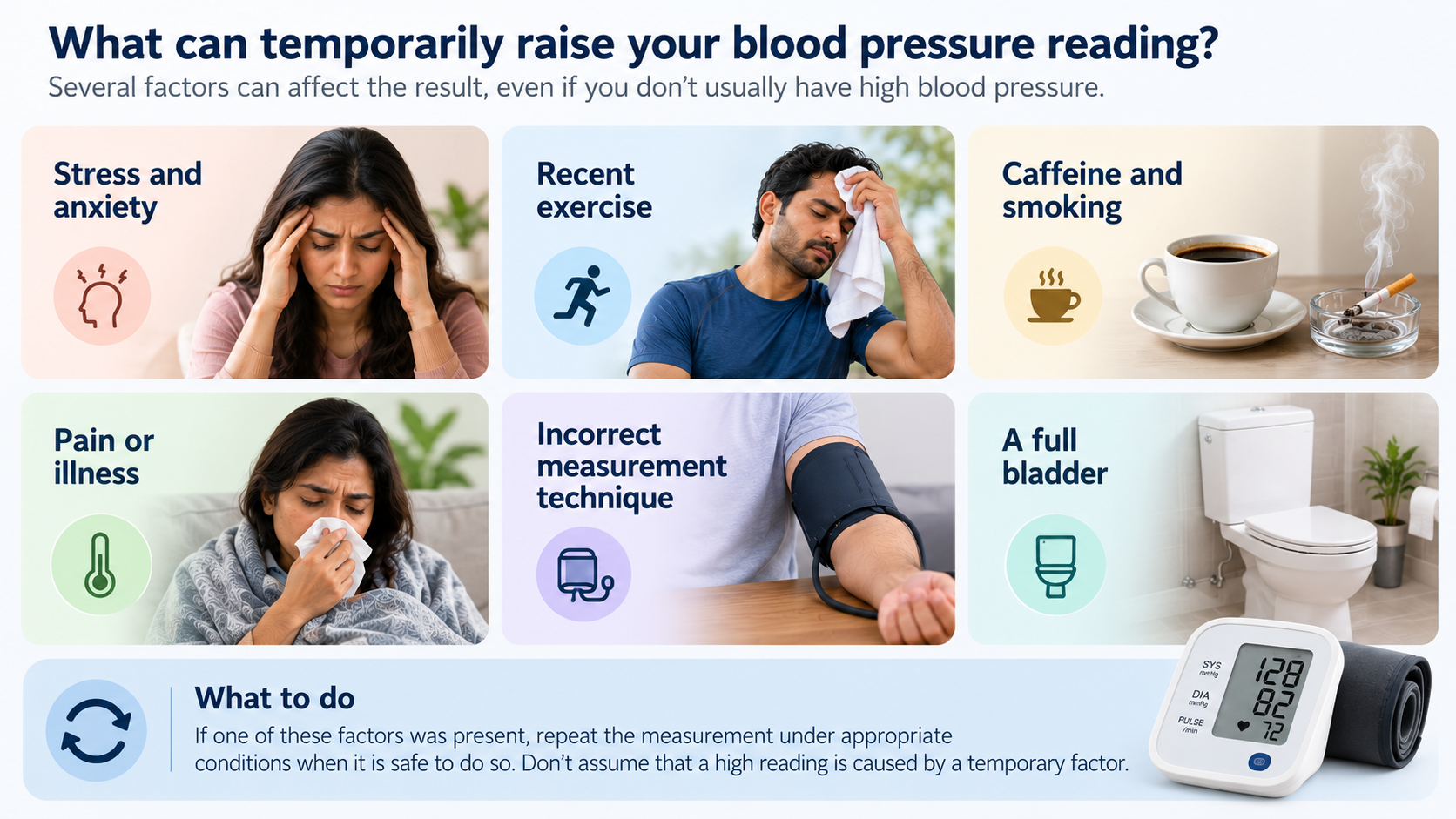
A high reading does not always reflect your usual blood pressure. Several factors can affect the result, although their presence does not automatically explain an abnormal reading.
Stress and anxiety: Feeling tense during a measurement can temporarily raise blood pressure. Worrying about the first reading may also make it harder to relax before the next one.
Recent exercise: Blood pressure changes during physical activity, so measuring immediately afterwards may not give a representative resting reading.
Caffeine and smoking: Both can temporarily affect blood pressure. Avoid them for at least 30 minutes before a planned measurement.
Pain or illness: Pain, acute illness and physical discomfort can influence blood pressure. A high reading should still be assessed in context.
Incorrect measurement technique: Talking, crossing your legs, using the wrong cuff size or allowing your arm to hang unsupported can affect the result. Measuring over clothing can also interfere with accuracy.
A full bladder: Needing to urinate can affect a reading, which is why emptying your bladder beforehand is recommended.
If one of these factors was present, repeat the measurement under appropriate conditions when it is safe to do so. Don't assume that stress or another temporary factor explains a very high reading.
What should you do if your blood pressure is extremely high?
A blood pressure reading above 180 mm Hg systolic and/or 120 mm Hg diastolic requires prompt attention. If either number is this high, wait at least one minute and check again, unless you have symptoms that require emergency care.
If the reading remains this high without symptoms: Contact a healthcare professional immediately for guidance. Don't wait for a routine appointment.
If you have chest pain, shortness of breath, back pain, sudden weakness or numbness, changes in vision or difficulty speaking: Seek emergency medical care immediately. Don't delay care to repeat the reading or try to lower your blood pressure at home.
A healthcare professional can assess the situation and determine the appropriate response. Don't take extra doses of blood pressure medicine unless specifically instructed to do so.
Pregnancy and recent childbirth require particular caution. Severe pregnancy-related hypertension can occur at lower readings than the threshold described above. Seek immediate maternity or emergency care if you have concerning symptoms or have been advised that your blood pressure is dangerously high.
Can you lower blood pressure instantly with home remedies?
Bananas, berries, and garlic can be part of a balanced diet, while lemon water, pomegranate juice, herbal teas are sometimes promoted as home remedies for blood pressure management. These dietary choices may support blood pressure management over time, but they cannot be relied on to bring down a sudden, significantly high reading.
Dr Aseem Dhall, Director and Head of Cardiac Sciences at ISIC Multispeciality Hospital, New Delhi, cautions against trying to lower blood pressure rapidly with home remedies or taking extra medicine without medical advice. In an interview with The Indian Express, he discussed the risks of persistently high readings and the importance of seeking timely medical assessment.
If your blood pressure is high, avoid these common mistakes:
Taking someone else's medicine: It may be unsuitable for you or interact with other medicines you take.
Taking an extra dose of your own medicine: This can lower blood pressure too much or cause other complications. Follow your prescribed treatment plan.
Stopping prescribed treatment: Don't stop your regular medicine or change the dose without medical advice.
Relying on an internet remedy: Trying foods, drinks or supplements instead of seeking appropriate care can delay treatment.
Some supplements may have a modest effect on blood pressure over time, but the evidence varies. If you're considering lower blood pressure supplements for long-term management, speak to your healthcare professional first, as some supplements can interact with prescribed medicines. They should not be used to treat a sudden, significantly high reading.
What if your blood pressure remains high?
Take your blood pressure readings to your next appointment, along with a list of any medicines you take. Your doctor can look at the pattern and decide whether you need further tests or a change in treatment.
If you're already taking medicine for hypertension, don't increase, reduce or stop it on your own. Let your doctor know if your readings remain high despite treatment.
FAQs
Q1. What should you do when your blood pressure suddenly rises?
Put your feet flat on the floor, support your back and sit quietly for five minutes before checking again. If the reading is still above 180/120 mm Hg, get medical advice straight away. Chest pain, trouble breathing, sudden weakness or problems with your vision or speech are reasons to seek emergency care. Don't wait to see if the reading comes down.
Q2. How to lower blood pressure quickly?
There is no guaranteed way to bring high blood pressure down within minutes at home. Sit quietly and check the reading correctly first. If it is extremely high, follow the urgent medical advice in this article rather than relying on home remedies or taking extra medicine.
Q3. How to reduce BP in 5 minutes?
Five minutes of quiet rest before taking another reading can help you check your blood pressure more accurately. It does not guarantee that your BP will fall within that time. If the reading is extremely high or you have concerning symptoms, don't delay medical care.
Q4. How to quickly lower blood pressure spikes?
What to do during a blood pressure spike depends on the reading and any symptoms. Rest and repeat the measurement if it is safe to do so. A reading that remains above 180/120 mm Hg needs immediate professional guidance, while chest pain, breathlessness or sudden neurological symptoms require emergency care. Don't try to force your blood pressure down with unprescribed medicine.
Q5. What is the 7-second trick to lower blood pressure?
You may have come across videos claiming that a simple trick can bring blood pressure down in seven seconds. There is no good evidence that such a quick fix works. Slow breathing may help you feel calmer if you're stressed, but it won't reliably bring down a dangerously high reading.
Q6. What drink lowers BP quickly?
Beetroot juice and some other drinks have been studied for their effects on blood pressure, but they aren't quick fixes for a sudden BP spike. If your reading is unusually high, don't reach for a particular drink and wait for it to work. Check the reading again and seek medical advice if it remains very high.
Q7. What are the symptoms of a blood pressure spike?
High blood pressure often causes no noticeable symptoms. A severe rise accompanied by chest pain, difficulty breathing, sudden weakness or numbness, changes in vision or difficulty speaking can signal a medical emergency. A blood pressure reading is more useful than symptoms alone for identifying high BP.
Q8. What are some simple ways to manage blood pressure?
Cut back on salt and eat more fruit and vegetables.
Exercise regularly and maintain a healthy weight.
Limit alcohol and moderate caffeine intake.
Take prescribed blood pressure medicine as directed.
Q9. Can diet and exercise help manage hypertension?
Yes. A heart-healthy diet that includes vegetables, fruit, whole grains and other nutritious foods, along with regular physical activity, can help manage hypertension. Limiting excess salt and alcohol and working towards a healthy weight may also help. These changes complement prescribed treatment when needed.
Read Also
References
https://www.icmr.gov.in/standard-treatment-workflows-stws?q=HR
https://www.fogsi.org/wp-content/uploads/2026/01/Hypertensive-Disorders-in-Pregnancy-Final-pdf.pdf
https://www.nccih.nih.gov/health/hypertension-high-blood-pressure
Disclaimer: This article is intended for informational purposes only and should not replace professional medical advice, diagnosis or treatment. Always consult a qualified healthcare professional before starting supplements or changing your prescribed medicines. If your blood pressure reading is extremely high or you experience symptoms such as chest pain, difficulty breathing or sudden weakness, seek immediate medical attention.










Comments