

5 Benefits of Applying Sunscreen and Tips to Get Maximum Protection





Last updated on 24 Mar 2026
Sunscreen is a simple yet highly effective way to protect the skin from harmful ultraviolet radiation. Regular use reduces the risk of skin cancers, including melanoma, and prevents sunburn, premature ageing, and uneven pigmentation. UVA rays contribute to ageing and collagen breakdown, while UVB rays cause sunburn and direct skin damage. Daily application of broad-spectrum sunscreen with SPF 30 or higher, along with proper reapplication, helps maintain healthy skin. For best results, sunscreen should be combined with other protective measures such as avoiding peak sun hours and wearing protective clothing.
Key Takeaways
|
5 Benefits of Applying Sunscreen
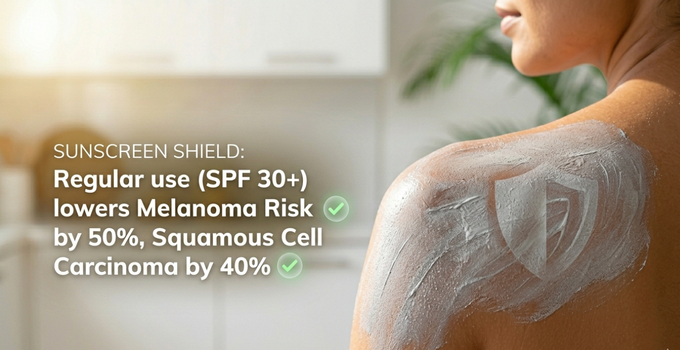
Sunlight emits two types of harmful UV rays that reach Earth: UVA and UVB. Prolonged exposure to both is the leading cause of skin cancer. According to the Skin Cancer Foundation, regular sunscreen use reduces the risk of squamous cell carcinoma by 40% and melanoma, one of the most dangerous forms of skin cancer, by 50%. Skin precancers are common in people who do not protect themselves from the sun, and if left untreated, these can progress into full skin cancer over time.
2. Prevents Sunburn
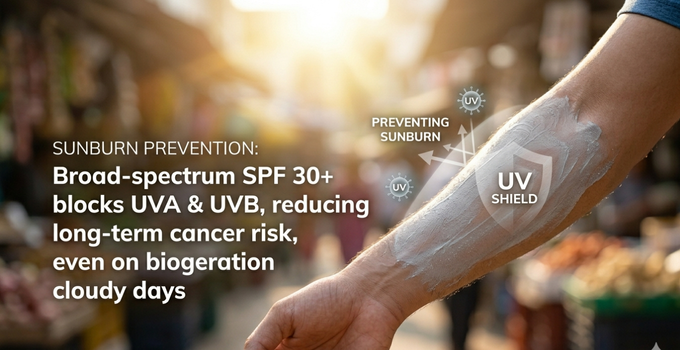
Sunburn typically appears within a few hours of excessive UV exposure, whether from the sun or artificial sources. UVB rays are the primary cause. Frequent sunburns accelerate premature skin ageing and raise the risk of skin cancer over time. The more burns you accumulate, the higher your long-term risk. Using a broad-spectrum sunscreen daily prevents this damage, including on cloudy or cool days when UV rays remain active and harmful.
3. Prevents Premature Ageing
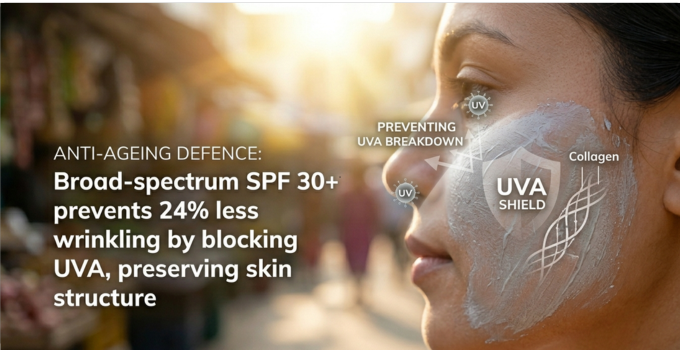
UVA rays penetrate deep into the skin and break down collagen, the structural protein that keeps skin firm and smooth. This leads to fine lines, wrinkles, and sagging over time. A 2013 study published in the Annals of Internal Medicine found that adults under 55 who used sunscreen daily showed 24% less skin wrinkling and coarsening than those who used it only occasionally. Regular broad-spectrum sunscreen use is one of the most evidence-backed anti-ageing habits available.
4. Maintains an Even Skin Tone
Sun exposure triggers the overproduction of melanin, leading to dark spots, blotchy patches, and an uneven complexion in areas regularly exposed to sunlight. Daily sunscreen application blocks the UV rays responsible for this pigmentation, preventing new spots from forming and helping existing ones from darkening further. Pairing sunscreen with vitamin C-rich foods such as oranges, guava, and kiwi, staying hydrated, and limiting alcohol consumption further support an even skin tone.
5. Preserves Skin Health
Sunscreen protects the skin's essential structural proteins, including keratin, elastin, and collagen, which keep skin smooth, firm, and resilient. It also reduces redness and inflammation caused by overexposure to UV rays. Consistent use keeps the skin barrier intact and functioning as it should, protecting against both cosmetic and clinical skin damage.
Tips to Get Maximum Benefits from Sunscreen
Choose a sunscreen that offers broad-spectrum protection against both UVA and UVB rays, with an SPF of 30 or higher. Water-resistant formulas are preferable if you plan to sweat or swim. Apply sunscreen 15 minutes before going outside to allow it to absorb properly, and reapply every two hours throughout the day, or more frequently during intense physical activity or swimming.
Do not forget your lips. Apply lip balm with at least SPF 30, as skin cancer can affect the lips, too. Match your formula to your skin type. Cream-based sunscreens work well for dry skin, while gel-based options suit oily skin better. If you have sensitive skin or allergies, consult your doctor before choosing a product.
Check the expiry date before use, and discard any sunscreen that shows changes in colour or consistency. Apply sunscreen every single day, not just when it is sunny. UV rays penetrate clouds and reach your skin even on overcast days.
Sunscreen Is Your Skin's First Line of Defence
Sunscreen is essential, but it works best as part of a broader sun protection strategy. Avoid going outdoors between 10 am and 2 pm when UV rays are at their strongest. When you do go out, wear long-sleeved clothing, a wide-brimmed hat, and sunglasses to shield as much skin as possible. Sunscreen fills the gaps your clothing cannot cover, making the combination far more effective than either alone.
Frequently Asked Questions
1. What SPF should I use daily?
SPF 30 is the minimum recommended for daily use. SPF 50 offers stronger protection and is suitable for those with fair skin, a history of skin cancer, or extended time outdoors. Higher SPF does not mean you can skip reapplication.
2. Do I need sunscreen indoors?
UVA rays penetrate glass and can reach your skin through windows. If you regularly sit near a window, applying sunscreen indoors makes sense, particularly on your face and arms.
3. Can people with dark skin skip sunscreen?
No. While higher melanin levels offer some natural protection, dark skin is not immune to UV damage, skin cancer, or sun-induced pigmentation. Sunscreen benefits all skin tones.
4. How much sunscreen should I apply?
Most adults need around half a teaspoon for the face and neck and a full teaspoon for each arm. Most people apply far less than this, significantly reducing the effective SPF.
5. Can I use the same sunscreen for my face and body?
Yes, though facial sunscreens are often formulated to be lighter and non-comedogenic to avoid blocking pores. If you have acne-prone or sensitive skin, a dedicated facial sunscreen is worth using.
What’s Worth Remembering
Sunscreen is not optional; it is a daily necessity for protecting your skin from long-term damage. UV exposure happens even on cloudy days and indoors near windows, making consistent use essential. Applying the right amount and reapplying regularly is just as important as choosing a good product. Sunscreen works best when combined with other protective habits, such as wearing protective clothing and avoiding peak sunlight hours. No matter your skin type or tone, protecting your skin from UV damage helps prevent cancer, slows ageing, and maintains overall skin health.
Read Also
References
World Health Organisation. Ultraviolet radiation and health [Internet]. 2023 [cited 2026 Mar 21]. Available from: https://www.who.int/news-room/questions-and-answers/item/radiation-ultraviolet-(uv)
Hughes MCB, Williams GM, Baker P, Green AC. Sunscreen and prevention of skin ageing: randomised trial. Ann Intern Med. 2013;158(11):781-90. Available from: https://www.acpjournals.org/doi/10.7326/0003-4819-158-11-201306040-00002
National Health Service. Sunscreen and sun safety [Internet]. 2023 [cited 2026 Mar 21]. Available from: https://www.nhs.uk/live-well/seasonal-health/sunscreen-and-sun-safety/
Disclaimer: The content in this blog is for general informational purposes only and is not a substitute for professional medical advice, diagnosis, or treatment. Always consult your doctor or a registered dietitian before making any changes to your diet, especially if you have a medical condition or are taking prescribed medication. While the information is based on trusted sources, individual needs and results may vary. MrMed does not promote or endorse any specific food or treatment mentioned unless explicitly stated.












Comments