

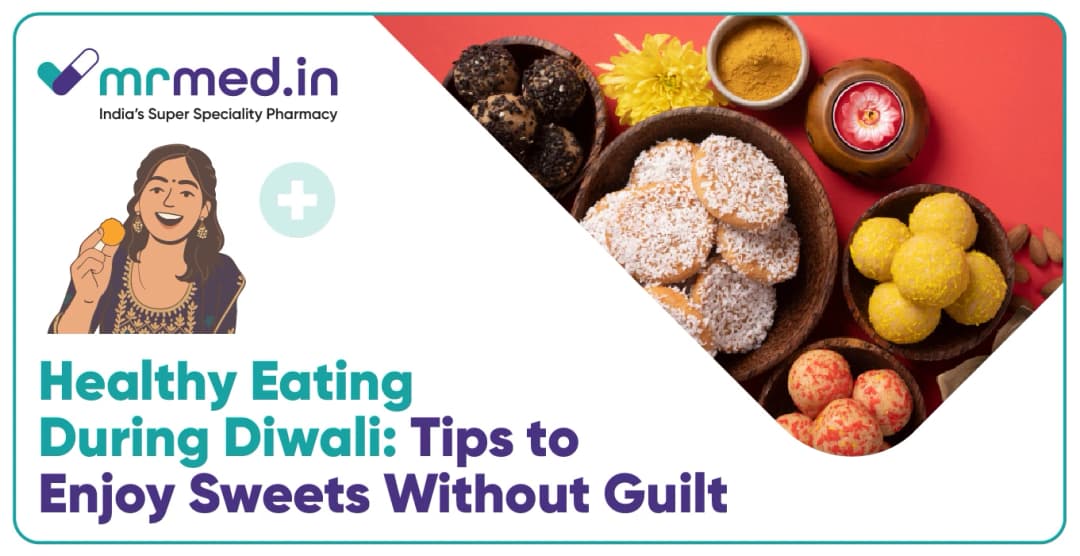
Healthy Eating During Diwali: Tips to Enjoy Sweets Without Guilt





Last updated on 02 Jan 2026
Diwali, the festival of lights, is also a festival of flavours, warmth, and togetherness. From traditional mithai to rich snacks, every home fills with tempting aromas that symbolise celebration. But alongside the joy comes a familiar concern about overindulgence. As we light diyas and exchange sweets, it’s essential to balance festive treats with mindful choices that protect our health and happiness. This Diwali, celebrate with love, moderation, and smarter eating habits that let you enjoy every bite guilt-free.
The Link Between Festivity and Overindulgence
During the festive season, it’s easy to lose track of portion sizes. With so many sweets, fried snacks, and sugary beverages, calorie intake can double or even triple compared to normal days. Experts say that many people gain 1–2 kilograms during Diwali due to high-sugar and high-fat consumption. What makes it more challenging is that traditional sweets are often loaded with refined sugar, ghee, and mawa ingredients that, while delicious, can strain the body if eaten in excess.
Enjoying sweets doesn’t have to mean giving up health. The key lies in moderation, ingredient swaps, and staying mindful of what you eat.
Smart Ways to Enjoy Sweets Without Guilt
Here are some easy and practical ways to make your Diwali food celebrations enjoyable yet balanced:
Go for portion control – You don’t need to avoid sweets altogether. Start with smaller servings and savour the taste slowly. This helps you feel satisfied without overeating.
Choose smart substitutes – When preparing Healthy Diwali Sweets, use natural sweeteners like jaggery, dates, figs, or stevia instead of refined sugar.
Include nuts and seeds – Almonds, walnuts, chia, and flaxseeds add crunch and nutrition. They are also common ingredients in Low Calorie Diwali Sweets that provide healthy fats and protein.
Try baked over fried – Opt for baked versions of chaklis, mathris, or samosas. These Healthy Diwali Snacks retain flavour while cutting down on oil and calories.
Add fruits – Fresh fruits like bananas, apples, or pomegranates are great additions to homemade sweets. They enhance sweetness naturally and support digestion.
Watch your timings – Have sweets in the daytime instead of late at night when metabolism slows. It helps prevent sugar spikes and fat storage.
Balance with activity – Incorporate small exercises like walking or yoga into your Diwali routine as part of your Diet and fitness tips to stay active amidst celebrations.
Homemade Alternatives for a Healthier Diwali
Dr Shikha Sharma, a well-known Indian nutritionist and founder of Dr Shikha’s NutriHealth, emphasises that: “Festivals like Diwali are not meant to promote restriction, but awareness. The key is to strike a balance between enjoying sweets in moderation, using natural ingredients like jaggery and dry fruits, and staying hydrated. Mindful eating during celebrations can prevent post-festival fatigue and sugar spikes.
When you prepare sweets at home, you control the ingredients, making it easier to create Guilt-free Diwali sweets. Here are some traditional sweets you can make healthier:

Oats Ladoo: Use oats, jaggery, and nuts as healthier alternatives to sugar and ghee.
Dry Fruit Barfi: Rich in fibre, magnesium, and good fats from nuts and dates.
Ragi Halwa: A power-packed dessert that fits well in a Diwali Diet Plan for those monitoring weight.
Coconut Balls: Made with coconut, honey, and cardamom, these are ideal Diwali Sweets Without Sugar.
Baked Shakkarpara: Swap frying for baking to enjoy crispy, low-fat treats.
Making Homemade healthy Diwali sweets helps families enjoy authentic flavours while minimising harmful fats and refined sugars.
Understanding Sugar and Portion Control
According to ICMR, encourage moderation in festive eating by limiting your intake of foods high in sugar, salt, and fat.
Sugar isn’t inherently bad; it’s the excess that causes harm. During Diwali, controlling sugar intake becomes crucial, especially for people with diabetes or those watching their weight. You can follow these Ways to control sugar intake during Diwali:
Opt for Low Glycemic Index (GI) sweets, such as til ladoo, besan barfi, or moong dal halwa made with jaggery.
Keep an eye on hidden sugars in packaged mithai and desserts.
Pair sweets with fibre-rich foods to slow sugar absorption.
Drink water or herbal tea after meals instead of sugary beverages.
Opting for Diwali Low Glycemic Index Sweets helps maintain steady blood sugar levels and prevents fatigue after eating sweets.
The Role of Balance: Moderation, Hydration, and Mindful Eating
Maintaining a Safe and Healthy Diwali isn’t about restriction; it’s about balance.
Drink at least 2–3 litres of water daily to flush out excess sugar and fat.
Include salads, sprouts, and fruits alongside rich foods to aid digestion.
Practice mindful eating by enjoying every bite and stopping when you’re comfortably full.
Avoid eating under stress or while distracted, as it can lead to overconsumption.
Incorporate healthy eating tips during Diwali, such as using smaller plates, limiting second helpings, and sharing desserts with family members.
Keeping Your Heart and Weight in Check
Excess sugar and fried food can increase cholesterol and triglyceride levels. To not gain weight during Diwali, try these small yet effective strategies:
Start your day with a light exercise, such as walking, dancing, or yoga.
Avoid skipping meals before parties, as it can lead to overeating.
Choose homemade snacks instead of store-bought fried options.
Include yoghurt or curd in meals to improve digestion.
Practice portion control with every dish you enjoy.
Following these Nutrition tips for Diwali celebrations ensures your heart stays healthy while your taste buds stay happy.
Easy Swaps for a Healthier Diwali Menu
Traditional Choice | Healthier Alternative | Benefit |
Gulab Jamun (deep-fried) | Baked or air-fried Jamun | 40% fewer calories |
Sugar-laden Ladoo | Oats or dry fruit Ladoo | Rich in fibre and nutrients |
Samosa | Baked samosa with whole wheat crust | Less oil, more fibre |
Fried Namkeen | Roasted chana or makhana | High protein, low fat |
Sugar syrup Jalebi | Jaggery jalebi | Natural sweetener, lower GI |
Mindful Celebration: Protecting Health During Festivities
Diwali is not only about food, it’s about energy, family, and joy. To enjoy a Safe and Healthy Diwali, keep these small yet powerful steps in mind:
Avoid prolonged periods of fasting before meals, as it can trigger overeating.
Do not skip sleep; fatigue increases sugar cravings.
Stay hydrated before and after meals.
Add fibre-rich foods like vegetables and whole grains to balance heavy dishes.
Maintain a Diwali Diet Plan if you have diabetes or hypertension.
Balanced celebrations reduce stress and enhance well-being, making the festival enjoyable for everyone.
How to Manage Post-Diwali Detox
After the celebrations, a gentle detox helps restore balance.
Start the morning with warm water and lemon.
Eat light meals with soups and steamed vegetables.
Avoid consuming leftovers that are heavy in sugar or oil.
Go for a brisk walk daily to boost metabolism.
This phase helps your body recover and renew energy naturally.
FAQs
1. How can I enjoy sweets during Diwali without feeling guilty?
You can enjoy sweets in moderation by choosing smaller portions, avoiding overeating, and making healthier versions with jaggery, nuts, or oats instead of refined sugar.
2. What are some healthy sweets I can make for Diwali?
You can prepare healthy Diwali sweets like oats ladoo, dry fruit barfi, ragi halwa, baked shakkarpara, or coconut balls, all made with less sugar and ghee.
3. How can I control my sugar intake during Diwali?
Choose low glycemic index sweets, avoid sugary drinks, drink plenty of water, and balance sweets with fibre-rich foods like fruits or salads to slow sugar absorption.
4. What is the best way to avoid weight gain during Diwali?
Stay active with short walks or light exercise, avoid skipping meals, eat slowly, and include healthy snacks like roasted chana or makhana in your Diwali diet plan.
5. Are sugar-free or jaggery-based sweets really healthier?
Yes, when consumed in moderation. Jaggery and natural sweeteners are less processed and provide minerals, but portion control is still important to avoid excess calories.
Final Thoughts
Diwali is a celebration of togetherness and gratitude, not guilt. You don’t need to give up sweets or snacks to stay healthy; you just need balance, awareness, and smarter choices. With a few mindful swaps and moderation, you can truly have a Happy Diwali that’s good for both your body and soul.
Celebrate the light within and around you and let your plate reflect nourishment, joy, and care.
Read also
References
Guilt-Free Diwali Sweets: 5 Traditional Recipes with a Healthy Twist
How to Manage Diabetes During Diwali: Smart Sweet Choices & Snack Tips for a Healthier Celebration
Disclaimer: The content in this blog is for general informational purposes only and is not a substitute for professional medical advice, diagnosis, or treatment. Always consult your doctor or a registered dietitian before making any changes to your diet, especially if you have a medical condition or are taking prescribed medication. While the information is based on trusted sources, individual needs and results may vary. MrMed does not promote or endorse any specific food or treatment mentioned unless explicitly stated.











Comments