

Gut Health and the Microbiome: Why Personalised Nutrition Is Replacing Generic Diets





Last updated on 14 Jul 2026
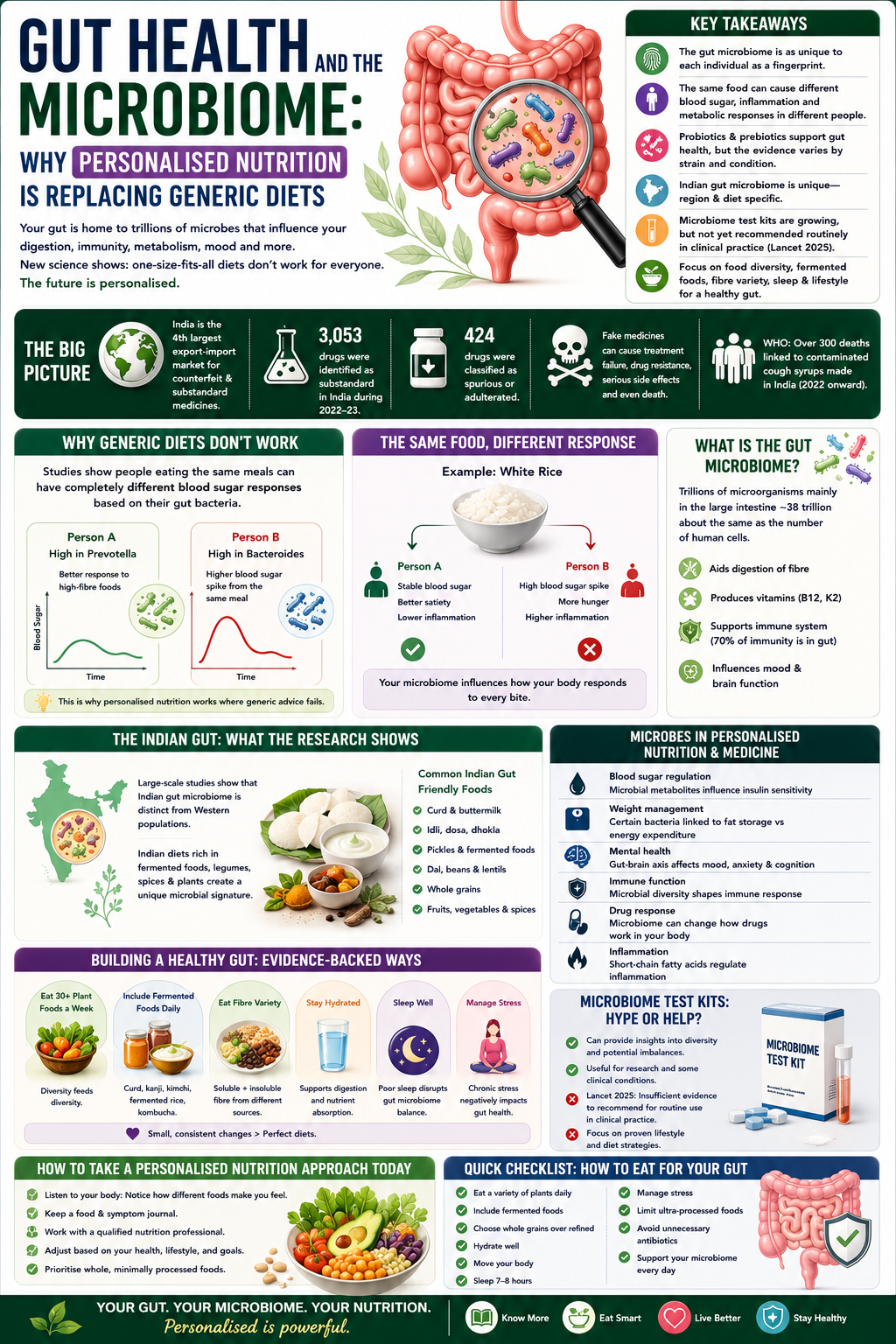
For many decades, nutrition recommendations have been based on a basic assumption: that a person basically has the same characteristics as everyone else. Consume more fibre. Drink water. Reduce sugar. While this nutrition advice is not wrong, recent findings show that people have widely differing results from identical meals.
This is the story of gut health, the gut microbiome, and why personalised nutrition is moving from a wellness trend into genuine clinical science and what it means for how you eat.
Key Takeaways
|
What Is the Gut Microbiome?
The gut microbiome includes trillions of microorganisms that reside mainly in the large intestine. To put things into perspective, the estimated number of microorganisms is around 38 trillion, about the same as the number of human cells in the body. In the years from 2014 to 2024, approximately 5.82 times growth of scientific literature about the gut microbiome has been observed; from the estimated thousands of texts published annually, it has reached thousands of papers per year, and hence became one of the areas of science with the fastest-growing body of knowledge.
The microbes in the body are more than just passive residents. A wide range of studies suggests they play a crucial role in maintaining digestive health, immune function, metabolism, and mood and mental function. Thus, they assist in the digestion of fibre, which is indigestible in humans, synthesise vitamins such as B12 and K2, and aid in the formation of the immune system.
Dysbiosis is an imbalance of microbial ecosystem, which is linked to various diseases such as irritable bowel syndrome and inflammatory bowel disease, etc.
Why Generic Diets Are Not Working for Everyone
Most national or international dietary recommendations are based on population averages. In other words, these recommendations provide general steps that generally suit most people. Unfortunately, although this is an advantage for public health, it does not take into account that individual microbiomes are unique.
An important study performed by Weizmann Institute scientists showed that people aged 1-70 who consumed identical meals had totally different blood sugar reactions. In particular, one participant's glucose was spiking after eating bread, as if he or she had consumed sugar. Another person's glucose was high after eating tomatoes. The composition of the individual's microbiome was the main factor in these differences.
This is another reason why personalised nutrition works, while generic dietary advice fails: the same rice affects a person with a high abundance of Prevotella bacteria differently than it would a person with predominantly Bacteroides bacteria in their gut. For an individual, a particular fermented product would not be beneficial, since they already consume foods rich in that microbiota.
The Indian Gut: What the Research Shows
The most expansive gut microbiome investigation, conducted in India, revealed that the properties of different microbes depend on the geographical area and the types of food eaten. The gut microbiota of Indians differs from that of Europeans and Americans, making it impossible to apply guidelines based on Western research directly to India.
This is important because most microbiome studies that inform current rules for healthy eating habits were conducted in Europe and North America. More specifically, Indian diets include many fermented food products (including but not limited to curd, idli, dosa, and pickled foods), beans, spices containing bioactive substances, and plants, which contribute to the emergence of a microflora of its own kind that is still being studied and analysed.
Microbes in Personalised Nutrition and Medicine
Microbes in personalised nutrition and medicine are being studied across a growing number of conditions. Current research shows that the microbiome influences:
Area | How the Microbiome Plays a Role |
Blood sugar regulation | Microbial metabolites influence insulin sensitivity independently of diet |
Weight management | Certain bacterial ratios are associated with fat storage versus energy expenditure |
Mental health | The gut-brain axis links microbiome composition to anxiety, depression, and cognitive function |
Immune function | 70 per cent of the immune system is located in the gut. Microbial diversity shapes immune calibration |
Drug response | The microbiome metabolises certain medications differently, affecting efficacy and side effects |
Inflammation | Short-chain fatty acids produced by gut bacteria regulate systemic inflammatory pathways |
The article “The gut-microbiome connects nutrition and human health” published in Nature Reviews Gastroenterology and Hepatology in 2025 co-authored by Spanish National Research Council, University College Cork and Weizmann Institute researchers presents the latest information from this science in a clinical setting.
Probiotics and Prebiotics: What the Evidence Actually Says
Probiotics are live beneficial bacteria, and prebiotics are the dietary fibres that feed them are the most widely sold tools for supporting gut health. But the evidence base is more nuanced than the marketing suggests.
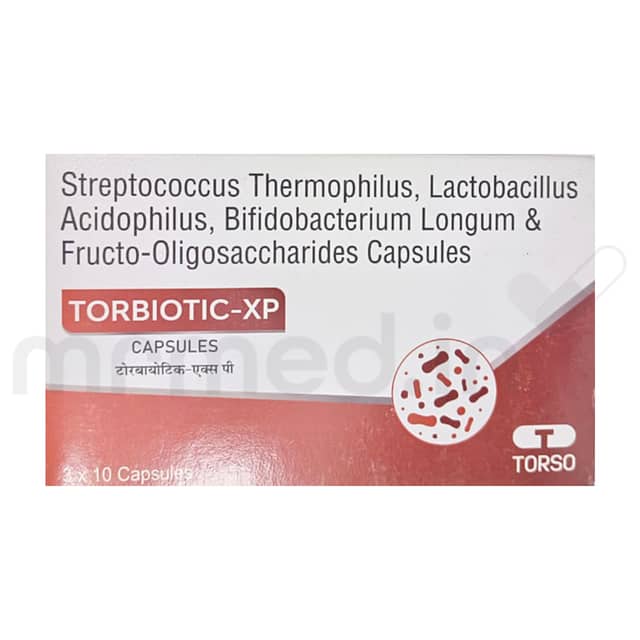
Best probiotics for gut health depend entirely on the strain and the condition:
Strain | Evidence Base | What It May Help |
Lactobacillus rhamnosus GG | Strong (multiple RCTs) | Antibiotic-associated diarrhoea, childhood diarrhoea |
Bifidobacterium longum | Moderate | IBS symptoms, constipation |
Saccharomyces boulardii | Strong | C. difficile infection, traveller's diarrhoea |
Lactobacillus acidophilus | Moderate | Lactose intolerance, vaginal health |
Multi-strain combinations | Emerging | General microbiome diversity |
The key issue here is that the strains of probiotics you see marketed for "general gut health" and those used for particular medical conditions carry very different levels of evidence for effectiveness. The strain of probiotic matters, the amount of probiotics in the dosage matters, and how long you take the probiotics matters.
Onions, garlic, bananas, Jerusalem artichokes, oats, beans, and asparagus contain prebiotics that sustain the beneficial bacteria that you already have. These foods release short-chain fatty acids through fibres they contain, such as butyrate, which supply energy to cells lining the colon and carry out an anti-inflammatory action. This is precisely why the recommendation to eat a wide diversity of plant foods in one's diet is consistently the most evidence-based advice these days.
What Is a Microbiome Test and Is It Worth It?

The microbiome test involves collecting a stool sample, which is then analysed for the various bacterial species present in your intestine. There are many companies providing this facility in India and globally, and even offering individualised dietary recommendations.
The science is for real. The technology is genuinely evolving. It has been established that the 2025 International Consensus published in The Lancet Gastroenterology and Hepatology concludes that there is "insufficient evidence to advocate for routine microbiome tests in clinical usage." The main drawback is that there is no definitive, validated definition of what constitutes a "healthy" microbiome.
According to the microbiome test market size, the market was valued at USD 18.62 billion in 2026. This commercial viability indicates genuine public interest, but the test result showing that your Firmicutes-to-Bacteroides ratio is skewed does not suffice to support a scientific dietary prescription.
What Are the Top 5 Tips for Gut Health?
Dr Shoba Suri, Senior Fellow at the Observer Research Foundation and author of India's most comprehensive 2025 policy review of fermented foods, confirms that the Dietary Guidelines for Indians 2024 now explicitly encourage fermented food consumption, yet these foods remain underrepresented in food policy and public awareness, despite their well-documented gut microbiome benefits.
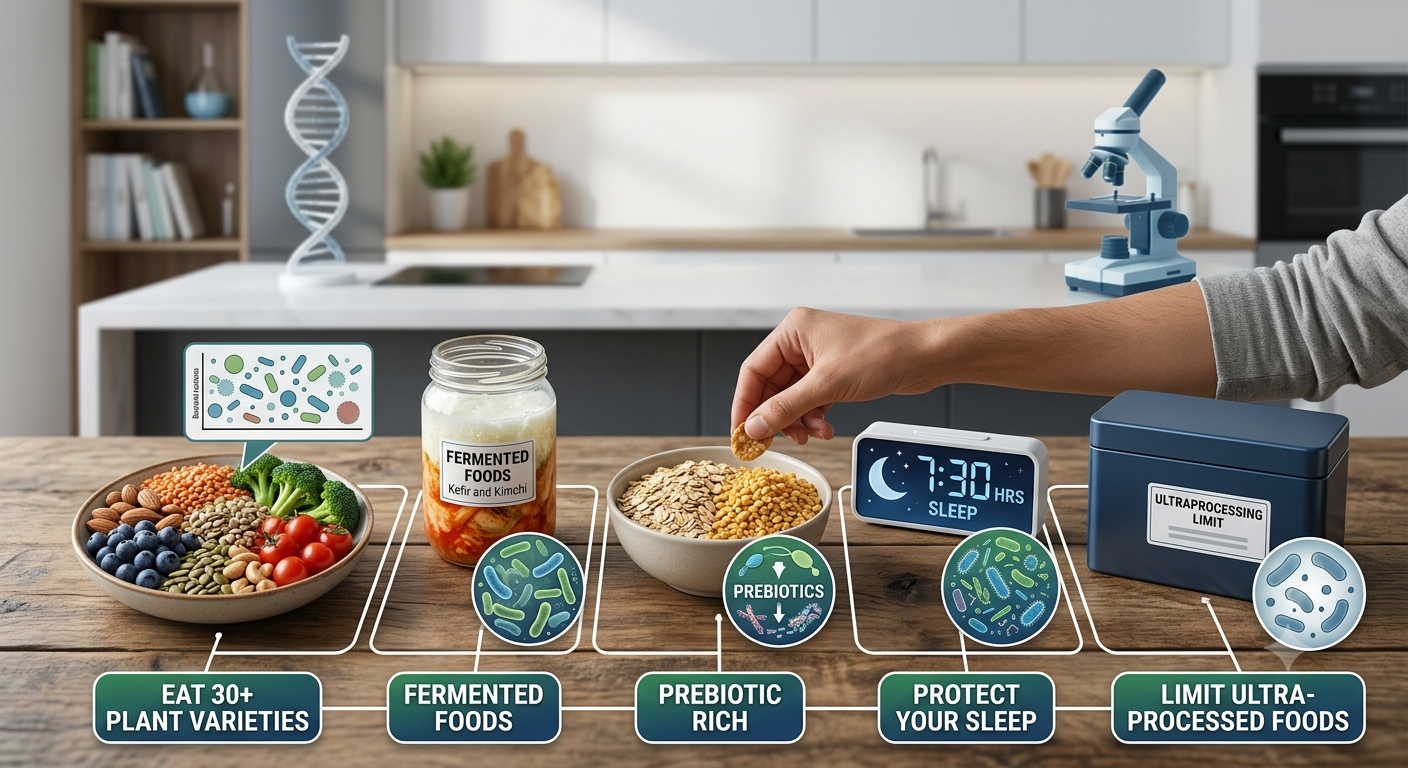
The evidence converges clearly on five practices. What are the top 5 tips for gut health? Here they are, ranked by evidence strength:
1. Eat 30 or more different plant foods per week. A landmark study from the American Gut Project found that people eating 30-plus types of plants weekly had significantly more diverse microbiomes than those eating 10 or fewer. Diversity of input drives diversity of the microbiome.
2. Include fermented foods daily. A 2021 Stanford study found that a high-fermented-food diet increased microbiome diversity and reduced inflammatory markers more effectively than a high-fibre diet with yoghurt, kefir, curd, kimchi, and kombucha all showing measurable effects.
3. Eat prebiotic-rich foods. Dal, rajma, oats, garlic, onions, and ripe bananas feed the bacteria already living in your gut. Combining these with probiotic foods creates a synergistic effect known as a synbiotic.
4. Protect your sleep. The gut microbiome follows circadian rhythms consistently poor sleep measurably disrupts microbial composition within days. Seven to nine hours of consistent sleep is one of the most underappreciated tools for digestive health.
5. Limit ultra-processed foods. Emulsifiers, artificial sweeteners, and preservatives commonly found in ultra-processed foods have been shown to disrupt the gut mucosal layer and alter microbial balance independently of calorie or sugar content.
Why Personalised Nutrition Is Replacing Generic Diets
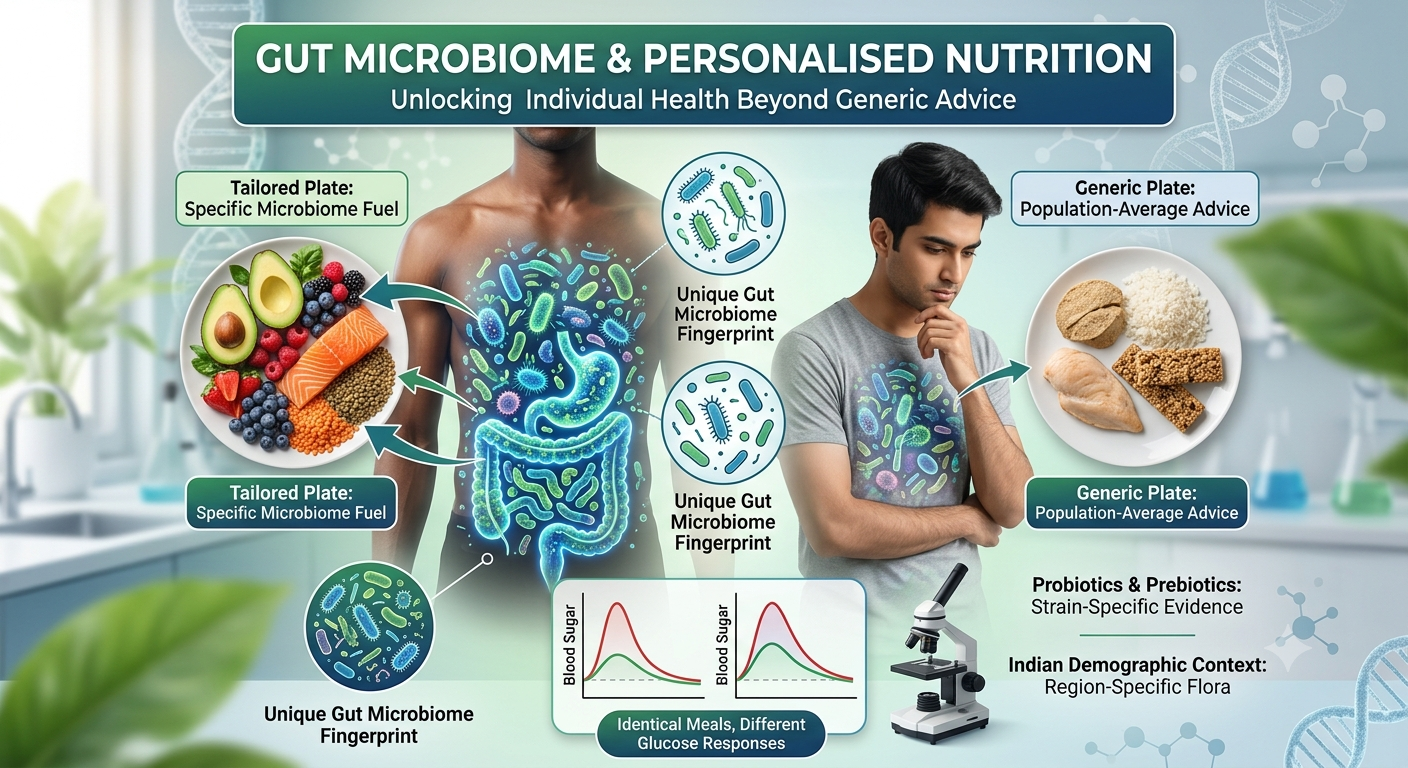
Personalised nutrition is taking over from generic diets, not because generic diets were incorrect. It means scientists have now discovered how the same diet can cause different health effects. The future microbiome diet will be based on unique microbial characteristics, genetics, food interactions, and lifestyle rather than on the general characteristics of a population.
We have to admit that this process is not yet complete, and scientific evidence for microbial-guided nutrition is still being established. However, the tendency is clear. The fastest-growing field in nutritional medicine is not the discovery of a new superfood but rather the realisation that the microbiome is the most important determinant of diet's effects on the body.
FAQs
Q1. What are the top 5 tips for gut health?
Eat 30-plus different plant foods weekly, include fermented foods daily, eat prebiotic-rich dal and oats, prioritise sleep, and limit ultra-processed foods. These five practices have the strongest consistent evidence for improving microbiome diversity.
Q2. What is the best probiotic for gut health?
It depends on what you need it for. Lactobacillus rhamnosus GG for antibiotic-associated diarrhoea, Saccharomyces boulardii for gut infections, Bifidobacterium longum for IBS. "General gut health" probiotics have weaker evidence; strain matters enormously.
Q3. Is a microbiome test worth taking?
The technology is improving, but a 2025 Lancet consensus found insufficient evidence to routinely recommend it in clinical practice. Focus on dietary diversity first, it is more evidence-based than any test available today.
Q4. What foods are best for gut health?
Fermented foods (curd, idli, dosa, pickle), prebiotic-rich foods (dal, garlic, onion, banana, oats), and a wide variety of coloured vegetables and fruits. Indian traditional diets are, in many ways, already built for gut health.
Q5. Can poor gut health affect mental health?
Yes, through the gut-brain axis. The microbiome produces neurotransmitters, including serotonin, and communicates directly with the brain via the vagus nerve. Dysbiosis has been linked to anxiety, depression, and cognitive changes in multiple clinical studies.
Final Thoughts
Although the science surrounding the gut microbiome is incomplete, we have acquired enough knowledge to take action. To promote gut health, one does not need an expensive test or a proprietary supplement. Instead, one can accomplish this by engaging with a variety of foods, including fermented foods, consuming fibrous foods, getting various forms of rest, and following a diet plan in accordance with the unique requirements of the ecosystem of microorganisms in one’s gut.
The transition from generic diets to personalised nutrition is underway, not due to the ineffectiveness of generic nutrition advice but because of the new understanding of the problem. One should begin with following the scientifically proven facts and keep going as the new technology develops.
Read Also
https://www.mrmed.in/health-library/health-care/antibiotics-vs-probiotics-effect-on-gut
https://www.mrmed.in/health-library/health-care/best-multivitamins-for-women-in-india
https://www.mrmed.in/health-library/health-care/best-multivitamin-for-men
References
Sanz Y, Cryan JF, Deschasaux-Tanguy M, Elinav E, Lambrecht R, Veiga P. The gut microbiome connects nutrition and human health. Nat Rev Gastroenterol Hepatol [Internet]. 2025 Aug [cited 2026 Jul 09];22(8):534-555. Available from: https://pubmed.ncbi.nlm.nih.gov/40468006/
Gut Microbiota for Health editorial team [Internet]. 2026 Jan 09 [cited 2026 Jul 09]. Key advances in gut microbiome research during 2025. Available from: https://www.gutmicrobiotaforhealth.com/key-advances-in-gut-microbiome-research-during-2025/
Top Doctor Magazine [Internet]. 2026 May 15 [cited 2026 Jul 09]. Microbiome testing and personalised nutrition: what works in 2026. Available from: https://topdoctormagazine.com/news/microbiome-testing-personalized-nutrition/
Disclaimer: This article is for general informational and educational purposes only and does not constitute medical or nutritional advice. If you have a diagnosed gastrointestinal condition or are considering significant dietary changes, please consult a qualified gastroenterologist or registered dietitian.














Comments