








Quick Summary
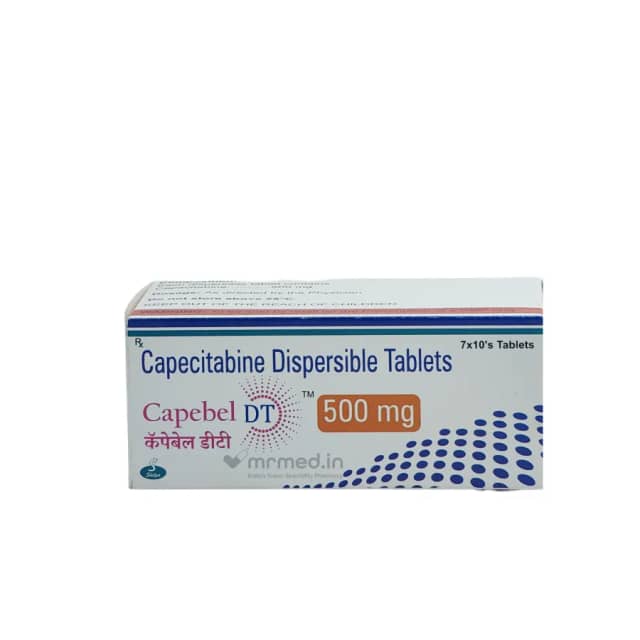
Capebel DT 1000mg Tablet 30's

Last updated on 29 Sep 2026 | 05:13 AM (IST)
₹3543
MRP: ₹12654
(You Save ₹9111)
30 TABLET(s) IN A BOTTLE


72% OFF
₹3543
MRP: ₹12,654.00
Inclusive of all taxes
72% Off



Dispatch: Today
Care delivered without the wait. Your order is prioritized for rapid dispatch to ensure it reaches your doorstep on time.
Substitutes
Xelodace DT 1000mg Tablet
WEMBRACE BIOPHA...
₹ 219.70/tablet
87% costlier
Capebel DT 1000mg Tablet
SHILPA MEDICARE...
₹ 118.40/tablet
1% cheaper
Introduction
Capebel DT 1000mg Tablet contains Capecitabine, an anticancer medicine belonging to the fluoropyrimidine group. It is available as a dispersible tablet and is designed to be dissolved in water before taking.
Capebel DT 1000mg Tablet is a prescription medicine used for specific types of metastatic colorectal cancer and metastatic breast cancer. The dose and treatment schedule are decided by the oncologist based on the type of cancer, overall health and other medicines being used.
Uses
Capebel DT 1000mg Tablet is used for:
Metastatic colorectal cancer: Cancer of the colon or rectum that has spread to other parts of the body.
Metastatic breast cancer: Used after failure of treatment with paclitaxel and an anthracycline-containing chemotherapy regimen, as prescribed by an oncologist.
How Capebel DT 1000mg Tablet Works
Capebel DT 1000mg Tablet contains Capecitabine, which is converted in the body into 5-fluorouracil (5-FU), an active anticancer medicine.
5-FU interferes with the production of DNA and RNA, which cancer cells need to grow and multiply. This slows cancer cell growth and can lead to the death of cancer cells.
Interaction of Capebel DT 1000mg Tablet with Other Medicines
Tell your doctor about all prescription medicines, over-the-counter medicines, vitamins, supplements and herbal products you take. Some medicines can affect how Capecitabine works or increase the risk of side effects.
Brivudine: Do not take brivudine together with Capecitabine. This interaction can cause severe and potentially fatal toxicity. A suitable interval is required between brivudine and Capecitabine treatment.
Other Capecitabine-containing medicines: Do not take Capebel DT together with another medicine containing Capecitabine unless specifically prescribed by your doctor. This could result in receiving more Capecitabine than intended.
Warfarin and other coumarin anticoagulants: Capecitabine can increase the effect of these blood-thinning medicines and may increase the risk of bleeding. Your doctor may monitor your INR or prothrombin time more closely.
Phenytoin: Capecitabine may increase phenytoin levels and the risk of phenytoin toxicity. Monitoring may be required.
Allopurinol: Concomitant use should be avoided unless specifically advised by your doctor.
Folinic acid or folic acid: These may increase the toxicity of Capecitabine in some treatment regimens. Tell your doctor if you take them.
Storage Conditions
Store Capebel DT 1000mg Tablet according to the storage instructions provided on the product packaging.
Keep the tablets in their original packaging and protect them from moisture and direct heat or light.
Keep the medicine out of the reach and sight of children.
Do not use the medicine after the expiry date.
How to Use
Take Capebel DT 1000mg Tablet exactly as prescribed by your oncologist. The dose and treatment schedule depend on the type of cancer, your body size, kidney function and other medicines used with Capecitabine.
Capebel DT is a dispersible tablet. Place the prescribed tablet or tablets in approximately 100 mL of drinking water, allow them to disperse and then drink the resulting solution. The product was developed to allow Capecitabine to be taken as a dispersion in water, which may be useful for people who have difficulty swallowing tablets.
Capecitabine is generally taken with food, within 30 minutes after a meal, according to the prescribed treatment schedule. Do not change the dose or treatment cycle without medical advice.
If you miss a dose, do not take an extra dose to make up for it. Take the next dose at the prescribed time and inform your treatment team.
Safety Advice
Pregnancy
Capecitabine can harm an unborn baby and should not be used during pregnancy. Women who can become pregnant should use effective contraception during treatment and for the recommended period after the final dose.
Breast Feeding
Breastfeeding should be discontinued during Capecitabine treatment and for the recommended period after the final dose because a risk to the breastfed child cannot be excluded.
Lungs
Tell your doctor if you have a significant lung condition or develop new breathing difficulty during treatment. Seek medical attention if breathing problems are severe or sudden.
Liver
Tell your doctor if you have liver disease or abnormal liver function tests. Capecitabine can affect liver function, and monitoring may be required during treatment.
Alcohol
There is no specific alcohol interaction established for everyone. Ask your doctor whether alcohol is appropriate during treatment, particularly if you have liver problems or significant treatment-related nausea, vomiting or diarrhoea.
Driving
Capecitabine may cause dizziness, fatigue or nausea, which can affect concentration. Avoid driving or operating machinery if you experience these effects.
Side Effects
Capebel DT 1000mg Tablet may cause side effects, although not everyone experiences them.
Common side effects:
Diarrhoea
Nausea
Vomiting
Abdominal pain
Mouth sores or stomatitis
Hand-foot syndrome, causing redness, swelling, pain or peeling of the hands and feet
Fatigue
Loss of appetite
Rash
Anaemia
Dizziness
Dehydration
Serious side effects:
Severe or persistent diarrhoea, especially with dehydration
Severe hand-foot syndrome with blistering, peeling or significant pain
Severe infection or fever associated with low blood cell counts
Chest pain, irregular heartbeat or other symptoms of serious heart problems
Severe liver problems, including yellowing of the skin or eyes or dark urine
Severe allergic reactions, including swelling of the face, lips or throat or difficulty breathing
Severe skin reactions such as blistering, peeling or widespread skin damage
Severe toxicity associated with dihydropyrimidine dehydrogenase (DPD) deficiency
Seek prompt medical attention if you develop severe diarrhoea, chest pain, difficulty breathing, significant skin reactions, signs of infection or other severe symptoms.
Expert Tips
Take Capebel DT 1000mg Tablet exactly as prescribed by your oncologist.
Take the medicine with food and follow the treatment cycle given by your doctor.
Use the prescribed amount of water when preparing the dispersible tablet and drink the entire solution.
Do not change the dose or treatment schedule yourself.
Tell your doctor if you develop severe diarrhoea, vomiting, mouth sores or hand-foot syndrome.
Your doctor may monitor your blood counts, kidney function and liver function during treatment.
Tell your doctor if you are taking warfarin, phenytoin, brivudine, allopurinol or other medicines.
Inform your doctor if you have kidney, liver or heart problems before starting treatment.
DPD deficiency can increase the risk of severe Capecitabine toxicity. Follow your oncologist's advice regarding pre-treatment testing.
If you miss a dose, do not take an extra dose. Contact your treatment team if you are unsure what to do.
FAQs
Q1.
What is Capebel DT 1000mg Tablet used for?
Capebel DT 1000mg Tablet is used to treat metastatic colorectal cancer and certain cases of metastatic breast cancer after previous chemotherapy has failed, as prescribed by an oncologist.
Q2.
How should I take Capebel DT 1000mg Tablet?
Capebel DT 1000mg Tablet should be taken exactly as prescribed. As a dispersible tablet, it can be dispersed in approximately 100 mL of water and the resulting solution should be consumed. Capecitabine is generally taken within 30 minutes after a meal.
Q3.
Can Capebel DT 1000mg Tablet be taken during pregnancy?
No. Capecitabine can harm an unborn baby and should not be used during pregnancy. Tell your doctor immediately if you become pregnant during treatment.
Q4.
What should I do if I miss a dose of Capebel DT 1000mg Tablet?
Do not take an extra dose to make up for the missed dose. Take the next dose at the prescribed time and inform your treatment team.
Q5.
What are the common side effects of Capebel DT 1000mg Tablet?
Common side effects include diarrhoea, nausea, vomiting, abdominal pain, mouth sores, hand-foot syndrome, fatigue, loss of appetite and anaemia.
Q6.
Can Capebel DT 1000mg Tablet cause hand-foot syndrome?
Yes. Capecitabine can cause hand-foot syndrome, which may cause redness, swelling, pain, burning or peeling of the skin on the palms and soles. Tell your doctor if these symptoms become severe.
Fact Box
Molecule name | Capecitabine |
Therapeutic class | Anticancer medicine |
Pharmacological class | Fluoropyrimidine antimetabolite |
Indications | Metastatic colorectal cancer; metastatic breast cancer after failure of paclitaxel and an anthracycline-containing chemotherapy regimen |
References
Disclaimer
MrMed’s primary intention is to ensure that its consumers get information that is reviewed by experts, accurate and trustworthy. The information and contents of this website are for informational purposes only. They are not intended to be a substitute for professional medical advice, diagnosis, or treatment. Please seek the advice of your doctor and discuss all your queries related to any disease or medicine. Do not disregard professional medical advice or delay in seeking it because of something you have read on MrMed. Our mission is to support, not replace, the doctor-patient relationship.
Did you find this information helpful?
Author Details
Written By
Vishishta
M.Sc Microbiology

Reviewed By
Dr. Tejashwin Adiga
MBBS
Last updated : 29 Sep 2026 | 05:13 AM (IST)

Want to know more?
Read Our Editorial Policy