

Sourced from:Manufacturer Authorized Distributor

Quick Summary
Gabantin GRS 300mg Tablet

Last updated on 26 Sep 2026 | 08:41 AM (IST)
₹241
MRP: ₹297
(You Save ₹56)
10 TABLET(s) IN A STRIP
Gabantin GRS 300mg Tablet is a prescription medicine used to treat neuropathic pain and certain types of seizures. It contains gabapentin in a gastroretentive sustained release formulation, which works by calming overactive nerves and reducing abnormal electrical activity in the brain. This helps relieve nerve related pain and control seizures. Gabantin GRS 300mg Tablet should be taken under strict medical supervision as part of a comprehensive neurological care plan.
Sourced from:Manufacturer Authorized Distributor
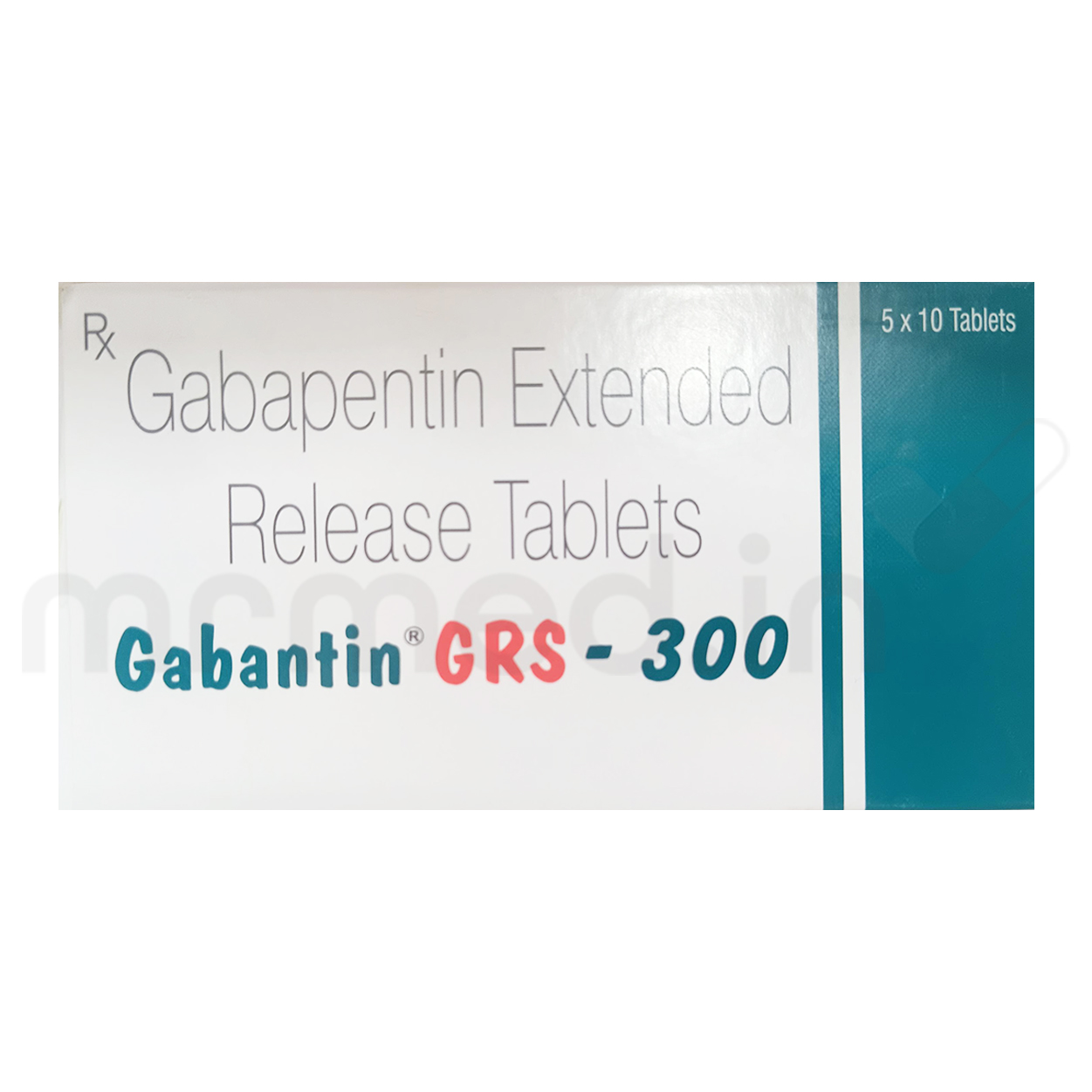

Gabantin GRS 300mg Tablet
Salt Composition
GABAPENTINMarketer
SUN PHARMACEUTICAL INDUSTRIES LTD
19% OFF
₹241
MRP: ₹297.00
Inclusive of all taxes
19% Off



Dispatch: Today
Care delivered without the wait. Your order is prioritized for rapid dispatch to ensure it reaches your doorstep on time.
Substitutes
Movapentin 300mg Tablet
MOVA PHARMACEUT...
₹ 20.70/tablet
14% cheaper
Gabator 300mg Tablet
TORRENT PHARMAC...
₹ 21.10/tablet
12% cheaper
Pentanerv 300mg Tablet
ALKEM LABORATOR...
₹ 23.90/tablet
0% cheaper
Gapitas 300mg Tablet
TAS MED (INDIA)...
₹ 10.30/tablet
57% cheaper
Better Service Satisfied Customers
Introduction
Gabantin GRS 300mg Tablet Contains the active substance Gabapentin. Gabapentin is an anticonvulsant that belongs to the class of gamma-aminobutyric acid (GABA) analogs. It treats neuropathic pain, anxiety disorders, and seizures in patients with epilepsy.
Gabantin GRS 300mg Tablet treats neuropathic pain, including postherpetic neuralgia, nerve pain following shingles infection, and other forms of nerve pain. It also works as an adjunctive treatment for partial-onset seizures, with or without secondary generalisation, in both adults and children aged 3 years and older. Additionally, Gabantin GRS 300mg Tablet helps manage anxiety disorders as part of a broader treatment plan.
Before using Gabantin GRS 300mg Tablet, inform your doctor if you have allergies to Gabapentin or any ingredients in the capsule or if you have kidney problems, lung inflammation, or neuropsychiatric conditions. Contact your healthcare provider if you experience dizziness, swelling, unexplained fatigue, coordination issues, or vision problems.
Gabantin GRS 300mg Tablet may cause serious side effects, including difficulty breathing, severe skin reactions, or signs of infection such as fever, unusual bleeding, or bruising.
Do not stop taking Gabantin GRS 300mg Tablet suddenly, as this may increase seizure frequency in patients with epilepsy. Healthcare providers should monitor patients for any signs of suicidal thoughts or behaviours, especially at the start of treatment. Gabantin GRS 300mg Tablet may cause dizziness or drowsiness, so patients should avoid driving or operating heavy machinery until they understand how the medication affects them.
Uses
The uses of Gabantin GRS 300mg Tablet are:
Neuropathic pain (e.g., postherpetic neuralgia in adults)
Partial onset seizures (with and without secondary generalisation) in adults and pediatric patients aged 3 years and older with epilepsy
Other forms of neuropathic pain
Seizure management
How Gabantin GRS 300mg Tablet works
Gabapentin binds strongly to the α2δ subunit of voltage-activated calcium channels, contributing to its pain-relieving and seizure-controlling effects, although the exact mechanism remains unclear.
Interaction of Gabantin GRS 300mg Tablet with other drugs
It is important to inform your healthcare professional about all the medications you are taking, including prescription drugs, over-the-counter medications, nutritional supplements, and herbal products. Some medications may interact with Gabantin GRS 300mg Tablet, potentially affecting their effectiveness or causing side effects.
Storage Conditions
Keep out of reach of children and pets.
Store in the original packaging to protect from moisture.
Avoid direct sunlight
Store Gabantin GRS 300mg Tablet at room temperature
How to take Gabantin GRS 300mg Tablet
For Gabantin GRS 300mg Tablet, treatment typically begins with a low dose, such as 300 mg on Day 1 for Postherpetic Neuralgia, with gradual increases over the following days. Dosing adjustments are made based on the patient's response and condition. In patients with reduced renal function, the dose of Gabantin GRS 300mg Tablet should be adjusted, regardless of the formulation. Consult your healthcare provider for personalised dosing recommendations and adjustments based on your specific condition and renal function.
Safety Advice

Breast Feeding
It is unknown if Gabantin GRS 300mg Tablet are safe to take during breastfeeding. Please consult your healthcare provider if you have any concerns.

Alcohol
It is not safe to have alcohol while you’re on treatment with Gabantin GRS 300mg Tablet. Please consult your healthcare provider if you have any concerns.

Liver
You need to inform your doctor if you have any liver disorders before starting treatment with Gabantin GRS 300mg Tablet.

Lungs
Before starting treatment with Gabantin GRS 300mg Tablet talk to your doctor if you have any lung conditions.

Driving
Gabantin GRS 300mg Tablet may be unsafe to use as they may affect the ability to drive or operate machinery as they can cause dizziness and fatigue. It is recommended to consult your doctor for further guidance.

Pregnancy
It is unknown if Gabantin GRS 300mg Tablet are safe to take during pregnancy. Please consult your healthcare provider if you have any concerns.
Side Effects
Side effects are unwanted symptoms caused by medicines. Although all drugs can cause side effects, not everyone experiences them.
Common side effects of Gabantin GRS 300mg Tablet are:
Dizziness
Sleepiness (somnolence)
Swelling (peripheral edema)
Fatigue
Nausea and vomiting
Lack of coordination
Diarrhea
Dry mouth
Constipation
Weight gain
Tremor
Sore throat
Double vision and blurred vision
Serious side effects of Gabantin GRS 300mg Tablet are:
Jaundice (yellowing of the skin or eyes)
Rhabdomyolysis (muscle breakdown)
Liver problems (hepatobiliary disorders)
Elevated creatine kinase and liver function tests
Movement disorders
Expert Tips
Discontinue Gabantin GRS 300mg Tablet immediately if you experience serious reactions such as DRESS, anaphylaxis, or angioedema, and contact your healthcare provider.
Avoid driving or operating heavy machinery if you feel sleepy or dizzy.
Do not stop taking Gabantin GRS 300mg Tablet abruptly, as it can increase your seizure risk.
Monitor yourself for any suicidal thoughts or behaviours, particularly if you have epilepsy, and report any neuropsychiatric symptoms, especially in children.
Always follow your healthcare provider's guidance and seek medical advice if you notice any concerning symptoms.
FAQs
Q1.
Is Gabantin GRS 300mg Tablet a very strong painkiller?
Gabantin GRS 300mg Tablet is not considered a very strong painkiller, but it is a medication commonly used to manage nerve-related pain and control seizures.
Q2.
Is Gabantin GRS 300mg Tablet good for anxiety?
Gabantin GRS 300mg Tablet is not primarily used to treat anxiety, but it may be prescribed off-label in some cases to help manage anxiety symptoms. It is mainly used to treat nerve pain and seizures. Always consult your doctor for advice on appropriate treatments for anxiety.
Q3.
What is the best time to take Gabantin GRS 300mg Tablet?
The best time to take Gabantin GRS 300mg Tablet depends on your doctor's advice and your condition. It is often taken in divided doses throughout the day, with or without food. Your doctor will recommend a schedule based on your needs and treatment plan
Q4.
What are the possible side effects of Gabantin GRS 300mg Tablet?
Common side effects of Gabantin GRS 300mg Tablet include dizziness, drowsiness, and swelling in the hands or feet. Less common effects can include blurred vision, weight gain, and mood changes. Always consult a healthcare provider if any side effects occur.
Q5.
Is Gabantin GRS 300mg Tablet a muscle relaxer?
Gabantin GRS 300mg Tablet is not a muscle relaxer, but it is an anticonvulsant used to treat nerve pain and control seizures.
Fact Box
Molecule name | Gabapentin |
Therapeutic class | Analgesic, Antiepileptic |
Pharmacological class | Anticonvulsant |
Indications | 1. Neuropathic pain 2. Partial onset seizures (with or without secondary generalisation) in adults and children aged 3 years and older 3. Other neuropathic pain 4. Seizure management |
References
1. https://www.accessdata.fda.gov/drugsatfda_docs/label/2017/020235s064_020882s047_021129s046lbl.pdf
2. asaei R, Katta S, Patel P, Saadabadi A. Gabapentin. https://pubmed.ncbi.nlm.nih.gov/29630280/
3. Backonja M, Glanzman RL. Gabapentin dosing for neuropathic pain: evidence from randomized, placebo-controlled clinical trials. https://pubmed.ncbi.nlm.nih.gov/12637113/
4. https://www.ema.europa.eu/en/medicines/human/referrals/neurontin
Disclaimer
MrMed’s primary intention is to ensure that its consumers get accurate and trustworthy information that is reviewed by experts. The contents of this website are for informational purposes only. They are not intended to be a substitute for professional medical advice, diagnosis, or treatment. Please seek the advice of your doctor and discuss all your queries related to any disease or medicine. Do not disregard professional medical advice or delay in seeking it because of something you have read on MrMed. Our mission is to support, not replace, the doctor-patient relationship.
Did you find this information helpful?
Author Details

Written By
Dr. Vijayalakshmi N.
BDS

Reviewed By
Dr. Tejashwin Adiga
MBBS
Last updated : 26 Sep 2026 | 08:41 AM (IST)

Want to know more?
Read Our Editorial Policy
.jpg&w=640&q=70&dpl=dpl_3TxdSbGY1MDWDRYz3tkVva9ZqupY)