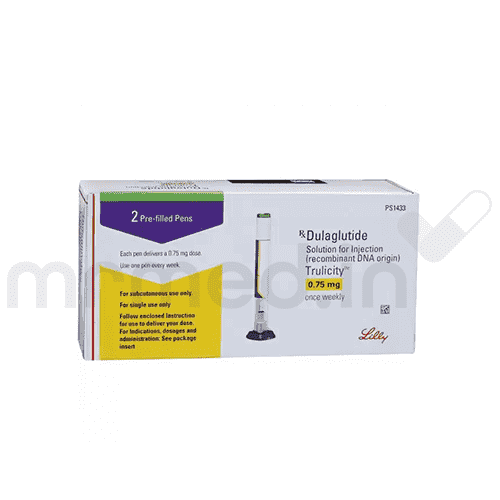

Sourced from:Direct from Manufacturer

Quick Summary
Trulicity 1.5mg Injection


Last updated on 05 Sep 2026 | 11:31 AM (IST)
₹4829
MRP: ₹5669.06
(You Save ₹840.06)
2 PREFILLED PEN(s)
Sourced from:Direct from Manufacturer


Trulicity 1.5mg Injection

Salt Composition
DULAGLUTIDEMarketer
ELI LILLY AND COMPANY INDIA PVT LTD
Prepaid Only. Non-Returnable.

15% OFF
₹4829
MRP: ₹5,669.06
Inclusive of all taxes
15% Off


Salt Composition
DULAGLUTIDEMarketer
ELI LILLY AND COMPANY INDIA PVT LTD
Prepaid Only. Non-Returnable.
Substitutes
Aplevant 1.5mg Injection
LUPIN LTD
₹ 2693.00/injection
12% costlier


Introduction
Trulicity 1.5 mg Injection contains Dulaglutide, a medicine used to improve blood sugar control in adults with type 2 diabetes mellitus. It belongs to a group of medicines called GLP-1 receptor agonists. Trulicity 1.5 mg Injection is supplied as a single-use pre-filled pen containing 1.5 mg of Dulaglutide in 0.5 mL solution. It is used along with diet and exercise and should be used only as prescribed by a doctor.
Uses
Trulicity 1.5 mg Injection is used to:
Improve blood sugar control in type 2 diabetes mellitus: It is used along with diet and exercise to help control blood sugar levels.
Add-on therapy: Dulaglutide 1.5 mg once weekly can be used with other blood sugar-lowering medicines when additional blood sugar control is needed.
Trulicity is not used to treat type 1 diabetes mellitus or diabetic ketoacidosis.
How Trulicity 1.5 mg Injection Works
Trulicity contains Dulaglutide, which works similarly to the natural hormone GLP-1. It increases insulin release when blood sugar levels are high and reduces glucagon release. It also slows gastric emptying. These effects help lower blood sugar levels in people with type 2 diabetes mellitus.
Interaction of Trulicity 1.5 mg Injection with Other Medicines
Tell your doctor about all the medicines, vitamins and supplements you take before starting Trulicity.
Insulin and sulfonylureas: Taking Trulicity with insulin or sulfonylureas can increase the risk of low blood sugar. Your doctor may adjust the dose of these medicines.
Oral medicines: Trulicity slows gastric emptying and may affect the rate at which some oral medicines are absorbed.
Storage Conditions
Store Trulicity 1.5 mg Injection in a refrigerator at 2°C to 8°C.
Do not freeze the medicine.
Keep the pre-filled pen protected from light.
Keep it in the original carton until use.
Keep Trulicity out of the reach of children.
Do not use the pen if it has been frozen.
The pre-filled pen is for single use and should be discarded after use.
How to Use Trulicity 1.5 mg Injection
Use Trulicity 1.5 mg Injection exactly as prescribed by your doctor.
The recommended Dulaglutide dose for add-on therapy is 1.5 mg once weekly. It is injected under the skin of the abdomen, thigh or upper arm. It can be given at any time of the day, with or without food.
Try to use Trulicity on the same day each week. If your doctor changes your dose, follow the prescribed schedule. Do not change the dose or stop treatment without medical advice.
Your doctor or pharmacist should show you how to use the pre-filled pen correctly.
Safety Advice

Pregnancy
Trulicity 1.5 mg Injection is not recommended during pregnancy. Tell your doctor if you are pregnant, planning to become pregnant or become pregnant while using Trulicity.

Breast Feeding
Trulicity 1.5 mg Injection should not be used while breastfeeding. Tell your doctor if you are breastfeeding before starting treatment.

Lungs
Tell your doctor before surgery or a procedure requiring general anaesthesia or deep sedation. Dulaglutide delays gastric emptying, which may increase the risk of stomach contents entering the lungs during such procedures.

Liver
Tell your doctor if you have liver disease before using Trulicity 1.5 mg Injection. No dose adjustment is generally required for hepatic impairment, but your doctor will decide whether this medicine is suitable for you.

Alcohol
Talk to your doctor about alcohol consumption while using Trulicity. Alcohol can affect blood sugar levels and may make diabetes control more difficult. If Trulicity is used with insulin or a sulfonylurea, low blood sugar can occur.

Driving
Trulicity is not expected to directly affect your ability to drive. However, low blood sugar may occur when it is used with insulin or sulfonylureas and can affect concentration and reaction time.
Side Effects
Very common side effects:
Nausea
Vomiting
Diarrhoea
Abdominal pain
Common side effects:
Decreased appetite
Indigestion
Constipation
Flatulence
Abdominal distension
Acid reflux
Belching
Fatigue
These side effects mainly affect the digestive system and may become less noticeable as treatment continues.
Serious side effects:
Severe allergic reactions
Pancreatitis
Severe gastrointestinal problems
Gallbladder problems
Low blood sugar, particularly when used with insulin or sulfonylureas
Kidney problems associated with dehydration
Seek medical attention if you develop severe or persistent abdominal pain, especially if it spreads to the back, as this can be a sign of pancreatitis.
Persistent vomiting or diarrhoea can cause dehydration and may affect kidney function. Tell your doctor if these symptoms are severe or do not improve.
Expert Tips
Use Trulicity 1.5 mg Injection exactly as prescribed.
Trulicity 1.5 mg is generally used as an add-on treatment dose when additional blood sugar control is needed.
Use the injection once a week, preferably on the same day each week.
Follow the diet and exercise plan your doctor recommended.
Tell your doctor if you use insulin or a sulfonylurea because the combination can increase the risk of low blood sugar.
Contact your doctor if you develop severe or persistent abdominal pain.
Tell your doctor if you have severe digestive problems, persistent vomiting, or diarrhoea.
Inform your doctor before surgery or deep sedation.
FAQs
Q1.
What is Trulicity 1.5 mg Injection used for?
Trulicity 1.5 mg Injection contains Dulaglutide and is used along with diet and exercise to improve blood sugar control in adults with type 2 diabetes mellitus.
Q2.
Is Trulicity 1.5 mg Injection a starting dose?
Trulicity 1.5 mg is generally used as an add-on treatment dose. Dulaglutide treatment may be started at 0.75 mg once weekly, with the dose increased to 1.5 mg once weekly after at least four weeks when additional blood sugar control is needed.
Q3.
How often should I use Trulicity 1.5 mg Injection?
Trulicity 1.5 mg Injection is used once a week. It can be injected under the skin of the abdomen, thigh or upper arm at any time of the day, with or without food.
Q4.
What are the common side effects of Trulicity 1.5 mg Injection?
The very common side effects include nausea, vomiting, diarrhoea and abdominal pain. Other common side effects include decreased appetite, indigestion and constipation.
Q5.
Can Trulicity 1.5 mg Injection cause low blood sugar?
Yes. The risk is higher when Trulicity is used with insulin or a sulfonylurea. Your doctor may adjust the dose of these medicines to reduce this risk.
Q6.
What should I do if I miss a dose of Trulicity 1.5 mg Injection?
If you miss a dose, take it as soon as possible if there are at least 3 days (72 hours) before your next scheduled dose. If less than 3 days remain, skip the missed dose and take the next dose on your regular day. Do not take two doses within 3 days of each other.
Q7.
Can Trulicity 1.5 mg Injection be used with other diabetes medicines?
Yes. You can use dulaglutide with other blood sugar-lowering medicines when prescribed by your doctor. However, combining it with insulin or a sulfonylurea can increase the risk of low blood sugar.
Q8.
How should I store Trulicity 1.5 mg Injection?
Store Trulicity 1.5 mg Injection in a refrigerator at 2°C to 8°C. Do not freeze it. Keep it protected from light and in its original carton until use.
Q9.
Can Trulicity 1.5 mg Injection help with weight loss?
Weight loss can occur in some people taking Dulaglutide. However, Trulicity 1.5 mg Injection is indicated for type 2 diabetes mellitus and should not be used specifically for weight loss unless advised by a doctor.
Fact Box
Molecule name: | Dulaglutide |
Therapeutic class: | Antidiabetic |
Pharmacological class: | GLP-1 receptor agonist |
Indication: | Type 2 diabetes mellitus |
References
Disclaimer
MrMed’s primary intention is to ensure that its consumers get information that is reviewed by experts, accurate and trustworthy. The information and contents of this website are for informational purposes only. They are not intended to be a substitute for professional medical advice, diagnosis, or treatment. Please seek the advice of your doctor and discuss all your queries related to any disease or medicine. Do not disregard professional medical advice or delay in seeking it because of something you have read on MrMed. Our mission is to support, not replace, the doctor-patient relationship.
Did you find this information helpful?
Author Details

Written By
Naina Boruah
MSc Biomedical Science

Reviewed By
Dr. Tejashwin Adiga
MBBS
Last updated : 05 Sep 2026 | 11:31 AM (IST)

Want to know more?
Read Our Editorial Policy