

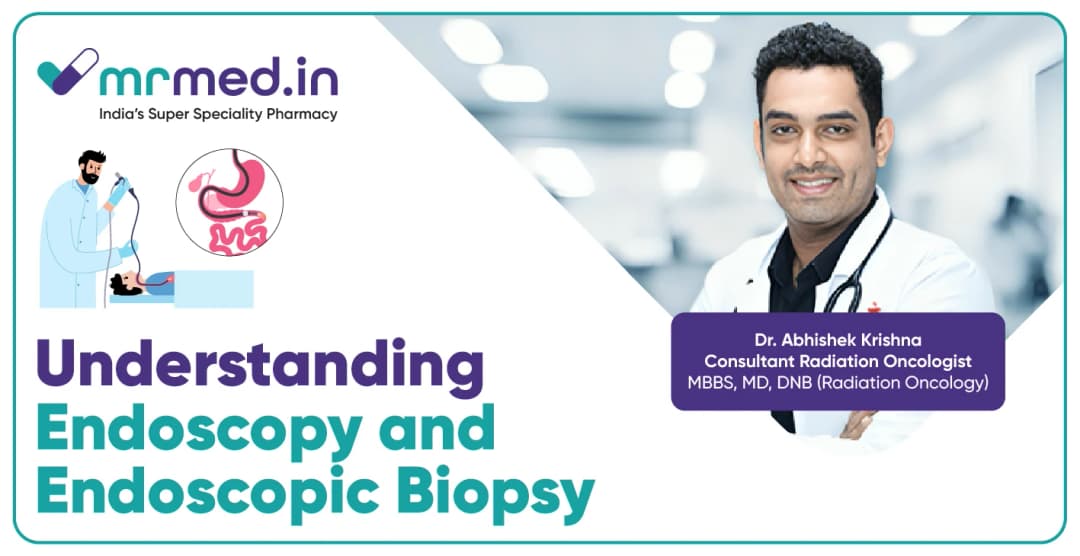
Understanding Endoscopy & Endoscopic Biopsy: A Complete Guide





Last updated on 02 Jan 2026
When it comes to diagnosing and monitoring serious health conditions, especially cancers, accuracy and early detection make all the difference. One of the most reliable diagnostic methods available today is endoscopy. To help patients and caregivers better understand this procedure, Dr. Abhishek Krishna, Consultant Radiation Oncologist, provides clear insights into what endoscopy involves, how to prepare for it, and why it is considered a cornerstone of modern cancer care.
What is an Endoscopy?
Endoscopy is a minimally invasive medical procedure that allows doctors to examine the inside of the body using a thin, flexible tube equipped with a camera and light. Unlike traditional imaging scans, endoscopy provides a direct and detailed view of internal organs, helping in the early detection of abnormalities.
Doctors may recommend endoscopy for cancer screening or to investigate persistent or suspicious symptoms. Depending on the target area, an endoscope may be inserted through the mouth (to examine the throat, esophagus, and stomach) or the rectum (to assess the colon and rectum). In most cases, “endoscopy” refers to an upper endoscopy performed through the mouth.
Before and During the Procedure
Understanding what to expect before and during an endoscopy helps ease anxiety. Preparation usually involves fasting overnight to ensure a clear view of the stomach and digestive tract. These steps are simple yet essential for accurate results.
On the day of the procedure, the throat may be numbed with a local anesthetic spray to reduce discomfort. The doctor then gently guides the endoscope inside to capture images in real time. The procedure is generally safe, quick, and well-tolerated, though some patients may experience mild throat irritation for a short time afterward.
Diagnostic and Treatment Value
One of the key benefits of endoscopy is that it can also be used for endoscopic biopsy. If the doctor identifies any suspicious growths, ulcers, or lesions, a small tissue sample can be collected immediately for further examination.
This makes endoscopy not only a diagnostic tool but also a vital step in early cancer detection and monitoring. It enables timely intervention and helps doctors plan appropriate treatment with precision.
Frequently Asked Questions (FAQs)
Is endoscopy painful?
No, endoscopy is generally not painful. You may feel mild discomfort or a gagging sensation, but local anesthesia or sedation helps you stay relaxed.How long does an endoscopy take?
The procedure usually takes 15–30 minutes, depending on the area being examined and whether any biopsy or additional procedure is performed.Can I eat after an endoscopy?
You can eat once the numbness in your throat wears off, usually after a few hours. Your doctor will advise when it’s safe to resume normal eating.
Conclusion
Endoscopy is a safe, effective, and minimally invasive procedure that helps doctors diagnose and treat various digestive and internal conditions early. By following your doctor’s instructions before and after the test, you can ensure a smooth experience and accurate results. Regular screenings, when advised, can play a key role in maintaining long-term digestive and overall health.
Watch Also
Disclaimer: The information in this guide is intended for general awareness and educational purposes only. It should not be considered a substitute for professional medical advice, diagnosis, or treatment. Always seek the guidance of your doctor or a qualified healthcare provider with any questions you may have about endoscopy, endoscopic biopsy, or any other medical procedure. Do not ignore professional advice or delay seeking care because of something you have read here. While insights are provided by Dr. Abhishek Krishna and based on trusted sources, individual cases may differ. MrMed does not promote or endorse any specific procedure, product, or treatment unless clearly mentioned.












Comments