

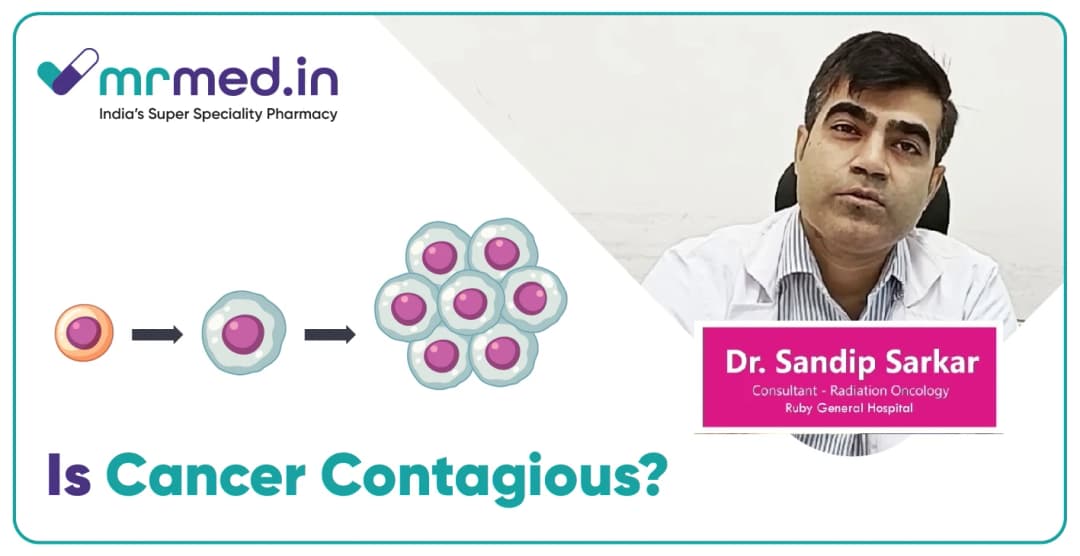
Is Cancer Contagious?





Last updated on 02 Jan 2026
Cancer is one of the most common yet misunderstood health conditions. A widespread cancer myths is that it can spread from person to person. According to Dr. Sandip Sarkar, a consultant in radiology oncology at Ruby General Hospital, Kolkata, such misconceptions create unnecessary fear, stigma, and social isolation. Avoiding contact or sharing personal items with someone who has cancer is unnecessary and can harm emotional well-being. Promoting cancer awareness helps clear these misunderstandings and supports patients emotionally.
Is Cancer Contagious?
Can cancer be transmitted? Cancer cannot be transmitted. Touching, hugging, or sharing utensils, clothes, or beds is completely safe. Knowing that cancer cannot be transmitted reduces fear and stigma for patients and reinforces accurate cancer awareness.
What Causes Cancer?
Is cancer hereditary? It develops due to a combination of genetic, environmental, and lifestyle factors: Cancer is not contagious.
-
Genetic Factors: A strong family history or inherited gene mutations can increase susceptibility, though it doesn’t guarantee cancer. This clarifies concerns about whether cancer is hereditary.
-
Environmental Factors: Exposure to ionising radiation or harmful chemicals like asbestos can damage DNA over time.
-
Lifestyle Factors: Smoking, excessive alcohol, poor diet, obesity, and lack of physical activity can elevate risk.
These factors show that cancer arises internally from changes in a person’s cells, not through contact with others. Understanding cancer facts prevents confusion between risk and transmission.
Final Thoughts
Cancer is influenced by genetics, environment, and lifestyle, not casual contact. Awareness of the real causes, early detection, and adopting healthy habits are key to reducing risk and supporting well-being. Even hereditary cancers are not contagious.
Disclaimer: The content in this blog is for general informational purposes only and is not a substitute for professional medical advice, diagnosis, or treatment. Always consult your doctor or a registered dietitian before making any changes to your diet, especially if you have a medical condition or are taking prescribed medication. While the information is based on trusted sources, individual needs and results may vary. Mr Med does not promote or endorse any specific food or treatment mentioned unless explicitly stated.











Comments