

Diabetes Management Tips for Festive Eating: Simple Ways to Stay in Control





Last updated on 02 Jan 2026
Key Takeaways
|
Festivals in India are magical, with bright lights, laughter, relatives arriving from everywhere, and of course, endless food. But if you are living with diabetes, sweets and feasts can turn joy into worry. One extra laddu or a late-night biryani can suddenly raise your blood glucose.
But here’s the good news: you don’t have to miss out. With the right Diabetes Management Tips, you can enjoy every festival without fear. This guide shows how to balance celebrations and health while eating the food you love.
Why Festivals Make Sugar Levels Hard to Control
Festivals change everything: our sleep schedule, eating times, portion sizes, stress levels, and even activity patterns.
Here’s what usually happens:
Breakfast was skipped to “save space” for a big lunch
Multiple tea breaks with snacks
Late-night desserts
Heavy, oily meals at social functions
This may cause symptoms of high blood sugar including:
Fatigue
Headache
Excessive thirst
Frequent urination
Sudden hunger
The trick is not to avoid festive food but to balance it smartly.
Dr Nishant Singh, Consultant, General Medicine and Diabetology, Meddo Clinic, New Delhi, advises that during festivals, people with diabetes should break meals into smaller, frequent portions, choose nuts or fruit instead of traditional sweets, avoid white rice and bakery foods, and strictly limit deep-fried snacks to keep blood sugar stable.
Follow a Balanced Plate: Indian Version
Festive meals can still be healthy with a smart Diabetes diet chart in an Indian style plate:
Portion | Healthy Holiday-Friendly Choices |
50% Vegetables | Sabzi, sprouts chaat, salads, sautéed veggies |
25% Protein | Paneer, dal, soya, eggs, grilled chicken or fish |
25% Whole Grains | Phulkas, multigrain rotis, millets, brown rice |
Why it works:
Vegetables slow sugar absorption
Protein keeps you full longer
Whole grains prevent glucose spikes
Tips for eating healthy during the holidays:
Have a small meal before attending a party
Eat slowly and mindfully
Take smaller portions first, with no pressure to refill
Diabetes Tips for Holidays: Small Tweaks, Big Changes
Simple behaviour changes can significantly help with healthy eating during the holidays:
Say “just a little”: don’t pile plates high
Fill up on fibre: veggies first, sweets later.
Check timing: aim for meals before 9 PM
Add curd or buttermilk for gut support.
Take a short walk after meals.
Walking 15–20 minutes after festive dinners helps smooth out sugar peaks.
What About Sweets? (Because No Indian Festival Exists Without Them)
You don’t have to give up sweets, just choose smarter options and control portions.
Better sweet choices:
Sugar-free sweets
Sugar free kaju katli
Date-based ladoos (small portion)
Fruit custard with Sugar substitutes for baking
Dry fruits for sugar patients (almonds, walnuts, pistachios)
Sugar-free cake for diabetics for birthdays and anniversaries
Confusion alert:
Is jaggery good for diabetes?
Not really! Jaggery still behaves like sugar once inside the body. Treat it as a dessert, not a “healthy” substitute.
Golden rules for sweets:
Eat after lunch or dinner, never on an empty stomach
Avoid “just one more” refills.
Share when possible
Smart Snacking During Festivals
Snacking is where most sugar damage happens. So choose Diabetic snacks Indian style:
Avoid | Choose Instead |
Samosa, kachori | Vegetable soup, sprouts chaat |
Bakery biscuits | Best sugar-free biscuits for diabetics |
Namkeen mixtures | Roasted chana or peanuts |
Fried paneer | Paneer tikka |
Chips | Roasted makhana benefits for diabetes |
These swaps keep you lighter and more energetic through celebrations.
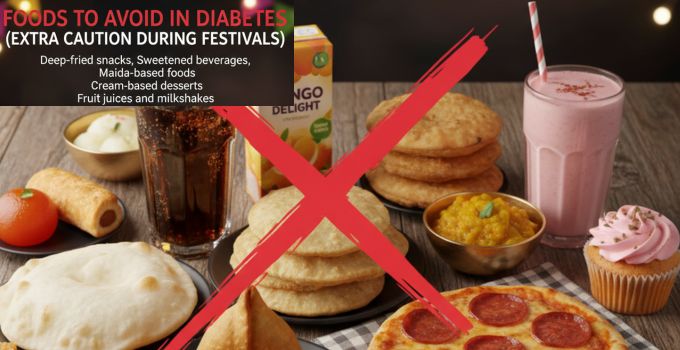
Foods to Avoid in Diabetes (Extra Caution During Festivals)
Deep-fried snacks
Sweetened beverages (colas, packaged juices)
Maida-based foods, naan, puris, pizza
Heavy sweets like halwa, gulab jamun and rasmalai
Cream-based desserts and bakery puffs
Fruit juices and milkshakes
These foods cause fast glucose surges.
Healthy Drinks That Support Blood Sugar Balance
Prefer:
Lemon water
Unsweetened buttermilk
Coconut water (small servings)
Masala tea without sugar
Green tea
Traditional drinks:
Karela jamun juice benefits include better insulin response
(Use only under a doctor’s advice to avoid low sugar risk)
Avoid:
Sugary sodas
Falooda, thandai
Milkshakes loaded with syrup
Hydration is crucial as dehydration increases glucose concentration.
Must-Have Fruits and Dry Fruits for Diabetics
Healthy Diabetic friendly fruits:
Apple
Guava
Papaya
Orange
Berries
Not recommended:
Mango in excess
Grapes in large portions
Dry fruits for sugar patient:
Walnuts and almonds best
Pistachios okay in moderation
Limit cashews and raisins
Portion matters more than “good” or “bad” labels.
Carry Snacks While Travelling for Festivals
We often travel long distances for Diwali, Pongal, Eid, and Onam. Carrying Diabetic snacks Indian options, avoids emergencies like sudden sugar dips:
Take:
Fruit
Makhana
Protein bars (no added sugar)
Boiled eggs
Roasted peanuts
Multigrain biscuits
Avoid long fasting to prevent cravings later.
Quick Help: How to Control Sugar Level Immediately
If sugar rises suddenly, here’s what helps:
Drink 1–2 glasses of water
Walk 20 minutes
Take prescribed medicine on schedule.
Avoid more sweets or carbs
Check your sugar if you have a glucometer
If symptoms persist → consult a doctor.
Dr Veshnavi, a diabetologist quoted in The Financial Express, recommends pairing festive sweets with fibre-rich or protein-rich meals, drinking plenty of water, and avoiding long gaps between meals, as this helps slow sugar absorption and prevents sharp post-meal glucose spikes during Diwali and other celebrations.
Fit Festive Cooking Ideas
Prefer:
Steaming more than frying
Pan-grilling more than deep-oil cooking
Smaller serving bowls for rice
Sugar substitutes for desserts
Some quick Diabetic friendly recipes for dinner:
Moong dal cheela and paneer stuffing
Grilled chicken and sautéed spinach
Millet khichdi and curd
Vegetable poha with peanuts
You’ll enjoy the taste without the guilt.
Culturally Sensitive Diet Plans for Diabetes
India’s food diversity means there’s always a healthy festive swap:
North: Rajma, chole with phulka instead of naan
South: Idlis and sambar rather than pooris and potato curry
West: Dhokla instead of fried snacks
East: Steamed fish instead of oily gravies
You keep tradition alive and sugar calm.
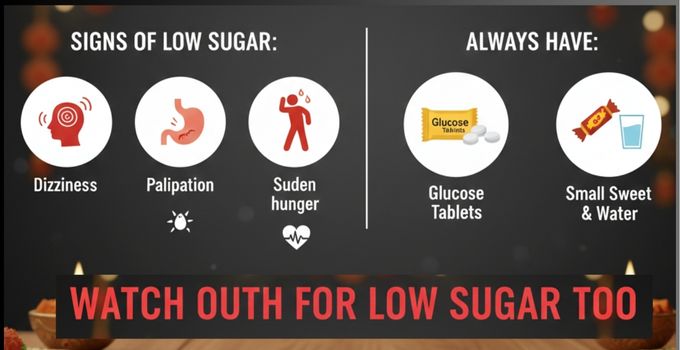
Watch Out for Low Sugar Too
Festive excitement sometimes delays meals lead to → hypoglycemia risk
Signs of low sugar:
Dizziness
Sweating
Sudden hunger
Palpitations
Always have:
Glucose tablets OR
Small sweet and water if needed
Festivals should be fun, not a health scare.
FAQs
How can I manage diabetes during Indian festivals while still enjoying food?
You can enjoy festive eating with diabetes by using portion control, a balanced plate, and choosing fibre-rich vegetables, protein, and whole grains to prevent sugar spikes during celebrations.Can diabetics eat sweets during festivals? What are safer alternatives?
Yes, but in moderation. Choose sugar-free sweets, small date ladoos, fruit custard with sugar substitutes for baking, and share portions to keep festive sugar levels controlled.What should be included in a diabetes-friendly festive plate?
An Indian-style diabetes diet chart should include 50% vegetables, 25% protein such as paneer or dal, and 25% whole grains such as multigrain rotis to avoid glucose spikes.Is jaggery better than sugar for people with diabetes?
No. Jaggery raises blood sugar just like regular sugar. Treat it as an occasional dessert, not a healthy substitute for diabetics during festivals.What snacks are suitable for diabetics during festivals?
Choose diabetic-friendly Indian snacks like sprouts chaat, roasted chana, paneer tikka, or roasted makhana instead of samosas, namkeens, and bakery biscuits.Which drinks help control blood sugar during festive eating?
Healthy drinks for diabetes include lemon water, unsweetened buttermilk, green tea, and small servings of coconut water. Avoid sugary sodas and milkshakes.How can walking after festive meals help with diabetes control?
A 15–20 minute walk after festive dinners improves insulin response, supports digestion, and helps prevent high blood sugar after heavy or late-night meals.What to do if blood sugar suddenly goes high during a festival?
Drink water, walk for 20 minutes, avoid more carbs, take prescribed diabetes medication on time, and check blood sugar levels with a glucometer if available.
Final Thoughts: Celebrate Smart, Not Scared
Managing diabetes during festivals does not mean giving up the food and joy you love. With these Diabetes Management Tips, a little planning, and mindful choices, you can enjoy gatherings, sweets, travel, and traditions while keeping glucose steady. Real celebration means feeling healthy during and after the festival.
Celebrate freely. Eat smartly. Stay in control.
Read Also
References
1. Ajala O, English P, Pinkney J. Systematic review and meta-analysis of different dietary approaches to the management of type 2 diabetes. Am J Clin Nutr. 2013 Mar;97(3):505-16. doi: 10.3945/ajcn.112.042457. Epub 2013 Jan 30.
2. Thomas D, Elliott EJ. Low glycaemic index diets for type 2 diabetes. Cochrane Database Syst Rev. 2009 Jan 21;2009(1):CD006296. doi: 10.1002/14651858.CD006296.pub2.
3.Davies, M. J., Aroda, V. R., Collins, B. S., Gabbay, R. A., Green, J., Maruthur, N. M., … Buse, J. B. (2022). Management of Hyperglycemia in Type 2 Diabetes, 2022. A Consensus Report by the American Diabetes Association (ADA) and the European Association for the Study of Diabetes (EASD). Diabetes Care, 45(11), 2753–2786.
Disclaimer: The information shared in this blog is meant for general educational purposes only and should not be taken as medical advice. Always consult a qualified healthcare professional for diagnosis, treatment, or medical guidance related to your health. The content is based on reliable sources, but it may not be suitable for every individual’s condition. We do not assume responsibility for any actions taken based on this information. Readers are encouraged to exercise caution and use their discretion when making healthcare decisions.











Comments