

Know About Blood Infections - Types, Signs, Symptoms & Treatment





Last updated on 14 Jul 2026
Quick Summary
A blood infection occurs when a bacterium, virus, or fungus invades your bloodstream and disperses throughout your body, causing inflammation and putting stress on your organs. Symptoms often begin with fever and fatigue, but if you do not receive prompt medical attention, they can progress rapidly.
Key Takeaways:
|
Due to the increase in hospitalisations related to infections and decreased immunity, it is vital to recognise the early warning signs of blood infection to improve your chance of survival and a quicker recovery.
What Is a Blood Infection and Why Is It Dangerous?
Septicemia, also referred to as a bloodstream infection, is characterised by a significant bacterial or fungal infection, such as pneumonia or a waterborne disease, entering your bloodstream and subsequently spreading to multiple sites in the body.
Unlike localised infections (such as an infected wound or sore throat), a septic infection affects multiple organ systems simultaneously.
When pathogens circulate in the bloodstream, the body's immune response is activated, resulting in widespread inflammation and oedema, severe hypotension (very low blood pressure), dysfunctional organs, and possible sepsis.
The biggest factor is time! What presents as a simple fever may rapidly escalate to a severe and possibly life-threatening condition if not promptly treated. For this reason, clinicians regard all suspected cases of septicaemia as emergencies requiring immediate intervention.
How Do Blood Infections Start in the Body?
Dr Aditi Sharma – Infectious Disease Specialist, AIIMS New Delhi – explains that blood infections are a major cause of serious illness in India and that early diagnosis, prompt antibiotics, and strict hospital hygiene save many lives.
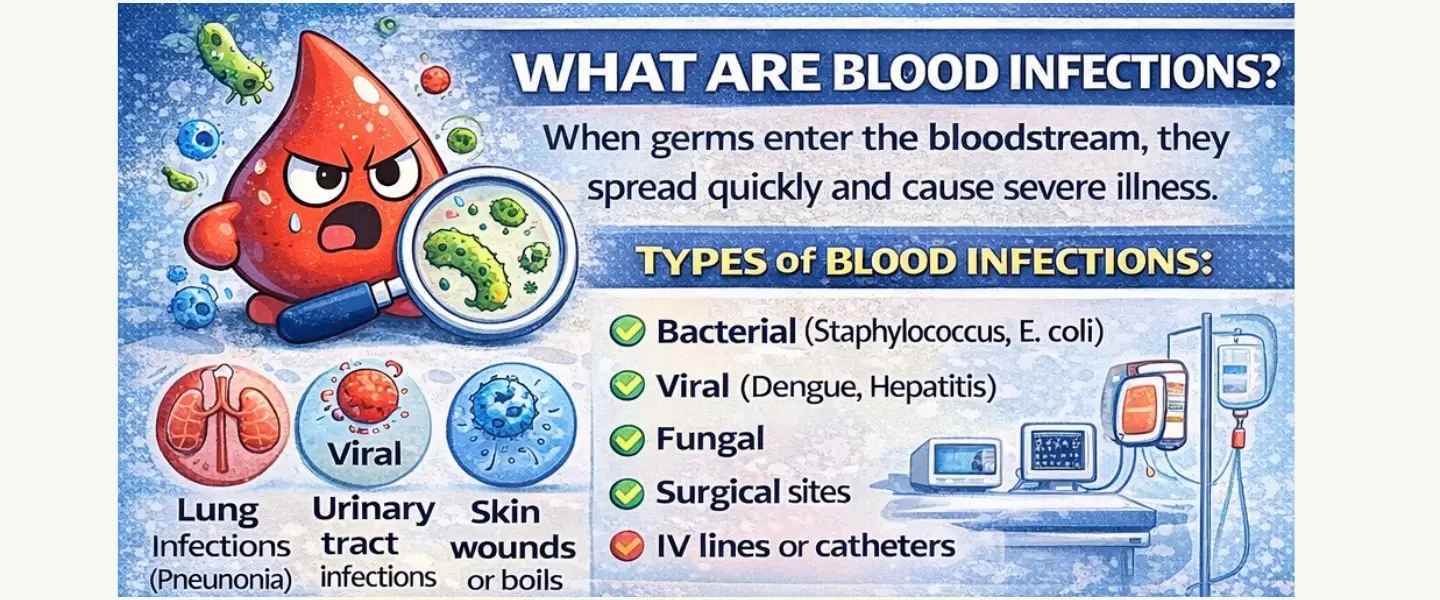
Blood infections usually start when an infection from another part of the body spreads into the bloodstream.
Common sources include:
Lung infections such as pneumonia.
Skin wounds, cuts, or boils.
Surgical wounds.
IV lines or catheters are used in hospitals.
Once germs enter the bloodstream, they multiply rapidly and spread throughout the body.
People with weakened immunity, diabetes, cancer, kidney disease, or those recovering from surgery are at higher risk of developing serious blood infections.
What Are the Different Types of Blood Infections?
Blood infections can develop when germs enter the bloodstream from different parts of the body.
1. Bacterial Blood Infections
The most frequently caused bacteria in blood infections, Staphylococcus, E.coli and Streptococcus can usually cause serious illness when they enter the bloodstream.
2. Viral Blood Infections
Blood infections can also be caused by viruses, such as the viruses that cause Dengue fever and hepatitis. The way these viruses are contracted usually involves contact with someone who has a blood infection, which can infect the organs of an individual.
3. Fungal Blood Infections
Blood infections caused by fungi (such as Candida species) are more common among people in hospitals or those with a weakened immune system.
4. Parasitic Blood Infections
Some infections (like malaria) can directly infect red blood cells and spread through the blood very quickly.
Every type of infection will require a specific treatment. This underscores the importance of blood testing in determining which treatment is appropriate.
What Are the Early Warning Signs to Watch For?
According to BMC journals in 2024, blood infections (sepsis) cause death in about 27 to 34 out of every 100 severe cases, making it one of the leading causes of ICU admissions in India.
Blood infection symptoms often begin mildly but can become severe very quickly.
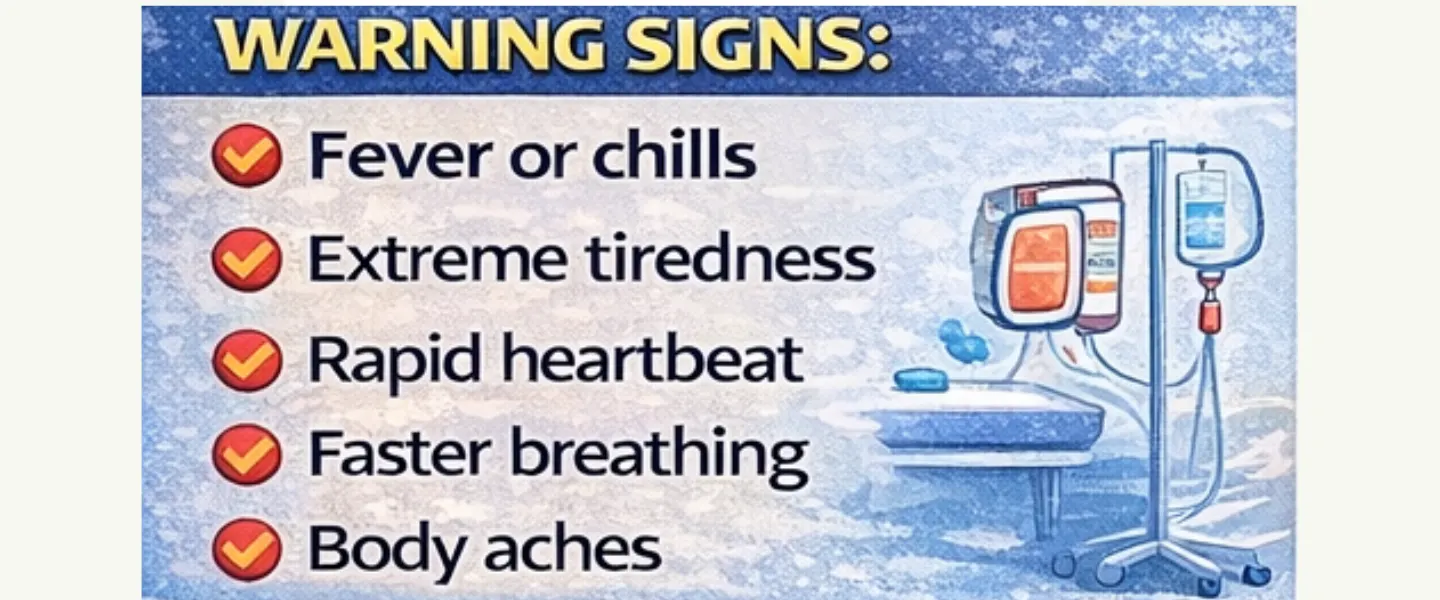
Common early symptoms include:
Fever or chills.
Extreme fatigue or weakness.
Rapid heartbeat.
Faster breathing than normal.
Muscle or body aches.
Serious symptoms may include:
Confusion or dizziness.
Very low blood pressure.
Reduced urine output.
Cold or pale skin.
Loss of consciousness.
Any fever combined with weakness or confusion requires immediate medical attention.
How Do Doctors Diagnose Blood Infections?
The aim of diagnosing infections is to identify both the infection itself and its source. In general, physicians will perform the following diagnostic tests:
Blood cultures (to identify the presence of bacteria or fungi).
Complete blood count.
Inflammation markers.
Urine testing.
Imaging, such as X-ray or CT scan.
Blood culture testing allows the physician to determine which germ is causing the infection, enabling them to prescribe a more appropriate treatment rather than a broad-spectrum antibiotic.
What Treatments Are Used for Blood Infections?
In 2024, the Indian Society of Critical Care Medicine shared updated recommendations to improve early detection and treatment of sepsis in Indian hospitals.
Immediately upon receiving a diagnosis, a patient usually receives one or more treatments, even if not all lab results are available.
Some common treatments in hospitalised patients include:
Antibiotics or antivirals are given through IV.
Fluids are given to stabilise blood pressure.
Oxygen is provided to assist with breathing, if needed.
Medication is given to treat fever and pain.
Monitoring of the patient in an intensive care unit for severe cases.
Customise appropriate treatment after identifying the organism from laboratory tests.
Receiving early hospital care increases the chances of living.
Can Blood Infections Be Prevented?
Many infections are not preventable, but simple behaviours can help reduce one's risk.
Here are some simple ways to help avoid and prevent infection:
Treating an infection as soon as it's found.
Keeping open wounds clean and dry.
Practising proper hand hygiene.
Following catheter and IV care protocols.
Completing antibiotic courses as prescribed.
Keeping vaccinations up to date.
The use of hospital safety practices can play a key role in preventing bloodstream infections.
Who Is Most at Risk?
People in the following categories are at greater risk of developing serious illnesses:
Older adults.
Newborns.
People who suffer from chronic illnesses.
People whose immune systems are suppressed.
Individuals who have undergone recent surgery.
All of these groups should be extra cautious and report any symptoms of a serious illness as soon as possible.
Frequently Asked Questions
1. Is a blood infection the same as sepsis?
A bloodstream infection can lead to a serious condition called sepsis, which results from the body's severe immune response to an infection.
2. Can blood infections be cured?
If treated promptly and appropriately, the vast majority of people with sepsis will recover completely.
3. How fast do symptoms worsen?
Some bloodstream infections progress quickly; otherstake longer (usually days).
4. Are blood infections contagious?
Bloodstream infections can be transmitted through the primary source, but they are generally not contagious to others.
5. Do blood infections always need hospital care?
Most people with bloodstream infections require intravenous therapy and need close monitoring during treatment.
Final Thoughts
If a blood infection is diagnosed early enough, it can be treated very effectively. Knowing the warning signs is important so that, if they develop, treatment can be sought quickly enough to prevent complications.
As a result of advances in modern medicine and timely treatment, many people who develop a blood infection can expect to return to their daily lives as if nothing had happened.
Read Also
References
Disclaimer
This article is for educational purposes only and does not replace professional medical advice. Blood infections are medical emergencies. Always seek immediate medical care if symptoms are suspected.












Comments