

HIV Myths vs Facts





Last updated on 02 Jan 2026
Even today, many people still carry misconceptions about HIV. These misunderstandings can lead to fear, stigma, and missed opportunities for prevention and treatment. With modern medicine, HIV is no longer the life-ending condition it was once thought to be. People living with HIV can enjoy long, healthy lives when diagnosed early and treated properly. Understanding HIV myths and facts is important to clear confusion, reduce stigma, and encourage timely testing and treatment.
To combat stigma and misinformation, it’s essential to distinguish between myth and fact. In this article, we’ll break down some of the most common misconceptions and explain the truth in simple, friendly terms.
Why Myths Around HIV Still Exist
Fear of the unknown makes people more likely to believe false stories.
In some cultures, discussions about sexual health remain taboo, which prevents accurate information from spreading.
Social media can sometimes amplify misleading health-related content.
That’s why spreading accurate HIV facts is so important today.
Common Myths About HIV and the Truth Behind Them
In 2024, approximately 40.8 million people worldwide were living with HIV, including 39.4 million adults and 1.4 million children. Over half of those affected were women and girls. Myths and facts about hiv aids include,
Myth 1: HIV transmission myths
This is one of the most widespread HIV transmission myths. People sometimes believe they can get HIV from hugging, shaking hands, or sharing food with someone who has HIV.
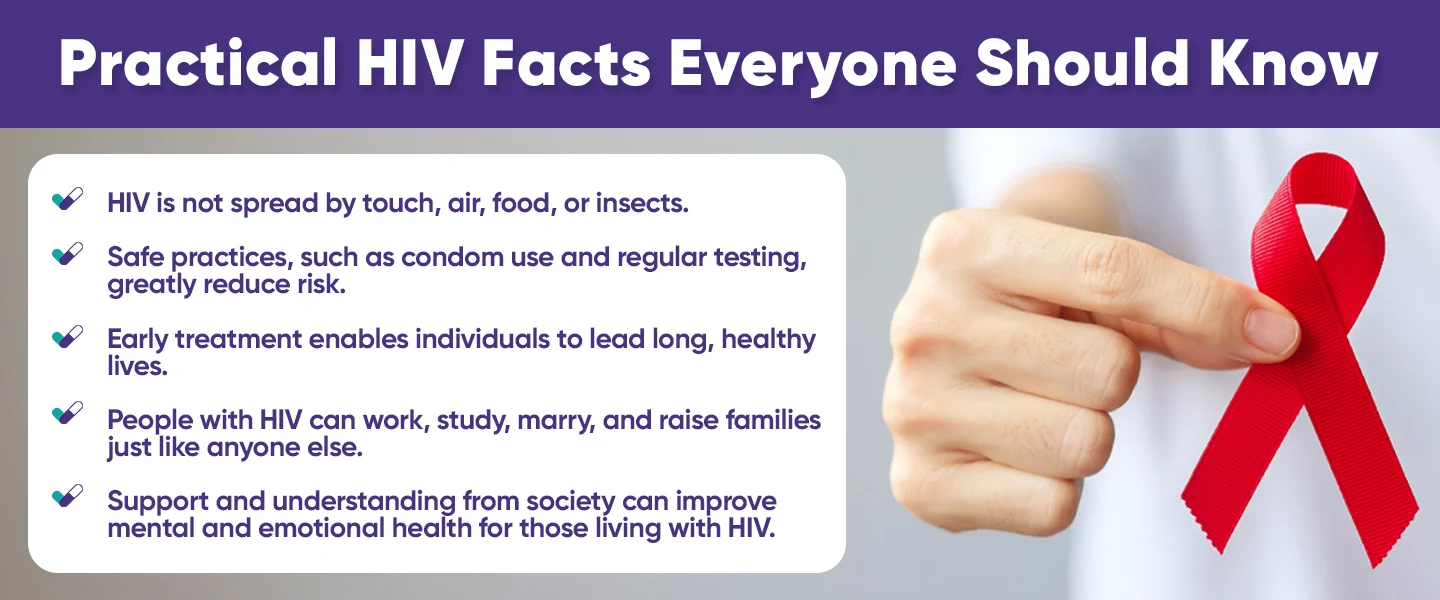
Fact: HIV cannot be spread through casual contact. The virus does not survive well outside the body, and it is not transmitted through saliva, sweat, or physical contact. Spending time with, hugging, or eating with a person living with HIV is completely safe.
Myth 2: HIV only affects certain groups of people
Another false belief is that HIV only affects certain communities or lifestyles.
Fact: Anyone can get HIV, regardless of gender, sexuality, or background. While some groups may be at higher risk due to lack of awareness, unsafe practices, or limited access to healthcare, HIV does not discriminate.
Myth 3: Myths about hiv transmission
One of the older myths about HIV transmission is that mosquito bites can pass on the virus.
Fact: Mosquitoes do not transmit HIV. The virus cannot survive or multiply inside insects. Extensive research and real-world studies confirm that no cases of HIV have ever been linked to mosquito bites.
Myth 4: Myths and Facts about HIV/AIDS
Many people still confuse HIV with AIDS, thinking they mean the same thing.
Fact: HIV is the virus, while AIDS is the advanced stage of untreated infection. With early diagnosis and treatment, most people with HIV never develop AIDS. Modern medications enable individuals to maintain their health and prevent the progression of disease.
Myth 5: HIV can spread through kissing
This is another common myth about HIV that causes unnecessary fear.
Fact: HIV is not transmitted through closed-mouth kissing, casual kisses, or social interactions. Deep kissing has an extremely low risk and only becomes a concern if both partners have open sores or bleeding gums, which is very rare.
Myth 6: There’s no need for HIV testing unless you feel sick
Many people believe in HIV testing myths, assuming symptoms will make the infection obvious.
Fact: HIV can remain symptomless for years. Testing is the only way to know for sure. Regular screening is recommended for people who are sexually active, pregnant women, and anyone who may have been exposed. Early testing means early treatment, resulting in better outcomes.
Myth 7: Once diagnosed, there’s no hope because there’s no cure
This belief comes under HIV cure myths and is still common in many places.
Fact: While there is no complete cure yet, HIV can be managed very effectively with antiretroviral therapy (ART). These medicines suppress the virus to undetectable levels, which keeps the immune system strong. When the virus is undetectable, it cannot be transmitted. This is known as U=U (Undetectable = Untransmittable).
Myth 8: Traditional remedies or alternative treatments can cure HIV
In some regions, cultural remedies or herbal solutions are promoted as cures.
Fact: No herbal, alternative, or home-based remedies have been proven to cure HIV. Only modern antiretroviral medicines are scientifically validated to control the virus. Using untested remedies can delay proper treatment and harm health.
Myth 9: Myths about hiv/aids
This is one of the most damaging myths about HIV/AIDS for families.
Fact: With proper medical care, people living with HIV can have healthy, HIV-negative children. Treatments reduce the risk of transmission during pregnancy, childbirth, and breastfeeding. Many parents with HIV now raise families without passing on the virus.
Myth 10: If someone looks healthy, they cannot have HIV
Appearance can be misleading, which is why many people still believe in these myths and facts about HIV transmission.
Fact: People with HIV can look and feel healthy for many years, especially with treatment. The only reliable way to know someone’s HIV status is through testing.
The Role of Education and Research
Thanks to ongoing gut-brain-like studies in HIV (to borrow a phrase), modern research has transformed how we view the condition:
Treatments are safer, more effective, and widely available.
Prevention strategies, such as pre-exposure prophylaxis (PrEP), have significantly reduced the risk of HIV transmission.
Scientific understanding has busted countless myths and facts about HIV and AIDS, proving that living with HIV is manageable.
Public education and awareness remain the most effective tools for replacing stigma with compassion.
What to Do If You Test Positive
Dr. Nupoor Acharya, Consultant Immunologist & Rheumatologist, explains that there is no scientific evidence that HIV is transmitted through insect bites. It’s a total misconception.” Outdated information still circulates in communities.
Testing positive for HIV can feel overwhelming, but remember—you are not alone, and modern treatment makes it possible to live a long, healthy life. Here are the key steps to take:
1. Confirm the Test
Sometimes, an initial test may give a false-positive result. Doctors usually recommend a second test to confirm the diagnosis.
2.Seek Medical Care Immediately
Connect with a qualified healthcare provider. They will guide you through the next steps, including baseline tests and the initiation of treatment.
3. Start Treatment Early
Antiretroviral therapy (ART) should be started as soon as possible. Early treatment helps keep the immune system strong and reduces the amount of virus in your body.
4. Understand U=U (Undetectable = Untransmittable)
With consistent treatment, your viral load can become undetectable. This means you stay healthy and cannot pass HIV to sexual partners.
5. Look After Your Mental Health
A new diagnosis can bring feelings of fear, sadness, or anxiety. Reach out to counsellors, peer support groups, or trusted friends and family.
6. Live a Healthy Lifestyle
Eating well, exercising, and avoiding smoking or excessive alcohol help your body respond better to treatment.
7.Stay Informed and Connected
Learning the difference between HIV myths and facts will help you avoid stigma and misinformation. Staying connected with healthcare providers and support networks makes the journey easier.
Final Thoughts
The fight against HIV is not just about medicine’s also about changing perceptions. Myths create fear and stigma, while facts empower people to seek testing, treatment, and support. By sharing correct information, we help build a world where HIV is treated like any other health condition, without prejudice or misinformation.
The truth is simple: with the right knowledge and treatment, people living with HIV can live full, vibrant lives. Breaking myths is the first step toward a healthier, more compassionate future.
Read also
References
https://www.webmd.com/hiv-aids/top-10-myths-misconceptions-about-hiv-aids
https://www.unaids.org/en/frequently-asked-questions-about-hiv-and-aids
Disclaimer: The content in this blog is for general informational purposes only and is not a substitute for professional medical advice, diagnosis, or treatment. Always consult your doctor or a registered dietitian before making any changes to your diet, especially if you have a medical condition or are taking prescribed medication. While the information is based on trusted sources, individual needs and results may vary. MrMed does not promote or endorse any specific food or treatment mentioned unless explicitly stated.











Comments