

How to Protect Yourself from Lung Damage in Delhi’s Polluted Air





Last updated on 09 Jan 2026
Key Takeaways
|
Delhi’s air pollution has become a year-round health challenge. With harmful pollutants constantly floating in the air, the risk to the lungs and overall well-being is real. While policies and large-scale efforts will take time to show results, you and your family can take protective steps immediately.
This guide brings you practical actions and expert-backed measures to help reduce exposure to polluted air and minimise lung damage, whether you are a child, a senior, a commuter, or someone living with respiratory disease.
Why Delhi’s Air Pollution Is Getting Riskier
Pollution levels in Delhi often rise far beyond safe limits. Dangerous particles such as PM2.5 and PM10 are small enough to enter the lungs and even the bloodstream. These pollutants can:
Trigger breathing difficulties
Worsen asthma and COPD symptoms.
Lower immunity
Increase heart-related risks
Damage to the lungs over time
Winter months worsen the situation because cold air traps pollution closer to the ground, making the smog more intense. As a result, both short-term breathing problems and long-term lung diseases become more common.
Protective Steps Everyone Should Follow
Even small daily changes can significantly protect your lungs.
Wear a Proper Mask Outdoors
Use a high-filtration mask, such as an N95 or KN95. These capture harmful fine particles better than cloth or surgical masks. Make sure the mask fits tightly over your nose and mouth to prevent polluted air from leaking in.
Track Pollution Levels Daily
Check the day’s Air Quality Index before stepping outside. Limit exposure on days labelled “poor,” “very poor,” or “severe.”
Practice Smart Indoor Living
When the air outside is bad:
Keep windows and doors closed
Seal gaps where outside air can enter
Avoid burning candles, incense, or outdoor grills.
Regularly clean surfaces to remove dust
Use exhaust fans while cooking.
Use an Air Purifier at Home
If possible, install a purifier with a HEPA filter in areas where the family spends most of its time, such as bedrooms and the living room. It significantly reduces indoor particle concentration.
Special Care Tips for Different Groups
The updated 2025 advisory from the Ministry of Health and Family Welfare (MoHFW) recommends that high-risk groups, children, pregnant women, the elderly, and patients with chronic lung or cardiovascular disease minimise outdoor excursions on high-pollution days, limit physical exertion, and stay indoors to avoid exposure to polluted air.
Children
Kids breathe faster, making them more vulnerable. Try to:
Restrict outdoor play during peak pollution hours
Carry a spare mask for school or travel.
Promote more indoor activities on bad-AQI days.
Keep them well-hydrated
Elderly People
Seniors often have reduced lung capacity. They should:
Stay indoors during high-pollution periods
Avoid morning and late-evening walks near traffic.
Maintain regular medications for existing health issues.
Keep warm in winter, since cold air irritates the airways.
Working Adults and Commuters
Daily travel increases exposure. You can:
Travel when roads are less busy
Keep car windows closed.
Use a mask consistently during commutes.
Prefer remote work options on severe smog days.
People with Asthma or Chronic Lung Disease
Randeep Guleria, Former Director, All India Institute of Medical Sciences (AIIMS), New Delhi. He has publicly warned that Delhi’s air has turned into more than just a seasonal nuisance. According to him, the toxic smog isn’t just aggravating pre-existing lung or heart conditions; it is now causing serious damage even in otherwise healthy individuals.
Pollution can trigger life-threatening attacks. It helps to:
Never skip prescribed inhalers or medications
Avoid smoke, dust, chemical fumes, and strenuous outdoor activity.
Always carry a rescue inhaler while stepping out.
Get preventive check-ups more frequently during winter.
Support Your Lungs with Better Habits
According to recent data, between 2022 and 2024, Delhi’s major hospitals recorded over 2 lakh (200,000) cases of acute respiratory illness (ARI) linked to poor air quality. This surge underscores how pollution spikes are directly affecting health and hospital burden.
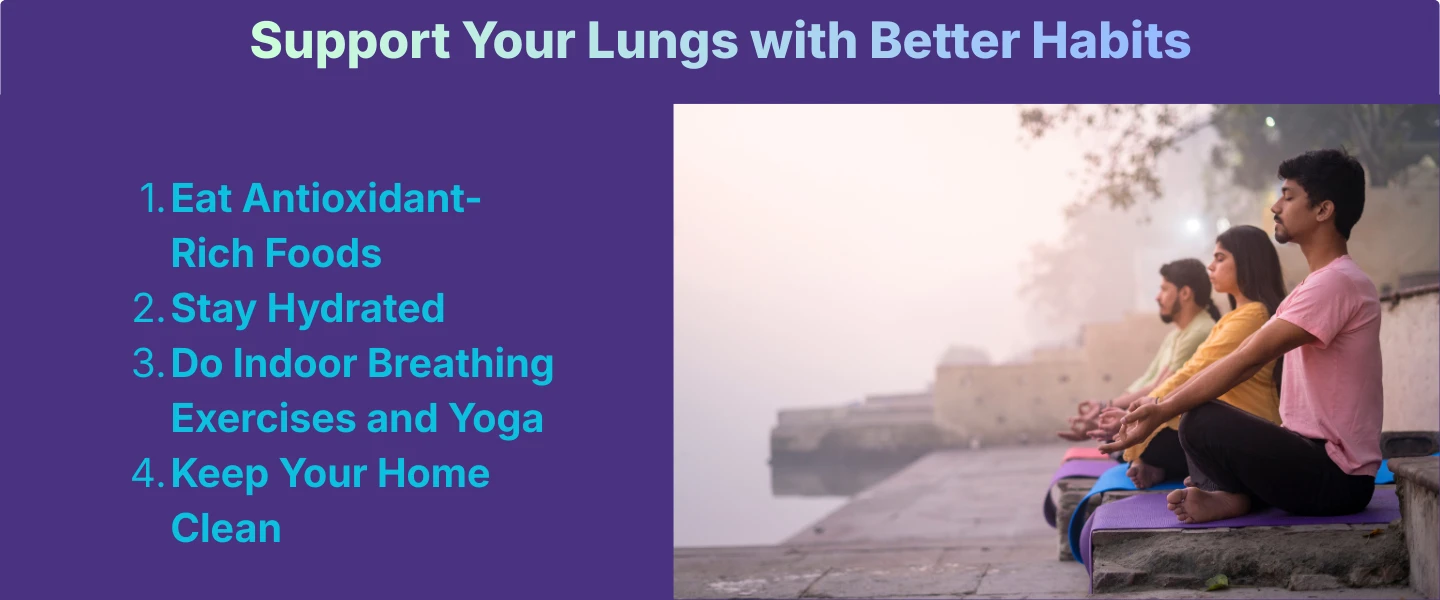
You can strengthen your lungs and body to handle the stress of pollution better.
Eat Antioxidant-Rich Foods
Pollution leads to oxidative stress. Foods that help fight this include:
Berries, apples, oranges
Green leafy vegetables
Nuts and seeds
Tomatoes and carrots
Omega-3-rich foods like walnuts and fish
Aim for a mix of colours on your plate daily.
Stay Hydrated
Warm water, soups, and herbal teas all help keep airways moist and flush irritants more easily.
Do Indoor Breathing Exercises and Yoga
Deep breathing improves lung capacity and helps remove stale air more effectively. Yoga forms like pranayama are especially beneficial when done correctly at home.
Keep Your Home Clean
Pollutants settle on surfaces and fabrics. Regular vacuuming, mopping, and wiping prevent re-exposure.
Modify Daily Routines Strategically
Avoid jogging outdoors on high smog days; choose indoor exercise instead.
Reduce time spent near traffic lights, construction sites, or dusty markets.
If you must go outside during peak pollution hours, keep your activity light, avoid jogging, running, or cycling.
Consider activities such as mall walks or indoor sports instead of outdoor workouts during smog season.
These adjustments make a meaningful difference over time.
Protect Indoor Air Quality
One major mistake people make is thinking that staying indoors automatically keeps them safe. Indoor pollution can become equally harmful if ignored.
Here are precautions that help:
Keep shoes outside the main living space
Use door mats to trap dust.
Wash curtains and bed linens more often during winter.
Keep indoor plants for a better humidity balance.
Ensure chimneys and exhaust fans work efficiently.
Small household changes can prevent pollutants from accumulating.
Take Extra Care When Winter Arrives
Regional Advisory from Directorate of Health Services, NCT of Delhi. This advisory recommends avoiding outdoor activities (especially near heavy traffic or industrial zones), avoiding burning incense/coils, or disposing of waste inside homes, practising wet-mopping instead of sweeping (to reduce dust), and urging vulnerable individuals to stay indoors during severe pollution episodes.
Delhi winters are beautiful, but tough on the lungs. Extra caution helps prevent health flare-ups:
Use scarves or mufflers outdoors to warm the air before breathing
Maintain room humidity at a comfortable level.
Wear layers to stay warm and protect airways.
Increase indoor ventilation only when pollution dips temporarily.
Children and seniors, in particular, should follow winter safety guidelines closely.
When to Seek Medical Help
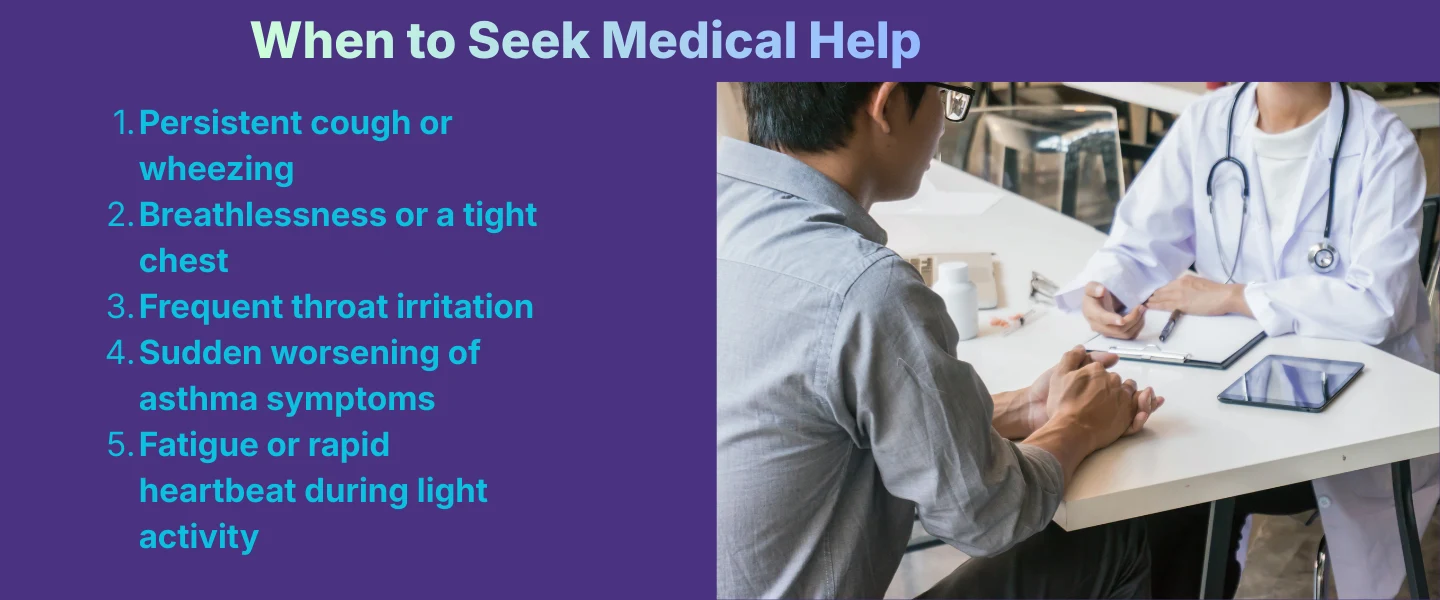
Seek immediate medical advice if you or a family member experiences:
Persistent cough or wheezing
Breathlessness or a tight chest
Frequent throat irritation
Sudden worsening of asthma symptoms
Fatigue or rapid heartbeat during light activity
Early action prevents complications and long-term damage.
FAQs
1. Should everyone wear a mask outdoors in Delhi?
Yes. A high-quality mask like N95 offers excellent protection, especially on bad-AQI days.
2. Is it safe to exercise outdoors during smog season?
Avoid strenuous outdoor activity when pollution levels are high. Indoor exercise is safer.
3. Can air purifiers reduce indoor pollution effectively?
Yes, especially those with HEPA filters. Place them in bedrooms and living areas.
4. Are children more affected by polluted air?
Yes. Children have developing lungs and breathe faster, so they absorb more pollutants.
5. Can diet and hydration help?
Absolutely. A balanced, nutrient-rich diet and good hydration strengthen lung defence.
Final Thoughts
Delhi’s polluted air isn’t going to disappear overnight, but that doesn’t mean you’re powerless. With thoughtful routines, stronger indoor environments, and better lung-friendly habits, you can dramatically reduce the damage pollution can cause.
The key is consistency. Every smart choice, every mask worn, every purified breath indoors, every smoke-free day at home adds up to healthier lungs and a better quality of life.
Protect your breath, protect your future.
Read also
References
Disclaimer: The information shared in this blog is meant for general educational purposes only and should not be taken as medical advice. Always consult a qualified healthcare professional for diagnosis, treatment, or medical guidance related to your health. The content is based on reliable sources, but it may not be suitable for every individual’s condition. We do not assume responsibility for any actions taken based on this information. Readers are encouraged to exercise caution and use their discretion when making healthcare decisions.












Comments