

H1N1 Cases Rise in India: Symptoms, Vaccine Protection, Treatment and When to See a Doctor





Last updated on 05 Oct 2026
H1N1 influenza, commonly known as swine flu, is drawing renewed attention in India as health departments and surveillance systems track rising infections across several regions. The rise has also brought questions about seasonal flu vaccination, antiviral treatment and how to recognise symptoms that may need medical attention.
For most people, influenza is a short-term respiratory illness. But it can be more serious for young children, older adults, pregnant women and people with certain underlying conditions. Knowing what H1N1 symptoms look like, how the infection spreads and what protection is available can help people respond appropriately during the current flu season.
Key Takeaways
|
H1N1 Cases in India: What Is Happening Now?
H1N1 activity has increased in parts of India, although case numbers vary by region. Haryana reported 378 cases by September 16, up from 163 on August 26. Bhopal recorded 46 cases in the first two weeks of September, while Delhi had reported 1,777 cases by August 20, compared with 229 during the same period last year.
These figures come from different dates and local surveillance systems, so they should not be combined to estimate the country's overall H1N1 burden. The National Centre for Disease Control (NCDC) continues to monitor seasonal influenza across India.
The rise in cases has prompted closer monitoring, but there is no evidence of a new or unusually dangerous H1N1 strain. Dr Rajiv Bahl, Director General, ICMR, said on August 25 that the viruses circulating in India match seasonal influenza patterns seen in recent years. The H1N1 lineage currently in circulation has been present since 2025, with genetic changes that are expected as seasonal influenza viruses evolve. So far, the increase in cases does not indicate a new H1N1 threat.
H1N1 Is Not Something You Get From Eating Pork
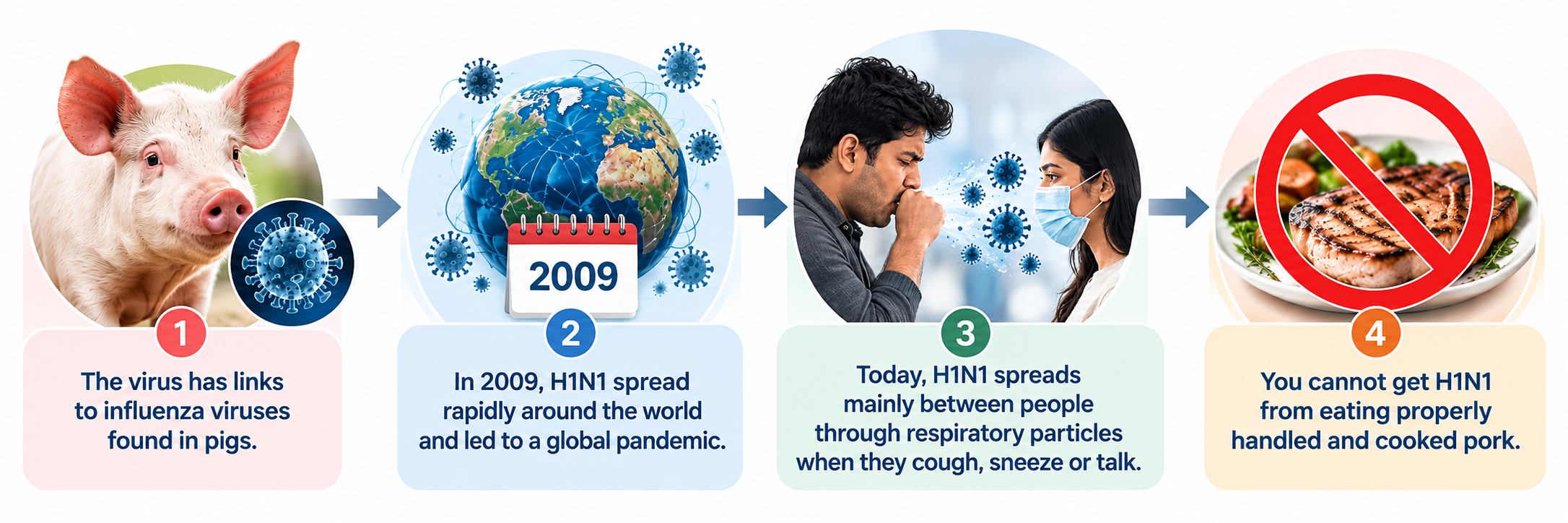
H1N1 is a type of Influenza A virus that now circulates among people as seasonal flu. You may also hear it called “swine flu”. The name comes from the virus's links to influenza viruses found in pigs when it first emerged in 2009. Today, H1N1 spreads mainly between people.
You cannot get H1N1 from eating properly handled and cooked pork. The infection spreads through respiratory particles from an infected person, particularly when they cough, sneeze or talk. Being in close contact with someone who has the infection can increase the risk of catching it.
What Are the Symptoms of H1N1?
H1N1 can cause symptoms similar to seasonal influenza. Common swine flu symptoms include:
Symptoms can range from mild to more severe. They cannot confirm H1N1 on their own because other influenza viruses and respiratory infections can cause similar symptoms. Testing may be needed in some cases.
Swine Flu vs Seasonal flu vs COVID-19: How Are the Symptoms Different?
H1N1(Swine flu), H3N2 (seasonal flu), and COVID-19 can all start with similar symptoms. That makes it difficult to know which infection you have based on symptoms alone. A test may be needed to identify the infection.
If symptoms are severe or getting worse, medical advice is more useful than trying to distinguish the viruses at home
Symptom | H1N1 | H3N2 | COVID-19 |
Fever | Common | Common | Common |
Cough | Common | Common | Common |
Body aches | Common | Common | Common |
Fatigue | Common | Common | Common |
Sore throat | Common | Common | Common |
Loss of taste or smell | Less typical | Less typical | Can occur |
How Is H1N1 Diagnosed?
Symptoms of H1N1 can look like other respiratory infections, so they cannot confirm the infection on their own. When testing is required, a doctor may recommend an H1N1 RT PCR test.
Does the Flu Vaccine Protect Against H1N1?
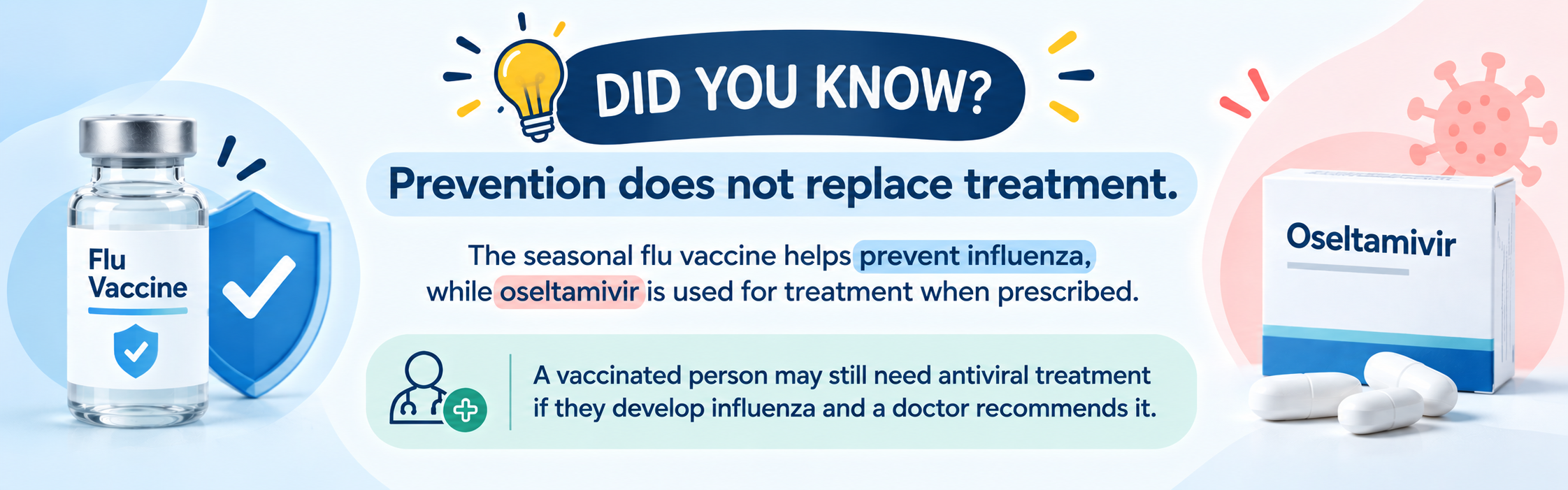
Yes. Seasonal flu vaccines include protection against H1N1. The strains covered by the vaccine are updated each season, and NCDC has published the recommended vaccine composition for 2026.
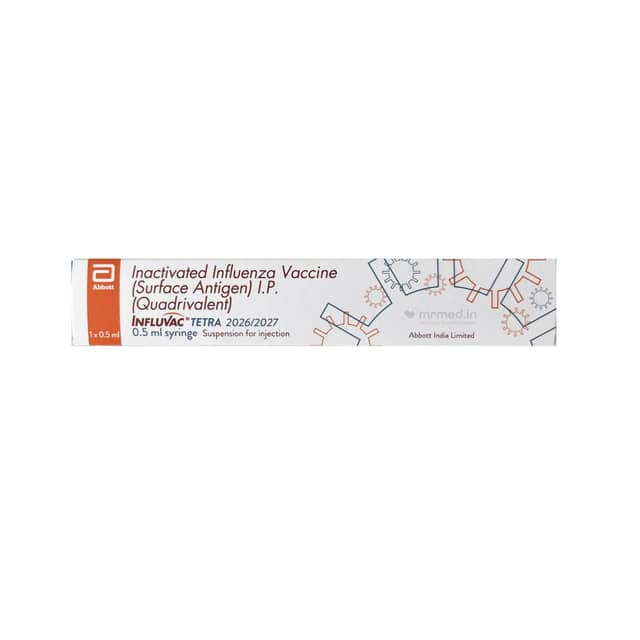
In India, doctors recommend vaccines such as Influvac Tetra and Vaxiflu for H1N1 protection. The vaccine does not guarantee that you will avoid influenza, but it can lower the risk of getting seriously ill.
H1N1 Treatment: What Is Used?
Most mild cases can be managed at home with rest, fluids and medicines for fever or body aches.
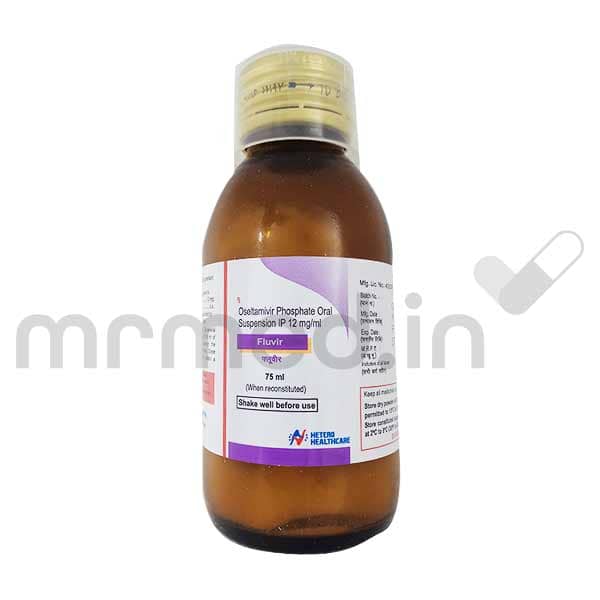
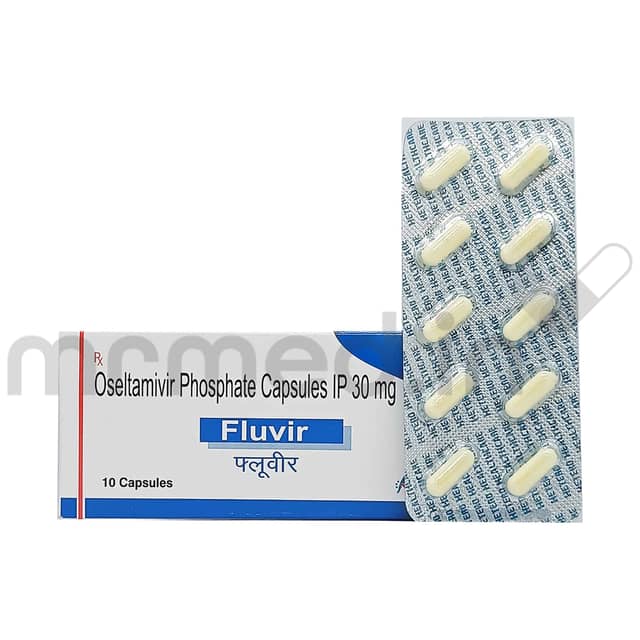
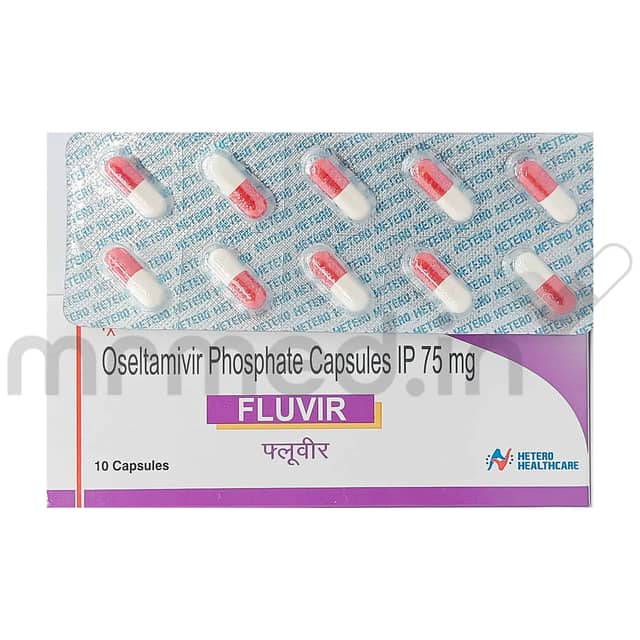
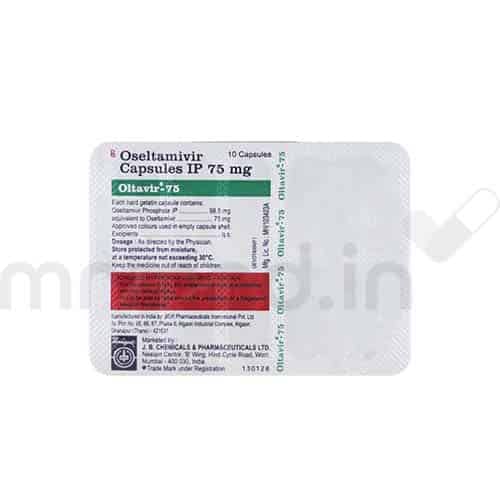
For people who need antiviral treatment, doctors may prescribe oseltamivir. It is used against influenza, including H1N1, and is available under brand names such as Oltavir and Fluvir.
Antibiotics do not treat H1N1 because it is caused by a virus. Do not start antibiotics or oseltamivir on your own. A doctor can advise whether antiviral treatment is appropriate.
When Should You See a Doctor for H1N1?
Most people with mild influenza recover with rest, fluids and medicines to relieve symptoms. However, influenza should not be ignored when symptoms are severe, do not improve or start getting worse.
If you are pregnant, very young, older, immunocompromised or living with a chronic health condition, speak to a doctor sooner if you develop flu-like symptoms.
Seek urgent medical attention if you develop:
Difficulty breathing or shortness of breath
Chest pain or pressure
Confusion, unusual drowsiness or difficulty staying awake
Severe weakness, dizziness or signs of rapid deterioration
Symptoms that improve but then return or become significantly worse
These can be H1N1 warning signs and should be assessed promptly.
How Can You Reduce the Risk of H1N1?
Since H1N1 spreads mainly from person to person, reducing exposure to respiratory particles and maintaining good hygiene can help limit transmission.
Some simple precautions include:
Get vaccinated: Ask your doctor about the seasonal influenza vaccine, particularly if you are at higher risk of complications.
Stay home when unwell: Avoid close contact with others while you have flu-like symptoms.
Cover coughs and sneezes: Use a tissue or your elbow to cover your mouth and nose.
Keep your hands clean: Wash them regularly with soap and water or use an alcohol-based hand sanitiser.
Improve indoor ventilation: Open windows or improve airflow in crowded indoor spaces where possible.
Avoid touching your face: Try not to touch your eyes, nose or mouth with unwashed hands.
Use medicines appropriately: Do not start antibiotics or antiviral medicines such as oseltamivir without medical advice.

The Takeaway
The rise in H1N1 cases in parts of India is worth noting, but current surveillance has not identified an unusually dangerous strain. Vaccination, basic precautions and timely medical care can help reduce the risk of complications.
FAQs
Q1. What is the current situation with the H1N1 virus in India?
H1N1 activity has increased in several parts of India, although reported H1N1 cases in India vary between regions. Current surveillance has not identified an unusual genetic shift or a new, unusually dangerous H1N1 strain.
Q2. What are the symptoms of swine flu in adults?
Common swine flu symptoms in adults include:
Fever
Cough
Sore throat
Headache
Body aches
Chills
Fatigue
Runny or blocked nose
These H1N1 symptoms in adults can also occur with other influenza infections.
Q3. What are the symptoms of H1N1 in children?
H1N1 symptoms in children can include:
Fever
Cough
Sore throat
Runny or blocked nose
Headache
Body aches
Fatigue
Young children also have a higher risk of influenza complications.
Q4. Is H1N1 still a threat today?
H1N1 continues to circulate as a seasonal human influenza virus. It can cause serious illness in some people, particularly those at higher risk of complications.
Q5. What is the best treatment for H1N1?
H1N1 treatment depends on the person's symptoms and risk of complications. Mild illness may improve with rest, fluids and medicines for symptom relief. Oseltamivir may be prescribed when antiviral treatment is clinically indicated. It is also used in swine flu treatment when recommended by a doctor.
Q6. Can H1N1 be treated at home?
Mild H1N1 infection may be managed at home with rest, adequate fluids and medicines for symptom relief. This is sometimes referred to as H1N1 treatment at home. People at higher risk of complications or those with severe or worsening symptoms should seek medical advice.
Q7. Does the flu vaccine protect against H1N1?
Yes. Seasonal influenza vaccines include protection against H1N1. The H1N1 vaccine is part of the seasonal flu vaccine in India, with vaccine strains updated according to the influenza viruses expected to circulate during the relevant season.
Q8. How much does the H1N1 vaccine cost in India?
The H1N1 vaccine price in India can vary depending on the vaccine brand, formulation, provider and location. The swine flu vaccine price should be checked with the vaccination provider for the current cost.
Q9. Is there a test for H1N1?
Yes. A swine flu test or H1N1 test may be recommended depending on the clinical situation. An H1N1 RT PCR test can detect genetic material from the virus when laboratory confirmation is required. The swine flu test price can vary depending on the laboratory and type of test.
Q10. When should I see a doctor for swine flu?
Seek medical advice if symptoms are severe, persistent or getting worse. H1N1 warning signs that need urgent medical attention include:
Difficulty breathing or shortness of breath
Chest pain or pressure
Confusion or unusual drowsiness
Severe weakness or dizziness
These are also reasons to seek prompt medical care rather than trying to manage swine flu symptoms and treatment on your own.
















Comments