


More Indians Die from Flu Than You Think: The Growing Need for Adult Vaccination





Last updated on 27 Jun 2026
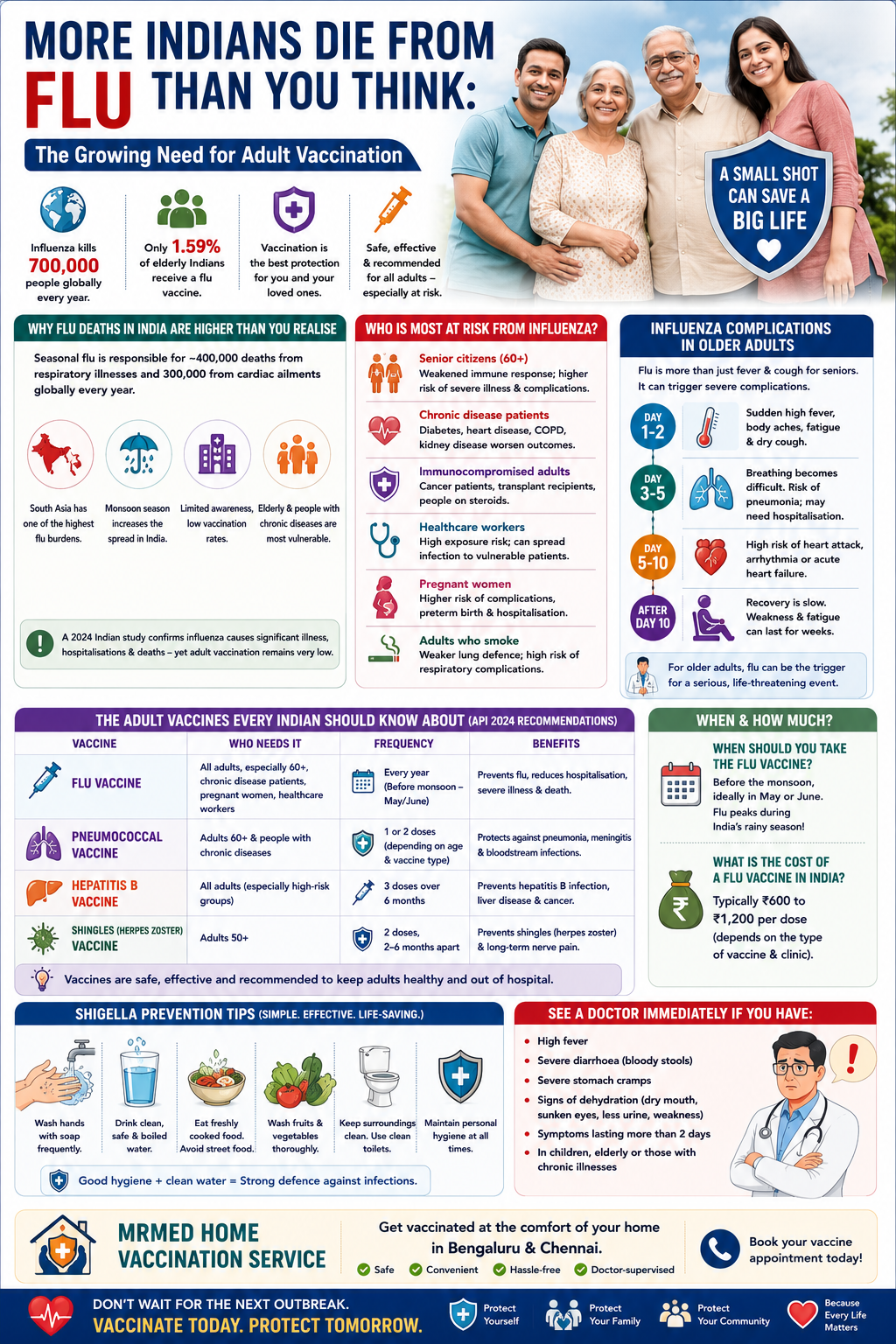
Most people in India still think of the flu the way they think of a bad cold, uncomfortable, inconvenient, but something you sleep off in a few days. The truth is considerably more serious. Influenza kills hundreds of thousands of people globally every year, and South Asia carries a disproportionately high share of that burden. Closer to home, only 1.59 per cent of elderly Indians have received a flu vaccine. In a country where over 150 million people are above the age of 60, that number should make us sit up.
This blog is about what influenza actually does to adults, particularly older adults and those with chronic diseases and why adult vaccination in India deserves far more attention than it currently gets.
Key Takeaways
|
Why Flu Deaths in India Are Higher Than You Realise
There is a disconnect between what most Indians think about influenza and the actual data. The flu is generally seen as a childhood disease or as one associated with cooler climates, both of which are incorrect.
A 2024 position paper from the Indian Association of Preventive and Social Medicine, published in the Indian Journal of Community Medicine, confirmed that influenza causes significant morbidity, hospitalisations, and mortality in India and that evidence-based vaccination recommendations for Indian adults remain poorly adopted on the ground.
Current research indicates that seasonal flu is responsible for approximately 400,000 deaths from respiratory illnesses and 300,000 deaths from cardiac ailments globally on a yearly basis. In general, the burden of seasonal flu is higher in South America, Africa, and South Asia due to several factors, including poverty, poor general health, limited access to healthcare, and limited access to vaccination.
Who Is Most at Risk from Influenza?
Dr Randeep Guleria, Former Director of AIIMS New Delhi and lead author of India's first consensus influenza vaccination guidelines, frames the problem plainly: "Adults often overlook the importance of vaccines, assuming they are only for children. But as we age, our immune system weakens, making us more susceptible to preventable diseases. Vaccines like the flu shot, pneumococcal, hepatitis B, and shingles vaccines are crucial for adults, especially those above 50 or with chronic conditions."
Truthfully, anyone age 60 and older and anyone of any age with an underlying chronic medical condition is at much greater risk for developing severe illness or death from influenza. For these reasons, the people with the highest risk for developing severe influenza-related disease or death are as follows:
Risk Group | Why Flu Is More Dangerous |
Senior citizens (60+) | Weakened immune response; slower recovery; higher risk of secondary infections |
Chronic disease patients | Diabetes, heart disease, COPD, and kidney disease all worsen flu outcomes |
Immunocompromised adults | Cancer patients, transplant recipients, and those on steroids |
Healthcare workers | High exposure risk; can transmit to vulnerable patients |
Pregnant women | Flu during pregnancy increases the risk of premature birth and complications |
Adults who smoke | Impaired lung defence makes respiratory complications more likely |
The two primary complications of influenza in elderly adults resulting in mortality include pneumonia and cardiovascular events. A younger adult can develop flu symptoms, and after about 7 days, their symptoms will go away. However, for a person 70 years of age with diabetes, influenza may be the event that prompts the development of an acute cardiovascular disease or acute respiratory failure.
Influenza Complications in Older Adults: What Actually Happens
When senior citizens get the flu, the illness rarely stays simple. Here is what the progression often looks like in high-risk elderly adults:
Day 1-2: Sudden high fever, body aches, fatigue, and dry cough. Often more severe than in younger adults.
Day 3-5: Breathing may become laboured. Secondary bacterial pneumonia can set in, requiring hospitalisation.
Day 5-10: Risk of cardiovascular complications, including arrhythmia, heart attack, or acute heart failure, peaks during this window.
Beyond day 10: Recovery is slower; weakness and fatigue can persist for weeks. For some, the event triggers a lasting decline.
Influenza complications in older adults are not rare edge cases. They are a documented, predictable consequence of leaving a high-risk population unvaccinated.
The Adult Vaccines Every Indian Should Know About
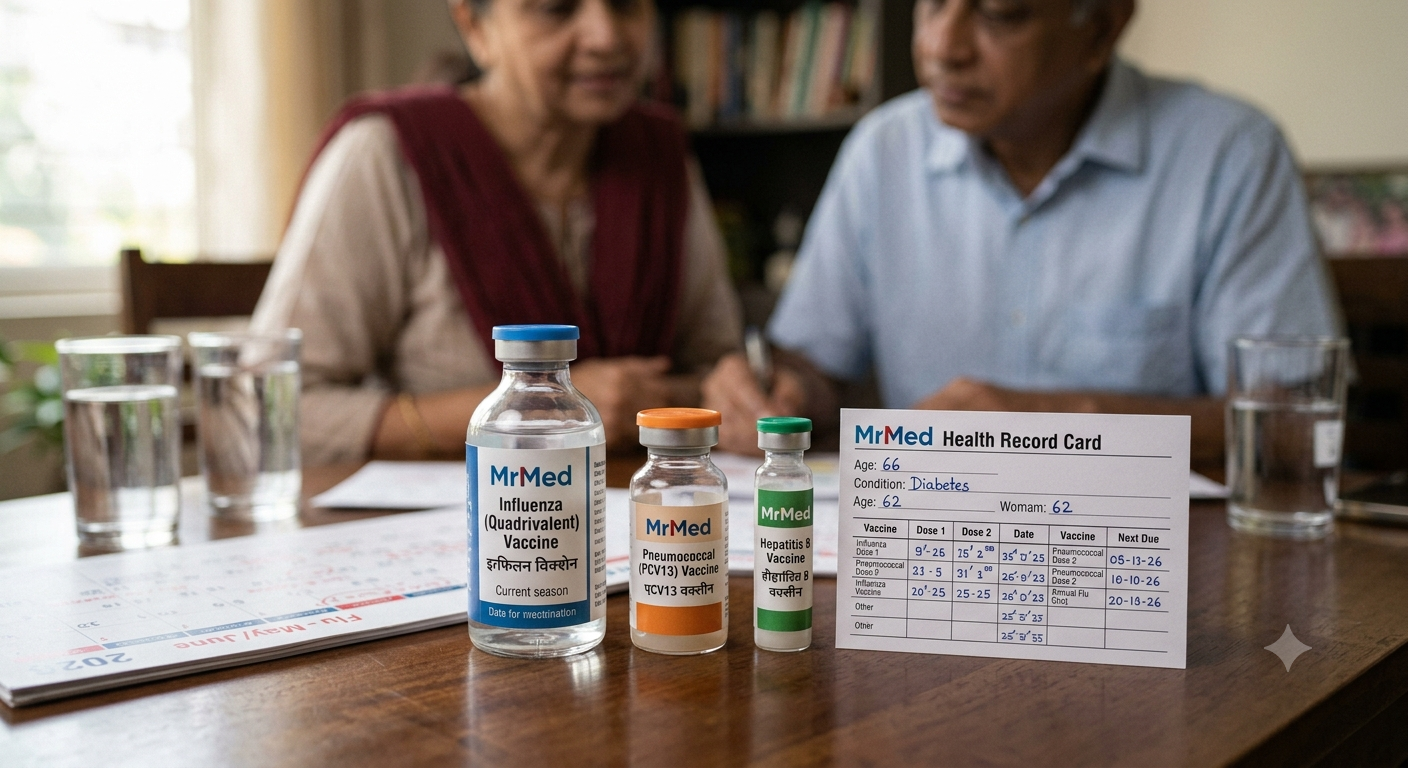
In 2024, the API (Association of Physicians of India) updated its guidelines for adult vaccination, focusing on influenza, pneumococcal infections, hepatitis B, and herpes zoster vaccinations, which are particularly important for high-risk groups, including older adults, health care workers, and adults with chronic diseases.
Here is the core adult vaccination schedule that Indian adults should be aware of:
Vaccine | Who Needs It | Frequency |
Flu vaccine | All adults, especially 60+ and those with chronic disease | Annual every year |
Pneumococcal vaccine (PCV13 + PPSV23) | Adults 65+; adults 50-65 with risk factors | One or two doses as per the schedule |
Hepatitis B vaccine for adults | Unvaccinated adults, healthcare workers, and those with chronic liver conditions | 3-dose series if unvaccinated |
Adults 50+ | Two doses, 2-6 months apart | |
Td booster (Tetanus-Diphtheria) | All adults | Every 10 years |
Each of these is preventable. Each causes serious, sometimes fatal, illness in adults who are unprotected. And yet adult vaccination rates in India remain critically low.
When Should the Flu Vaccine Be Given in India?
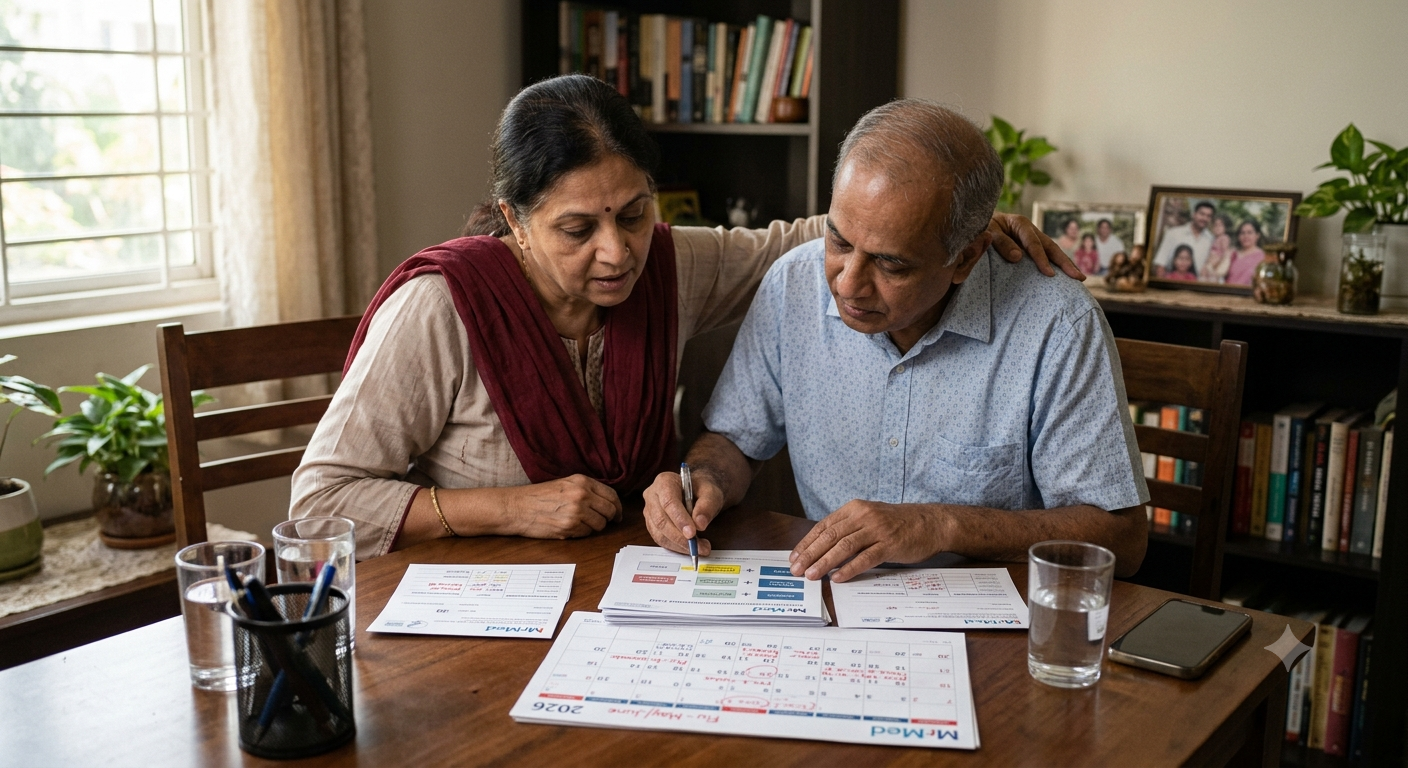
When is the best time to get a flu vaccine in India? The Indian Academy of Paediatrics (IAP) advises that the best time to receive the vaccine is May to June, using the most recent Southern Hemisphere V.V.V.V (Vaccine-Variances-Vaccination). Given the nature of seasonal flu viruses, India experiences an influenza peak during the monsoon season; therefore, if you are vaccinated just before your influenza peak, you will allow your body to build full immunity before the risk of exposure increases.
In contrast to the December-February influenza season seen in the western world, the Indian influenza season corresponds to the monsoon rain season; however, many people are unaware that the Indian seasonal flu pattern follows the monsoon. As a result, for almost all cities, getting vaccinated for influenza in December is not beneficial!
What Is the Cost of a Flu Vaccine in India?
What is the cost of a flu vaccine in India varies by city, provider, and formulation but as a general guide:
Vaccine Type | Approximate Cost in India |
Standard quadrivalent flu vaccine | ₹600 - ₹1,200 per dose |
High-dose flu vaccine (for 65+) | ₹1,500 - ₹2,500 per dose |
Pneumococcal vaccine (PCV13) | ₹2,500 - ₹4,500 per dose |
Hepatitis B vaccine for adults | ₹300 - ₹600 per dose (3-dose series) |
The cost of a missed day of work, a hospitalisation, or an ICU stay runs far higher. Annual flu vaccination for seniors, in particular, is one of the most cost-effective health interventions available.
Benefits of Flu Vaccination: Why a Jab a Year Matters
The most recent real-world evidence makes the benefit concrete: a 2026 CDC VISION Network study of over 31,000 hospitalised patients found that the 2024-25 flu vaccine reduced the risk of influenza-associated hospitalisation by 46 per cent, with adults aged 50 to 64 seeing the strongest protection.
The benefits of flu vaccination extend beyond not catching influenza:
Reduces hospitalisation risk in elderly adults by up to 40 per cent in high-risk groups.
Lower cardiovascular risk studies consistently show that flu vaccination is associated with fewer heart attacks and strokes in the months following vaccination.
Protects people around you. Vaccinated adults are less likely to pass influenza to elderly parents, young grandchildren, or immunocompromised family members.
Even when infection occurs, vaccinated individuals who do contract influenza tend to have significantly milder illness.
For senior citizens and influenza risk, the evidence is unambiguous. Elderly flu prevention through annual vaccination is one of the most consistently supported interventions in preventive medicine.
Home Vaccination Services by MrMed
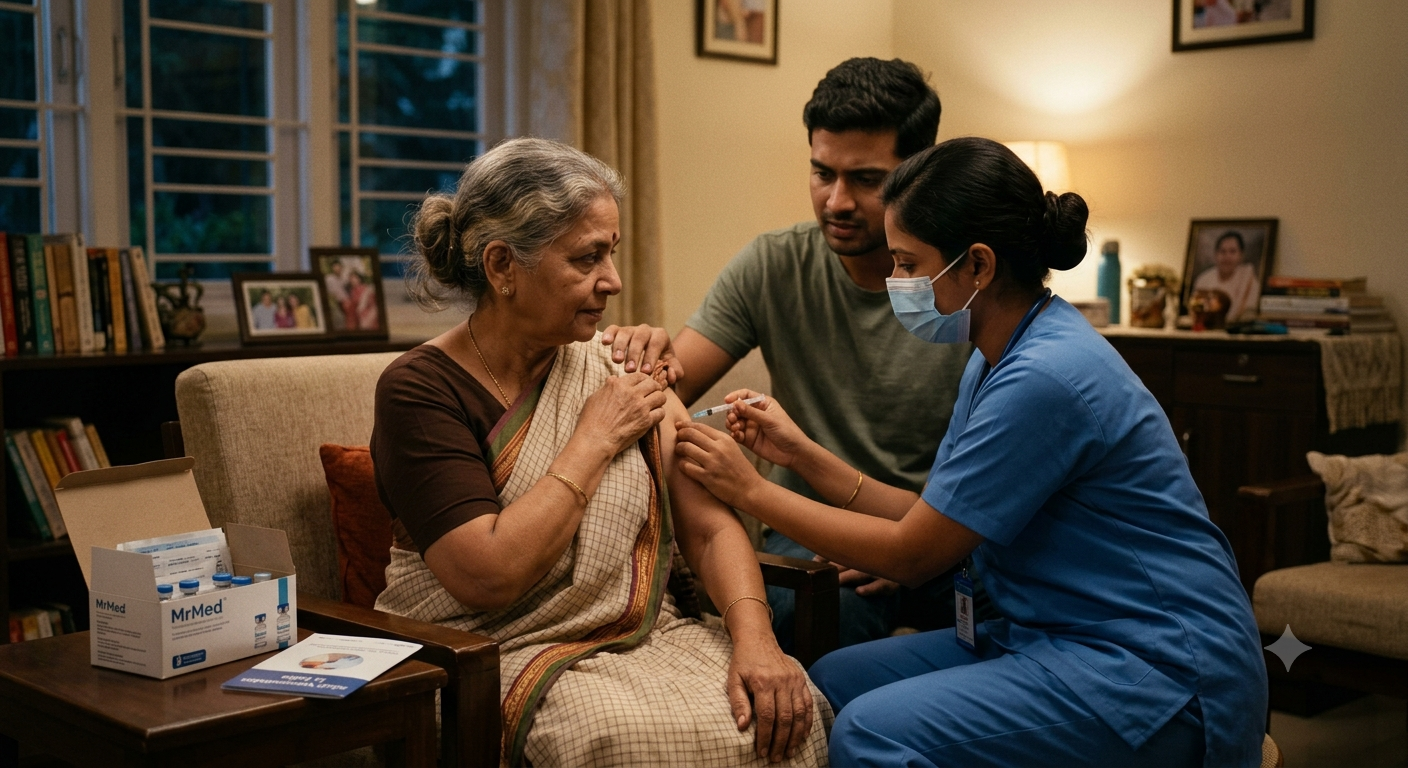
The majority of adults do not receive vaccinations because they find it inconvenient to go to a clinic (especially older adults). Crowded waiting rooms, difficulty travelling, and physical restrictions can prevent many people from getting vaccinated. MrMed’s Home Vaccination Services.
MrMed brings the vaccine to you through trained staff who administer it in your home and monitor your condition before leaving (no queue to wait in, no travelling to the clinic, and no hassle involved).
At the moment, MrMed can provide Home Vaccination Services for the influenza, pneumococcal, and hepatitis B vaccines, as well as other adult vaccines (in Bengaluru and Chennai). If you want to receive your adult vaccination at home (whether for yourself, an elderly parent, or a family member with mobility limitations), Home Vaccination Services are available.
To book a home vaccination service or check availability in your area, visit mrmed.in.
FAQs
Q1. Do adults really need a flu vaccine every year?
Yes. The influenza virus changes each year, so last year's influenza vaccine does not fully protect against this year's strains. One shot, once a year, ideally before the monsoon.
Q2. What is the cost of a flu vaccine in India?
Typically ₹600 to ₹1,200 for a standard dose. High-dose versions for adults over 65 cost more. MrMed's home vaccination service includes the consultation check. MrMed.in for current pricing.
Q3. Can senior citizens get vaccinated at home?
Yes. MrMed's Home Vaccination Services in Bengaluru and Chennai bring the vaccine to you. This is particularly useful for elderly adults or anyone with limited mobility.
Q4. Is the flu vaccine safe for adults with chronic diseases?
Yes, in fact, it is especially recommended for them. Adults with diabetes, heart disease, COPD, or kidney disease face higher flu complications and benefit most from vaccination.
Q5. When should the flu vaccine be given in India?
Before the monsoon, May or June is ideal. Influenza peaks in India during the rainy season, so vaccinating in advance gives your immune system time to prepare.
Final Thoughts
Given its large population, India has some of the lowest adult vaccination rates in the world. This is not because the vaccines themselves do not work; it is because of the lack of awareness about them, limited accessibility, and the cultural belief that vaccines are meant only for children.
The statistics tell a different story. Unfortunately, there are significant numbers of elderly adults who die from influenza every year, but these deaths are greatly understated. Most of these deaths could be avoided with access to the annual flu shot, pneumonia vaccine, and Hepatitis B vaccine for adults, all of which could greatly decrease hospitalisation, severe illness, and death for elderly and at-risk persons.
If you have an elderly parent living with you, or if you know someone who has a chronic disease such as diabetes, heart disease or any other chronic condition, this is not something you should dismiss. Contact MrMed to book an appointment for an adult vaccination at home and stop letting an easily avoidable risk persist.
Read Also
References
OC Academy. Adult vaccination in India: safeguarding elderly lives [Internet]. 2026 Jun [cited 2026 Jun 23]. Available from: https://www.ocacademy.in/blogs/adult-vaccination-in-india-elderly-influenza-pneumonia/
IAP Advisory Committee on Vaccines and Immunisation Practices. Influenza vaccine recommendations for India [Internet]. Mumbai: Indian Academy of Paediatrics; 2026 [cited 2026 Jun 23]. Available from: https://acvip.org/professional/columns/influenza-vaccine
MedBound Times. Adult vaccination recommendations: essential shots for adults in India [Internet]. 2025 Sep 8 [cited 2026 Jun 23]. Available from: https://www.medboundtimes.com/medicine/adult-vaccination-immunization-recommendations-india
Disclaimer: This article is for general informational and awareness purposes only. Always consult a qualified physician before starting any vaccination programme, particularly if you have an existing medical condition or are on long-term medication.














Comments