

Type 1, Type 2, and Other Diabetes Types: What Makes Them Different





Last updated on 09 Apr 2026
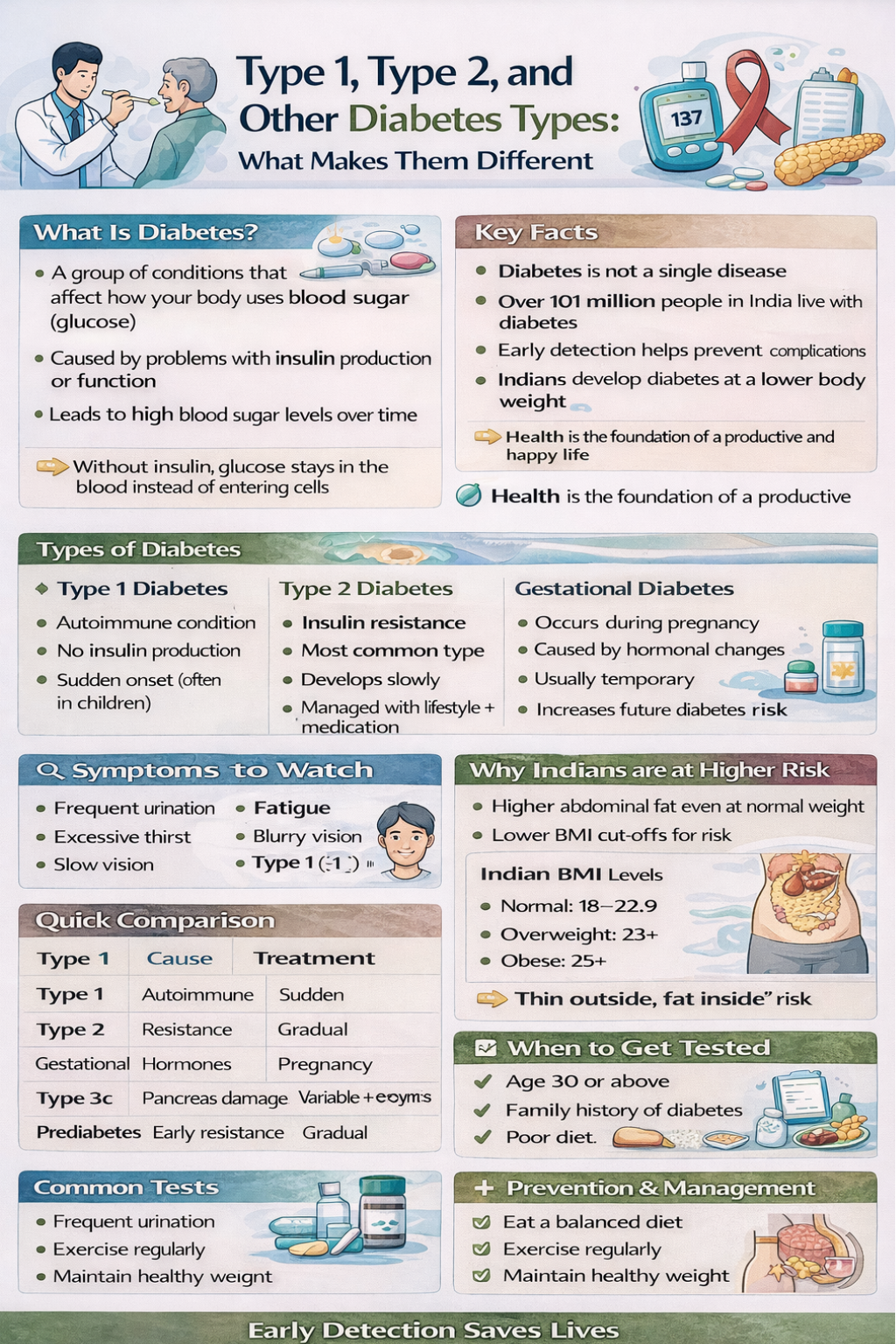
Diabetes is not a single condition but a group of disorders with different causes, including autoimmune, genetic, and lifestyle factors. Each type affects insulin function differently. Indians face a higher risk at a lower body weight. Early detection, regular testing, and the right treatment approach are essential for managing blood sugar and preventing complications.
Key Takeaways
|
“You have diabetes.”
For many people, hearing this is confusing and worrying. What makes it even more confusing is not knowing which type of diabetes you have. Each type behaves differently in the body, and the treatment and lifestyle changes required can vary widely.
This guide explains all types of diabetes mellitus, including Type 1, Type 2, gestational, Type 3c, LADA, and MODY. You’ll also understand why Indians develop Type 2 diabetes earlier and at a lower weight than Western populations.
Understanding Diabetes in Simple Terms
Blood glucose levels that remain above normal can indicate that you have diabetes mellitus. Insulin (the hormone produced by the pancreas) allows glucose to enter your body's cells to provide energy; therefore, when either:
Insulin is not produced properly by the pancreas (and thus no key exists).
Insulin does not work properly in the body (thus it is an unusable key).
Without insulin, glucose cannot enter your cells; it remains in your bloodstream. Long-term hyperglycaemia (elevated blood glucose levels) can damage organs, nerves, and blood vessels.
According to the International Diabetes Federation, India has over 101 million people living with diabetes, making it one of the highest globally.
Types of Diabetes
1. Type 1 Diabetes: Sudden, Severe, and Insulin-Dependent
Autoimmune disorders, such as Type 1 diabetes, occur when the body attacks its insulin-producing cells.
What occurs in the body is that:
The pancreas almost completely stops producing insulin plus 2) Sugar can't enter cells, causing blood sugar levels to rise drastically & without any available insulin, the body uses stored fat as an energy source and may develop ketoacidosis (a potentially deadly condition).
Who develops it?
Children and young adults are primarily affected by T1D.
The onset can happen suddenly without warning, even among people in good health.
Type 1 diabetes Symptoms:
Increased urination.
Excessive drinking
Unexplained or unwanted weight loss
Extreme fatigue
Blurry vision
The effects of living with T1D include:
You will require lifelong treatment with insulin as well as many daily blood glucose (sugar) checks, plus you will need to carefully plan meals around insulin and blood sugars.
.png "MrMed")
2. Type 2 Diabetes: Slow, Silent, and Progressive
Insulin resistance is the main cause of type 2 diabetes.
What is type 2 diabetes, and what happens in the body?
The cells do not respond to the insulin when it is presented.
Glucose has a harder time getting into cells due to insulin resistance.
The pancreas will increase insulin production.
Eventually, the pancreas can no longer produce enough insulin to handle the amount of glucose in the blood, and blood sugar levels will rise.
People most commonly develop type 2 diabetes later in life, but increasingly it is seen in younger adults. It typically progresses without many noticeable signs and symptoms.
type 2 diabetes Symptoms:
Fatigue
Frequent urination and increased thirst
Slow to heal wounds
Tingling/numbness of the hands/feet
May go undiagnosed for many years due to the lack of significant symptoms.
The effects of living with T2D include:
Being diagnosed and/or living with type 2 diabetes requires many changes in lifestyle and may involve some type of medication. Frequent blood glucose monitoring is a must for all type 2 diabetics.
3. Gestational Diabetes: During Pregnancy
Hormonal changes during pregnancy will be the cause of gestational diabetes
Effects
Insulin action is obstructed; therefore, rising blood glucose
The possibility of affecting your baby's growth and delivery
Increased risk to the mother of developing Type 2 later in life.
Management
Very strict control of diet
Frequent testing of your blood glucose
Usually only an issue for a short time, but it requires very careful management
.png "MrMed")
4. Type 3c Diabetes: From Pancreatic Damage
Type 3c is frequently misdiagnosed as type 2 because they share characteristics
Causes
Pancreatitis that goes on over time
Surgery involving the pancreas
Injury to/pancreatic illness
What occurs?
Reduction in insulin production
Reduction in the ability to make digestive enzymes
Symptoms
Elevated blood sugar levels
Losing weight
Loose, oily stools
Weakness caused by not able to absorb nutrients properly
How to treat type 3c
May require insulin treatment
May require digestive enzyme supplementation
May require nutritional support
.png "MrMed")
5. Prediabetes: Early Warning Stage
Prediabetes occurs prior to developing diabetes, and is characterised by glucose levels being above normal, but not yet classified as a diabetic state.
Significance
Prediabetes can show an indication of developing type II diabetes if not treated.
If left untreated, type II diabetes could develop
Management
Balanced eating habits
Regular exercise
Weight maintenance
.png "MrMed")
6. LADA: Slowly Developing Type 1 in Adults
aLADA (Adult Latent Autoimmune Diabetes) is frequently referred to as Type 1.5 Diabetes.
Characteristics
Autoimmune destruction of insulin-making cells
Symptoms may come on gradually.
May be mistakenly diagnosed as Type 2 initially.
For Example
A person diagnosed as Type 2 at age 30 could start requiring insulin within a few years.
7. MODY: Genetic Diabetes
Maturity-Onset Diabetes of the Young (MODY) is a rare genetic condition.
It is characterised by:
A genetic mutation
Onset at a young age
A family history of diabetes.
Why Should You Care About MODY?
Some forms of MODY can be treated with specialised oral medications, and you may not need to take insulin.
Comparing All Types of Diabetes
Type | Cause | Key Problem | Onset | Treatment |
Type 1 | Autoimmune | No insulin | Sudden | Insulin |
Type 2 | Insulin resistance | Sugar not used | Gradual | Lifestyle + medication |
Gestational | Hormones | Temporary resistance | During pregnancy | Diet + monitoring |
Type 3c | Pancreatic damage | Sugar + digestion issues | Variable | Insulin + enzyme supplements |
Prediabetes | Early insulin resistance | Risk stage | Gradual | Lifestyle changes |
LADA | Autoimmune slow | Gradual insulin loss | Adults | Insulin later |
MODY | Genetic | Gene-related dysfunction | Young | Targeted therapy |
Why Diabetes Starts Earlier in Indians
The Understanding of Diabetes differs quite a bit in India from the rest of the world.
Many people think that you can only get Diabetes if you are clearly Overweight or Obese. But in an Indian person, this assumption could be incorrect. An Indian could appear to be very thin or fit, but actually be at a very high risk of developing Type 2 Diabetes.
What does Lower BMI and Higher Risk mean?
The Diabetes in India has defined the following BMI cut-off points in its classification system:
Normal BMI: 18 to 22.9
Overweight: 23 and over
Obese: 25 and over
These Cut-offs are the lowest levels of BMI based on comparisons with Western countries, where a person is classified as overweight at 25 and as obese at 30.
Why do Indians have Lower BMI Levels Compared to Western Cultures?
Research has shown that Asian Indians tend to have higher body fat and metabolic risk at lower BMI levels compared to Western populations, which explains why Type 2 diabetes develops earlier, even at lower body weight.
This means:
A BMI of 24, which is considered "normal" on a global scale, is already high risk for an Indian. If someone waits until they are visibly overweight, they may be diagnosed late.
.png "MrMed")
What Actually Happens in the Body?
Abdominal Fat (Central Obesity)
Fat is deposited around organs and releases substances that disrupt insulin's normal function, leading to insulin resistance.
Increased Amount of Fat around the Abdomen
Muscle burns glucose for energy so if there is less muscle, there will be higher levels of glucose left in the blood.
The pancreas produces more insulin during the early stages of insulin resistance; however, sustained production will strain the pancreas over time and weaken it.
"Skinny on the Outside - Fat on the Inside"
A person can be skinny on the outside but have an increased risk of metabolic disease due to increased levels of fat on the inside.
Your waist size matters:
For males: 90 cm or greater
For females: 80 cm or greater.
Even if your body mass index (BMI) is normal, a larger waist size will increase your risk.
Dr. Shashank Joshi, Past President, Endocrine Society of India. Said We are 'thin-fat' Indians. We may look slim, but ancestrally we store more fat. developing a thrifty genotype that keeps fat in the stomach. Even with a normal BMI, we carry extra risk."
When Should You Get Tested?
You may want to consider testing if:
You’re 30 and older
There is a family history of diabetes
You have an increased waist circumference or abdominal fat
You are experiencing symptoms of fatigue, extreme thirst, and/or frequent urination
Common tests include:
Fasting Blood Glucose
Hemoglobin A1C
The earlier diabetes is diagnosed, the better the chances of preventing complications.
FAQs (People Also Ask)
1. What are the main types of diabetes?
The main types include Type 1, Type 2, gestational diabetes, Type 3c, prediabetes, LADA, and MODY. Each type differs in cause, age of onset, and how the body handles insulin.
2. What is the difference between Type 1 and Type 2 diabetes?
Type 1 diabetes occurs when the body stops producing insulin completely due to an autoimmune attack. Type 2 diabetes happens when the body becomes resistant to insulin or does not use it effectively.
3. Can slim people get diabetes?
Yes, even slim individuals can develop diabetes, especially in Indians who may have higher abdominal fat despite a normal body weight. This increases insulin resistance.
4. Is prediabetes reversible?
Yes, prediabetes can often be reversed with healthy lifestyle changes such as regular exercise, a balanced diet, and weight management if detected early.
5. Why is Type 2 often diagnosed late?
Type 2 diabetes develops gradually, and symptoms like fatigue or increased thirst can be mild or unnoticed. Many people discover it only during routine tests or after complications appear.
6. What is Type 3c diabetes?
Type 3c diabetes occurs due to damage to the pancreas from conditions like pancreatitis or surgery. This affects both insulin production and digestive enzyme function.
7. What is LADA?
LADA (Latent Autoimmune Diabetes in Adults) is a slow-progressing form of autoimmune diabetes. It may initially look like Type 2, but eventually requires insulin treatment.
8. When should I get tested?
It is recommended to get tested after age 30, especially for Indians. Earlier testing is advised if you have symptoms, family history, obesity, or other risk factors.
Final Thoughts
When you understand the various forms of diabetic disease, you can make better-informed choices to maintain your health and manage your illness.
Many Indians develop diabetes at a young age, at or prior to reaching a normal weight. The key to avoiding complications from diabetes will be to have early detection through testing and make the necessary lifestyle changes to remain healthy.
Read Also
Refereces
American Diabetes Association. Classification and diagnosis of diabetes [Internet]. Available from: https://diabetesjournals.org/care/article/46/Supplement_1/S19/148942/2-Classification-and-Diagnosis-of-Diabetes
World Health Organization. Diabetes fact sheet [Internet]. Available from: https://www.who.int/news-room/fact-sheets/detail/diabetes
National Institute of Diabetes and Digestive and Kidney Diseases (NIDDK). What is diabetes? [Internet]. Available from: https://www.niddk.nih.gov/health-information/diabetes/overview/what-is-diabetes
International Diabetes Federation. IDF Diabetes Atlas 10th edition [Internet]. Available from: https://diabetesatlas.org/atlas/tenth-edition/
Disclaimer: The information in this article is intended for general informational purposes only and does not constitute medical advice. Diabetes symptoms, complications, and treatment responses vary significantly between individuals. Always consult a qualified endocrinologist or healthcare professional for an accurate diagnosis and personalised treatment plan. Never adjust or stop prescribed medication without medical guidance.

















Comments