

Monsoon Illness Guide: Typhoid, Leptospirosis, Viral Fever vs Dengue vs Malaria





Last updated on 05 Oct 2026
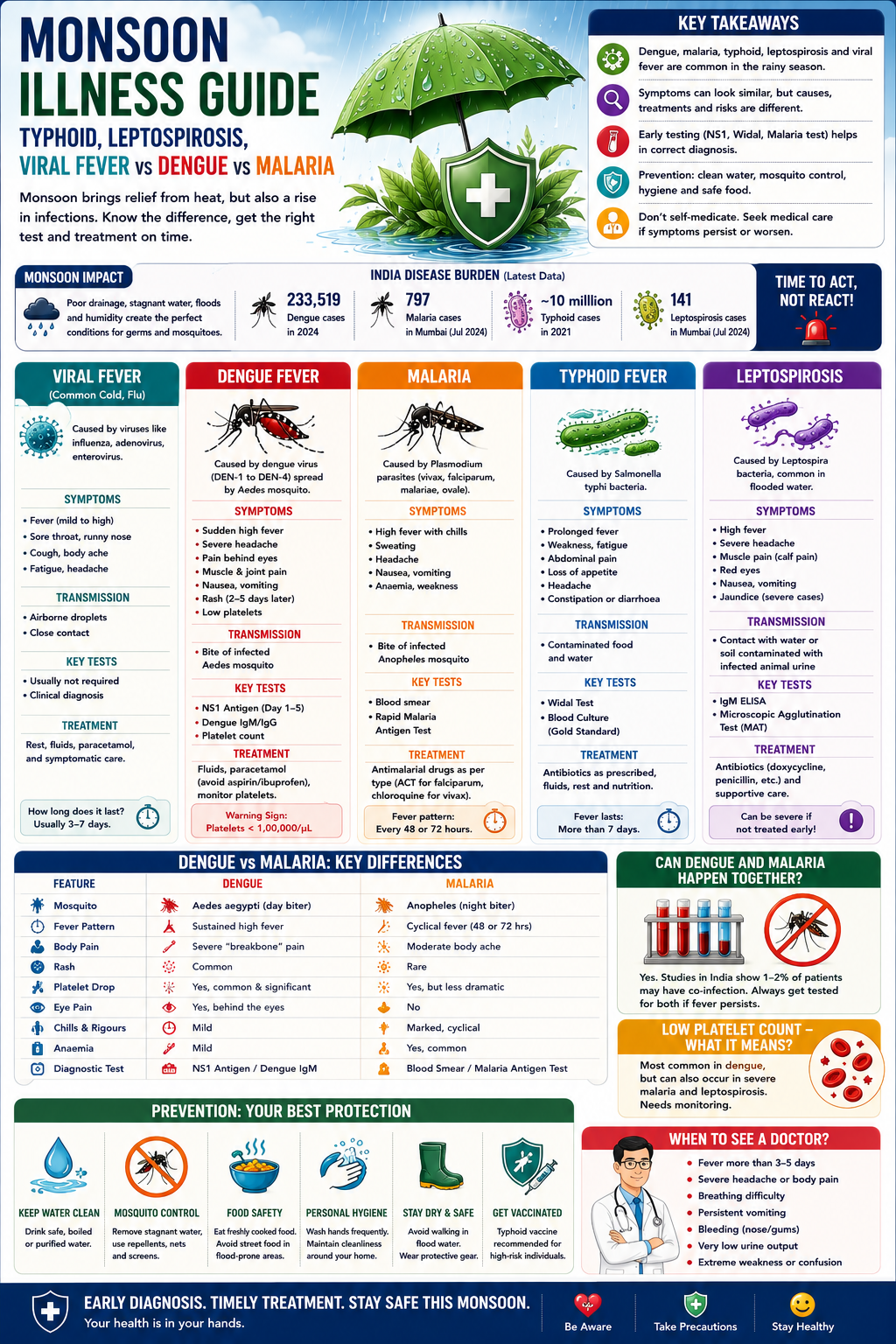
Every year, with the monsoon season comes the same set of events: the coolness of the air, the scent of moist soil, and an increase in hospital admissions. In July 2024, the city of Mumbai recorded 797 cases of malaria, 535 cases of dengue, 141 cases of leptospirosis, and 1,239 cases of gastroenteritis, most of which could have been avoided with prompt care.
The problem is that the symptoms of monsoon fever are very similar. High temperature, body pain, and fatigue can perfectly sum up the symptoms of dengue, malaria, typhoid, and a simple viral infection.
Key Takeaways
|
How Monsoon Creates the Perfect Storm for Illness
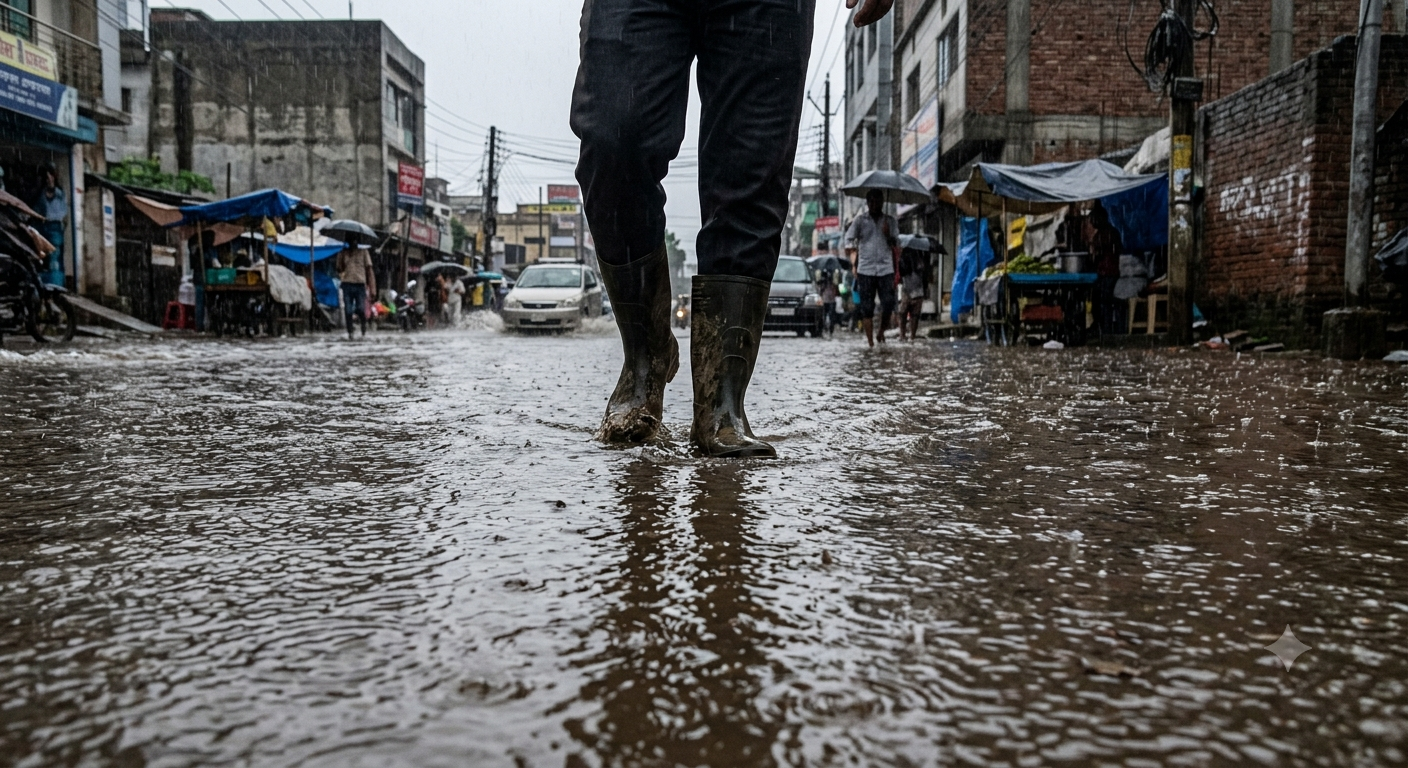
Stagnant water, floods, humidity, and poor drainage systems do not merely cause nuisances; they create ideal conditions for vectors and pathogens that cause monsoon diseases.
Mosquito-borne diseases in monsoon flourish because Aedes mosquitoes (responsible for dengue and chikungunya) thrive in stagnant water, including flower pots, water coolers, and uncovered water tanks. Anopheles mosquitoes (which transmit malaria) breed in larger puddles and rivers.
Waterborne diseases in the rainy season, such as typhoid, hepatitis A, leptospirosis, and cholera, spike when flooding contaminates drinking water sources and food-preparation surfaces, enabling their spread. According to the WHO, there are more than 3.4 million people suffering from water-borne diseases in India every year, with children being the most vulnerable ones due to their underdeveloped immune systems.
The Big Four: How to Tell Them Apart
Viral Fever
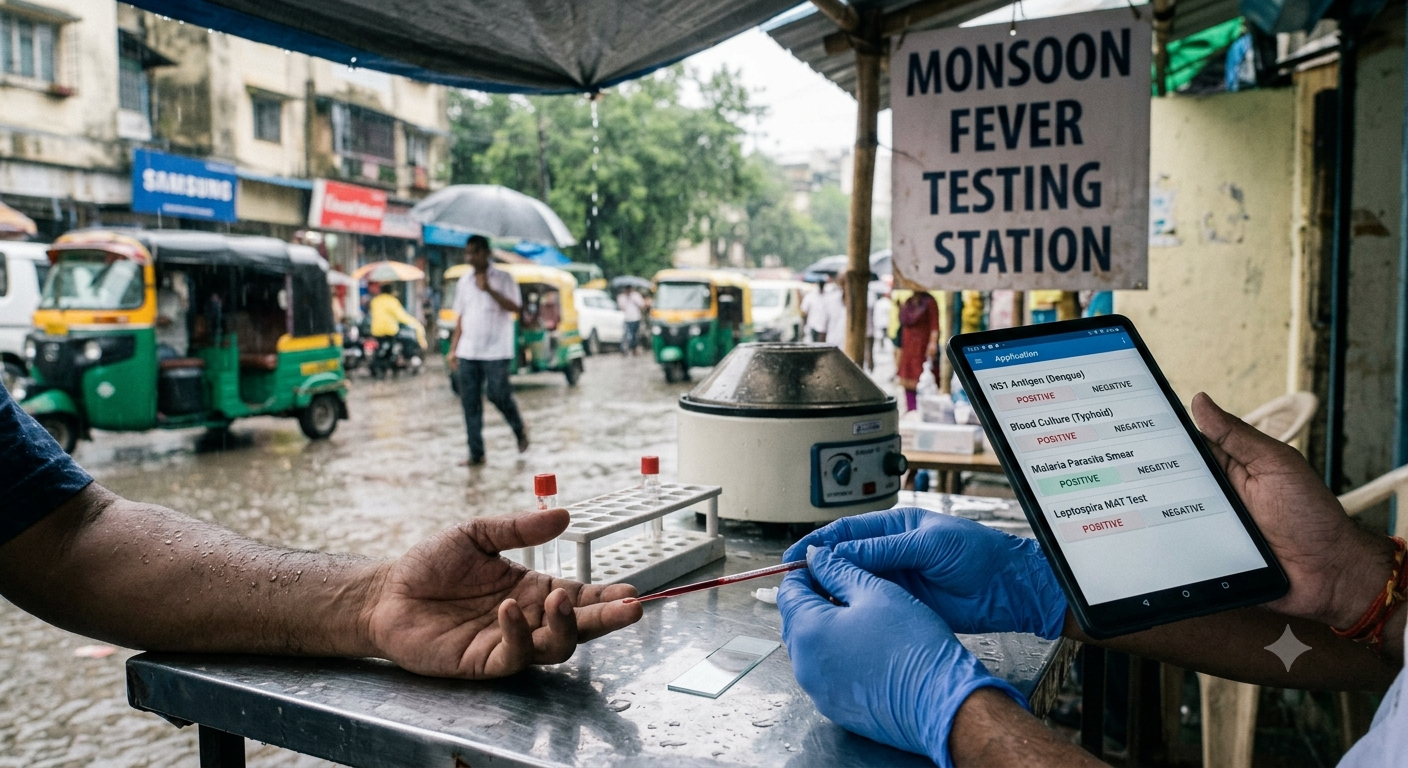
A 2025 observational study of 600 acute febrile illness patients at a tertiary centre in Maharashtra found dengue in 25 per cent, malaria in 10.3 per cent, and leptospirosis in 6.8 per cent of cases and noted that 42 per cent of dengue patients had hepatitis as a complication at presentation, a finding that underscores why dengue is not simply a "platelet drop" illness.
Causes of viral fever during monsoon include influenza viruses, adenoviruses, enteroviruses, and rhinoviruses, the same pathogens that cause respiratory and gastrointestinal infections year-round but spread more efficiently in crowded, damp conditions.
Difference between viral fever and dengue: Viral fever is a self-resolving condition that typically resolves within 3 to 7 days and does not lead to a decrease in platelet count. The standard treatment includes fluids and rest, and sometimes paracetamol is required.
How many days does viral fever last? Most viral fevers get solved within 3 to 7 days. If fever persists beyond day 5 without improvement, investigations are warranted, as this pattern raises suspicion of dengue or typhoid.
Can viral fever turn into dengue? The two kinds of infections differ entirely. Nonetheless, viral fever can mask the early stages of dengue. This is why the presence of fever in such cases calls for a dengue test.
Dengue Fever
The data from Indian hospitals confirm dengue's dominance: a study of 1,141 monsoon fever patients in Uttarakhand found that 71.2 per cent of cases were dengue, while 1.9 per cent had concurrent multiple infections, reinforcing that a negative malaria test does not rule out dengue, and vice versa.
The symptoms of dengue infection usually appear 4 to 10 days after being bitten by an infected Aedes aegypti mosquito. Dengue has an acute onset with a high fever (39-40 °C), intense headache, body aches, nausea, vomiting, and characteristic rashes.
How to identify dengue fever: In addition to the hallmark rash (which appears after 2-5 days), a reduction in platelets to less than 1,00,000/µL in blood has occurred, and the NS1 antigen in blood tests positive during the first five days.
Which fever causes a low platelet count? In India, dengue is the most common cause of thrombocytopenia, although leptospirosis and severe malaria may also cause it.
Difference between viral fever and dengue symptoms: While both dengue and viral fever cause fever and body aches, there are some unique features of dengue, such as eye pain, a skin rash, and platelet counts below 1 lakh, which are not present in other viral fevers.
Malaria
Malaria symptoms have a distinctive cyclical pattern, high fever with chills and rigours that come and go every 48 hours (Plasmodium vivax) or every 72 hours (P. malariae). Between episodes, patients may feel relatively well, unlike in dengue or typhoid, where the fever is more sustained.
Dengue vs malaria symptoms chart:
Feature | Dengue | Malaria |
Mosquito vector | Aedes aegypti | Anopheles |
Fever pattern | Sustained high fever | Cyclical every 48 or 72 hours |
Joint and muscle pain | Severe "breakbone" | Moderate |
Rash | Yes characteristic | Rare |
Platelet drop | Yes hallmark | Yes, but less dramatic |
Eye pain | Characteristic | No |
Chills and rigours | Mild | Marked, cyclica |
Mild | Yes haemolytic | |
Diagnostic test | NS1 antigen/dengue IgM | Blood smear / rapid malaria antigen |
Can dengue and malaria happen together? Indeed, research on monsoon fever outbreaks in India has shown that some patients experience co-infections with dengue and malaria. If a patient has not responded to malaria treatment, it is now usually recommended to perform a dengue test.
Typhoid
In contrast to dengue and malaria, typhoid symptoms appear more gradually, occurring between one and three weeks after ingesting contaminated food or water. Fever develops in a stepwise manner with headaches, abdominal pain, constipation or diarrhoea, and in some instances, a characteristic rash known as "rose spots".
Malaria vs typhoid symptoms and typhoid vs dengue symptoms often cause confusion in the first few days. The distinctions:
Feature | Typhoid | Malaria | Dengue |
Onset | Gradual (1–3 weeks) | Sudden | Sudden (4–10 days post-bite) |
Fever pattern | Stepwise rise, sustained | Cyclica | Sustained high |
Abdominal pain | Prominent | Absent | Mild nausea |
Constipation/Diarrhoea | Common | Rare | Rare |
Rash | Rose spots (rare) | Rare | Widespread maculopapular |
Platelet drop | Mild | Yes | Marked |
Transmission | Contaminated food/water | Mosquito | Mosquito |
Which blood test confirms typhoid? The diagnosis is commonly made via the Widal test, which detects antibodies to Salmonella typhi. However, the Widal test may yield false-positive results because it is performed in endemic areas. In confirmation of this diagnosis, blood culture is considered the gold standard because it provides definitive results, but it is time-consuming, taking 5 to 7 days to complete. The Typhidot test is much quicker and is increasingly being used in Indian hospitals.
What foods should you eat during typhoid? The diet should include easy-to-digest foods to properly support the body’s healing process. Possible foods are boiled rice, khichadi, moong dal, boiled vegetables, banana, and curd. It is important to avoid raw vegetables, high-fibre foods, spicy curries, and street food until full recovery has been achieved.
Leptospirosis
Leptospirosis symptoms: In India, one of the most underrecognised rainy-season diseases is leptospirosis, which can appear 2 to 30 days after contact with water contaminated by animal urine, mainly that of rodents, cows, or dogs. The symptoms include very high fever, severe headache, muscle pain, including the calf muscles, conjunctival suffusion (redness of the eyes), and, in severe cases, jaundice.
Leptospirosis treatment involves antibiotics: doxycycline can be prescribed for mild cases, while IV penicillin or ceftriaxone is used to treat severe cases (Weil’s disease). In case of not treated severe leptospirosis, the mortality can be as high as 40 per cent. It is not transmitted by mosquitoes but rather through contaminated water, including floodwater, which enters the body through wounds, skin, and mucous membranes.
Feature | Leptospirosis | Dengue | Malaria |
Transmission | Contaminated water/soil | Aedes mosquito | Anopheles mosquito |
Eye redness | Characteristic | Rare | Rare |
Calf muscle pain | Hallmark | Generalised | Generalised |
Jaundice | In severe cases | Rare | Rare |
Platelet drop | Yes | Marked | Yes |
Treatment | Antibiotics (doxycycline/penicillin) | Supportive only | Antimalarials |
When to Go to the Doctor Immediately
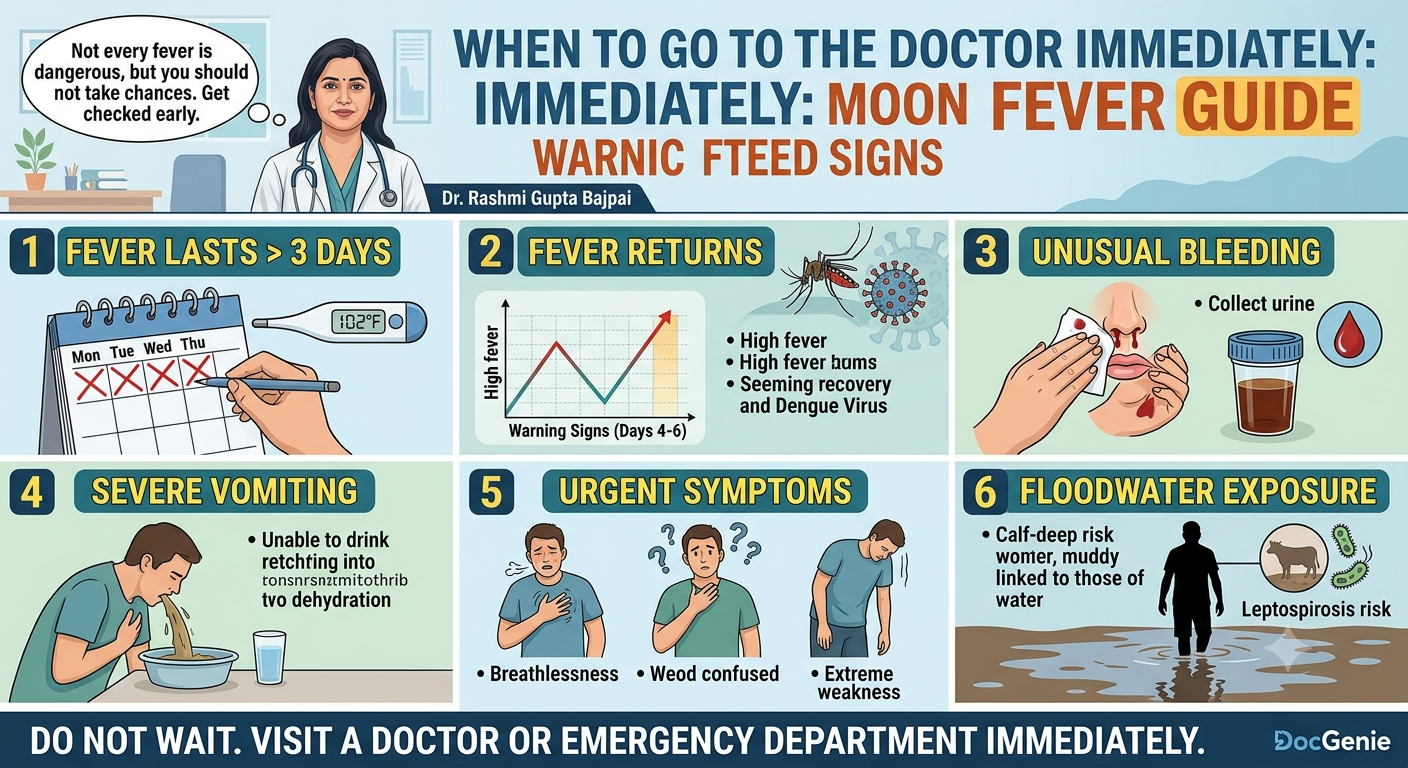
Dr Rashmi Gupta Bajpai, General Physician and Internal Medicine specialist at DocGenie, makes the point that applies to every monsoon fever, regardless of cause: "Not every fever is dangerous, but you should not take chances. Don't ignore fever during monsoon; get checked early”
Go to a doctor or emergency department, do not wait if:
Fever lasts more than 3 days without clear improvement
Fever returns after seeming to improve (dengue "warning signs" typically appear on days 4-6)
Do you develop any bleeding gums, nose, urine, or stools
Severe vomiting prevents fluid intake
Breathlessness, confusion, or extreme weakness
Fever with wading through floodwater in the past month (leptospirosis)
FAQs
Q1. What are the first symptoms of dengue?
Sudden high fever, severe headache, pain behind the eyes, and intense muscle and joint pain within 4 to 10 days of a mosquito bite. A rash typically appears 2 to 5 days after the onset of fever.
Q2. How to identify dengue fever vs viral fever?
Dengue causes eye pain, a characteristic rash, and a drop in platelet count, none of which occur with ordinary viral fever. The NS1 antigen blood test can confirm dengue within the first 5 days.
Q3. Can dengue and malaria happen together?
Yes, concurrent infections occur. If a patient does not improve on one treatment, the other should always be tested.
Q4. Which blood test confirms typhoid?
The Widal test detects antibodies and is most commonly used. Blood culture is the definitive test. The Typhidot / TyphiRapid test is faster and widely available in Indian clinics.
Q5. How long does viral fever last?
Most viral fevers resolve in 3 to 7 days with rest and paracetamol. Fever persisting beyond day 5, or worsening after initial improvement, always needs investigation.
Final Thoughts
The monsoon season guarantees one thing: fever. You will encounter it year after year. The key lies in recognising the type of fever-stricken patient you have, since typhoid, dengue, malaria, and leptospirosis need different treatments for effective care. Administering antimalarial medication to a dengue patient can cause them to waste precious time until the appropriate treatment is provided. The greatest danger lies in missing leptospirosis until its effect on the kidneys is felt.
Drink lots of liquid. Use mosquito repellent and nets. Don't wade through floodwaters without closed shoes. If the fever lasts more than three days or has any of the above symptoms, get tested for an early diagnosis.
Read Also
Monsoon Diet Precautions: Street Food Dangers You Should Know
11 Essential Tips to Prevent Flu & Viral Diseases This Rainy Season
References
Manipal Hospitals [Internet]. Kolkata: Manipal Hospitals Dhakuria; 2025 Sep 5 [cited 2026 Jul 08]. Monsoon health guide: preventing dengue, malaria and typhoid. Available from: https://www.manipalhospitals.com/dhakuria/blog/monsoon-health-guide-dengue-malaria-typhoid-prevention/
Mittal M, Singh A, Agarwal R. A study of etiological pattern in an epidemic of acute febrile illness during monsoon in a tertiary health care institute of Uttarakhand, India. J Clin Diagn Res [Internet]. 2015 Jan [cited 2026 Jul 08];9(1):DC08–DC11. Available from: https://pubmed.ncbi.nlm.nih.gov/25121013/
Kumar S, Shibi S, Sanjai R, Shobana S. Early diagnosis of dengue, malaria, scrub typhus, leptospira using CBC and LFT parameters in a tertiary care hospital: a 10-year retrospective study. Open Forum Infect Dis [Internet]. 2025 Jan 29 [cited 2026 Jul 08]. Available from: https://www.ncbi.nlm.nih.gov/pmc/articles/PMC11779423/
Disclaimer: This article is for general informational and awareness purposes only. If you or a family member has a persistent fever during the monsoon season, consult a qualified physician and get appropriate blood tests done. Do not self-diagnose or self-medicate.














Comments