


Safe Medicine Storage at Home: Easy Tips for Every Season, Especially Winter





Last updated on 02 Jan 2026
Key Takeaways
|
Keeping medicines safe at home is just as important as taking the right dose. Whether it’s a cough syrup during flu season or a daily medication for chronic conditions, how you store them affects their safety, strength, and shelf life. Winter weather in India, especially in colder regions, can change storage needs due to temperature fluctuations. This guide helps you follow practical medication storage guidelines for every household.
Why Home Medicine Storage Matters
Many families don’t think about how to store medicines at home once they bring them from the pharmacy. Exposure to heat, excess cold, humidity, or sunlight can damage medicines. Some drugs may become less effective, lose their original strength, or even become harmful if they degrade.
The most important rule is to maintain the right medicine storage temperature, whether it is a hot summer or a chilly winter. Following proper safe drug storage practices protects your health and prevents unnecessary waste.
Where Should You Keep Medicines at Home?
In May 2025, CDSCO issued a Guidance Document on Disposal of Expired/Unused Drugs, which outlines how expired or unused medicines should be handled, including procedures for storage, collection, return, and environmentally safe disposal (e.g. inertisation, incineration).
Choosing the right place is the first step. When deciding where to keep medicines at home, look for:
• A cool, dry place
• A closed cabinet away from direct sunlight
• A spot that is high and out of children’s reach
Many Indian families store medicines in the kitchen or bathroom drawers. But this is risky due to heat and moisture from cooking, showers, and geysers. These are examples of places where it is not safe to keep medicines.
Better household options include:
• A dedicated medicine storage organiser inside a bedroom cupboard
• A child-proof medicine cabinet if there are kids at home
• A secure shelf with proper labelling
• Any place protected from extreme temperatures
• A drawer that stays dry and dust-free
These are five places where it is safe to keep medicines, helping you access them easily while keeping them protected.
How Temperature Affects Medicines
All medicines come with storage instructions, such as “store below 25°C” or “keep refrigerated”. This instruction helps maintain potency. A medicine storage temperature chart can be helpful, especially if you store different types of medicines.
During winter, people often wonder: Can medicine be stored in cold?
Extreme cold can damage liquid medicines like syrups, insulin, eye drops, or injectables. They should never freeze. Similarly, medicines must not be exposed to heating appliances or direct sunlight.
For items that require cooling, follow refrigerator medicine storage guidelines:
• Keep them in the main compartment, not the freezer
• Do not place them in the door shelves where the temperature fluctuates
• Store medicines separately from food
• Label them clearly to avoid mix-ups
For families who travel or lack refrigeration, doctors may advise how to store medicine without a fridge, such as in insulated cold boxes or cool dry cabinets.
Winter-Specific Medicine Storage: Stay Careful With Extreme Cold
Winter can be tricky because extreme cold may destabilise medicines. Pay special attention to safe storage of drugs in winter by:
• Preventing exposure to freezing temperatures
• Avoiding storage near windows or balconies
• Using airtight boxes to protect from moisture
• Checking liquid medicines for particles or changes in appearance
Tablets are generally more stable but need dryness. In areas like the Himalayas or northern states, temperature monitoring is very important for families who store regular medications such as insulin or heart medications.
Different Types of Medicines Need Different Care
An Indian study observed that among households with medicines stored at home, a majority lacked proper labelling (65%), and about one-third (33.5%) had medications within reach of children, a risky scenario.
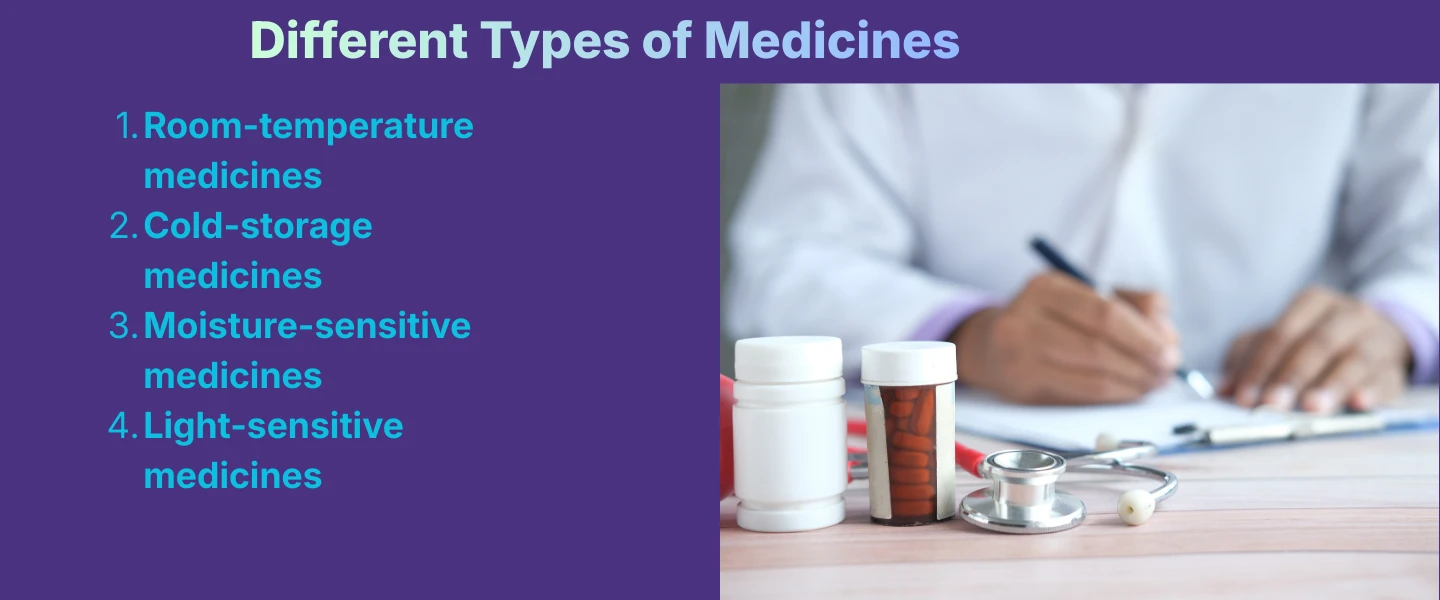
Understanding types of drug storage helps you avoid mistakes. Some examples:
Room-temperature medicines
Most tablets, capsules
(Look for the " do not refrigerate medication list on the packaging)Cold-storage medicines
Certain injections, eye drops, and biological drugs
(Ask your pharmacist What medications are kept in cold storage?)Moisture-sensitive medicines
Powders, dissolvable tablets
Store with humidity-control packetsLight-sensitive medicines
Medicines in dark bottles should be kept away from strong light
When in doubt, pharmacists can guide you.
Organising Medicines at Home: Simple Safety Hacks
Soumyadeep Bhaumik, Associate Editor at BMJ Global Health, heads the Meta-Research & Evidence Synthesis Unit at the George Institute for Global Health (India). Dr Bhaumik is a prominent researcher in medicine and public health, recognised among the top 2% of most cited researchers globally in general and internal medicine.
Creating a separate area for medicines keeps things neat and avoids mix-ups. Families often look for the best medicine storage box for home because:
• It prevents children from accessing dangerous drugs
• Expired and active medicines stay separated
• Labels help quick usage during emergencies
Choose a box that is:
• Airtight
• Easy to clean
• Large enough for prescriptions and first-aid items
• Labelled properly
A small family may only need one medicine storage organiser, while elderly individuals or patients with chronic diseases may also require weekly pill organisers.
Storing Medicines in Care Homes or Elderly Homes
A 2025 survey found that 96.3% of households store medicines at home. When caring for seniors, safety becomes even more important. “How should medication be stored in a care home?” is a common question. The guidelines suggest:
• Locked cabinets with authorised access only
• Separate storage for each resident
• Daily check for correct prescriptions
• Medication logs for monitoring usage
• Refrigerated medicines are stored in a separate medical refrigerator only
These steps ensure proper safety and reduce the risks of accidental overdosing.
Spotting When a Medicine Goes Bad
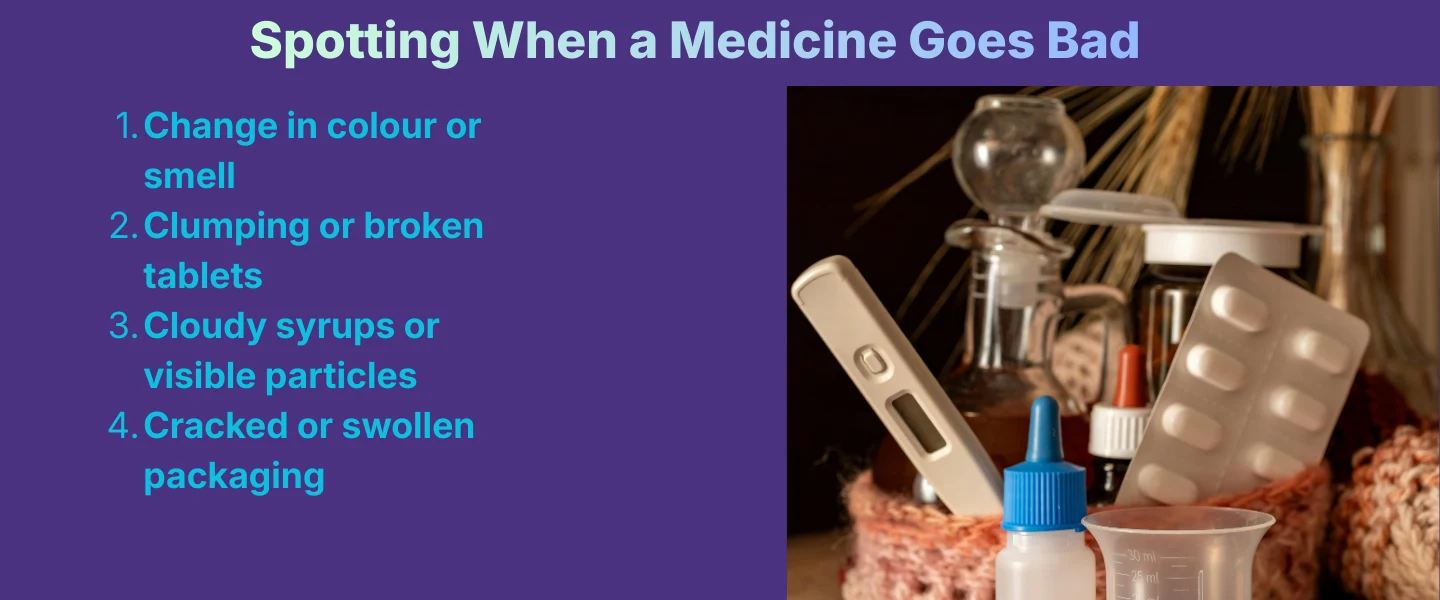
If medicine looks different from when you bought it, avoid using it. Warning signs include:
• Change in colour or smell
• Clumping or broken tablets
• Cloudy syrups or visible particles
• Cracked or swollen packaging
When in doubt, ask a pharmacist.
How to Dispose of Expired Medicine at Home Safely
Clogging drains or throwing medicine in open trash harms the environment and pets. If you’re unsure how to dispose of expired medicine at home, follow this method:
• Mix expired medicines with coffee powder, tea waste, or cat litter
• Seal tightly in another bag
• Dispose of it in household waste (never flush medicines)
• Scratch out personal details on labels
• Return high-risk drugs to pharmacies if they offer disposal programs
Proper disposal keeps everyone safe and prevents misuse.
Keep Kids Safe: Child-Proof Your Storage
Toddlers are curious and quick. Storing medicines in secure places prevents accidental poisoning. A child-proof medicine cabinet must have:
• Locks
• High placement out of reach
• No colourful or easy-access packets
Teach children that medicines are not candies.
Seasonal Storage Checklist
Use this quick guide every season:
Season | Risk | What to Do |
Summer | Heat, humidity | Keep medicines in cool, dry areas, and avoid kitchens |
Monsoon | Damp walls, moisture | Use airtight containers |
Winter | Freezing cold | Avoid placing medicines near windows or outside walls |
With simple steps, safe home medicine storage becomes part of your health routine.
FAQs
1) What is the ideal temperature to store medicines at home?
Most medicines require a room temperature below 25°C. Always check the packet for exact medicine storage temperature instructions.
2) Is it okay to keep medicines in the fridge?
Only medicines with clear refrigeration instructions should be kept in the fridge while following refrigerator medicine storage guidelines.
3) Can I store medicines in my bathroom or kitchen?
No. Heat and moisture make these places unsafe for storing medicines.
4) How often should I check for expired medicines?
Every 3–6 months. Learn how to safely dispose of expired medicine at home.
5) Do I need special boxes for storing medicines?
A labelled and organised area, or the best medicine storage box for home, helps prevent mistakes, especially in homes with children or elderly patients.
Final Thoughts
Storing medicines properly is not complicated when you know what to avoid and what to follow. Small changes in storage habits help protect your family’s health, prevent wastage, and ensure medicines work as they should throughout every season.
Read also
References
https://www.jantecpharma.in/blog/medication-storage-tips-for-households
https://www.pharmacytimes.com/view/5-tips-for-storing-medicine-safely
Disclaimer: The information shared in this blog is meant for general educational purposes only and should not be taken as medical advice. Always consult a qualified healthcare professional for diagnosis, treatment, or medical guidance related to your health. The content is based on reliable sources, but it may not be suitable for every individual’s condition. We do not assume responsibility for any actions taken based on this information. Readers are encouraged to exercise caution and use their discretion when making healthcare decisions.














Comments