

World Stroke Day 2025




Last updated on 02 Jan 2026
World Stroke Day is observed every year on October 29 to raise awareness about one of the most urgent medical emergencies of our time. Even though stroke is preventable in many cases, it continues to be a leading cause of death and long-term disability worldwide. The purpose of this global movement is simple yet powerful: educating communities, encouraging early detection, and promoting swift action that can save lives.
Why This Day Matters in 2025
The World Stroke Day 2025 campaign reinforces the message that can change outcomes for millions: every second counts when a stroke occurs. The World Stroke Organisation (WSO) continues its mission to ensure people recognise symptoms early and take immediate medical action. This observance also reminds us that awareness is not just a healthcare responsibility, but a community effort.
The 2025 Theme and Its Purpose
The World Stroke Day 2025 theme, “Every Minute Counts,” highlights the importance of acting immediately when signs of a stroke appear. When a stroke strikes, the brain loses millions of neurons within minutes. The faster a patient reaches a stroke-ready hospital, the better their chances of survival and meaningful recovery. While themes evolve each year, the core World Stroke Day theme has always emphasised urgency, awareness, and prevention.
The campaign also promotes the unified visual identity represented through the World Stroke Day 2025 logo and the World Stroke Day 2025 slogan, both designed to strengthen public memory and encourage immediate response.
Understanding Stroke
Stroke is among the top causes of death and disability in India, according to ICMR–NCDIR findings.
A stroke occurs when blood flow to the brain is disrupted, either due to a blocked artery or a ruptured blood vessel. This leads to oxygen deprivation, causing brain cells to die rapidly. Stroke must be treated as a time-critical emergency, because delays can result in irreversible brain damage, paralysis, speech loss, or even death.
Types of Stroke
There are three main types of stroke, and understanding them helps in recognising their danger:
1.Ischemic Stroke – The most common type, caused by blocked or narrowed arteries that limit blood supply to the brain.
2.Hemorrhagic Stroke – Triggered by a ruptured blood vessel that causes bleeding in or around the brain.
3.Transient Ischemic Attack (TIA) – Also known as a mini-stroke, where symptoms are temporary but serve as a critical warning sign.
Warning Signs You Should Never Ignore
Dr M. V. Padma Srivastava (AIIMS) emphasises that rapid diagnosis and thrombolysis within the “golden window” can significantly reduce lifelong disability.
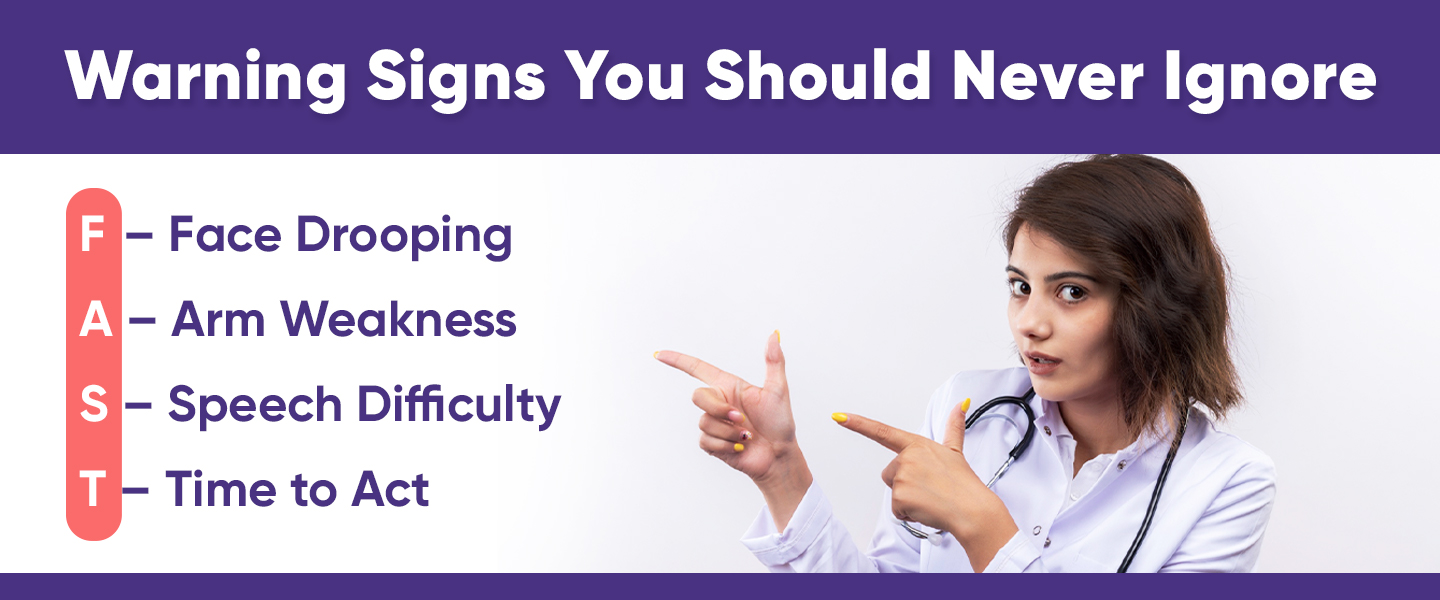
Recognising the symptoms leads to faster treatment and better recovery. The FAST method remains the gold standard for identifying a stroke:
F – Face Drooping: One side of the face appears uneven or numb.
A – Arm Weakness: Sudden loss of strength in one arm.
S – Speech Difficulty: Slurred, slowed, or distorted speech.
T – Time to Act: Call emergency services immediately.
This urgency is the focus of posters, images, and awareness materials, such as a World Stroke Day poster that helps communities quickly remember symptoms.
Who Is at Risk?
Stroke risk factors include:
Smoking
Obesity
High cholesterol
Lack of physical activity
Heart conditions
Poor diet and stress
Excessive alcohol intake
Age increases risk, but stroke can affect younger adults as well.
Prevention and Lifestyle Choices
India records an incidence rate of 105–152 stroke cases per 100,000 people per year, with numbers increasing due to urban lifestyle risks.
Preventing stroke is achievable through simple habits:
Eating a balanced, low-sodium diet
Exercising regularly
Avoiding smoking and limiting alcohol
Managing blood sugar and blood pressure
Scheduling routine health screenings
Reducing stress through yoga, meditation, or relaxation techniques
Healthy habits, when practised consistently, can significantly reduce stroke risk.
Why Immediate Treatment Matters
Doctors emphasise that there is a “golden window” for stroke treatment. Rapid response can allow timely medical interventions, such as clot-dissolving medication in ischemic stroke. Emergency teams, neurologists, and rehabilitation specialists play a crucial role in restoring health and preventing long-term disability.
This is also why schools, colleges, and workplaces increasingly organise World Stroke Day activities, including free screenings, CPR training, Act FAST demonstrations, and awareness sessions.
Stroke in Numbers (2025 Snapshot)
Stroke is the 2nd leading cause of death globally.
Over 12 million people suffer a stroke each year.
1 in 4 adults over 25 will experience a stroke in their lifetime.
In India, stroke cases are rising due to lifestyle-related risks and low awareness.
These statistics reinforce the urgency of awareness and prevention campaigns.
Emotional and Mental Health Support for Stroke Survivors
Many stroke survivors experience emotional challenges such as anxiety or depression.
Counselling, therapy, and support groups help survivors cope with emotional changes.
Encouragement and involvement from family members improve emotional resilience.
Mental health care is a crucial part of the recovery journey, not an optional step.
Community and Healthcare Support
Healthcare professionals, public health bodies, and volunteers play a vital role in educating communities and offering support through rehabilitation and counselling. Community participation ensures that awareness travels beyond hospitals into neighbourhoods, schools, and rural areas.
Myths vs Facts
Myth: Stroke only happens to older people.
Fact: Stroke can affect anyone, including young adults, especially those with hypertension, stress, smoking habits, or a poor lifestyle.
Myth: Stroke cannot be prevented.
Fact: Up to 80% of strokes are preventable through lifestyle changes such as controlling blood pressure, avoiding tobacco, exercising, and eating a healthy diet.
Myth: A stroke is a heart problem.
Fact: Stroke occurs in the brain, not the heart. It happens when blood flow to the brain is blocked or when a blood vessel bursts.
Myth: You should wait and see if symptoms go away.
Fact: Stroke is a medical emergency. Every minute counts—immediate treatment can save brain cells and reduce disability.
Myth: Recovery stops after a few months.
Fact: Stroke recovery can continue for months or even years with proper therapy, rehabilitation, and ongoing support.
FAQ
1. Why is World Stroke Day observed?
To spread awareness about prevention, symptom recognition, and timely treatment.
2. What is observed on October 29?
It is the global day dedicated to stroke awareness and action.
3. What is the FAST method?
FAST stands for Face drooping, Arm weakness, Speech difficulty, and Time to seek emergency help.
4. Can most strokes be prevented?
Yes. Lifestyle changes, routine screenings, and risk management can prevent many strokes.
5. Why is acting fast so important?
Because quick treatment saves brain cells, reduces disability, and improves survival rates.
Final Thoughts
World Stroke Day 2025 is a call to act with urgency, awareness, and compassion. Recognising symptoms, seeking immediate treatment, and living a preventive lifestyle can drastically reduce stroke-related harm. By staying informed and spreading awareness, we can help protect lives and build a healthier future for our communities.
Read also
References
https://karpagamhospital.in/world-stroke-day-2025-theme-awareness-significance/
https://www.knowledge-action-portal.com/en/content/world-stroke-day-2025
https://www.apollo247.com/health-topics/stroke/world-stroke-day-2025
Disclaimer: The content in this blog is for general informational purposes only and is not a substitute for professional medical advice, diagnosis, or treatment. Always consult your doctor or a registered dietitian before making any changes to your diet, especially if you have a medical condition or are taking prescribed medication. While the information is based on trusted sources, individual needs and results may vary. MrMed does not promote or endorse any specific food or treatment mentioned unless explicitly stated.











Comments