

Common Chest Symptoms That Are Not Always Heart-Related





Last updated on 07 Feb 2026
The heart is not always associated with chest pain. Some of the common non-cardiac causes of chest pain include acid reflux, gas, muscle strain and tension, anxiety and stress, and poor posture. These are common chest pain causes, not heart-related to heart disease. Most of the time, the pain varies with how you move, what you eat, and how stressed you are. Chest pain generally decreases with simple rest or by using strategies to relieve it (e.g., applying heat or cold).
Being aware of this information will help reduce anxiety, chest pain and enable you to be more alert for the more serious signs that could require treatment.
Key takeaways
|
Although chest pain can be scary, rarely will the cause be related to your heart. There are several reasons for chest discomfort, including digestive issues, stress, muscle tension, and poor posture. Being aware of these reasons will help you feel less anxious about the discomfort and will allow you to manage your triggers and know when to seek medical help.
Chest pain has a way of instantly creating panic. Even mild tightness can make you jump straight to heart disease. Hospitals see thousands of people every year with chest discomfort that turns out not to be heart-related at all. In reality, the stomach, muscles, lungs, and even stress can produce chest symptoms that feel just as intense as heart pain.
Understanding chest pain not related to heart problems, or any chest pain which is not heart-related, helps you respond calmly, manage everyday triggers, and still recognise true warning signs. Below are the most common chest symptoms that are usually non-cardiac and what they actually mean for your body.
The Most Common Non-Heart Chest Symptoms
These are common non-cardiac chest pain symptoms that people often mistake for heart problems.
Burning chest pain after meals
Tightness or pressure during stress
Sharp pain that moves around the chest
Heavy chest feeling after eating
Pain that worsens with movement or touch
One-sided chest pain, especially on the right
Now, let’s break each one down clearly.
1. Burning Chest Pain After Meals (Acid Reflux Chest Pain)
This happens when stomach acid flows upward into the food pipe instead of staying in the stomach.
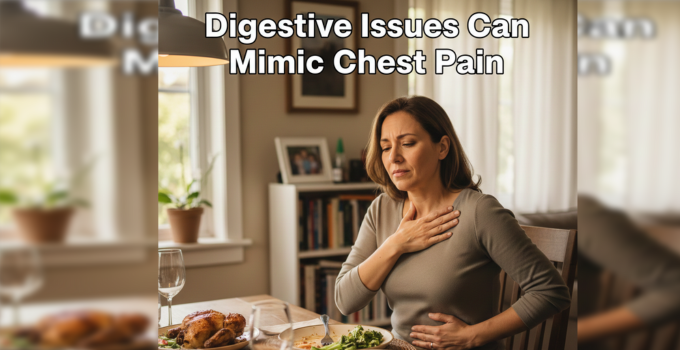
It irritates the chest; a hot, burning feeling may, and often does, rise to your throat. Some people feel this way after a big meal. They may also experience it after eating spicy foods, lying down too soon after a meal, or even leaning over to pick up something hot on the stove. The feeling might turn up again as though it were indigestion, or there could be a trace of acidic taste on their tongues.
Most commonly seen in one of three situations. Each one is harmless.
It is associated with eating
It feels hot or burning
It improves with antacids or sitting upright
Get checked if: Pain is severe, constant, or new.
2. Chest Tightness or Pressure That Is Not a Heart Attack
Chest pressure that’s not related to a heart attack can come from other sources, such as muscular tension, stress, digestive conditions and sitting with poor posture.
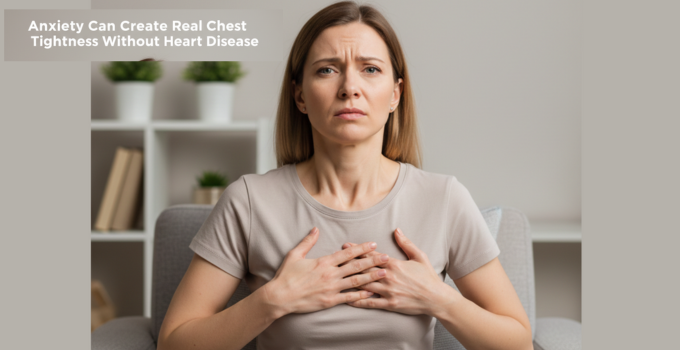
It’s part of the body's natural stress response: In moments of anxiety or fear, the muscles in your chest tighten, and your breathing often becomes shallow. This produces a squeezing sensation, a heavy feeling that may seem frightening but can usually be relieved by relaxing, slow breathing, or repositioning.
These are some of the most common triggers of chest tightness, causes and types of chest pressure not heart attack related.
Common triggers:
Anxiety or worry
Long hours sitting hunched
Fatigue
Emotional stress
Check for pressure: if it comes with breathlessness, sweating, or arm pain.
3. Sharp or Moving Chest Pain (Gas Pain in the Chest)
Air trapped in your digestive tract can cause gas pain, chest pressure, and discomfort. It might cause stabbing or squeezing sensations or come on suddenly; it can also change position quickly. Most people get relief from changing position, gas, or burping.
Typical signs include:
Moving around the body
Sudden increase in intensity
Rapid decrease in intensity
Get checked if: Pain is persistent or worsening.
4. Heavy Chest Feeling After Eating (Indigestion Chest Pain)
When digestion is slow or the stomach is too full, indigestion and chest pain can occur. The resulting bloating and pressure can move from your stomach into your chest area as well.
Common reasons for this sensation include eating large amounts of food at once, eating a lot of fatty foods, eating meals too quickly, and consuming foods that are too spicy.
The following sensations may be experienced with this type of pain:
Fullness
Pressure
Mild burning
Discomfort after eating.
Get checked if: Pain is frequent or very severe.
5. Chest Pain That Worsens With Movement (Muscle Strain)
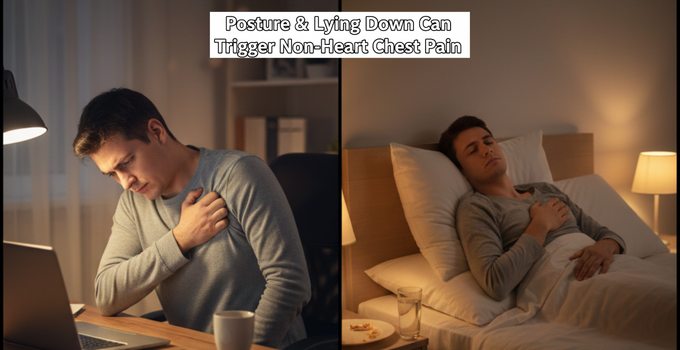
Sometimes, your chest pain could be due to strained chest muscles. Hence, it is very important to pay close attention to how you lift, exercise, cough, sit, and sleep. Be careful with stretching, twisting or pushing your chest too hard. Remember, balance is key.
Signs of muscle strain typically include:
Soreness
Tenderness
Pain that is worse with movement
Get checked if: Pain occurred after injury or feels extreme.
6. Chest Discomfort During Anxiety or Panic Attacks
If you are having a panic attack or anxiety issues, you may experience chest pain. Stress can lead to many physical symptoms, including rapid breathing, muscle tension, rapid heart rate, excessive sweating, dizziness, and chest tightness. Stress can lead to many physical symptoms, including what doctors call panic attack chest symptoms, such as rapid breathing, muscle tension, and chest tightness.
Many people feel chest pain that is not linked to the heart but to digestive issues, muscle strain, anxiety, or trapped gas.
In many cases, symptoms will improve with one of the following interventions:
Deep/slow breathing
Relaxing environment
Reassurance
Get checked if: Symptoms are new or unusual.
7. One-Sided Chest Pain, Especially on the Right Side
Non-cardiac chest pain right side is most often related to nausea, muscle strain, lung irritation, gallbladder discomfort, or trapped gas. Heart-related chest discomfort is often felt in the centre or left side of your chest.
Non-cardiac chest discomfort is more likely when:
It is on the right side
Has a relationship with either meals or movement
A PMC clinical review found that non-cardiac chest pain in 2018 accounts for up to 60 to 70 % of chest pain cases once heart disease is ruled out, with digestive problems, muscle strain, and anxiety being the most common causes.
Cardiac vs Non-Cardiac Chest Pain (Simple Comparison)
Feature | Heart-Related Chest Pain | Non-Heart Related Chest Pain |
When it usually starts | During physical activity or emotional stress | After meals, during anxiety, or with body movement |
How it feels | Heavy pressure, squeezing, or crushing pain | Sharp, burning, tight, or stabbing discomfort |
Where it spreads | Often moves to the left arm, jaw, neck, or back | Usually stays in one spot |
What improves it | Rest, medical treatment | Changing position, relaxing, and digestive relief |
Duration pattern | May last several minutes and worsen with effort | Often comes and goes |
FAQs
1. How to know chest pain is not heart-related?
Chest pain is usually non-heart-related if it appears after eating, changes with movement, improves with posture changes, feels burning or sharp, or happens during anxiety rather than physical effort.
2. What is the difference between cardiac and non-cardiac chest pain?
Cardiac chest pain often feels heavy, spreads to the arm or jaw, and appears with exertion, while non-cardiac chest pain is usually sharp, burning, localised, and linked to digestion, movement, or stress.
3. Can acid reflux really cause chest pain?
Yes. Acid reflux can cause a burning chest sensation when stomach acid irritates the food pipe, often after meals or lying down, and is one of the most common causes of non-heart chest pain.
4. Can anxiety or panic attacks cause chest tightness?
Yes. Anxiety triggers muscle tightening and fast breathing, creating chest pressure, shortness of breath, and discomfort that feels serious but is not related to heart disease.
5. Is sharp chest pain usually heart-related?
Sharp, stabbing pain that changes with position is more often caused by gas, muscle strain, or breathing irritation than by heart problems.
6. Why does chest pain happen after eating?
After meals, digestion can cause bloating, acid reflux, and pressure that travels upward into the chest, creating discomfort that feels similar to heart pain.
7. When should chest pain be treated as an emergency?
Chest pain that is accompanied by breathlessness, sweating, dizziness, arm or jaw pain, fainting, or severe pressure that does not improve with rest requires urgent care.
What’s Worth Remembering
Chest symptoms can be scary, but are often due to common problems like digestive issues, anxiety, strained muscles, or gas bubbles instead of heart disease. Knowing what non-cardiac chest pain feels like helps you stay calm while remaining alert for warning signs.
If the chest pain is new, intense, or has recurred, always see a doctor to be safe.
Read Also
References
Fass R, Achem SR. Noncardiac chest pain. J Neurogastroenterol Motil. 2011;17(2):110–123.
Li T, Sun Z, Tang H. Diagnosis and management of noncardiac chest pain. World J Gastroenterol. 2024;30(2):123–136.
Huffman JC, Pollack MH. Panic disorder and chest pain: mechanisms, morbidity, and management. Prim Care Companion J Clin Psychiatry. 2003;5(2):54–62.
Disclaimer: The content in this blog is for general informational purposes only and is not a substitute for professional medical advice, diagnosis, or treatment. Always consult your doctor or a registered dietitian before making any changes to your diet, especially if you have a medical condition or are taking prescribed medication. While the information is based on trusted sources, individual needs and results may vary. MrMed does not promote or endorse any specific food or treatment mentioned unless explicitly stated.












Comments