

15 Early Signs of Heart Disease You Should Not Ignore





Last updated on 06 Feb 2026
The early development of heart disease is often subtle and mild, easy to ignore and easy to overlook at a time before it becomes dangerous, even life-threatening.
Key Takeaways
|
In India, early symptoms of heart diseases like tightness of the chest and shortness of breath are often brushed off as stress, ageing or environmental causes. Being aware of these red flags can help facilitate prompt medical treatment, minimise complications, and promote continued heart health with early intervention and a change in lifestyle.
Your heart works tirelessly every second of your life, yet it often sends subtle warnings before a serious problem occurs. In India, heart disease is the leading cause of death, but most people only seek medical help when it’s too late. Recognising early signs of heart disease can give you a vital head start and even save your life.
Imagine feeling unusually tired after climbing a few stairs, a dull ache in your chest, or a fluttering heart and dismissing it as stress. These could be early warning signs of coronary heart disease, and early detection allows timely action.
“Your heart speaks before it breaks. Listen carefully.”
15 early signs and symptoms of heart disease that everyone should know
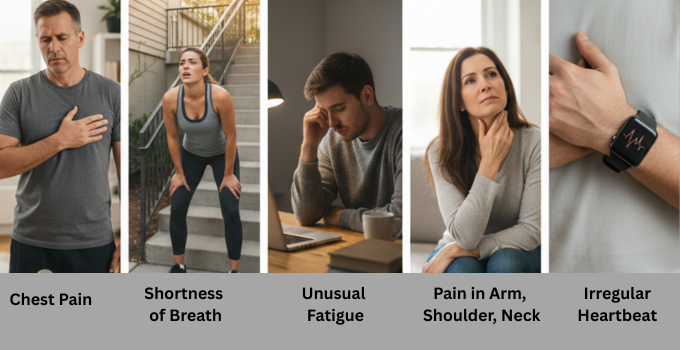
1. Chest Pain or Heart Disease
Chest pain that indicates heart disease can feel like pressure, heaviness, tightness or burning. It can come on suddenly with exercise, stress, or at rest. Heart disease symptoms in men are likely to include severe or crushing pain, while heart disease symptoms in women may include only mild discomfort or something like heartburn.
This discomfort may spread to the arms, shoulders, jaw, or back. The chest pain is important because it indicates reduced blood supply to the heart muscle, which can worsen without treatment.
Why does it happen?
The heart muscle isn’t getting enough blood because the arteries are blocked or narrowed.
As per the World Health Organisation (WHO), 2016 Cardiovascular diseases (CVDs), including coronary heart disease, account for nearly 27% of all deaths in India and around 45 % of deaths between the ages of 40 and 69.
2. Shortness of Breath
Your heart is unable to pump blood properly, so fluid backs up into your lungs; that’s why you feel short of breath. You may become winded when you climb stairs, walk short distances or even just sit down. It is usually associated with extreme tiredness, dizziness, or chest pain. In India, pollution can exacerbate breathlessness, prompting many people to mistakenly assume it is a respiratory problem.
Tip: Track unexplained breathlessness, especially if it persists or worsens over time.
3. Unusual Fatigue
Persistent tiredness, even after sufficient rest, is a common early symptom, particularly in women. Daily tasks, such as walking to work or household chores, may suddenly feel exhausting. Fatigue occurs when the heart struggles to deliver enough oxygen-rich blood to the body. Fatigue heart disease is often mistaken for stress, overwork, or lack of sleep.
Why does it happen?
Your heart struggles to supply enough oxygen-rich blood to the body, leaving you drained.
“Fatigue is your heart asking for help before it’s too late.”
4. Pain in Arm, Shoulder, Neck, or Jaw
Heart-related pain often radiates beyond the chest, affecting the left arm, shoulders, neck, jaw, or upper back. Early signs of heart disease in males often include left-arm pain, while early signs of heart disease in females may feel it in the jaw or upper back. This happens because nerves transmitting heart pain overlap with those in these areas. Recognising this pattern can prevent misdiagnosis.
Why does it happen?
The nerves that detect heart pain also connect to these areas, so the brain interprets the pain as coming from them.
5. Irregular Heartbeat or Palpitations
A racing, fluttering, or pounding heart can indicate early heart disease. Irregular heartbeats occur when the heart’s electrical system malfunctions or the heart muscle is under strain. Some people may feel skipped beats or a sudden thumping sensation in the chest. Frequent or persistent heart palpitations should never be ignored.
Why does it happen?
Damage to heart tissue or electrical disturbances can cause the heart to beat irregularly.
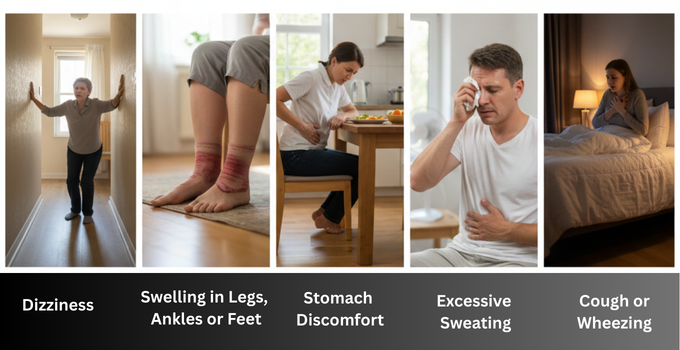
6. Dizziness or Light Headedness
Dizziness, a feeling of passing out, or light-headedness happens when the brain doesn’t get enough oxygen-rich blood because the heart isn’t pumping well. It might start out as something relatively mild, perhaps mild lightheadedness, but it can develop into presyncope or imbalance. It’s a common mistake to explain it away as dehydration, low blood sugar or stress, which can delay seeking appropriate evaluation.
Why does it happen?
The brain isn’t getting enough oxygen-rich blood due to inefficient heart pumping.
7. Swelling in Legs, Ankles, or Feet
Oedema, or swelling, occurs when the body retains fluid in tissues because the heart is not pumping effectively. It could also present in the ankles or feet, and be exacerbated by the end of the day. The shoes or socks may feel tight. Swelling that won't go away means your heart is stressed and should be checked out.
Why does it happen?
When the heart can’t pump blood effectively, fluid leaks into surrounding tissues.
8. Nausea, Indigestion, or Stomach Discomfort
Nausea, indigestion or mild stomach pain can also be some early signs and symptoms of heart disease. Decreased blood flow and reduced neural signals from the heart may give rise to feelings of discomfort that can be perceived as digestive issues. The trouble is, ignoring them may delay diagnosis and treatment.
Why does it happen?
Reduced blood flow affects the digestive system and can trigger these sensations.
9. Excessive Sweating
Unexplained, particularly cold sweating, is among the touchpoints for heart disease. It can happen in cool settings or without physical activity. The body is responding to diminished blood flow and increased heart stress. For many people, it is a synonym for anxiety, but when accompanied by other signs and symptoms, a medical evaluation is necessary.
Why does it happen?
The body responds to reduced blood flow and heart strain.
10. Persistent Cough or Wheezing
If you have a long-term cough or wheezing, it may be a sign of fluid in the lungs due to heart failure. It’s worst when you’re lying down, and is often accompanied by fatigue or shortness of breath. In India, the symptom is often mistaken for pollution, an allergy, or a cold, leading to a delayed diagnosis.
Why does it happen?
Poor heart function leads to fluid retention in the lungs.
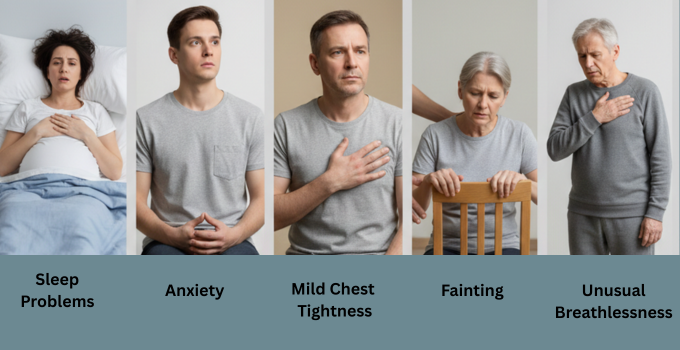
11. Sleep Problems
Having trouble sleeping, waking with shortness of breath, or needing to prop up on pillows to breathe more easily are all potential signs of early heart disease. Sleep Quality Poor sleep is usually accompanied by feeling tired, irritable and short of breath. Indian women are likely to take note of these subtle signs, which they would readily shrug off, thinking it is stress or a lack of sleep.
12. Anxiety or a Sense That Something Is Wrong
Unexplained anxiety or a sense of impending doom may appear before other heart symptoms, particularly in women. This occurs because reduced blood flow and irregular heartbeat affect the nervous system, triggering emotional symptoms.
Tip: If anxiety arises suddenly and accompanies chest discomfort, palpitations, or breathlessness, get a heart evaluation.
13. Mild Chest Tightness or Pressure
Mild chest tightness or pressure, even if brief or intermittent, can be an early warning sign of heart disease. Unlike severe chest pain, this may feel like a dull ache, heaviness, or squeezing sensation that comes and goes. It can occur during rest, physical activity, or emotional stress. Many people dismiss it as indigestion or muscle strain, but recognising it early allows for timely evaluation and treatment.
14. Fainting or Near-Fainting Episodes
Episodes of fainting or near-fainting, especially during exertion, can signal poor heart function or irregular heartbeat. These occur when the brain temporarily receives insufficient blood. They are a serious warning and should never be ignored.
15. Unusual Breathlessness with Minimal Activity
Feeling breathless after light activity like walking across the room, climbing a single flight of stairs, or simple household tasks is a subtle early warning. It occurs because the heart cannot efficiently pump blood to meet oxygen demands. In India, this symptom is often misattributed to pollution, asthma, or ageing.
Tip: Track any unexplained breathlessness and consult a cardiologist if it persists.
“Earlier, heart attacks were traditionally seen in people beyond 50 or 60, but now we see them in those under 45. Smoking, stress, and lifestyle choices are key drivers of heart disease in young adults.” by Dr. Sudhakar Rao, Consultant Cardiologist
What Are The Prevention Tips?
Eat heart-friendly foods: fruits, vegetables, whole grains, lean proteins
Exercise regularly: even 30 minutes of brisk walking helps
Avoid smoking and limit alcohol
Manage stress with yoga, meditation, or breathing exercises
Maintain a healthy weight and stay hydrated
“A healthy heart today keeps the hospital away tomorrow.”
FAQs
1. What are the early signs of heart disease in men?
Classic signs include chest pressure, left-arm pain, shortness of breath, irregular heartbeat, and fatigue with activity.
2. What are the early warning signs of heart disease in women?
Subtle signs like fatigue, nausea, jaw/neck/back pain, shortness of breath, and sleep disturbances.
3. Can infants have heart disease?
Yes, early signs of heart disease in infants include rapid breathing, poor feeding, bluish lips, poor weight gain, and excessive sweating during feeding.
4. Are irregular heartbeats dangerous?
Frequent palpitations may indicate arrhythmia and require a cardiologist’s evaluation.
5. How can I know if fatigue is related to heart disease?
Persistent tiredness along with chest discomfort, shortness of breath, or palpitations is a red flag.
6. What are the early signs of heart disease?
Early signs of heart disease include chest discomfort, shortness of breath, unusual fatigue, irregular heartbeat, arm or jaw pain, dizziness, swelling in the legs, and unexplained sweating.
What’s Worth Remembering
Heart disease often whispers before it shouts. The early signs may feel subtle fatigue, shortness of breath, mild chest discomfort, or unusual palpitations but recognising them can make all the difference. In India, where lifestyle pressures, pollution, and dietary habits increase risk, listening to your heart’s signals is more important than ever.
Taking small but consistent steps, such as monitoring symptoms, maintaining a heart-healthy diet, exercising regularly, managing stress, and consulting a cardiologist when needed, can protect your heart and save your life. Don’t wait for severe symptoms to appear; early awareness and timely action are your strongest allies.
“Your heart gives clues long before it cries for help. Notice, act, and protect it.”
Read Also
References
National Heart, Lung, and Blood Institute (NIH). Coronary Heart Disease: Symptoms. Available from: https://www.nhlbi.nih.gov/health/coronary-heart-disease/symptoms
WebMD. Understanding Early Signs and Symptoms of Heart Disease. Available from: https://www.webmd.com/heart-disease/heart-disease-symptoms
Reinier K, et al. Warning Symptoms Associated with Imminent Sudden Cardiac Arrest. PMC. Available from: https://pmc.ncbi.nlm.nih.gov/articles/PMC10746352/
CDC Heart Disease and Stroke Statistics. Heart Attack Facts and Early Signs in the United States. Available from: https://www.cdc.gov/heart-disease/data-research/facts-stats/index.html
Disclaimer: The content in this blog is for general informational purposes only and is not a substitute for professional medical advice, diagnosis, or treatment. Always consult your doctor or a registered dietitian before making any changes to your diet, especially if you have a medical condition or are taking prescribed medication. While the information is based on trusted sources, individual needs and results may vary. MrMed does not promote or endorse any specific food or treatment mentioned unless explicitly stated.












Comments