

Early Signs of Depression in Patients - Caregiver Guide





Last updated on 06 Oct 2026
When someone is diagnosed with a chronic illness, most of the attention naturally goes towards the physical side of the condition. There are medicines to take, appointments to attend, tests to complete and treatment plans to follow. Families may spend months learning about symptoms, side effects, diet, daily routines and what to do when the condition becomes difficult to manage. But there is another part of the illness that can be harder to see.
A person living with a long-term condition may also be dealing with fear about the future, changes in their independence, pain, tiredness, financial concerns or frustration about no longer being able to do the things they once enjoyed. These feelings can build quietly while everyone around them is focused on getting the physical treatment right.
From a caregiver's perspective, this can be confusing. The person may seem different, but it is not always easy to know whether the change is simply part of living with the illness or whether something more is happening emotionally. Mental health deserves attention alongside physical health. The World Health Organization's information on depression also highlights the connection between depression and physical health conditions.
Key Takeaways
|
What Can Change for a Person After a Chronic Diagnosis?
A chronic illness can affect much more than the body. It can change how a person works, socialises, sleeps, eats and manages everyday activities.
For some people, the adjustment can be difficult.
They may have to:
Change their daily routine around treatment or medication
Give up activities they previously enjoyed
Depend more on family members for everyday tasks
Deal with pain, weakness or ongoing tiredness
Worry about their health becoming worse
Feel frustrated about losing some independence
Manage changes in work, finances or family responsibilities
Spend more time attending appointments and undergoing treatment
These changes do not automatically mean that someone has depression. Feeling worried, frustrated or low after a diagnosis can be a natural response to a difficult situation.
However, when these changes continue or begin to affect everyday life, they should not simply be dismissed as part of the illness.
The NICE guidance on depression in adults with chronic physical health problems recommends considering the symptoms, how long they have lasted and their effect on a person's everyday functioning when assessing possible depression.
When Emotional Changes Become Harder to Notice
Caregivers are often watching for physical changes first. They may notice that a person has developed a fever, is experiencing pain, has lost their appetite or is struggling with treatment. Emotional changes can be much less obvious.
A person who used to talk a lot may become quiet. Someone who enjoyed meeting friends may stop going out. They may sleep for longer, lose interest in food or become unusually irritable.
Sometimes, the person may not even talk about how they are feeling.
This is where the early signs of depression can become easy to miss.

Depression is more than feeling sad for a few days. It can affect mood, interest, energy, concentration, sleep, appetite and a person's ability to manage everyday life. The World Health Organization describes depression and its symptoms here, including persistent low mood or loss of interest, tiredness, difficulty concentrating, changes in sleep or appetite, low self-worth and hopelessness. For a caregiver, the important thing is not to diagnose depression. It is to notice when something has changed.
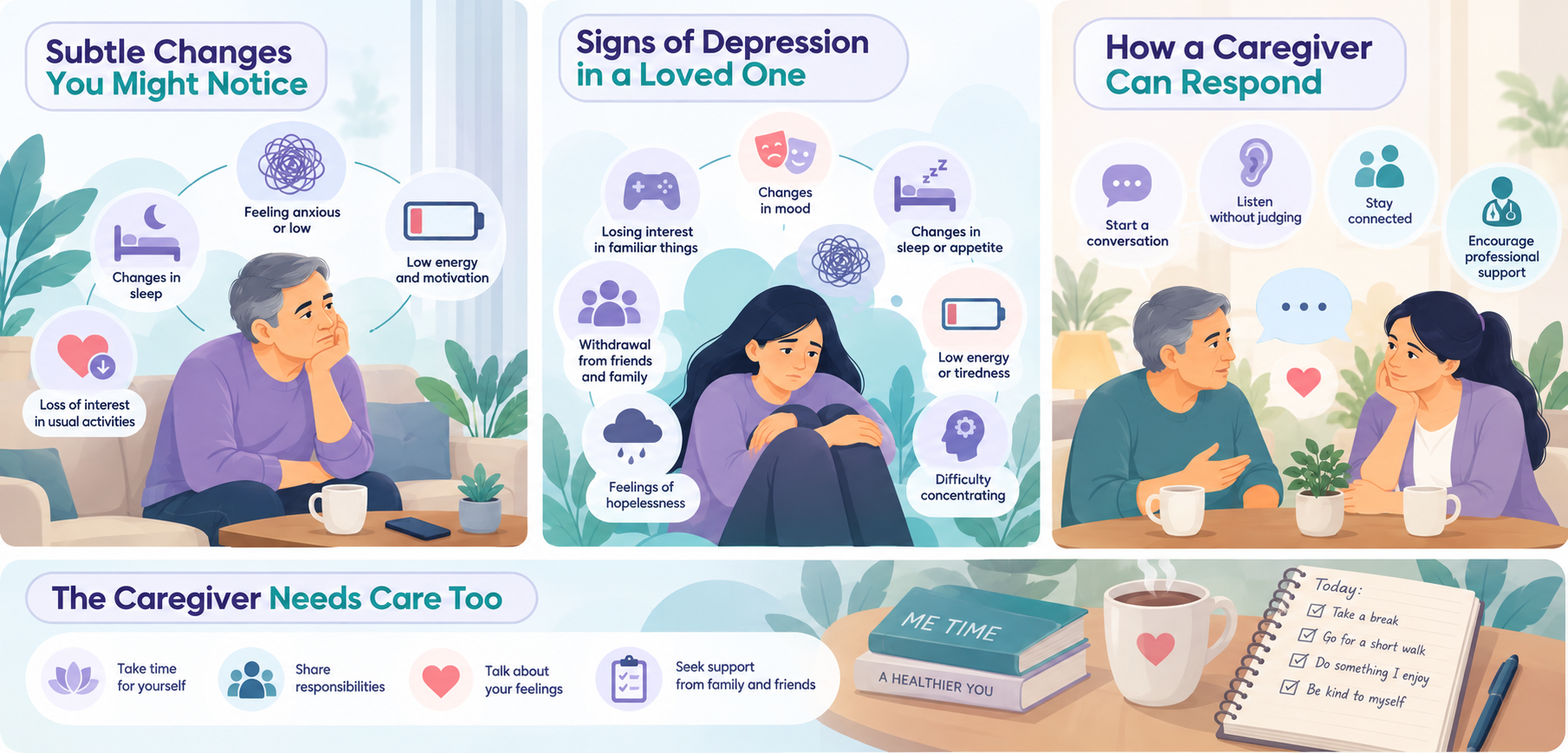
Signs of Depression in a Loved One to Look Out For
The Signs of depression in a loved one may appear gradually. They can also overlap with symptoms caused by the physical illness or its treatment.
Some changes to watch for include:
Losing interest in familiar things
A person may stop enjoying hobbies, meeting friends, watching films or spending time with family.
They may frequently say they do not feel like doing anything or stop looking forward to things they previously enjoyed.
Changes in mood
Depression does not always look like sadness.
Someone may become unusually quiet, frustrated, irritable or emotionally distant. They may also seem less interested in conversations or stop expressing feelings in the way they normally would.
These can be hidden signs of depression, particularly when the changes happen slowly.
Changes in sleep or appetite
Someone may sleep much more than usual or struggle to sleep. Their appetite may also increase or decrease.
These changes need to be considered carefully in someone with a chronic illness because the illness, treatment or medicines may cause similar symptoms.
Low energy or difficulty concentrating
Simple tasks may start to feel difficult.
A person may have less energy, struggle to concentrate, forget things or find ordinary decisions harder than before.
Fatigue can be particularly difficult to interpret because it is common in many long-term illnesses.
Withdrawing from others
A person may stop answering calls, avoid visitors or spend more time alone.
These behavioural signs of depression may be noticeable to a caregiver even when the person has not spoken about feeling depressed.
The NHS guidance on helping someone with depression also explains that family members and carers may notice changes in a person's behaviour and can play an important role in encouraging support.
Feelings of hopelessness or worthlessness
Someone may begin to feel that things will not improve or that they are a burden to their family.
Statements such as “Nothing will get better” or “Everyone would be better without me” should always be taken seriously.
How to Recognise Depression in a Loved One
Knowing how to recognise depression in a loved one is not about counting every symptom.
Instead, look at the change as a whole.
Ask yourself:
Is this different from how the person normally behaves?
Has the change continued for some time?
Is it affecting their relationships or everyday activities?
Does it seem to be making it harder for them to manage their illness?
NICE recommends that depression in people with chronic physical health problems should be assessed by considering symptoms, how long they have lasted and their effect on functioning. It also advises considering the role of the physical illness and medicines because they can contribute to similar symptoms.
So, if you are wondering how to tell if someone is depressed, look for a pattern rather than one isolated change.
According to NICE recommendations for depression alongside chronic physical health problems, assessment should take into account the person's symptoms, their duration, the effect on daily functioning and the possibility that physical illness or medicines may be contributing to similar symptoms. A caregiver does not need to diagnose depression. Noticing the change and encouraging the person to speak to a healthcare professional can be an important first step.
What About Cancer and Depression?
Cancer can bring many of the same challenges. A person may have to cope with treatment, physical symptoms, uncertainty about the future and changes to their normal routine.
For someone asking, “What are the early signs of depression in a cancer patient?”, the signs can include persistent low mood, loss of interest, tiredness, changes in sleep or appetite, difficulty concentrating and feelings of hopelessness.
The difficulty is that some of these symptoms can also be caused by cancer or its treatment. Research highlights how important this distinction can be. A systematic review and meta-analysis of 183 studies involving 182,521 people with cancer found that 49,280 had depression, which was approximately 27% of the study population. The rates varied across cancer types and populations.
This does not mean that every change in a cancer patient's mood is depression. It does mean that persistent emotional changes should not automatically be put down to treatment. In India, the Indian Council of Medical Research (ICMR) includes depression within its psychiatry Standard Treatment Workflows, reflecting the importance of recognising and managing the condition as part of healthcare.
How Can a Caregiver Respond?
The first step is usually a conversation, not a diagnosis.
If you are wondering how to talk to a depressed person, try starting with something simple:
“I've noticed you've seemed different lately. How have you been feeling?”
It can help to:
Listen without immediately trying to solve the problem.
Take their concerns seriously.
Avoid saying that they should simply “stay positive”.
Encourage them to speak with their doctor or a mental health professional.
Offer practical help, such as accompanying them to an appointment.
Stay connected even if they are less communicative.
If you are wondering how to motivate someone with depression, it is important to remember that depression itself can affect energy and motivation. Repeatedly telling someone to try harder may leave them feeling misunderstood. Instead, small and practical support can be more useful.
For example, offering to accompany them to an appointment may feel more manageable than asking them to organise everything themselves. If you are asking, “What to do if a family member is depressed?”, start by listening, staying connected and helping them access appropriate professional support.
Depression Management and Treatment
There is no single approach that works for everyone. Depression management depends on the person's symptoms, overall health, preferences and circumstances. Treatment may include psychological therapies, medicines or a combination of approaches. So, what is the most effective treatment for depression? There is no one treatment that is considered the best for every person. A healthcare professional can assess the individual's needs and discuss suitable options. NICE guidance includes psychological treatments and medicines among the approaches used for depression associated with chronic physical health problems.
For older adults, depression treatment for seniors in India may also need to take existing medical conditions, other medicines and age-related health concerns into account. The important thing is that emotional symptoms should be discussed as part of the person's overall care rather than treated as a separate concern that can simply be ignored.
Can Depression Be Prevented?
There is no guaranteed way to prevent depression.
However, supporting a person's overall wellbeing may help them cope with the emotional demands of a long-term illness. Depending on their health and abilities, this may include:
Maintaining regular sleep and meal routines
Staying connected with family and friends
Remaining physically active when appropriate
Continuing activities that provide enjoyment or purpose
Seeking professional support when emotional difficulties persist
These steps should not replace treatment when depression is present.
Caregivers also need support while caring for someone with a chronic illness. Sharing responsibilities, making time for rest and staying connected with family or friends can help reduce emotional strain. If feelings of being overwhelmed, low mood or difficulty coping persist, caregivers should consider speaking with a healthcare professional.
FAQs
Q1. What are the 4 major causes of depression?
There is no universally accepted list of exactly four causes. Depression can develop through a combination of biological, psychological and social factors. Chronic illness, stressful life events and other circumstances may also contribute.
Q2. How can I tell if my loved one is depressed?
Look for persistent changes in mood, interest, sleep, appetite, energy, concentration or social behaviour, particularly when these changes affect everyday life. A healthcare professional should make the diagnosis.
Q3. How can I help a loved one who is depressed?
Listen without judgement, stay connected, avoid dismissing their feelings and encourage them to seek professional support. Practical help with appointments or everyday activities may also be useful.
Q4. How can caregivers support a cancer patient with depression?
Caregivers can listen, encourage communication with the cancer care team and mental health professionals, and provide practical support. Depression should be assessed alongside the patient's physical health and treatment.
Q5. Is there a caregiver depression guide or caregiver support for depression?
A caregiver depression guide can help explain warning signs and ways to seek support. Depending on availability, counselling, mental health services and caregiver support groups may also be useful.
Also Read












Comments