







Sourced from:Direct from Manufacturer

Quick Summary
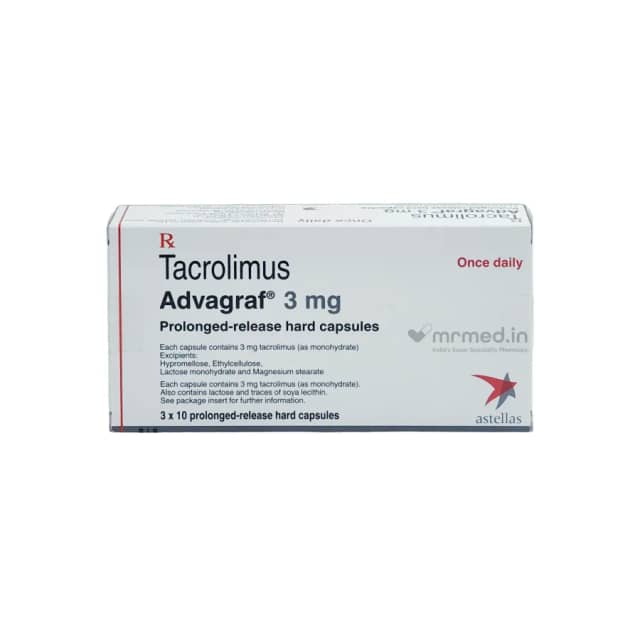
Advagraf 1mg Capsule

Last updated on 24 Oct 2026 | 08:56 AM (IST)
₹617
MRP: ₹937.5
(You Save ₹320.5)
10 CAPSULE(s) IN A STRIP
Sourced from:Direct from Manufacturer


Advagraf 1mg Capsule
Salt Composition
TACROLIMUSPAP Offer
Get free Tacrolimus Test worth Rs. 3500. Call Dost Team at 18002670909
Marketer
ASTELLAS PHARMA INC
34% OFF
₹617
MRP: ₹937.50
Inclusive of all taxes
34% Off


Salt Composition
TACROLIMUSPAP Offer
Get free Tacrolimus Test worth Rs. 3500. Call Dost Team at 18002670909
Marketer
ASTELLAS PHARMA INC

Dispatch: Today
Care delivered without the wait. Your order is prioritized for rapid dispatch to ensure it reaches your doorstep on time.
Substitutes
Mylimus 1.0mg Capsule
MYLAN PHARMACEU...
₹ 26.90/capsule
56% cheaper
Tacloran 1mg Capsule
WOCKHARDT LTD
₹ 28.50/capsule
53% cheaper
Tapoid 1mg Capsule
SAMARTH LIFE SC...
₹ 30.70/capsule
50% cheaper
Rinmus 1mg Capsule
RINDZ PHARMA PV...
₹ 32.70/capsule
47% cheaper
Better Service Satisfied Customers
Introduction
Advagraf 1mg Capsule contains Tacrolimus, an immunosuppressant that belongs to a group of medicines called calcineurin inhibitors. Each prolonged-release hard capsule contains 1 mg of tacrolimus. It is made by Astellas and is supplied as a strip of 10 capsules.
Advagraf is a once-daily formulation of tacrolimus. It should be prescribed by a doctor experienced in transplant care, and your dose is guided by blood tests that measure tacrolimus levels. Other tacrolimus capsules, such as Prograf, are taken twice daily, so the two are not interchangeable. Do not switch between tacrolimus brands or formulations unless your transplant specialist tells you to.
Uses of Advagraf 1mg Capsule
Advagraf 1mg Capsule is used to:
Prevent rejection after a kidney transplant: It helps stop the immune system from attacking a transplanted kidney in adults.
Prevent rejection after a liver transplant: It helps stop the immune system from attacking a transplanted liver in adults.
Treat resistant rejection: It may be used in adults when rejection of a transplanted organ has not responded to other immunosuppressive medicines.
Provide long-term protection: Immunosuppression must be maintained to protect the transplanted organ, so there is no set limit to the duration of treatment.
Advagraf is not recommended for use in children and adolescents.
How Advagraf 1mg Capsule Works
Advagraf 1mg Capsule contains tacrolimus, which enters immune cells called T-lymphocytes and blocks an enzyme called calcineurin. This reduces the activation and multiplication of T cells, which lowers the immune response against the transplanted organ and helps the body accept it.
The capsule is a prolonged-release formulation. It releases tacrolimus slowly over the day, which allows dosing once a day.
Interaction of Advagraf 1mg Capsule with Other Medicines
Tell your transplant specialist about all prescription medicines, over-the-counter medicines, supplements and herbal products you use before starting, stopping or changing any of them. Tacrolimus blood levels can change within a few days of a new medicine.
Grapefruit and herbal products: Avoid grapefruit and grapefruit juice, which can raise tacrolimus levels. Avoid St. John’s wort and other herbal remedies unless your doctor agrees.
Medicines that raise tacrolimus levels: These include azole antifungals (ketoconazole, itraconazole, voriconazole, fluconazole), macrolide antibiotics (clarithromycin, erythromycin), HIV and hepatitis C protease inhibitors (ritonavir), calcium channel blockers (diltiazem, verapamil, nifedipine) and omeprazole.
Medicines that lower tacrolimus levels: Rifampicin, phenytoin, carbamazepine, phenobarbital and corticosteroids can lower levels and increase the risk of rejection.
Ciclosporin and kidney-harming medicines: Do not combine ciclosporin with tacrolimus. Ibuprofen and other NSAIDs, aminoglycoside antibiotics, vancomycin, co-trimoxazole, amphotericin B, aciclovir and ganciclovir can add to kidney or nerve toxicity.
Potassium: Avoid potassium supplements and potassium-sparing diuretics (spironolactone, amiloride, triamterene). Tacrolimus can raise blood potassium, and co-trimoxazole can add to this.
Storage Conditions
Store Advagraf 1mg Capsule in its original pack to protect it from moisture, at room temperature.
Keep the capsules in the blister, inside the foil wrapper, until you are ready to take them. The wrapper contains a drying sachet (desiccant). Do not swallow it.
Use all capsules within 1 year of opening the aluminium wrapper.
Do not use the capsules after the expiry date on the carton.
Keep out of sight and reach of children. Ask your pharmacist how to dispose of unused medicine safely.
How to Use Advagraf 1mg Capsule
Take Advagraf 1mg Capsule exactly as prescribed by your transplant doctor. The dose depends on the type of transplant, your response and your tacrolimus blood levels. It is taken once a day in the morning. Take it on an empty stomach, or at least 1 hour before or 2 to 3 hours after a meal. Swallow the capsule whole with water. Do not open, crush or chew it. Take it immediately after removing it from the blister.
Take the capsule at the same time every morning.
If you forget the morning dose, take it as soon as possible on the same day. Do not take a double dose the next morning.
Your doctor may ask you to have a blood test before your morning dose to check your tacrolimus level.
Do not stop treatment, even if you feel well. Stopping can increase the risk of rejecting the transplanted organ.
Do not change between tacrolimus products unless your transplant specialist tells you to.
Safety Advice
Pregnancy
Tacrolimus crosses the placenta. It may be considered in pregnancy only when there is no safer alternative and the benefit justifies the risk to the baby. Newborns exposed in the womb may have raised potassium levels and need monitoring, especially of kidney function. Tell your doctor if you are pregnant or planning a pregnancy.

Breast Feeding
Tacrolimus passes into breast milk. Harmful effects on the baby cannot be ruled out, so you should not breastfeed while taking Advagraf.
Lungs
Immunosuppression increases the risk of infections, including lung infections. Cough, shortness of breath and fluid around the lungs have been reported with tacrolimus. Tell your doctor about any lung condition and report new or worsening cough, breathlessness or fever promptly.
Liver
Liver function tests are monitored during treatment, and abnormal results are common. The dose may need to be reduced in people with severe liver impairment. Tell your doctor if you have or have had liver problems.

Alcohol
Alcohol can increase the dizziness, sleepiness and vision problems that tacrolimus can cause. Avoid alcohol while taking Advagraf unless your transplant team advises otherwise.

Driving
Tacrolimus can cause visual and nervous system disturbances. Do not drive or use tools or machines if you feel dizzy or sleepy, or if you have problems seeing clearly.
Side Effects
Common side effects of Advagraf 1mg Capsule may include:
Tremor (shaking)
Headache
Diarrhoea
Nausea
High blood pressure
Difficulty sleeping
High blood sugar or diabetes
Raised potassium in the blood
Kidney problems
Your doctor will monitor your blood tests for kidney function, blood sugar, potassium and liver function.
Serious side effects
Seek medical attention if you develop:
Signs of infection, such as fever, sore throat, cough or feeling generally unwell. Memory loss, difficulty walking or loss of vision can be signs of a rare serious brain infection.
Severe abdominal pain with or without chills, fever, nausea or vomiting, which can be a sign of a tear in the gut wall.
Blurred vision, changes in colour vision or loss of vision.
Fever, unexplained bruising under the skin, extreme tiredness, confusion, yellowing of the skin or eyes, or passing little or no urine, which can be signs of damage to small blood vessels.
Severe headache, confusion, seizures or visual disturbance.
New skin changes, lumps or discolouration, because immunosuppressants increase the risk of skin cancer and lymphoma.
A fast or irregular heartbeat, palpitations or fainting.
Expert Tips
Take the same tacrolimus brand and formulation every time. Check the capsules when you collect your prescription and ask your pharmacist if they look different.
Take Advagraf once daily in the morning, at the same time each day.
Keep all appointments for blood tests so your dose can be adjusted.
Avoid grapefruit, grapefruit juice and St. John’s wort.
Tell every doctor, dentist and pharmacist that you take tacrolimus before starting any new medicine, including painkillers such as ibuprofen.
Protect your skin from the sun and UV light with protective clothing and a high-SPF sunscreen.
Avoid live vaccines and ask your doctor before any vaccination, including a flu shot.
Contact your doctor if you have diarrhoea for more than a day, as it can change tacrolimus levels.
Do not stop or change your dose without your transplant team, even if you feel well.
FAQs
Q1.
What is Advagraf 1mg Capsule used for?
Advagraf 1mg Capsule contains tacrolimus and is used in adults to prevent rejection of a transplanted kidney or liver. It can also be used to treat rejection that has not responded to other immunosuppressive medicines.
Q2.
How is Advagraf different from Prograf?
Both contain tacrolimus, but Advagraf is a prolonged-release capsule taken once a day, while Prograf is taken twice a day. They are not interchangeable, and any switch must be supervised by your transplant specialist.
Q3.
When should I take Advagraf 1mg Capsule?
Take it once a day in the morning, on an empty stomach or at least 1 hour before or 2 to 3 hours after a meal. Swallow it whole with water.
Q4.
How long do I need to take Advagraf?
You need to take it for as long as you need protection for your transplanted organ. There is no set limit, and stopping can increase the risk of rejection.
Q5.
Why do I need regular blood tests?
Blood tests measure your tacrolimus level so the dose can be kept in the right range. They also check kidney function, liver function, blood sugar and potassium.
Q6.
What should I do if I miss a dose of Advagraf 1mg Capsule?
Take it as soon as possible on the same day. If you remember only the next morning, do not take a double dose. Take your usual dose and continue as normal.
Q7.
Does Advagraf increase the risk of infections and cancer?
Yes. Because it lowers the immune response, infections are more likely and the risk of skin cancer and lymphoma is higher. Report signs of infection promptly and protect your skin from the sun.
Q8.
Can I use Advagraf during pregnancy or breastfeeding?
Tacrolimus may be considered in pregnancy only when there is no safer alternative, under close medical supervision. You should not breastfeed while taking Advagraf.
Fact Box
Molecule name | Tacrolimus |
Therapeutic class | Immunosuppressant |
Pharmacological class | Calcineurin inhibitor |
Indications | Prevention of organ transplant rejection |
References
Disclaimer
MrMed’s primary intention is to ensure that its consumers get information that is reviewed by experts, accurate and trustworthy. The information and contents of this website are for informational purposes only. They are not intended to be a substitute for professional medical advice, diagnosis, or treatment. Please seek the advice of your doctor and discuss all your queries related to any disease or medicine. Do not disregard professional medical advice or delay in seeking it because of something you have read on MrMed. Our mission is to support, not replace, the doctor-patient relationship.
Did you find this information helpful?
Author Details

Written By
Vishishta
M.Sc Microbiology

Reviewed By
Dr. Tejashwin Adiga
MBBS
Last updated : 24 Oct 2026 | 08:56 AM (IST)

Want to know more?
Read Our Editorial Policy