
Quick Summary
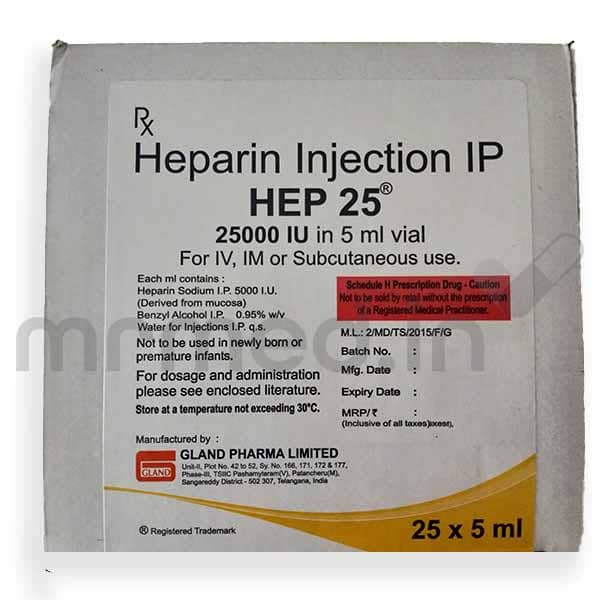
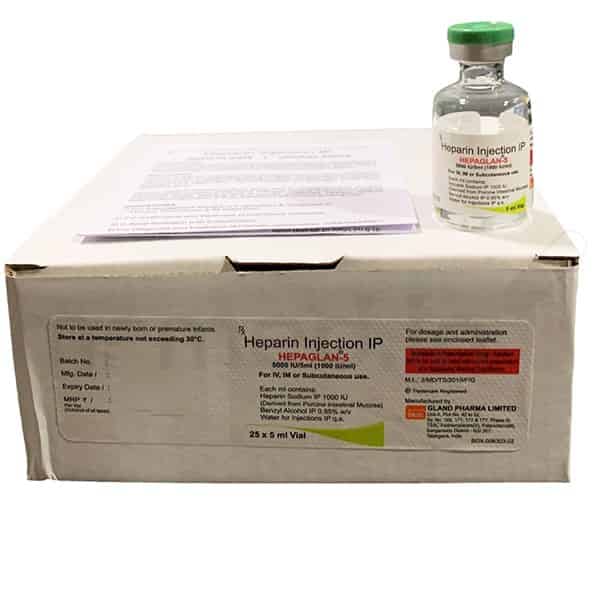
Heparin 5000IU Injection

Last updated on 31 Mar 2026 | 09:31 AM (IST)
₹81
MRP: ₹115
(You Save ₹34)
1 VIAL(s) OF 5ML


30% OFF
₹81
MRP: ₹115.00
Inclusive of all taxes
30% Off



Dispatch: Today
Care delivered without the wait. Your order is prioritized for rapid dispatch to ensure it reaches your doorstep on time.

Our Recommendation
Hepaglan 5000IU Injection
GLAND PHARMA LTD
HEPARIN
₹ 89
MRP:₹ 110.63
Substitutes
HEP 5000IU Injection
GLAND PHARMA LT...
₹ 80.00/injection
1% cheaper
Caprin 5000IU Injection
SAMARTH LIFE SC...
₹ 92.00/injection
14% costlier
Mettaparin H 5000IU Injection
METTA LIFE SCIE...
₹ 108.00/injection
34% costlier
Hepaglan 5000IU Injection
GLAND PHARMA LT...
₹ 89.00/injection
10% costlier


Introduction
Heparin 5000IU Injection contains Heparin as its active ingredient. It is a well-known anticoagulant medicine that helps prevent the formation of harmful blood clots in the veins, arteries, or lungs. Doctors often prescribe it to patients at high risk of clotting, such as those recovering from surgery, on bed rest, or with certain heart and blood vessel conditions.
The Heparin 5000IU Injection dosage depends on the patient’s medical condition, body weight, and clotting test results. It is usually given by a healthcare professional as a subcutaneous or intravenous injection under strict medical supervision. Following the prescribed dose and schedule is important to ensure safe and effective treatment.
One of the common medical uses of this injection is Heparin 5000 IU for DVT (deep vein thrombosis). It helps prevent and treat blood clots that form in the deep veins of the legs, which can otherwise lead to serious complications such as pulmonary embolism.
Before beginning treatment, patients may wish to check the Heparin 5000 IU Injection price to plan for therapy costs. The price can vary depending on the brand, hospital, and pharmacy location. For convenience and accessibility, patients can also buy Heparin 5000 IU Injection online from trusted pharmacy platforms with a valid prescription. Purchasing online ensures authenticity, proper storage, and reliable delivery.
In cases where the original brand is unavailable, doctors may suggest a Heparin 5000 IU Injection substitute that provides similar effectiveness and safety. However, any substitution should be done only under medical guidance.
Overall, Heparin 5000IU Injection plays an important role in preventing blood clots and protecting patients from life-threatening complications, especially in hospitals and critical care settings. Regular monitoring and adherence to the prescribed dose are key to safe and effective therapy.
Uses
Heparin 5000 IU Injection use include:
- Deep vein thrombosis
- Pulmonary embolism
- Disseminated intravascular coagulation
- Venous thromboembolism prophylaxis
- Atrial fibrillation with a high risk of stroke
- Hemodialysis
- Pregnancy-related thrombosis
How Heparin 5000IU Injection works
Heparin 5000IU Injection enhances the activity of antithrombin III, a natural anticoagulant protein in the body. By binding to antithrombin III, this medication accelerates its inhibitory effect on clotting factors, particularly thrombin and factor Xa. This inhibition disrupts the blood coagulation cascade, preventing fibrin formation, an essential component of blood clots. As a result, this medication effectively reduces the risk of clot formation and growth, making it a valuable anticoagulant used in various medical conditions.
Interaction of Heparin 5000IU Injection with other drugs
Inform the doctor about your medicines, including prescription, over-the-counter, nutritional or vitamin supplements, and herbal products. Certain medications may interact with Heparin 5000IU Injection, reducing effectiveness by causing undesirable side effects.
Storage conditions
- Store heparin 5000 injections at room temperature, between 20°C to 25°C (68°F to 77°F).
- Keep away from moisture, heat, and light.
- It should not be frozen.
- Keep away from children and pets.
How to use Heparin 5000IU Injection
Inj heparin 5000 IU is typically administered by injection, either intravenously (IV) or subcutaneously (under the skin). The specific dosage and administration method depends on the medical condition being treated, the patient's weight, age, and other factors, which a healthcare professional should determine. For IV use, this medication is usually given in a hospital setting under continuous monitoring to adjust the dosage as needed. Subcutaneous injections are often used for prophylactic purposes or in outpatient settings.
Safety Advice for Heparin 5000IU Injection

Breast Feeding
While Heparin 5000IU Injection is considered safe during breastfeeding, as with any medication, nursing mothers need to discuss their specific situation with a healthcare provider.

Alcohol
Heparin 5000IU Injection may affected by alcohol consumption. It's essential to consult with a healthcare professional about the suitability of alcohol consumption based on individual health conditions and the specific regimen.

Liver
Heparin 5000IU Injection is considered relatively safe for patients with liver impairment. Unlike other anticoagulant medications, this medication is not metabolized by the liver, and its elimination primarily occurs through the kidneys.

Lungs
Heparin 5000IU Injection is generally safe for the lungs, as it is an anticoagulant primarily used to prevent and treat blood clots in the circulatory system, not the lungs directly. It is often used to treat conditions like pulmonary embolism (PE), where blood clots block blood flow to the lungs.

Driving
Heparin pen injection does not directly affect a person's driving ability, as it is not known to cause drowsiness or impair cognitive and motor skills. Therefore, taking it, as prescribed will not likely interfere with one's ability to drive safely.

Pregnancy
Heparin 5000IU Injection is generally considered safe to use during pregnancy, and it is often preferred over certain other anticoagulants, especially vitamin K antagonists like warfarin. This preference is due to its minimal placental transfer, which means it does not cross the placenta to a significant extent and has a lower risk of harming the developing fetus.
Side Effects
Heparin 5000IU Injection causes some side effects like all medications, although not everyone will experience them. Heparin 5000IU side effects are:
Serious side effects of Heparin 5000 IU Injection are:
- Severe allergic reactions, including rash, itching, swelling, severe dizziness, or difficulty breathing
- Bleeding
- Heparin 5000IU Injection-induced thrombocytopenia (HIT)
- Osteoporosis (bone weakness)
Common side effects of Heparin 5000 IU Injection are:
- Bruising
- Hematomas
- Pain at Injection Site
- Redness at Injection Site
- Elevated Liver Enzymes
- Fever
- Nausea
- Vomiting
Expert Tips
-
Inform your healthcare provider about your complete medical history, including:
-
Bleeding disorders
-
Liver or kidney problems
-
Recent surgeries
-
Any known allergies
-
-
Your doctor will determine the appropriate dosage and method of administration based on your health condition.
-
Regular monitoring of blood clotting parameters, such as activated partial thromboplastin time (aPTT) or anti-Xa assay, is essential to:
-
Maintain the desired anticoagulant effect
-
Prevent bleeding or blood clots (thrombosis)
-
-
Follow the prescribed dosage and administration instructions exactly as directed by your healthcare provider.
-
Report immediately if you notice any unusual bleeding, bruising, or allergic reactions during treatment.
-
Avoid activities or medications that can increase the risk of bleeding while taking Heparin.
-
Maintain open communication with your doctor throughout therapy to ensure safety, minimize risks, and gain the maximum benefit from treatment.
FAQs about Heparin 5000IU Injection
Q1.
What are the side effects of Heparin 5000IU Injection?
Common side effects of Heparin 5000IU Injection may include bruising, hematomas, pain at the injection site, and elevated liver enzymes. Serious side effects can include bleeding, Heparin-induced thrombocytopenia (HIT), hypersensitivity reactions, and osteoporosis.
Q2.
Can I take Heparin 5000IU Injection if I am pregnant or breastfeeding?
Heparin 5000IU Injection is generally considered safe during pregnancy and breastfeeding. It does not cross the placenta significantly and is not expected to harm the baby when used appropriately. However, its use should be under the guidance of a healthcare provider.
Q3.
What is the recommended dosage for Heparin 5000IU Injection?
Heparin sodium injection 5000 IU dosing varies based on the patient's weight, medical condition, and desired anticoagulant effect. The dosage is usually adjusted based on regular monitoring of blood clotting parameters, such as activated partial thromboplastin time (aPTT) or anti-Xa assay.
Q4.
Is there a risk of bleeding with Heparin 5000IU Injection?
Yes, low molecular Heparin injection increases the risk of bleeding. Patients should be closely monitored for signs of bleeding and inform their healthcare provider promptly if they experience any unusual bleeding or bruising.
Q5.
Can Heparin 5000IU Injection be used in children and the elderly?
Heparin 5000IU 5ml can be used in children and the elderly. However, special consideration is required in these populations due to differences in dosing and potential age-related factors that may affect its use.
Fact Box of Heparin 5000IU Injection
|
Molecule name |
Heparin |
|
Therapeutic class |
Anticoagulants |
|
Pharmacological class |
Anticoagulants |
|
Indications
|
1. Deep vein thrombosis 2. Pulmonary embolism 3. Disseminated intravascular coagulation 4. Venous thromboembolism prophylaxis 5. Atrial fibrillation with a high risk of stroke 6. Hemodialysis 7. Pregnancy-related thrombosis |
References
- Wockhardt UK Ltd, Electronic medicines compendium (EMC), [Revised on June 2018] [ Accessed on 30th July 2023], https://www.medicines.org.uk/emc/files/pil.1678.pdf
- Baxter Healthcare Corporation, US Food, and Drug Administration, [Accessed on 30th July 2023], https://www.accessdata.fda.gov/drugsatfda_docs/label/2006/017037s158lbl.pdf
- KD Tripathi, Essentials of Medical Pharmacology, Drugs affecting coagulation, bleeding, and thrombosis, 7th edition, 2013, 617
Disclaimer
MrMed’s primary intention is to ensure that its consumers get information that is reviewed by experts, accurate and trustworthy. The information and contents of this website are for informational purposes only. They are not intended to be a substitute for professional medical advice, diagnosis, or treatment. Please seek the advice of your doctor and discuss all your queries related to any disease or medicine. Do not disregard professional medical advice or delay in seeking it because of something you have read on MrMed. Our mission is to support, not replace, the doctor-patient relationship.
Did you find this information helpful?
Author Details

Written By
Dr. Vijayalakshmi N.
BDS

Reviewed By
Dr. Tejashwin Adiga
MBBS
Last updated : 31 Mar 2026 | 09:31 AM (IST)

Want to know more?
Read Our Editorial Policy