
Quick Summary
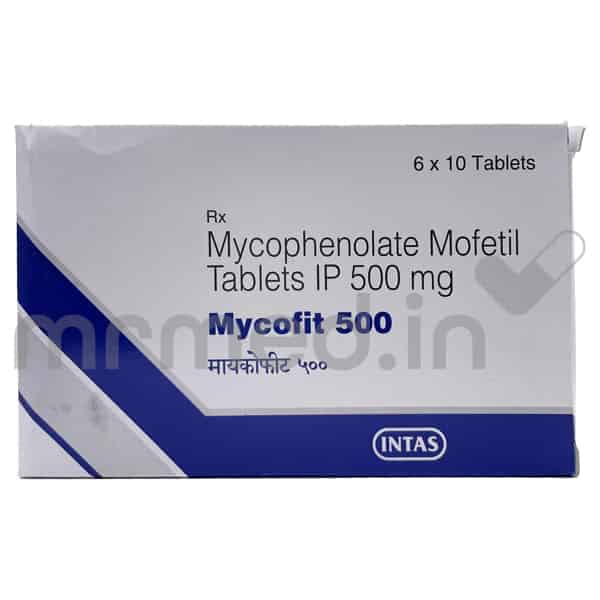
Mycofit 250 Tablet

Last updated on 26 Sep 2026 | 08:41 AM (IST)
₹294
MRP: ₹529.83
(You Save ₹235.83)
10 TABLET(s) IN A STRIP


45% OFF
₹294
MRP: ₹529.83
Inclusive of all taxes
45% Off



Dispatch: Today
Care delivered without the wait. Your order is prioritized for rapid dispatch to ensure it reaches your doorstep on time.
Substitutes
Mofetyl 250mg Tablet
RPG LIFE SCIENC...
₹ 34.00/tablet
16% costlier
Mofilet 250mg Tablet
EMCURE PHARMACE...
₹ 34.30/tablet
17% costlier
Mofecon 250mg Tablet
CONCORD BIOTECH...
₹ 42.10/tablet
44% costlier
Ceptimmun 250mg Tablet
HOSPIMAX HEALTH...
₹ 42.10/tablet
44% costlier
Introduction
Mycofit 250 Tablet contains Mycophenolate mofetil, an immunosuppressant belonging to the inosine monophosphate dehydrogenase (IMPDH) inhibitor class. It is primarily used to prevent organ rejection in patients who have undergone kidney, heart, or liver transplantation. This medicine is prescribed as part of a combination therapy with other immunosuppressive drugs to help the body accept the transplanted organ and prevent immune rejection.
The Mycofit 250 Tablet price may vary depending on the manufacturer and pharmacy. For patients who require alternatives, doctors may recommend Mycofit 250 Tablet substitutes such as Mycotero-S 360 mg Tablet or other formulations with similar active ingredients to ensure treatment continuity.
Mycofit tablet should not be used during pregnancy due to the risk of birth defects or miscarriage. Women of reproductive age must use effective contraception while taking this medication. Avoid live vaccines during treatment and for several weeks afterward, as the immune response may be weakened.
Common side effects may include nausea, diarrhea, infections, or fatigue. Always take this medication under medical supervision, avoid excessive sun exposure, and inform your doctor immediately if you experience unusual bleeding, yellowing of the skin, or vision problems. Mycofit 250 Tablet price varies by retailer.
Uses
Prevent organ transplant rejections
How Mycofit 250 Tablet Works
Mycofit 250 Tablet works by inhibiting the enzyme inosine monophosphate dehydrogenase (IMPDH) and reducing the production of guanosine nucleotides. MMF specifically affects the proliferation of activated T and B lymphocytes. These lymphocytes are key players in the immune response that can lead to the rejection of a transplanted organ.
Interaction of Mycofit 250 Tablet with other drugs
Live Vaccines (Life threatening)
Mycophenolate suppresses immune function, allowing live vaccines to cause active infection. Live vaccines should be avoided during therapy.Azathioprine or Other Immunosuppressants (Severe)
Using multiple immune suppressing medicines together can greatly increase the risk of serious infections and blood disorders. Close monitoring is required.Antacids containing Aluminum or Magnesium (Severe)
These can significantly reduce mycophenolate absorption, lowering its effectiveness. Dose spacing is necessary.Proton Pump Inhibitors like Omeprazole (Moderate)
PPIs may decrease drug absorption, especially in children. Doctors may adjust dosing or timing.Cholestyramine (Moderate)
This medicine reduces mycophenolate blood levels by interrupting enterohepatic circulation. Combined use may reduce treatment efficacy.Acyclovir or Ganciclovir (Moderate)
These antivirals may increase blood levels of both drugs, raising the risk of kidney or blood related side effects. Monitoring is advised.Oral Contraceptives (Mild)
Mycophenolate may reduce contraceptive effectiveness. Additional birth control methods are recommended.
Storage Information
Store this at room temperature between 15°C to 30°C.
Keep the medicine away from the reach of children and pets.
How to take Mycofit 250 Tablet
It is an orally available prescription drug. Your physician will decide the dose and duration of the treatment based on your disease condition, severity, and other factors. Always take Mycofit 250 Tablet as prescribed by your doctor. Do not open, crush, break, or chew the medicine.
Safety Advices

Pregnancy
Mycofit 250 Tablet is known to have harmful effects on the developing fetus and is generally not prescribed for use during pregnancy unless the benefits outweigh the risks.

Breast Feeding
Mycofit 250 Tablet is not recommended for breastfeeding mothers because small amounts of the drug can pass into the mother's milk and affect the nursing baby.

Lungs
Mycofit 250 Tablet should be cautiously administered in patients with lung diseases. Dose adjustments are necessary. Inform your physician if you have lung problems before initiating the therapy.

Liver
It is generally considered safe for individuals with liver disease, including those with liver transplants. The Mofecon OS dosage and use may need to be adjusted based on the severity of liver impairment.

Alcohol
It is unsafe to consume alcohol when taking Mycofit 250 Tablet because it may cause excessive drowsiness or liver problems.

Driving
Driving vehicles or operating machinery while taking Mycofit 250 Tablet is unsafe because it may cause drowsiness and vision problems.
Side Effects
Side effects are unwanted symptoms caused by medicines. Even though all drugs cause side effects, not everyone gets them.
Serious
Infections, fever, or sore throat
Unusual bleeding or bruising
Low blood cell count
Severe allergic reactions
Common
Higher risk of developing lymphoma and other cancers
Nausea, abdominal pain
Diarrhea
Constipation
Loss of appetite
Shortness of breath
Weight loss
Increased heartbeat
Headache
Blood pressure problem
Anaemia
Expert Tips
Take the prescribed dose exactly as directed by your doctor; do not alter the dosage without medical advice.
Inform your doctor about all the medications you are currently taking, including prescription drugs, over-the-counter medicines, and herbal supplements, as they may interact with Mycofit 250 Tablet.
If you are planning to conceive or suspect pregnancy while taking this medicine, consult your doctor immediately.
Your doctor may recommend switching to a safer alternative or adjusting your treatment plan during pregnancy.
Avoid direct exposure to sunlight, as this medication may increase the risk of skin cancer.
Use protective clothing and sunscreen when outdoors to reduce the chances of harmful UV exposure.
FAQs
Q1.
Can I breastfeed while taking Mycofit 250 Tablet?
Breastfeeding is generally not recommended while taking Mycofit 250 Tablet. This drug can pass into the mother's breast milk and may hurt the nursing infant. Consult your doctor about breastfeeding if you are taking this tablet.
Q2.
What is the mechanism of action of Mycofit 250 Tablet?
Mycofit 250 Tablet suppresses the immune system, preventing it from attacking the transplanted organ. It inhibits the activity of certain immune cells involved in the rejection process.
Q3.
What will happen if I stop taking Mycofit 250 Tablet suddenly?
Stopping your treatment all of a sudden may cause your condition to become worse. Do not stop taking Mycofit 250 Tablet without consulting your doctor.
Q4.
What is the correct way to take Mycofit 250 Tablet?
Follow the instructions advised by your doctor or the medication label. Mycofit 250 Tablet is taken orally with food to improve absorption. It should be swallowed, not chewed or broken.
Q5.
Can I drink alcohol while taking Mycofit 250 Tablet?
It is highly recommended to limit or avoid alcohol consumption while taking Mycofit 250 Tablet. Alcohol can interact with the medication, increasing the risk of side effects or interfering with its effectiveness.
Q6.
Whether Mycofit 250 Tablet can cause miscarriage?
Yes, Mycofit 250 Tablet can cause miscarriage. If you have childbearing potential, use effective contraception before or during treatment and at least six weeks after discontinuing the medication. Discuss contraceptive options with your doctor properly.
Q7.
Can I get vaccinated during the treatment with Mycofit 250 Tablet?
Live vaccines should be avoided while taking Mycofit 250 Tablet due to the risk of infection. Inform your healthcare provider about your immunization history and consult them regarding the appropriate timing of vaccinations.
Fact Box
Molecule name | Mycophenolate mofetil |
Therapeutic class | Immunosuppressants |
Pharmacological class | Inosine monophosphate dehydrogenase (IMPDH) inhibitor |
Indications | Prevent organ transplant rejections |
References
Roche Products Limited, European Medicine Consortium (EMC), [Revised on April 2022],[Accessed on 25/05/2023], https://www.medicines.org.uk/emc/files/pil.1103.pdf
Genentech USA, Inc., [ Revised on Oct 2021] [ Accessed on 25/05/2023], https://www.gene.com/download/pdf/cellcept_prescribing.pdf
S.E. Marshall, Immunological Factors in Disease, Davidson's Principles and Practice of Medicine, 22nd Edition, 2014, 71-96.
KD Tripathi, Immunosuppressant Drugs, Essentials of Medical Pharmacology, 8th Edition, 2019,.937-945.
Goodman & Gilman's, The Pharmacological Basis of Therapeutics, Inflammation, Immunomodulation, and Hematopoiesis, 12th Edition, 2011, 1014.
Disclaimer
MrMed’s primary intention is to ensure that its consumers get information that is reviewed by experts, accurate and trustworthy. The information and contents of this website are for informational purposes only. They are not intended to be a substitute for professional medical advice, diagnosis, or treatment. Please seek the advice of your doctor and discuss all your queries related to any disease or medicine. Do not disregard professional medical advice or delay in seeking it because of something you have read on MrMed. Our mission is to support, not replace, the doctor-patient relationship.
Did you find this information helpful?
Author Details

Written By
P. Thirumal Reddy
B. Pharm

Reviewed By
Dr. Tejashwin Adiga
MBBS
Last updated : 26 Sep 2026 | 08:41 AM (IST)

Want to know more?
Read Our Editorial Policy