









Quick Summary
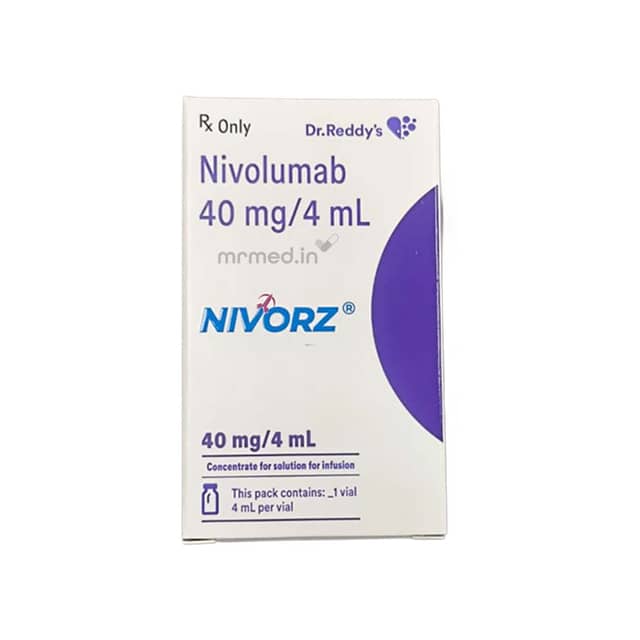
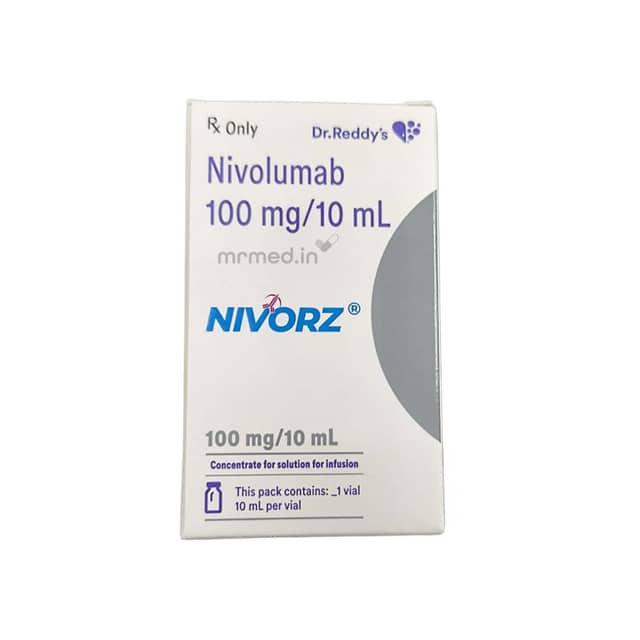
Nivorz 240mg Injection


Last updated on 26 Sep 2026 | 08:41 AM (IST)
₹81160
MRP: ₹97995
(You Save ₹16835)
1 VIAL(s) OF 24ML


Nivorz 240mg Injection

Salt Composition
NIVOLUMABPAP Offer
Buy 1, Get 1 Free. Contact us for latest updates
Marketer
DR REDDY'S LABORATORIES LTD
Prepaid Only. Non-Returnable.

17% OFF
₹81160
MRP: ₹97,995.00
Inclusive of all taxes
17% Off


Salt Composition
NIVOLUMABPAP Offer
Buy 1, Get 1 Free. Contact us for latest updates
Marketer
DR REDDY'S LABORATORIES LTD
Prepaid Only. Non-Returnable.

Dispatch: Today
Care delivered without the wait. Your order is prioritized for rapid dispatch to ensure it reaches your doorstep on time.
Substitutes
Opdyta 240mg Injection
BRISTOL MYERS S...
₹ 215920.00/injection
167% costlier
Introduction
Nivorz 240mg Injection contains nivolumab, a monoclonal antibody used as part of cancer treatment. It is a biosimilar of the reference medicine nivolumab and is administered by intravenous infusion under the supervision of a qualified healthcare professional.
Nivolumab targets programmed death-1 (PD-1), a protein found on immune cells. By blocking this immune checkpoint pathway, it can help restore T-cell activity against cancer cells.
Uses of Nivorz 240mg Injection
Nivorz 240mg Injection contains nivolumab and is used as part of treatment for certain cancers. In India, Nivorz has been approved by the Drugs Controller General of India (DCGI) across 12 indications covering solid tumours and haematological malignancies.
These include:
Non-small cell lung cancer (NSCLC): Used in certain patients with metastatic disease.
Renal cell carcinoma (RCC): Used in selected patients with kidney cancer.
Squamous cell carcinoma of the head and neck (SCCHN): Used for certain recurrent or metastatic disease.
Melanoma: Used in specified stages and treatment settings.
Classical Hodgkin lymphoma (cHL): Used in eligible patients with this type of blood cancer.
Urothelial carcinoma: Used in selected treatment settings for cancers of the urinary tract.
Colorectal cancer (CRC): Used for specific colorectal cancers, including biomarker-defined disease.
Oesophageal squamous cell carcinoma (ESCC): Used in specified treatment settings.
Gastric, gastroesophageal junction and oesophageal adenocarcinoma: Used in certain treatment settings, including combination treatment.
Resected oesophageal or gastroesophageal junction cancer: Used as adjuvant treatment in eligible patients after surgery and prior treatment.
Malignant pleural mesothelioma: Used for certain patients with this cancer of the lining of the lungs.
Hepatocellular carcinoma (HCC): Used in specified treatment settings for liver cancer.
The exact indication, treatment combination and stage of disease for which Nivorz is prescribed depend on the patient's cancer type and the treatment regimen recommended by the oncologist.
How Nivorz 240mg Injection works
Nivorz contains nivolumab, a PD-1 immune checkpoint inhibitor.
PD-1 is a receptor present on T cells. Some cancer cells can use the PD-1 pathway to reduce T-cell activity and avoid immune attack. Nivolumab binds to PD-1 and blocks its interaction with PD-L1 and PD-L2.
This can help restore T-cell activity and allow the immune system to recognise and attack cancer cells. Nivolumab therefore works by modifying the body's immune response rather than directly destroying tumour cells.
Interactions of Nivorz 240mg Injection with other medicines
Tell your doctor about all medicines, supplements and treatments you are receiving before starting Nivorz.
Particular attention may be needed with:
Medicines that suppress the immune system: These may affect the immune response associated with treatment and may also be used to manage immune-related reactions.
Other cancer medicines: Nivorz may be prescribed with other medicines as part of a specific cancer treatment regimen.
Prescription and non-prescription medicines: Tell your doctor about everything you take so potential interactions can be assessed.
Do not start, stop or change any medicine without discussing it with your doctor.
Storage Conditions
Store Nivorz 240mg Injection in a refrigerator at 2°C to 8°C.
Do not freeze.
Keep the vial in its original package to protect it from light.
Do not shake the vial.
The prepared infusion should be handled according to the instructions provided by the healthcare professional and the applicable product information.
How to Use
Nivorz 240mg Injection is administered by intravenous infusion by a doctor or qualified healthcare professional.
The dose and frequency depend on the type of cancer, the treatment regimen and whether nivolumab is being used alone or with other medicines. For some approved nivolumab regimens, 240 mg is administered by intravenous infusion every 2 weeks. Other regimens may use a different dose or schedule, depending on the cancer and combination treatment.
The concentrated solution must be prepared for intravenous infusion according to the prescribed regimen.
Do not attempt to inject Nivorz yourself. Your healthcare team will determine the appropriate dose and treatment schedule.
Safety Advice

Pregnancy
Tell your doctor if you are pregnant, planning to become pregnant or think you may be pregnant. Nivolumab may affect pregnancy, and your doctor will assess the potential benefits and risks of treatment.

Breast Feeding
Tell your doctor if you are breastfeeding. It is not known whether nivolumab passes into human breast milk. Your doctor will advise you whether breastfeeding should be discontinued during treatment.

Lungs
Inform your doctor if you have existing lung problems or develop a new or worsening cough, chest pain or difficulty breathing during treatment. Nivolumab can cause immune-mediated pneumonitis, which may require prompt medical attention.
Liver
Tell your doctor if you have liver disease or abnormal liver function tests. Nivolumab can cause immune-mediated hepatitis and other liver-related reactions. Your doctor may monitor liver function during treatment.

Alcohol
Discuss alcohol consumption with your doctor during treatment. Avoid excessive alcohol intake, particularly if you have liver problems or are receiving other medicines that may affect the liver.

Driving
Nivolumab treatment may cause tiredness or other side effects that can affect your ability to drive. If you experience such effects, avoid driving or operating machinery until you feel able to do so safely.
Side Effects
Nivorz may cause side effects. Some occur because nivolumab activates the immune system and can cause inflammation in healthy organs.
Commonly reported side effects may include:
Tiredness
Rash
Itching
Diarrhoea
Nausea
Reduced appetite
Cough
Shortness of breath
Musculoskeletal pain
Fever
Nivolumab can also cause serious immune-mediated reactions involving organs such as the lungs, bowel, liver, kidneys, skin and endocrine glands. Report new, persistent or worsening symptoms to your healthcare team promptly.
Infusion-related reactions may also occur during or after administration. Your healthcare team will monitor you during the infusion and manage any reaction according to its severity.
Expert Tips
Nivorz should be administered under the supervision of an oncologist or qualified healthcare professional.
Keep all scheduled appointments for treatment and monitoring.
Report new or worsening symptoms promptly, even if they do not appear to be related to your cancer.
Tell your doctor about all medicines, supplements and herbal products you use.
Inform your doctor if you have an autoimmune condition or have previously received medicines that suppress the immune system.
Do not self-administer Nivorz. It is given by intravenous infusion.
Store the vial as instructed and do not freeze or shake it.
FAQs
Q1.
What is Nivorz 240mg Injection used for?
Nivorz 240mg Injection contains nivolumab and is used as part of treatment for certain cancers. The specific use depends on the cancer type, stage and treatment regimen prescribed by the oncologist.
Q2.
Is Nivorz 240mg Injection chemotherapy?
No. Nivorz contains nivolumab, which is an immunotherapy medicine called a PD-1 immune checkpoint inhibitor. It works by helping the immune system recognise and attack cancer cells.
Q3.
How is Nivorz 240mg Injection given?
Nivorz 240mg Injection is administered through an intravenous infusion by a qualified healthcare professional. The dose and treatment schedule are determined by the treating oncologist.
Q4.
What does Nivorz 240mg Injection contain?
Nivorz 240mg Injection contains 240 mg of nivolumab in 24 mL, corresponding to a concentration of 10 mg/mL. It is supplied as a single-dose vial.
Q5.
Can Nivorz 240mg Injection be self-administered?
No. Nivorz is administered through intravenous infusion by a doctor or qualified healthcare professional. It should not be self-administered.
Q6.
Can Nivorz 240mg Injection cause immune-related side effects?
Yes. Nivolumab can cause immune-mediated reactions because it activates the immune system. These reactions may affect organs such as the lungs, liver, bowel, kidneys, skin and endocrine glands and can sometimes be serious.
Q7.
What should I tell my doctor before receiving Nivorz?
Tell your doctor about your medical history, particularly autoimmune conditions, previous organ problems and any medicines or treatments you are currently receiving. Also inform your doctor if you are pregnant, planning pregnancy or breastfeeding.
Fact Box
Molecule name: | Nivolumab |
Therapeutic class: | Antineoplastic agent |
Pharmacological class: | PD-1 immune checkpoint inhibitor |
Indications: | Treatment of certain solid tumours and haematological malignancies |
References
Disclaimer
MrMed’s primary intention is to ensure that its consumers get information that is reviewed by experts, accurate and trustworthy. The information and contents of this website are for informational purposes only. They are not intended to be a substitute for professional medical advice, diagnosis, or treatment. Please seek the advice of your doctor and discuss all your queries related to any disease or medicine. Do not disregard professional medical advice or delay in seeking it because of something you have read on MrMed. Our mission is to support, not replace, the doctor-patient relationship.
Did you find this information helpful?
Author Details

Written By
Naina Boruah
MSc Biomedical Science

Reviewed By
Dr. Tejashwin Adiga
MBBS
Last updated : 26 Sep 2026 | 08:41 AM (IST)

Want to know more?
Read Our Editorial Policy