

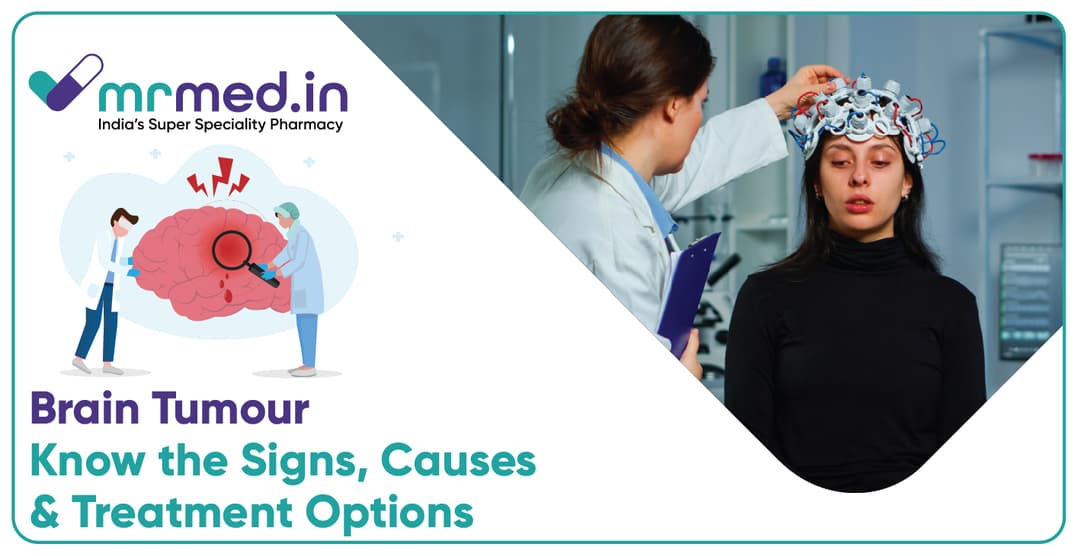
Brain Tumour: Symptoms, Signs & Causes





Last updated on 10 Sep 2026
A brain tumour is a growth of abnormal cells in the brain or surrounding structures. These tumours can be benign (non-cancerous) or malignant (cancerous), with the potential to interfere with essential brain functions depending on their location and size. Brain cancer, a malignant form, includes aggressive types like glioblastoma, which require immediate and intensive treatment.
This article explains the brain tumour symptoms, causes, diagnosis, and treatment options, backed by medical research and real data.

Signs And Symptoms Of Brain Tumour
Brain tumour symptoms depend on the tumour's type, size, and location. Some symptoms develop gradually over time, while others can appear suddenly.
Common Brain Tumour Signs and Symptoms:
Headaches: Persistent headaches, especially worse in the morning or during physical activity. These may not respond well to usual painkillers.
Seizures: New-onset seizures, even in individuals with no history of epilepsy, are a red flag.
Nausea and vomiting: Often without any digestive reason, especially in the morning.
Vision problems: Blurred or double vision, partial vision loss.
Balance and coordination issues: Trouble walking, dizziness, or clumsiness.
Speech difficulties: Trouble speaking or understanding words.
Cognitive or personality changes: Memory issues, confusion, difficulty concentrating, or noticeable mood swings.
Weakness or numbness: Usually on one side of the body or in specific limbs.
Hearing loss or ringing in the ears: Common in tumours near the auditory nerves.
These symptoms can mimic many less serious conditions, but persistent or worsening signs should not be ignored.
Causes Of Brain Tumours
The exact brain tumours causes are still not fully understood. However, research has identified several risk factors:
1. Genetic Mutations
Random mutations in genes can lead to uncontrolled cell growth. Some are inherited, while others occur spontaneously.
2. Family History
People with a family history of brain tumours or genetic conditions like Neurofibromatosis, Li-Fraumeni syndrome, or Turcot syndrome are at higher risk.
3. Radiation Exposure
Exposure to ionising radiation, especially from radiation therapy or atomic bomb exposure, increases risk.
4. Immunosuppression
People with weakened immune systems (e.g., HIV/AIDS or those on long-term immunosuppressants) have a higher risk of primary central nervous system lymphoma.
5. Environmental Factors
Prolonged exposure to chemicals such as formaldehyde, vinyl chloride, or pesticides is under investigation, though evidence is limited.
6. Age and Gender
Brain tumours can occur at any age but are more common in children and older adults. Glioblastoma is more frequent in men.
Note: There is no solid evidence that mobile phone use, microwave exposure, or stress causes brain tumours.
Types of Brain Tumours
Brain tumours are classified based on where they originate, how they behave, and the specific brain cells they affect. Understanding the type is crucial for diagnosis, treatment planning, and predicting outcomes.
By Origin

Tumours can be either primary (originating in the brain) or secondary/metastatic (spreading to the brain from elsewhere in the body).
Type | Description |
Primary Tumours | Begin in the brain or spinal cord. It can be benign or malignant. |
Secondary Tumours | Cancer that has spread (metastasised) to the brain from other organs like the lungs, breast, or skin. Always malignant and more common in adults. |
By Cell Type (Common Primary Tumours)
Each tumour type is named after the type of cell it originates from. This affects how it behaves and how it's treated.
Tumour Type | Origin & Features | Notes |
From glial (support) cells. Includes astrocytomas, oligodendrogliomas, and glioblastomas. | Most common type; glioblastoma is the most aggressive. | |
Meningiomas | From meninges (outer brain membranes). | Usually benign; may require surgery if large. |
Pituitary Adenomas | From the pituitary gland. | Affects hormone production; often benign. |
Schwannomas | From Schwann cells of cranial nerves. | Often affects hearing and balance (e.g., vestibular schwannoma). |
Medulloblastomas | From embryonic cells in the cerebellum. | Common in children; highly malignant but treatable. |
By Behaviour (Benign vs Malignant)

The nature of the tumour influences how fast it grows and whether it spreads.
Type | Characteristics |
Benign Tumours | Non-cancerous, slow-growing, usually don’t spread. Can still cause symptoms due to pressure on brain tissue. |
Malignant Tumours | Cancerous, grow rapidly, and can invade nearby tissue or recur after treatment. Require aggressive treatment. |
WHO Grading System (Tumour Aggressiveness)
The World Health Organisation (WHO) classifies brain tumours into 4 grades to help determine prognosis and treatment intensity.
Grade | Growth Pattern | Example | Prognosis |
Grade I | Slow-growing, least aggressive | Pilocytic astrocytoma | Often curable with surgery |
Grade II | Moderately slow, may recur | Diffuse astrocytoma | Can become higher grade |
Grade III | Malignant, actively growing | Anaplastic astrocytoma | Requires combined therapy |
Grade IV | Very aggressive, fast-growing | Glioblastoma multiforme | Poor prognosis even with treatment |
How Are Brain Tumours Diagnosed?
Proper brain tumour diagnosis includes a series of clinical and imaging assessments.
1. Neurological Examination
Doctors assess vision, hearing, balance, coordination, reflexes, and cognitive function.
2. Imaging Tests
MRI (Magnetic Resonance Imaging): The gold standard for detecting brain tumours.
CT Scan (Computed Tomography): Often used in emergencies or when an MRI isn't possible.
MR Spectroscopy: Helps determine tumour type by analysing chemical composition.
3. Biopsy
A tissue sample is taken (during surgery or via needle) to identify the tumour type, grade, and molecular features.
4. Molecular Testing
Used particularly in glioblastoma, where mutations like IDH1/2 and MGMT promoter methylation guide treatment decisions.
Treatment Options For Brain Tumours
Brain tumour treatment depends on multiple factors, including tumour type, location, grade, and patient condition. Treatments can include a combination of surgery, radiation, chemotherapy, and newer approaches.

1. Surgery
The primary treatment for most brain tumours.
Goal: Remove as much of the tumour as safely possible.
In some cases, total removal isn’t feasible due to the tumour’s location near vital brain areas.
2. Radiation Therapy
Targets and kills cancer cells left after surgery.
Types include external beam radiation and stereotactic radiosurgery (SRS).
Common for both benign and malignant tumours.
3. Chemotherapy
Medicines like Temozolomide(TMZ) are standard for glioblastoma.
May be used before or after surgery/radiation.
Administered orally or intravenously.
4. Targeted Therapy
Medicines that attack specific genetic features of cancer cells.
Examples: Bevacizumab (anti-VEGF) for glioblastoma.
5. Immunotherapy
Still in experimental stages for brain cancer.
Encourages the body’s immune system to recognise and attack tumour cells.
6. Tumour Treating Fields (TTF)
A non-invasive treatment for glioblastoma using low-intensity electric fields.
FDA-approved and now available in parts of India.
7. Supportive & Palliative Care
Focuses on relieving symptoms, improving quality of life.
Includes physiotherapy, counselling, and medications to reduce pressure in the skull.
Brain Tumour Survival Rate in India
Survival depends on tumour type and stage at diagnosis:
Tumor Type | 5-Year Survival Rate |
Low-grade glioma | 60–80% |
Anaplastic astrocytoma | 30–40% |
Glioblastoma | Less than 5% |
Meningioma (benign) | Over 85% |
In 2025, it is estimated that there will be 24,820 new cases of brain and other nervous system cancer, and an estimated 18,330 people will die of this disease. According to the National Brain Tumour Society, Brain cancer is estimated to be the 10th leading cause of cancer death in 2023 for both males and females in all age groups. The lack of awareness, access to early diagnosis, and financial constraints impact survival rates significantly.
Take Charge of Your Brain Health Today
A brain tumour diagnosis can feel overwhelming, but timely medical attention, the right treatment plan, and consistent support can make all the difference. If you or a loved one is experiencing persistent neurological symptoms, don’t ignore the signs, consult a neurologist immediately. Early detection saves lives. Stay informed, stay proactive, and prioritise regular health check-ups for better outcomes.
Have questions or need help finding treatment options?
Connect with certified specialists and explore trusted medications and therapies only on MrMed - India’s most reliable platform for super-speciality medicines.
Frequently Asked Questions (FAQs)
Q.1) Can you live a normal life with a brain tumour?
Yes, many people with brain tumours, especially benign or slow-growing ones, can live relatively normal lives with proper treatment and monitoring. Advances in surgery, radiation, and medication have significantly improved outcomes. Quality of life often depends on the tumour’s location, size, and type. Regular follow-ups and lifestyle adjustments can help manage symptoms effectively.
Q.2) What are my first signs of a brain tumor?
Early signs of a brain tumour may include persistent headaches, vision problems, nausea, seizures, memory issues, or changes in personality. Some people may also experience weakness, speech difficulties, or balance problems. Symptoms depend on the tumour's location in the brain. If you notice these signs, consult a neurologist promptly.
Q.3) What to avoid with a brain tumour?
Avoid activities that may increase pressure in the brain, such as heavy lifting or straining. Stay away from alcohol, smoking, and exposure to environmental toxins. Limit screen time and manage stress to reduce symptom flare-ups. Always follow your doctor’s advice regarding medications, diet, and activity level.
Q.4) What is the most dangerous type of brain tumour?
Glioblastoma is the most aggressive and deadly form of brain cancer.
Q.5) How long can you live with a brain tumour?
Survival varies by type. Some benign tumours have normal life expectancy; glioblastoma may lead to survival of less than 2 years even with treatment.
Read Also
References
Disclaimer: The content in this blog is for general informational purposes only and is not a substitute for professional medical advice, diagnosis, or treatment. Always consult your doctor or a registered dietitian before making any changes to your medicines or diet, especially if you have a medical condition or are taking prescribed medication. While the information is based on trusted sources, individual needs and results may vary. MrMed does not promote or endorse any specific food or treatment mentioned unless explicitly stated.












Comments