

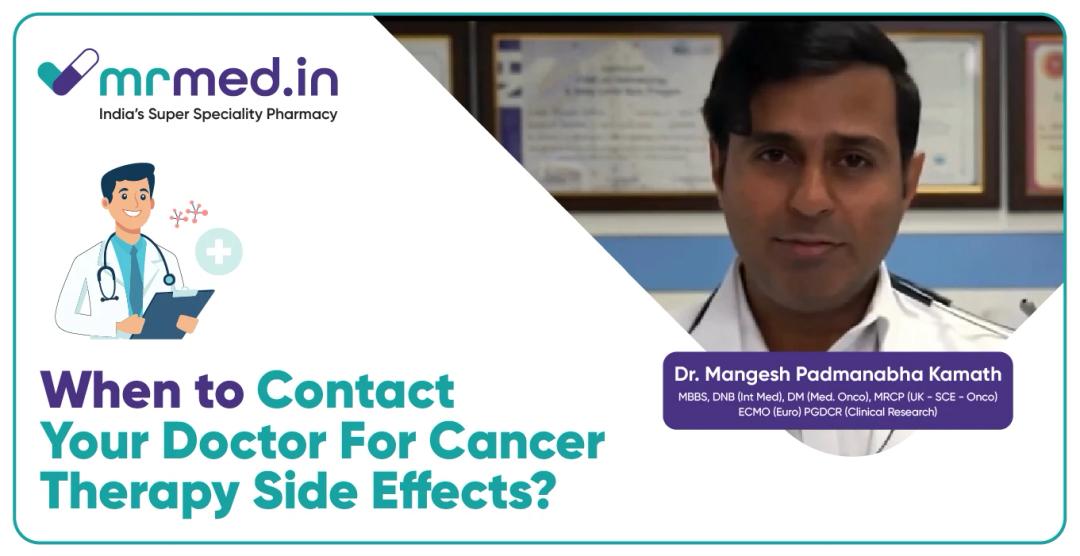
When to Contact Your Doctor For Cancer Therapy Side Effects?





Last updated on 02 Jan 2026
Dr. Mangesh P. Kamath, a Consultant medical oncologist, explains that while cancer therapies are lifesaving, they can sometimes bring unexpected challenges. Not every symptom is a cause for alarm, but knowing when to seek help can make your recovery safer and more comfortable. Understanding which changes are minor and which are serious ensures that you get the right care at the right time.
Recognising Cancer Therapy Side Effects
All treatments, from chemotherapy to radiation and targeted drugs, may lead to cancer therapy side effects. Common ones include fatigue, nausea, hair loss, or mild appetite changes. While these are uncomfortable, they’re usually manageable with guidance from your care team. However, it’s important to learn the warning signs to call a doctor, as some symptoms can be dangerous if ignored.
Serious Side Effects Symptoms
Certain serious side effects symptoms should never be overlooked. These include persistent high fever, chest pain, shortness of breath, uncontrollable vomiting, or bleeding that doesn’t stop. Doctors categorise these as medical red flags, meaning they need immediate medical evaluation. Recognising these dangerous symptoms early can prevent complications and improve outcomes.
Acute vs Chronic Symptoms
It’s also useful to understand acute vs chronic symptoms. Acute issues appear suddenly, such as severe allergic reactions or sharp pain, while chronic symptoms build up slowly over time, like ongoing fatigue or gradual weight loss. Both types matter. If you notice either, it falls under the category of side effects that need urgent care if they interfere with daily life or worsen unexpectedly.
When to Seek Medical Attention
So, when to seek medical attention? If you experience new or worsening symptoms that seem unusual for your treatment, it’s always safer to contact your care team. Common health warning signs include swelling in the legs, jaundice (yellowing of skin or eyes), unexplained rashes, or dizziness. These could point to deeper issues that need prompt care.
Practical Healing Journey Health Tips
Managing side effects doesn’t mean living in constant fear. A few healing journey health tips can help: keep a diary of daily symptoms, note changes in appetite or sleep, and track energy levels. By doing this, you’ll find it easier to decide when to contact your healthcare provider. Regular communication builds confidence and ensures you don’t delay medical support when it’s most needed.
Final thoughts
Not every discomfort during cancer therapy is a red flag, but some symptoms should never be ignored. By understanding your body, monitoring changes, and reaching out when in doubt, you stay in control of your healing journey. With timely action and the right medical guidance, you can navigate treatment more safely and with greater peace of mind.
Read also
11 Most Frequently Asked Questions by Cancer Patients
Disclaimer: The information provided in this article is for general awareness and educational purposes only. It should not be taken as a substitute for professional medical advice, diagnosis, or treatment. Always consult your doctor or a qualified healthcare provider with any questions regarding cancer treatment, side effects, or any medical condition. Do not ignore professional advice or delay seeking care because of information presented here. While insights are shared by Dr. Mangesh P. Kamath based on reliable sources, individual patient needs may vary. MrMed does not endorse or promote any specific medicine, product, or treatment unless clearly stated.












Comments