

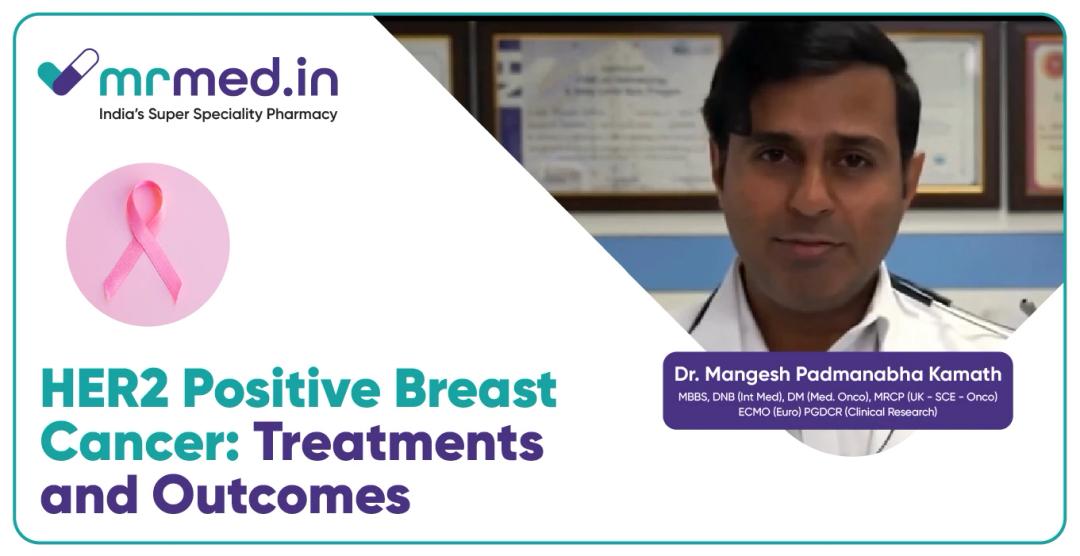
HER2 Positive Breast Cancer: Treatments and Outcomes





Last updated on 05 Oct 2026
Dr Mangesh Padmanabha Kamath, Consultant Medical Oncologist, explains that HER2, or human epidermal growth factor receptor 2, is a protein that promotes the growth of breast cancer cells. When the HER2 gene is amplified or the protein is overexpressed, it leads to a subtype known as HER2 positive breast cancer. This form of cancer is typically more aggressive, but targeted therapies have significantly improved survival and quality of life for patients.
HER2 Positive Treatment Options
Management requires a combination of chemotherapy, targeted therapy, and sometimes hormonal therapy, depending on the tumour profile. Modern HER2 positive treatment options include:
-
Chemotherapy with HER2-directed drugs
-
Targeted monoclonal antibodies
-
Antibody-drug conjugates
-
Tyrosine kinase inhibitors
The integration of these options has made HER2 cancers much more treatable than they were a decade ago.
HER2 Targeted Therapy Drugs in India
Access to therapy is crucial, and patients now have better availability of HER2 targeted therapy medicines India. These medicines directly act on HER2 receptors, reducing tumour growth and improving outcomes.
Commonly Used medicines:
-
Trastuzumab: Still the backbone of HER2 treatment. Many patients research trastuzumab in India to plan long-term therapy, as it is used in both early and advanced cases.
-
Pertuzumab in HER2 breast cancer: Often combined with trastuzumab and chemotherapy for dual HER2 blockade. This combination shows excellent results in preventing disease progression.
-
Antibody-drug conjugates (like T-DM1): Provide targeted chemotherapy delivery directly to cancer cells, minimising damage to healthy tissue.
Chemotherapy and HER2-Directed Therapy
For patients with early disease, treatment typically starts with a combination of chemotherapy and HER2-directed medicines. The chemotherapy treatment process for breast cancer involves cycles of intravenous medications, often lasting several months. In metastatic disease, treatment is tailored to prolong survival and maintain quality of life.
Patients often ask about chemotherapy duration for breast cancer, which can vary from 3–6 months in early cases, while advanced cases may require ongoing therapy depending on response.
Prognosis and Survival Outcomes
The development of targeted medicines has significantly improved the prognosis and survival rate for patients with HER2-positive breast cancer. Previously considered a poor-prognosis subtype, outcomes now rival or even surpass other aggressive cancers when treated with modern regimens.
When comparing HER2 positive vs HER2 negative breast cancer survival, it is clear that targeted medicines have reduced the gap. Many women with HER2 disease today achieve remission and live for many years with proper therapy.
Recurrence Risk in HER2 Cancers
The HER2 subtype breast cancer outcomes depend heavily on recurrence rates. Without targeted therapies, recurrence rates are significantly higher, especially within the first five years. The HER2 positive breast cancer recurrence risk decreases significantly when trastuzumab and pertuzumab are included in treatment, making them indispensable in both early and metastatic settings.
Cost and Accessibility in India
Treatment affordability is often a concern. Patients inquire about chemotherapy cost in India, as combining chemotherapy with targeted therapy can be financially challenging. Government schemes, generic availability, and patient-assistance programs are helping bridge this gap. Early access to affordable treatment is crucial for improving long-term survival rates.
HER2 Cancers in Early vs Advanced Stages
-
HER2-positive breast cancer in early-stage: Targeted therapies combined with chemotherapy often lead to a cure or long-term remission.
-
HER2-positive breast cancer in metastatic disease: While not always curable, patients live significantly longer with proper HER2 blockade and supportive care.
Fertility Considerations
Another concern is chemotherapy and fertility breast cancer. Young women undergoing treatment may experience reduced fertility. Doctors often recommend fertility preservation strategies such as egg or embryo freezing before starting therapy.
Final Thoughts
HER2-driven breast cancers were once considered highly aggressive and difficult to treat. With advancements in targeted therapy and improved access to modern medicines in India, survival rates and outcomes have greatly improved. Early detection, timely treatment, and ongoing monitoring remain key factors in achieving the best possible outcomes for patients.
Read also
Disclaimer: This article is for educational purposes only and does not substitute professional medical advice. Always consult your oncologist, such as Dr Mangesh Padmanabha Kamath, Consultant Medical Oncologist, for guidance tailored to your specific condition and treatment plan.












Comments