


Why Is Diarrhoea Common in Summer?





Last updated on 28 Apr 2026
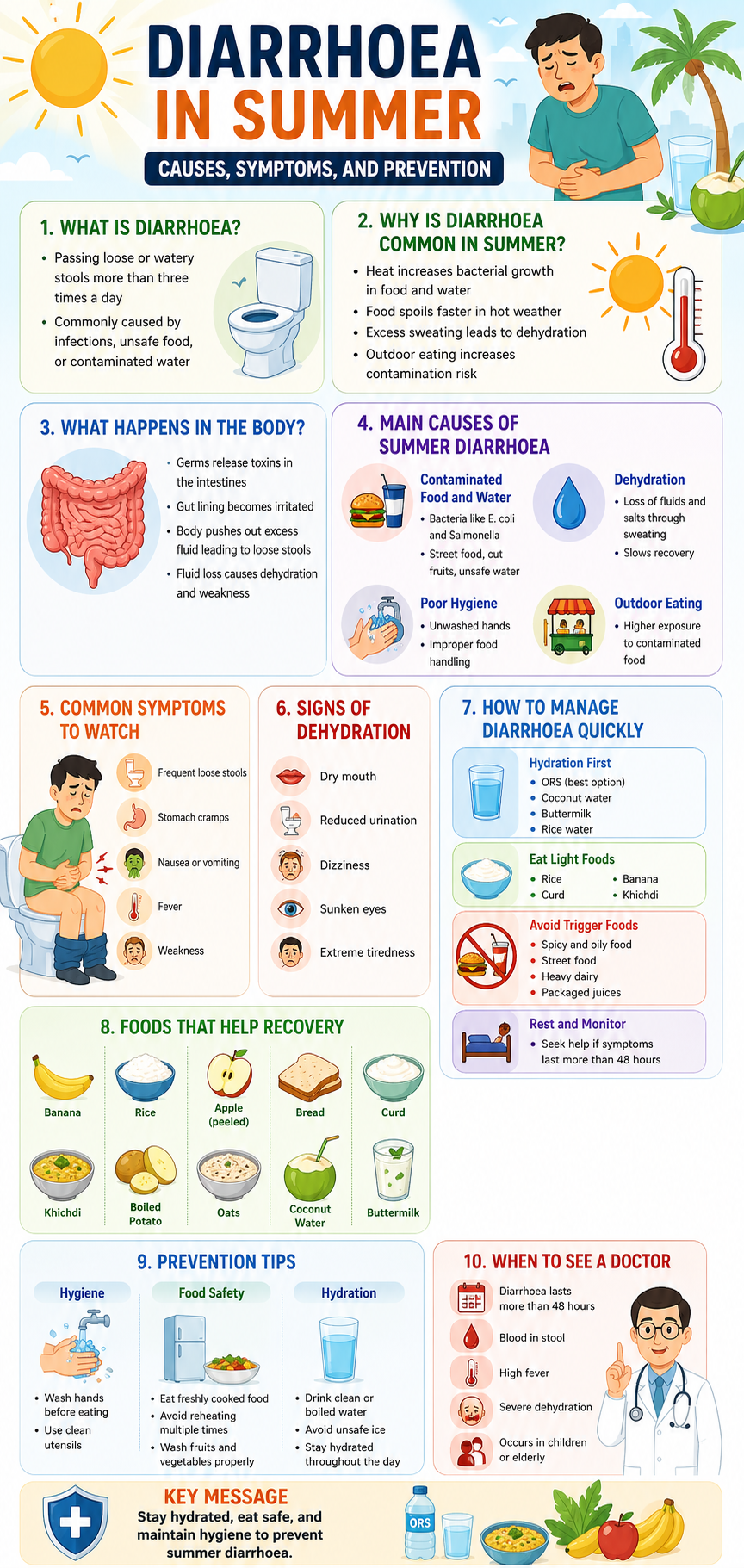
Diarrhoea is more common in summer due to heat, food contamination, and dehydration. It usually occurs from unsafe food or water and can lead to fluid loss. Early hydration, a light diet, and hygiene help manage symptoms. Timely care is important for preventing complications, especially among children, the elderly, and vulnerable groups.
Key Takeaways
|
Diarrhoea is more common in summer because heat allows harmful bacteria to grow quickly in food and water. This explains why diarrhoea happens in summer and why cases increase during hotter months. At the same time, increased sweating causes fluid loss, making the body more vulnerable to infections. If not managed early, it can lead to dehydration and weakness.
What Is Diarrhoea and Why Does It Increase in Summer?
Diarrhoea is the passage of loose or watery stools more than three times a day. It is commonly referred to as loose motion, and understanding loose motion causes helps in early management. It usually occurs when the digestive system is affected by infections, contaminated food or water, or sudden dietary changes.
In summer, the risk of diarrhoea increases because high temperatures help bacteria multiply faster. Food spoils quickly, especially when not stored properly. Frequent outdoor eating and increased sweating further raise the risk by exposing the body to contamination and fluid loss.
Therefore, due to the combination of heat, poor hygiene, and unsafe foods, diarrhoea is a common condition experienced during the summer, and cases will continue to rise as the summer progresses.
According to the World Health Organisation, there are an estimated 1.7 billion cases of diarrhoeal disease worldwide each year.
What Happens Inside Your Body During Summer Diarrhoea?
When harmful bacteria or viruses enter the body, they release toxins in the intestines. These toxins irritate the gut lining and cause the body to push out excess fluid, leading to loose stools. At the same time, sweating in hot weather increases fluid loss, raising the risk of dehydration, which can cause the body to experience signs & symptoms of weakness.
Main Causes of Diarrhoea in Summer (Loose Motion in Summer Causes)
The different types of diarrhoea causes are based on
1. Contaminated Food and Water
The most common cause of diarrhoea in summer is the consumption of contaminated food or unsafe water. High temperatures allow harmful bacteria such as E. coli and Salmonella to multiply rapidly, especially when food is left uncovered or improperly stored.
Eating street food, cut fruits, or drinking untreated water increases the risk of these bacteria entering the digestive system. Once inside, they produce toxins that irritate the intestines, disrupt normal digestion, and lead to frequent loose stools.
Common symptoms of foodborne infections include:
Loose or watery stools
Vomiting
Stomach cramps
These infections are often linked to bacterial infection diarrhoea, which is a major reason for stomach infection in summer.
2. Heat-Induced Dehydration
Hot weather produces excessive sweating and leads to significant water and salt depletion. These depletions can affect the balance of the digestive system, leading to dehydration, which can worsen diarrhoea and delay recovery.
In addition, dehydration slows recovery and exacerbates diarrhoea symptoms. This condition is commonly described as diarrhoea due to heat, especially during extreme weather.
Early fluid replacement using ORS for diarrhoea is one of the most effective ways to prevent complications.
3. Poor Hygiene and Food Storage
Poor hygiene practices, such as not washing your hands and consuming stale food, along with improper refrigeration of food products, lead to a higher rate of foodborne illnesses during the summer.
Reheating food multiple times also provides opportunities for bacterial growth.
4. Increased Number of Outdoor Meal Occasions
The increased number of outdoor meal occasions during travel and holiday periods increases exposure to contaminated food products, which contribute to summer diarrhoeal illnesses.
Dr. Robert H. Shmerling, Senior Faculty Editor, Harvard Health Publishing. Said, Diarrhoea is most often caused by viruses, bacteria, or parasites, usually linked to contaminated food or water.
.png "MrMed")
Summer Diarrhoea Symptoms You Should Not Ignore
Identifying signs of summer diarrhoea early can prevent complications.
Signs of summer diarrhoea include:
Frequent loose or watery stools
Sudden urge to pass stools
Stomach cramps
Nausea or vomiting
Weakness
Dehydration Symptoms
Fluid loss is the primary concern in cases of diarrhoea.
Symptoms of dehydration:
Dry mouth and lips
Very little urine production
Dizziness/light-headed
Sunken eyes
Extreme tiredness
These symptoms indicate the need for immediate fluid replacement using ORS or safe fluids
How to Stop Diarrhoea Fast in Summer
If you are dealing with diarrhoea, simple steps can help manage symptoms and support recovery:
Step 1: Start Hydration Early
Begin drinking Oral Rehydration Solution (ORS) as soon as symptoms appear. Taking small, frequent sips helps the body absorb fluids better and prevents dehydration.
Step 2: Eat Light and Easy-to-Digest Foods
Choose foods that are gentle on the stomach, such as:
Plain rice
Curd
Bananas
Khichdi
These foods help reduce irritation and support digestion.
Step 3: Avoid Trigger Foods
Certain foods can worsen symptoms and delay recovery. It is better to avoid:
Spicy or oily foods
Street food
Milk and heavy dairy products
Very cold drinks and packaged juices
Step 4: Rest and Monitor Symptoms
Giving the body enough rest supports faster recovery. If symptoms continue beyond 48 hours or signs of dehydration appear, medical advice is necessary.
.png "MrMed")
Summer Diarrhoea Treatment: What Actually Works
Fluids Are the Single Most Important Treatment for Diarrhoea
The first step in treating diarrhoea in summer is rehydration.
1. The best drinks to rehydrate with include:
The best drinks to rehydrate with include some of the best drinks for diarrhoea, such as:
ORS (Oral Rehydration Solution)
Buttermilk
Rice water
Lemon water (with salt & sugar)
All of these will help prevent dehydration and maintain normal electrolyte levels.
2. Medications (When Needed)
In some cases, a doctor may prescribe diarrhoea medicine based on the cause and severity:
Anti-diarrhoeal medications (to reduce frequency)
Probiotics (to encourage healthy gut bacteria)
Antibiotics (only if medically indicated)
It is best not to use any form of medication for diarrhoea without first consulting your doctor.
3. Home Remedies for Loose Motion
Simple kitchen-based solutions can act as an effective loose motion remedy at home and support faster recovery.
Bananas mixed with curd will help replace lost gut bacteria
Curd and rice are gentle on your system; they will help you digest food more easily
Boiled potatoes provide energy without being overly irritating to your digestive tract
Take small sips frequently instead of large amounts at once.
The National Health Service recommends drinking plenty of fluids and using oral rehydration solutions as the first step in managing diarrhoea.
10 Foods That Help Control Diarrhoea
Along with choosing the right foods, it is equally important to understand the foods to avoid in diarrhoea to prevent symptoms from worsening.
Banana – High in potassium and good for replenishing electrolytes, bananas also help form stools.
Rice – In its plain form, rice is an easy-to-digest food that helps to decrease stool frequency.
Apple (peeled) – Apples provide pectin, which will bulk your stool as well as improve the absorption of nutrients from food.
Bread – Simple carbohydrates provide energy without irritating your intestines.
Curd – Curd is a food made from fermented milk with good bacteria that assist in the restoration of your gut balance.
Khichdi – This dish made of rice and lentils is soft, light, and easy to digest, making it a perfect recovery food!
Potato (boiled) – Potatoes provide energy and are easy on your intestines.
Oats – Oats are a source of soluble fibre, which absorbs extra water in the intestines.
Coconut water – Coconut water maintains hydration and replaces lost minerals when you’ve been unwell.
Buttermilk – Buttermilk helps with digestion and cools your stomach when you’re ill.
Overall, these foods can help you recover from illness while being easy to digest without irritation.
.png "mrMed")
Diarrhoea Prevention Tips for Summer
Preventing summer diarrhoeal illness is far easier than treating it.
Everyday hygiene habits:
Always wash your hands before eating.
Use clean utensils when eating.
Avoid touching food with unclean hands.
Food Safety practices:
Eat only freshly prepared meals.
Keep refrigerated foods in the refrigerator.
Do not reheat more than once.
Wash all fruits and vegetables thoroughly before eating them.
Hydration tips:
Drink only bottled or well-filtered water and/or boiled water.
Do not use ice cubes from potentially unsafe sources.
Drink water regularly throughout the entire day.
Following these tips about preventing diarrhoea can greatly reduce your risk of developing a summer diarrhoeal illness.
When Should You See a Doctor?
If you experience any of the following symptoms, seek medical help:
Diarrhoea that persists for 48 hours or more.
Blood in your stool.
A high fever (over 101 F) with abdominal pain and diarrhoea.
Severe dehydration (i.e. dry mouth; unusual thirst; dizzy when standing up; decreased urination; palpitations).
Diarrhoea in children or elderly persons.
Seek medical help immediately if you notice any of these warning signs.
FAQs (People Also Ask)
1. How to prevent diarrhoea?
Drink clean water, maintain cleanliness, and refrain from eating food prepared outside of the house in the summertime.
2. Is it normal to have diarrhoea in summer?
Yes, due to heat, food spoilage, and bacteria multiplying, it usually occurs in the summer months.
3. What 12 foods stop diarrhoea?
Bananas, rice, apples, toast, curd, khichdi, potatoes, oats, coconut water, buttermilk, crackers and moong dal are good food options.
4. Can AC cause diarrhoea?
No, air conditioning does not directly cause diarrhoea.
5. How to stop diarrhoea in hot weather?
Drink plenty of fluids, take oral rehydration salts, eat light meals and avoid rich or greasy food.
6. What are food poisoning symptoms?
Symptoms associated with diarrhoea and/or vomiting may include loose stools, stomach cramps/pain, feverishness, weakness and general malaise.
7. What is the best medicine for loose motion?
For specific conditions, your doctor will generally prescribe the appropriate medications.
8. What are dehydration symptoms?
Symptoms associated with dehydration can include dry mouth, dizziness, decreased urine output, and changes in energy levels.
Final Thoughts
Diarrhoea in summer is common but preventable. Safe food practices, proper hydration, and early care can reduce risk and support faster recovery. If symptoms persist or worsen, timely medical attention is important to avoid complications.
Concentrating on adequate hydration, food hygiene, and early treatment will help prevent the majority of diarrhoea cases, enabling a quicker recovery without complications.
Read also
Foods That Cause Constipation and How to Keep Your Gut Healthy
World Digestive Health Day: Advances In Gastrointestinal Treatment
References
National Health Service. Diarrhoea and vomiting [Internet]. London: NHS; 2024 [cited 2026 Apr 17]. Available from: https://www.nhs.uk/conditions/diarrhoea-and-vomiting/
Ministry of Health and Family Welfare. Health advisories and public health information [Internet]. New Delhi: Government of India; 2024 [cited 2026 Apr 17]. Available from: https://www.mohfw.gov.in
National Library of Medicine. DuPont HL. Acute infectious diarrhea in immunocompetent adults. N Engl J Med. 2014;370(16):1532–1540. [cited 2026 Apr 17]. Available from: https://pubmed.ncbi.nlm.nih.gov/24738670/
National Library of Medicine. Guerrant RL, Van Gilder T, Steiner TS, et al. Practice guidelines for the management of infectious diarrhea. Clin Infect Dis. 2001;32(3):331–351. [cited 2026 Apr 17]. Available from: https://pubmed.ncbi.nlm.nih.gov/11170940/
Disclaimer: The content in this blog is for general informational purposes only and is not a substitute for professional medical advice, diagnosis, or treatment. Always consult your doctor or a registered dietitian before making any changes to your medicines or diet, especially if you have a medical condition or are taking prescribed medication. While the information is based on trusted sources, individual needs and results may vary. MrMed does not promote or endorse any specific food or treatment mentioned unless explicitly stated.














Comments