

15 Benefits of Drinking Water: Why Staying Hydrated Matters Every Day





Last updated on 02 Jan 2026
If there's one health tip we all get for free, it's this: Drink more water. Simple advice, yet most of us treat water like that friend we remember only when we're dying of thirst. The truth is, the hydration benefits go far beyond quenching thirst, affecting everything from your mood and skin to digestion, energy, immunity, and even brain function.
Let's break down exactly why your daily water intake matters so much and how it quietly shapes your overall health every day.
Why Water Matters More Than You Think
Your body is nearly 60% water (55-60% for adults). Your brain itself is about 73% water. Every organ depends on hydration. When water levels drop even slightly, your body slips into "low-power mode," affecting how you feel and function.
What Water Does Inside Your Body
Body Function | Role of Water |
Digestion | Helps break down food and absorb nutrients |
Brain Function | Supports focus, memory and clarity |
Skin Health | Maintains moisture and glow |
Immunity | Helps remove germs and toxins |
Metabolism | Helps burn calories efficiently |
Temperature Control | Keeps body cool in heat and workouts |
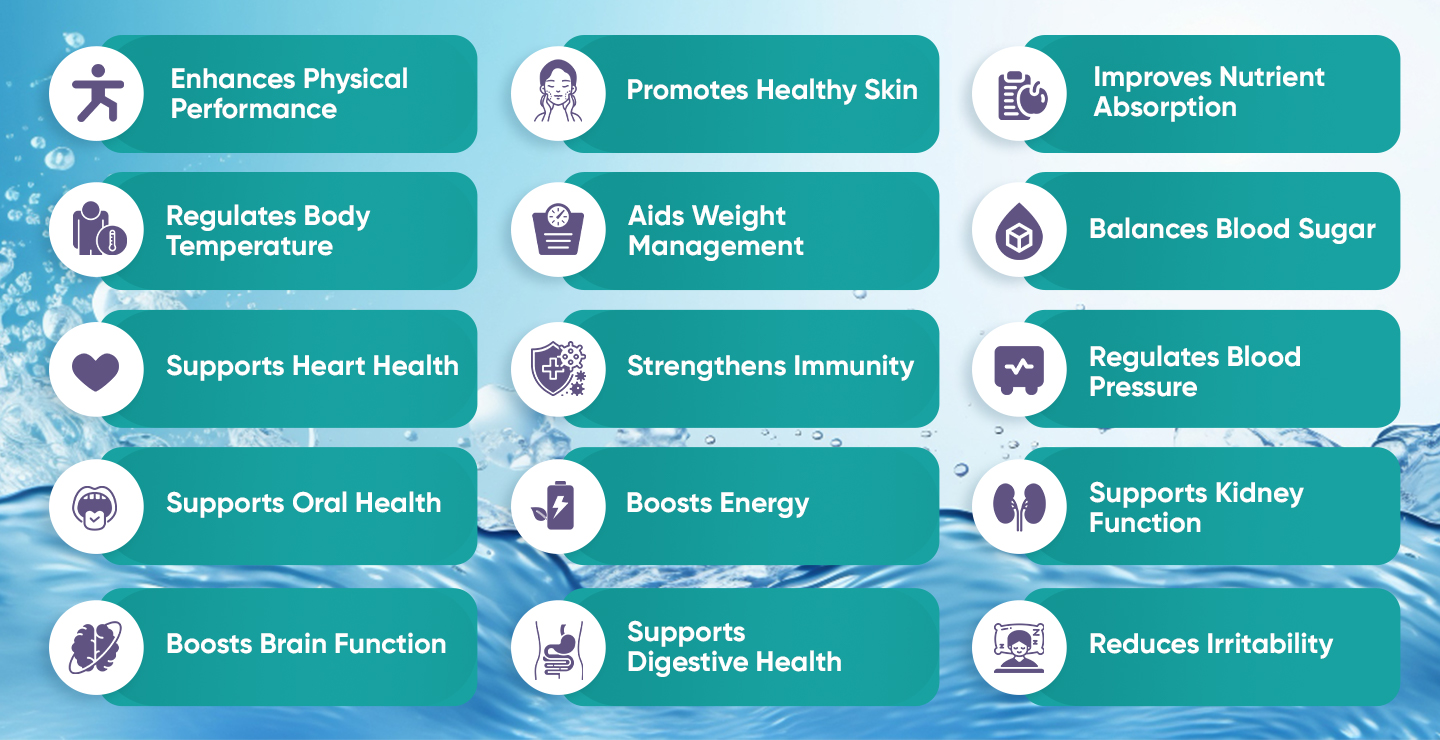
15 Drinking Water Benefits for Every Day
1. Boosts Your Energy & Reduces Fatigue
Water makes up 90% of your blood plasma, which carries oxygen and nutrients to every cell. When you're dehydrated, even by less than 1% body weight, you experience a decline in subjective energy and increased fatigue. Your heart works harder, circulation slows, and you feel drained even after 8 hours of sleep. Just a glass or two of water improves blood flow and naturally recharges your energy. No caffeine needed.
2. Improves Brain Function & Mental Clarity
Studies on students show that those who sipped water before an exam scored slightly higher on tests of attention and memory. Even mild dehydration increases neural activity in brain regions involved in attention and executive function, meaning your brain has to work harder to achieve the same results. Drinking enough water keeps nerve signals sharp, improves focus, stabilises mood, and helps you think clearly.
Ana Adan, PhD, Journal of the American College of Nutrition published article says, Being dehydrated by just 2% impairs performance in tasks that require attention, psychomotor, and immediate memory skills.”
3. Supports Complete Digestive Health
The importance of hydration for digestion and metabolism is huge, because water helps break down food, supports nutrient absorption, and keeps your system moving smoothly.
Water helps break down food and keeps your digestive system moving smoothly. When your stomach doesn't get enough fluids, it struggles to produce digestive juices, leading to acidity and bloating. Hydration also boosts metabolism, your body burns calories more efficiently throughout the day. Water keeps your intestines lubricated and prevents constipation by softening stool. It's one of the simplest ways to maintain gut health.
4. Gives You Naturally Glowing, Healthy Skin
One of the most overlooked benefits of drinking water for glowing skin is its ability to improve elasticity, smoothness, and natural radiance.
Your skin is 64% water, when hydration drops, it shows immediately. Dehydrated skin appears dull, feels rough, loses elasticity, and develops fine lines more quickly. Water improves blood flow to skin cells, helping deliver nutrients and flush toxins that cause breakouts. Drinking enough water enhances skin moisture, reduces dryness, and adds a natural glow, the cheapest skincare routine that actually works.
5. Aids Natural Weight Management
Many times when you "feel hungry," your body is actually thirsty. Water controls appetite, keeps your stomach fuller, and reduces cravings. According to a PMC-published article, research shows that drinking water before meals helps you eat less, supporting healthy and natural weight loss. It also boosts calorie-burning slightly, making weight management easier.
Brenda Davy, PhD, commenting on a randomized trial of water before meals, Dieters who drank water before meals, three times per day, lost about 5 pounds more than those who didn’t over 12 weeks.”
6. Strengthens Immunity & Detoxification
The right water intake to boost immune system strength is essential because water carries nutrients that your immune cells rely on to protect your body. It also supports the lymphatic system, which removes germs, waste, and toxins. Your kidneys act as your built-in detox system—they need enough water to filter toxins from your blood. When you stay hydrated, your urine becomes clearer, meaning your body is flushing out waste efficiently.
7. Protects Joints, Muscles & Physical Performance
The fluid in your joints is mostly water, acting as a natural cushion between your bones. When dehydrated, this cushioning reduces, causing stiffness and discomfort. Water also keeps muscles relaxed and prevents cramps. Even a small drop in hydration affects exercise performance and increases chances of cramps or early tiredness. Whether you walk, gym, run, or play sports, water keeps you performing at your best.
8. Regulates Body Temperature & Prevents Overheating
Sweating is your body's way of cooling down. Without enough water, you sweat less, and your body struggles to control heat. This can lead to overheating, especially during summers or workouts. Staying hydrated helps maintain the right temperature and prevents heat exhaustion.
9. Supports Heart Health & Blood Circulation
Your heart pumps thousands of liters of blood every day. When hydrated, your blood flows smoothly, putting less strain on the heart. When your body lacks water, blood becomes thicker, and your heart has to pump harder. Hydration keeps blood volume stable, maintains proper heart rhythm, and reduces the risk of palpitations.
10. Enhances Nutrient Absorption
Water helps dissolve vitamins and minerals, making them easier for your body to absorb. It also transports them through your bloodstream to the cells that need them. Without enough water, even healthy foods don't give you their full benefit.
11. Supports Healthy Blood Sugar Balance
Water helps your kidneys remove excess glucose through urine. When you’re dehydrated, blood sugar becomes more concentrated, making it harder for your body to regulate naturally. Staying hydrated supports smoother glucose control, especially important for people with prediabetes or diabetes.
12. Improves Kidney Function & Prevents Stones
Your kidneys rely on water to filter waste efficiently. Low hydration increases the concentration of minerals that form kidney stones. Drinking enough water dilutes these minerals, keeps urine clear, and reduces the risk of painful stone formation.
13. Helps Maintain Healthy Blood Pressure
When you’re dehydrated, blood volume drops. The body compensates by tightening blood vessels, which can elevate blood pressure. Proper hydration helps maintain a stable blood volume and supports healthy blood flow, reducing pressure on your arteries and heart.
14. Enhances Mood & Reduces Irritability
Studies show even mild dehydration can affect mood, causing irritability, restlessness, and difficulty concentrating. Drinking water helps regulate hormonal balance and supports brain function, leading to a calmer, more stable mood throughout the day.
15. Improves Oral Health & Prevents Bad Breath
Saliva is 99% water and plays a major role in protecting your teeth and gums. When you’re dehydrated, your mouth becomes dry, allowing bacteria to multiply, which can lead to bad breath and gum problems. Drinking enough water keeps your mouth moist and reduces bacterial growth naturally.
Best Time To Drink Water
Best time of day to drink water for health benefits
Morning: Activates digestion and metabolism
Before meals: Helps reduce overeating
During exercise: Prevents cramps and fatigue
Afternoon: Boosts focus
Before bed (small sip): Prevents dehydration without disturbing sleep
Signs That You Need to Drink More Water
Dry lips or tongue
Dark yellow urine
Headaches
Tiredness
Dry skin
Muscle cramps
Dizziness
Low focus or irritability
Your body sends these signals early, pay attention.
Easy Tips to Stay Hydrated Throughout the Day
Carry a bottle everywhere
Add lemon, cucumber, or mint for taste
Drink one glass with every meal
Set reminders on your phone
Eat water-rich foods like watermelon, cucumber, oranges, and coconut water
Small habits make a big difference.
Water Intake Calculator (Simple & Accurate)
Use this easy formula to calculate how much water you need based on your weight:
Daily Water Intake = Your Weight (kg) × 35 ml
Example:
If your weight is 70 kg:
70 × 35 ml = 2,450 ml per day (≈ 2.4 litres)
This formula is simple, practical, and easy to use for Indian climate and lifestyle.
FAQs
1. How much water to drink daily for better health?
Use your weight (kg) × 35 ml to know your daily intake. Increase your water intake during hot weather, workouts, or long outdoor hours to keep your body balanced.
2. Does drinking water help with weight loss naturally?
Yes. Water reduces sudden hunger, prevents overeating, and slightly boosts metabolism. Drinking a glass before meals helps control portions and supports natural weight loss.
3. What happens to the body when you don’t drink enough water?
You may feel tired, dizzy, or get headaches. Digestion slows, skin becomes dry, and your focus drops because your body struggles to function without enough fluids.
4. Why drinking water improves brain function?
Water supports nerve communication, memory, and concentration. Even mild dehydration makes your brain work harder, affecting clarity, mood, and overall mental performance.
5. How drinking water helps detox the body?
Water helps kidneys flush out toxins, supports liver function, and removes waste effectively. Proper hydration keeps your internal system clean and reduces toxin buildup.
6. How to increase daily water intake easily?
Carry a bottle, flavour water with lemon or mint, set reminders, and drink with meals. Small habits throughout the day make hydration effortless.
7. What are the health benefits of drinking water every day?
You get better skin, smoother digestion, more energy, improved immunity, and steady mood. Hydration also supports heart health, detox, metabolism, and brain function.
8. How does hydration affect energy levels?
When you’re dehydrated, oxygen flow decreases, making you feel tired quickly. Drinking enough water helps maintain steady energy and reduces fatigue.
9. Can dehydration cause headaches and fatigue?
Yes. Low hydration triggers headaches, dizziness, and tiredness because your brain and muscles don’t get enough oxygen and nutrients.
10. Is drinking water the best way to support joint health?
Yes. Water keeps joints lubricated, reduces stiffness, and helps prevent discomfort. Hydration also supports smoother movement during daily activities.
11. How much water should I drink during exercise?
Sip 200–300 ml every 20 minutes to avoid dehydration. For intense workouts or heat, drink up to 1 litre extra to stay hydrated.
Wrapping Up: Make Hydration Your Daily Superpower
Water isn't just another health trend—it's the foundation of how your body works. From sharper thinking and glowing skin to better digestion and steady energy, proper hydration quietly improves almost every aspect of your health.
Read also
References
European Food Safety Authority Panel on Dietetic Products, Nutrition and Allergies (NDA). Scientific opinion on dietary reference values for water. EFSA J. 2010;8(3):1459. doi:10.2903/j.efsa.2010.1459.
Water intake, hydration status and 2-year changes in cognitive performance: a prospective cohort study.Nishi SK, et al. BMC Med. 2023;21: [article 296]. doi:10.1186/s12916-023-02771-4
Drink water to curb weight gain? Clinical trial confirms effectiveness of simple appetite control method. Davy BM. ScienceDaily; 2010 Aug 23.
Disclaimer: The information shared in this blog is meant for general educational purposes only and should not be taken as medical advice. Always consult a qualified healthcare professional for diagnosis, treatment, or medical guidance related to your health. The content is based on reliable sources, but it may not be suitable for every individual’s condition. We do not assume responsibility for any actions taken based on this information. Readers are encouraged to exercise caution and use their discretion when making healthcare decisions.












Comments