

Fake ICU Medicines Seized in Bengaluru: What Patients Need to Know About Spurious Drugs





Last updated on 28 Aug 2026
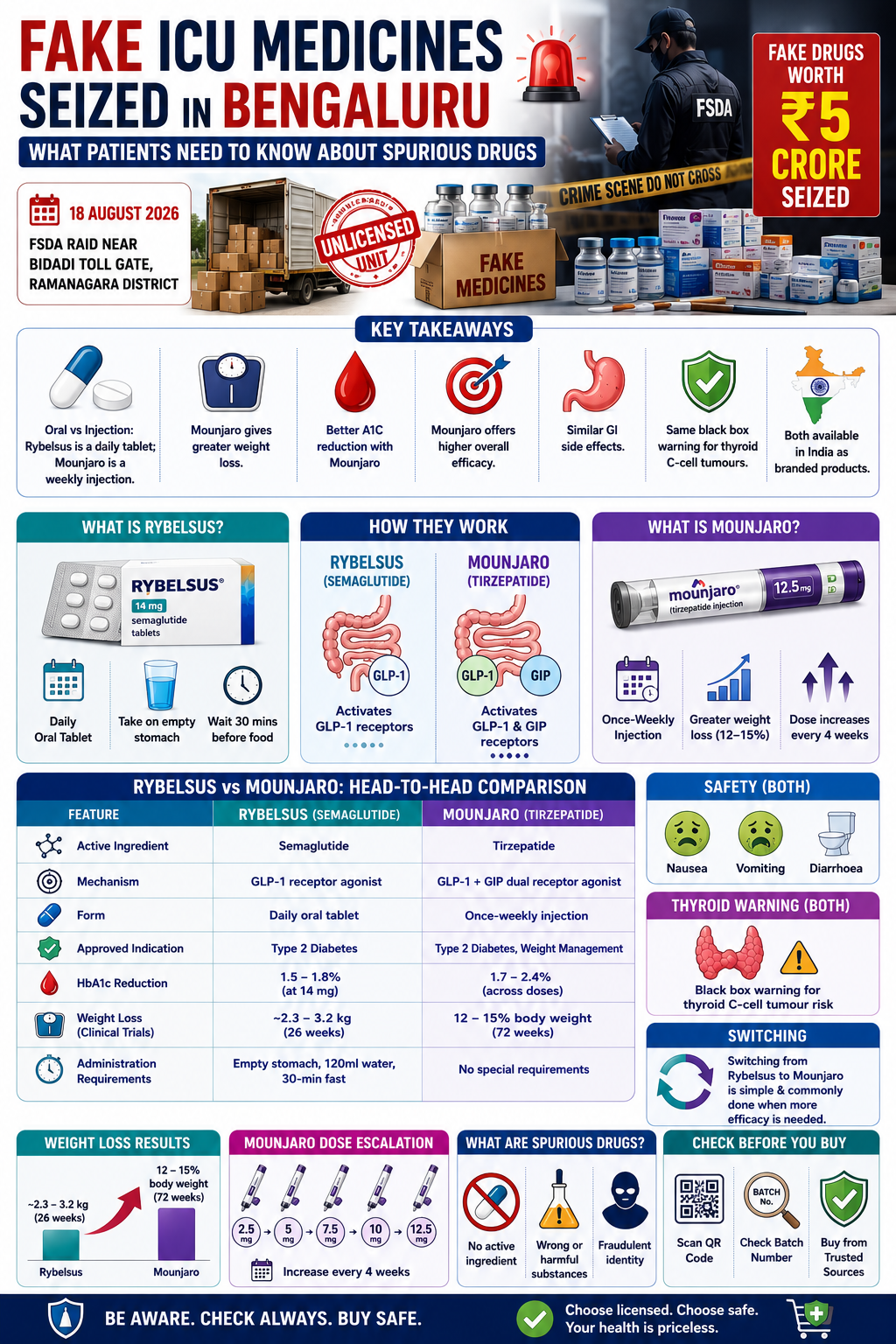
On August 18, 2026, Karnataka's Food Safety and Drug Administration (FSDA) conducted a raid near the Bidadi toll gate in Ramanagara district, where they made shocking discoveries that will be troubling news for patients, caregivers, and the medical fraternity in India.
Authorities have put a stop to a large counterfeit drug manufacturing operation near Bangalore and retrieved fake drugs worth ₹5 crore from this unauthorised establishment, which was using labels of famous brands for repackaging drugs for its counterfeit products. Some of the seized products were medicines and injections used in critical care, raising new questions about the possibility of counterfeit ICU medicines in legitimate hospital supplies.
This incident is not a one-time case, but a warning that all patients, caregivers, and healthcare professionals should understand.
Key Takeaways
|
What Happened in Bengaluru: The Full Picture
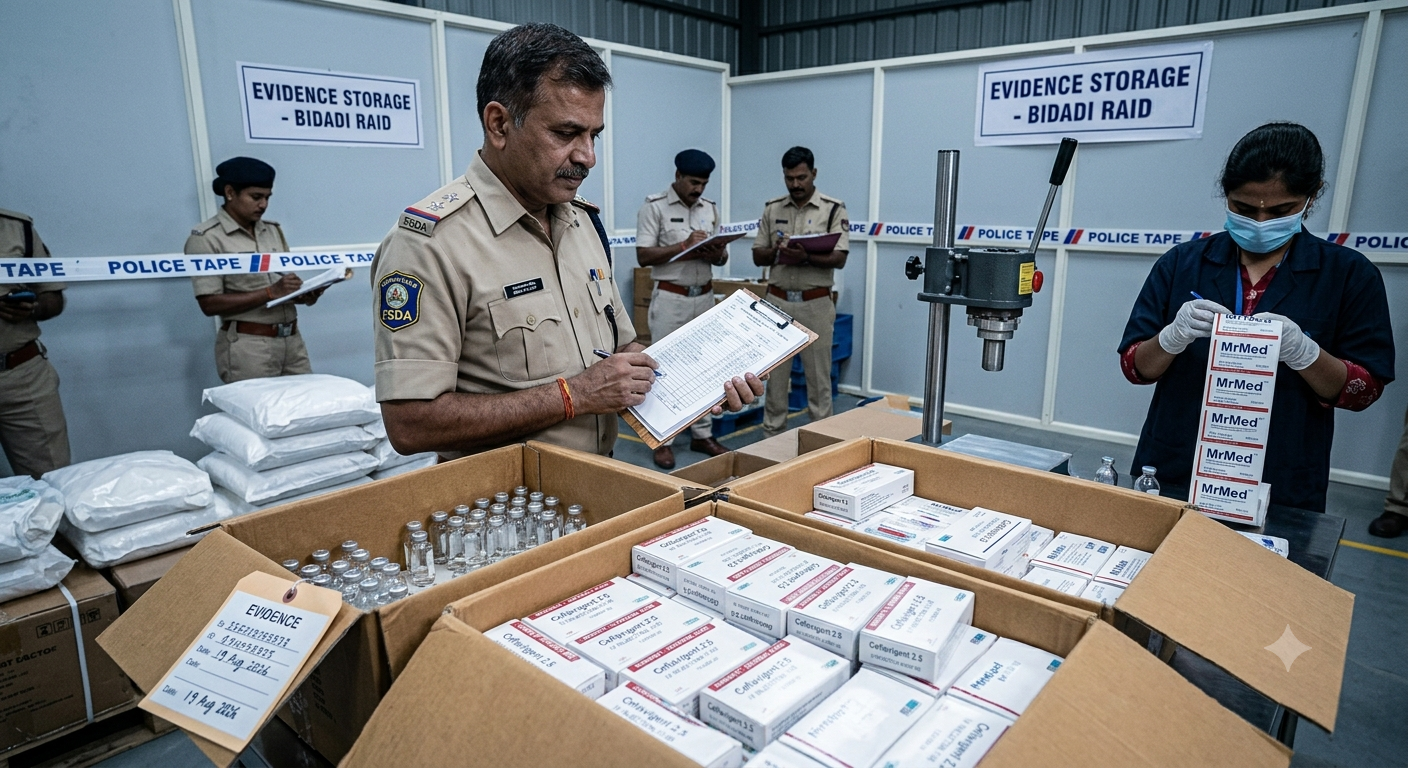
The Drug Wing of the Karnataka Food Safety and Drug Administration Department conducted a raid on August 18, which led to the discovery of the alleged relabelling of some drugs using the names and brands of major international pharmaceutical companies. Authorities are currently trying to figure out if these fake drugs reached drug stores, hospitals, and others.
The medicines being procured from factories in Himachal Pradesh and Telangana are said to have been relabelled to look like well-known brands from reputed international drug manufacturers. The police have arrested one Prabhadev in the case.
State Health Minister U T Khader said investigators are now trying to locate Prashant, believed to be the main figure in the scheme and currently living in Dubai. "Those who purchased and sold fake medicines at a low cost will have to be punished," Khader said.
Speaking to reporters in Bengaluru, Khader said public cooperation was essential to dismantle the growing fake drug network in the state, particularly given the limited manpower available in the Health and Food Safety departments. The government has announced cash rewards of ₹10,000 to ₹50,000 for credible information that helps uncover such networks, with informants' confidentiality guaranteed.
Why does the ICU angle matter specifically? Critical care medicines intravenous antibiotics, antifungals, vasopressors, and ICU fluids are among the most expensive drugs in a hospital formulary, making them lucrative targets for counterfeiting. A patient in an ICU who receives a spurious antibiotic with no active ingredient does not get worse because the treatment failed. They get worse because they received nothing while everyone assumed they were being treated.
What Are Spurious Drugs? The Legal Definition
The meaning of spurious drugs is precisely defined under the Drugs and Cosmetics Act, 1940. A drug is classified as spurious if it:
Is manufactured under a name that belongs to another legitimately manufactured drug
Is an imitation of, or a substitute for, another drug
Purports to be the product of a manufacturer whose label it does not bear
Has been substituted wholly or in part by another drug or substance
Category | What It Means | Example |
Spurious | Deliberately fraudulent fake identity | Labelled as Augmentin; contains paracetamol |
Counterfeit | Copy of a genuine product, often with packaging imitated | Identical box and blister as original; no active ingredient |
Substandard | From a real manufacturer, but fails quality tests | Correct drug, wrong potency or contaminated |
Adulterated | Contains a harmful substance added without disclosure | Antibiotic mixed with unregistered chemical |
Expired medicine | Past the manufacturer's confirmed stability date | Same composition, but degraded or unsafe |
The distinction between these categories is not semantic it determines how medicines are investigated, recalled, and prosecuted. As DCGI Rajeev Singh Raghuvanshi clarified at the CII Pharma Summit in October 2024, when media reported that 50 "fake" medicines had been listed: "They are not fake medicines"; they were substandard, not counterfeit. The Karnataka Bidadi seizure is in a different category: genuinely spurious, with medicines relabelled to impersonate multinational pharmaceutical brands.
Fake Medicine Health Risks: What Actually Happens to Patients
Fake medicines' health risks span a clinical spectrum that is broader than most people realise:
Treatment failure: The most common outcome. A patient receives a spurious antibiotic, does not improve, and the infection progresses. Time is lost. The correct treatment arrives late, or not at all.
Direct toxicity: If a spurious drug contains an undeclared active compound, a wrong molecule or a manufacturing contaminant, the patient may suffer an unexpected adverse reaction whose cause is initially unknown.
Drug resistance: Spurious antibiotics containing sub-therapeutic doses of the correct active ingredient can expose bacteria to insufficient drug concentrations, the ideal conditions for resistance to develop.
ICU-specific risks: Critically ill patients have no physiological reserve. A spurious vasopressor that delivers no active drug may result in cardiovascular collapse within hours. A fake antifungal can allow a systemic fungal infection to progress unchecked. The stakes in the ICU are not the same as in an outpatient pharmacy.
Bengaluru ICU drug racket concern is not abstract; it is a direct extension of the risk that ICU-specific drugs, priced at ₹20,000 per injection but supplied to hospitals at ₹5,000 to ₹6,000, create conditions where procurement shortcuts are taken without verification.
The risk is not hypothetical. A charge sheet filed in a Nagpur court confirmed that antibiotics supplied to government hospitals in Maharashtra contained talcum powder and starch instead of active ingredients, with the operation running continuously from 2021 through the COVID-19 pandemic across four states. Patients in those hospitals received no antibiotic treatment. They simply did not know it.
How to Identify Fake Medicines: A Consumer's Practical Guide
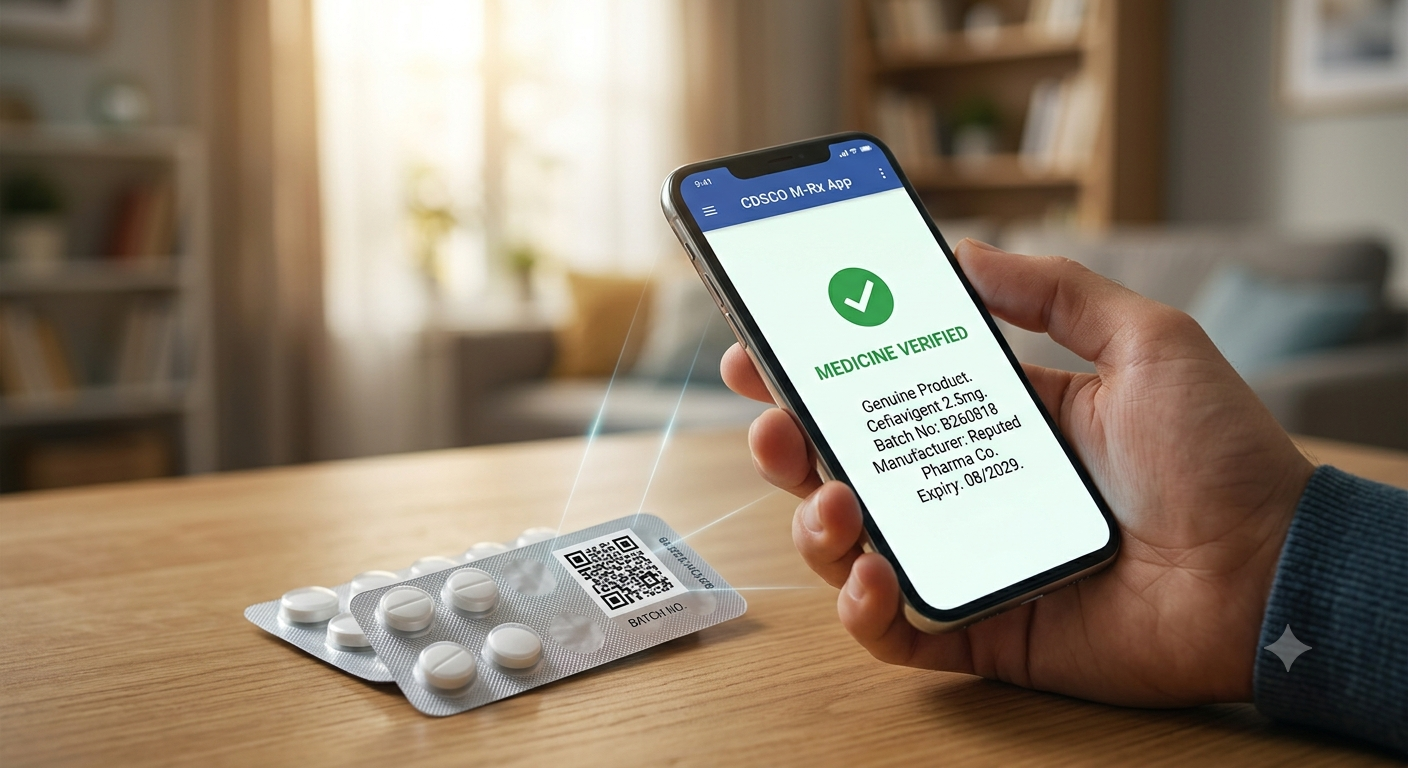
Identifying fake medicines and checking them genuinely requires more than a visual inspection. Today, sophisticated operations like the Bidadi racket produce packaging that is visually indistinguishable from the genuine product.
Step 1: Verify the Batch Number Through Official Channels
How to test if medication is real in India, officially:
CDSCO Drug Alert Portal: Visit cdsco.gov.in and check the monthly drug alert list for any batch or brand of medicine you have purchased. If your batch number appears, stop using the medicine immediately.
M-Rx App: Download from the Ministry of Health; scan the barcode or QR code on any medicine pack to verify product details.
eAushadhi Portal: cdsco.gov.in/opencms/opencms/en/consumer/ allows consumers to report suspicious medicines and check recalled products.
How to check fake medicine in India by SMS: While a dedicated national SMS verification system is not yet live for all medicines, some manufacturers have implemented scan-to-verify QR codes on their packaging, which can be scanned with any QR reader or the M-Rx app, which links to the product's batch verification page.
Step 2: Physical Inspection: Know the Limits
Physical checks are a starting point, not a definitive test:
What to Check | Genuine Indicator | Red Flag |
Hologram | Colour-shifting; textured; cannot be photocopied | Flat; single colour; peels easily |
Print quality | Sharp, consistent; no blurring | Smudged; irregular font; spacing inconsistencies |
Seal | Factory-sealed; uniform | Appears re-glued; mismatched seam |
Batch and expiry | Embossed or clearly printed; matches outer box | Printed separately; peelable sticker over original |
Price | At or near MRP | Significantly below MRP; no bill offered |
Storage | Appropriately stored at time of purchase | Unrefrigerated products that require cold chain |
Step 3: Buy Only From Licensed Sources
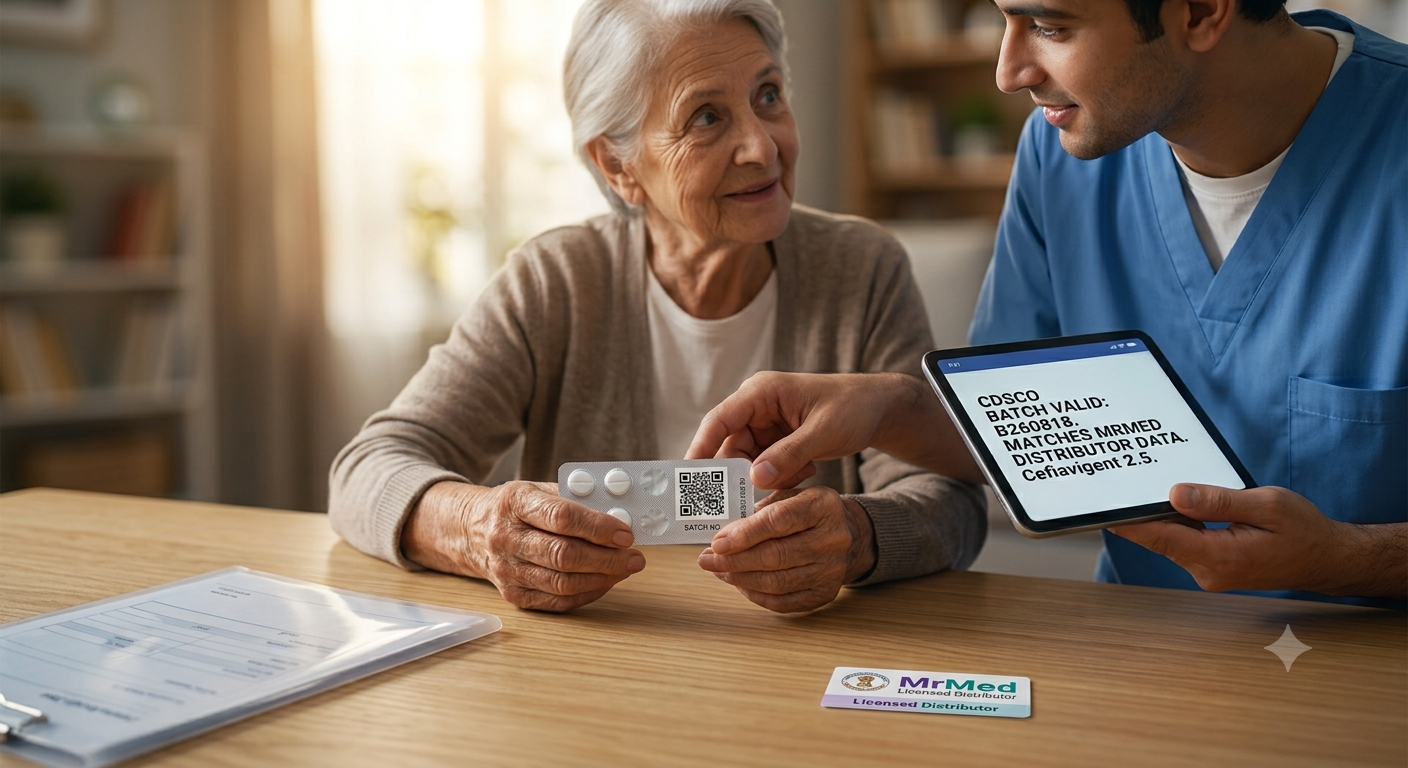
Karnataka fake drug racket investigations consistently find that counterfeit medicines enter the supply chain through unlicensed vendors, grey-market distributors, and in some cases hospital pharmacies that prioritise price over verification. A licensed pharmacy with a valid drug licence that provides a printed GST invoice with every purchase is the minimum standard.
CDSCO spurious drugs inspectors cannot be everywhere. Consumer vigilance and purchasing discipline are the front line of protection.
The Karnataka Response: What the Government Is Doing
The Karnataka government has urged citizens to provide preliminary information about suspected fake or spurious medicines through designated channels. Depending on the usefulness of the information, cash rewards of ₹10,000 to ₹50,000 will be provided, and informants' confidentiality will be maintained.
The Karnataka Food Safety and Drug Administration has initiated a Special Investigation Team (SIT) probe and sought Central Government cooperation to trace the interstate network which preliminary investigation suggests spans Himachal Pradesh, Telangana, and potentially other states.
This is not Karnataka's problem alone. The Bengaluru spurious drug racket has exposed an interstate manufacturing and distribution network that was supplying medicines bearing multinational company labels at a fraction of their market price. The buyers who procured these medicines cheaply, whether knowingly or not, and charged patients the full market rate are equally in the regulatory crosshairs.
What You Can Do Right Now
If you or a family member has recently been hospitalised or is currently receiving treatment in Karnataka or Karnataka-adjacent states, the following steps are practical and appropriate:
Ask your treating physician or pharmacist for the medicine's batch number and verify it against the CDSCO drug alert portal.
Request a printed purchase receipt for every medicine purchased from the hospital pharmacy and from outside pharmacies.
Report suspicious pricing if a medicine is offered at significantly below MRP, or if no receipt is offered; consider it a red flag and report to the FSDA helpline.
Contact CDSCO online at cdsco.gov.in or call the national Pharma Jan Samadhan helpline for reporting suspected spurious drugs.
If you are a healthcare professional and have procured medicines through unusual channels or at unusually low prices, contact Karnataka's Drug Enforcement Wing immediately; the reward and confidentiality protections apply to healthcare workers as much as to the general public.
FAQs
Q1. What fake ICU medicines were seized in Bengaluru?
The August 2026 Bidadi raid seized medicines and injections used in critical care, relabelled under multinational pharmaceutical company names. The largest batch was 5,640 bottles of Cefiavigent 2.5, valued at ₹3.38 crore. Investigations are ongoing to determine whether these reached hospital ICUs.
Q2. How to check if medicine is real or fake in India?
Check the batch number on the CDSCO drug alerts portal at cdsco.gov.in. Scan the QR code using the M-Rx app. Buy only from licensed pharmacies with printed invoices. If the price is significantly below MRP, treat it as a red flag.
Q3. How to check fake medicine in India by SMS?
A national SMS system is not yet universally available. Use the M-Rx app (QR scan) or the CDSCO web portal to verify the batch. Some manufacturers have brand-specific QR codes that can be scanned with any reader; check that the result matches the labelled product.
Q4. What are the risks of spurious or expired medicines?
Treatment failure, direct toxicity from undeclared compounds, antibiotic resistance from sub-therapeutic doses, and in critical care, life-threatening deterioration when ineffective drugs replace real treatment.
Q5. Can expired medicine kill?
In some categories, yes: tetracyclines and certain other drugs degrade into toxic compounds. More commonly, the risk is treatment failure rather than direct toxicity. In a critical care context, treatment failure is as dangerous as direct harm.
Final Thoughts
The Bengaluru fake medicine seizure of August 2026 is a stark reminder that the pharmaceutical supply chain in India, despite regulation, despite inspections, despite deterrents, remains vulnerable to criminal exploitation. The Bidadi operation was only uncovered because of a tip-off. How many similar operations are running undetected?
Patients and caregivers cannot delegate all responsibility for medicine safety to regulators. The practical tools exist: official verification portals, licensed pharmacies, printed invoices, batch number checks. Using them consistently is not paranoia; it is basic self-protection in a market where the consequences of a counterfeit medicine can be irreversible.
MrMed sources all medicines from licensed distributors with full traceability, displays batch and expiry information transparently, and maintains documentation that any patient can request. The standard should be universal, and until it is, informed consumer behaviour is the most reliable safeguard available.
Read Also
References
ETV Bharat [Internet]. Hyderabad: ETV Bharat; 2026 Aug 19 [cited 2026 Aug 21]. Crores worth fake medicines seized in Karnataka; govt plans SIT probe into interstate counterfeit drug network. Available from: https://www.etvbharat.com/en/state/crores-worth-fake-medicines-seized-in-karnataka-govt-plans-sit-probe-into-interstate-counterfeit-drug-network-enn26081903711
Central Drugs Standard Control Organisation [Internet]. New Delhi: CDSCO, Ministry of Health and Family Welfare; [cited 2026 Aug 21]. Drug alerts: spurious drugs. Available from: https://cdsco.gov.in/opencms/opencms/en/Notifications/Alerts/
Nagaraju B, Ramana GV. Current scenario of spurious and substandard medicines in India: a systematic review. J Appl Pharm Sci [Internet]. 2015 [cited 2026 Aug 21];5(3):156–161. Available from: https://pmc.ncbi.nlm.nih.gov/articles/PMC4355878/
Disclaimer: This article is for general informational and awareness purposes only. If you suspect you have received spurious or counterfeit medicines, stop use immediately and report to the CDSCO portal at cdsco.gov.in or the Karnataka FSDA helpline. In a medical emergency, contact your treating physician immediately.











Comments