

CBD for Pain Relief: Benefits, Uses, Dosage, and What the Research Says





Last updated on 20 Aug 2026
Cannabidiol (CBD), a non-intoxicating compound derived from cannabis plants, has gained significant attention for its potential pain relief properties. Millions of people worldwide suffer from chronic pain conditions, including arthritis, neuropathic pain, muscle strain, and back pain, often seeking alternatives to conventional painkillers due to concerns about dependence and side effects.
CBD has emerged as a potential therapeutic option, with growing scientific evidence supporting its use for various types of pain relief. However, the legal status of CBD in India remains complex, and understanding its benefits, limitations, and proper usage is essential for informed decision-making.
This comprehensive guide examines research on CBD for pain relief, discusses different types of CBD products, provides evidence-based dosing guidelines, addresses safety concerns, and explains the regulatory landscape in India.
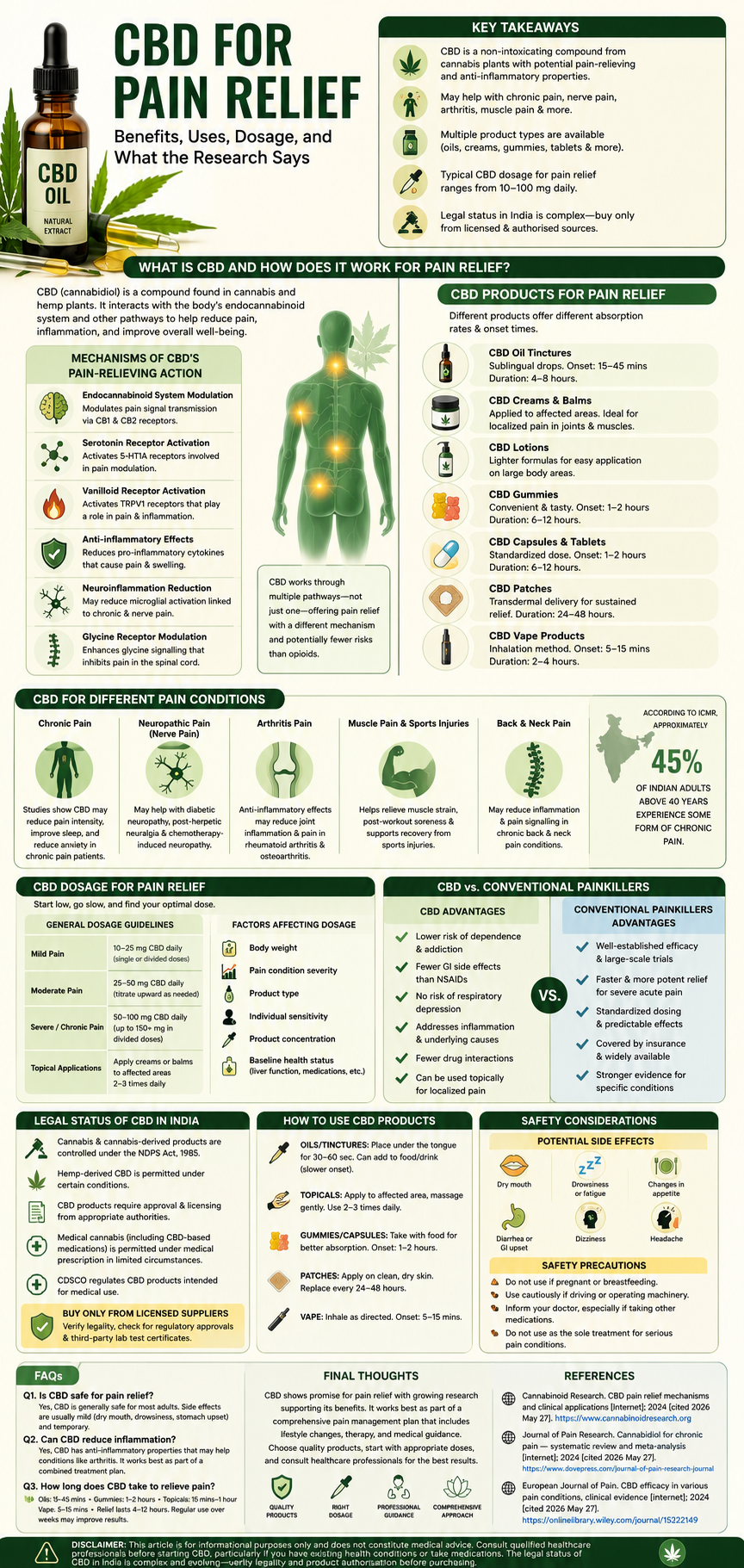
Key Takeaways
|

What Is CBD and How Does It Work for Pain Relief?
Cannabidiol (CBD) is one of over 100 cannabinoids found in cannabis and hemp plants. Unlike THC (tetrahydrocannabinol), CBD does not produce intoxication or the "high" associated with cannabis use. Instead, CBD interacts with the body's endocannabinoid system, a complex cell-signalling system that regulates pain, inflammation, mood, and immune function.
According to research published in the Indian Journal of Pharmacology, CBD may help reduce inflammation and pain through interaction with the endocannabinoid system and other pain-modulating pathways.
Mechanisms of CBD's Pain-Relieving Action:
Endocannabinoid System Modulation: CBD interacts with cannabinoid receptors (CB1 and CB2) in the nervous system and immune cells, modulating pain signal transmission and perception.
Serotonin Receptor Activation: CBD activates 5-HT1A serotonin receptors, which are involved in mood regulation and pain modulation.
Vanilloid Receptor Activation: CBD activates TRPV1 receptors, which play crucial roles in pain perception and inflammation.
Anti-inflammatory Effects: CBD reduces the production of pro-inflammatory cytokines, potentially decreasing the inflammation underlying many pain conditions.
Neuroinflammation Reduction: CBD may reduce microglial activation, which contributes to chronic and neuropathic pain.
Glycine Receptor Modulation: CBD enhances glycine receptor signalling, which contributes to pain inhibition in the spinal cord.
Unlike opioid painkillers (Naltrexone) that directly bind to opioid receptors, CBD works through multiple pathways, potentially offering pain relief with a different mechanism and side effect profile.
CBD Products for Pain Relief: Types and Delivery Methods
Different CBD product types offer varying absorption rates, onset times, and durations of effect, allowing patients to choose based on their specific pain conditions and preferences.
Types of CBD Products Available:
CBD Oil Tinctures: Liquid CBD extracted in carrier oil, typically administered under the tongue for rapid absorption; onset 15 to 45 minutes, duration 4 to 8 hours.
CBD Creams and Balms: Topical products applied directly to affected areas; useful for localised pain; slower systemic absorption but effective for joint and muscle pain.
CBD Lotions: Lighter formulations than creams; easier application for large body areas.
CBD Gummies: Edible products providing convenient dosing; slower onset (1 to 2 hours) due to digestive absorption; longer duration (6 to 12 hours).
CBD Capsules and Tablets: Standardised dosing in pill form; similar absorption to gummies.
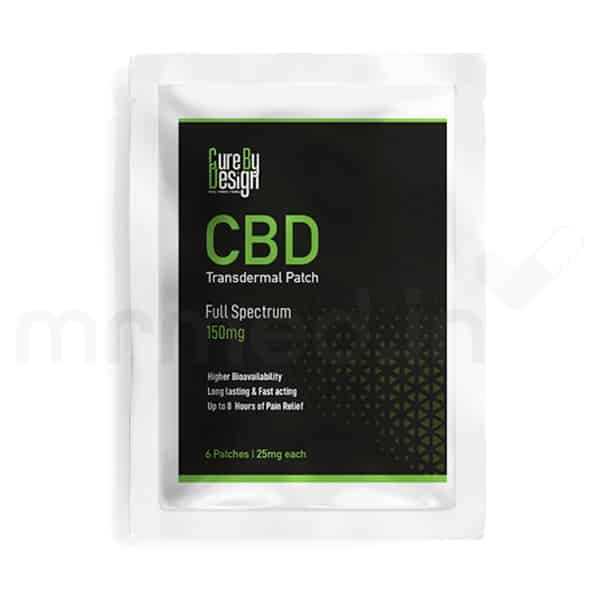
CBD Patches: Transdermal delivery providing sustained release over 24 to 48 hours.
CBD Vape Products: Inhalation method providing rapid onset (within minutes) but shorter duration (2 to 4 hours).
CBD for Different Pain Conditions
According to Indian Council of Medical Research (ICMR) data, approximately 45 percent of Indian adults above 40 years experience some form of chronic pain.
Research has examined CBD's potential efficacy for various pain types, with varying levels of evidence.
Chronic Pain:
According to studies published in peer-reviewed journals, CBD shows promise for chronic pain management. A systematic review examining multiple studies found that CBD reduced pain intensity and improved pain-related symptoms in various chronic pain conditions. Patients report improved sleep quality and reduced anxiety associated with chronic pain.
Neuropathic Pain (Nerve Pain):
Neuropathic pain, caused by nerve damage or dysfunction, is notoriously difficult to treat. Research indicates CBD may be particularly useful for neuropathic pain conditions through its anti-inflammatory and neuroinflammation-reducing properties. Patients with diabetic neuropathy, post-herpetic neuralgia, and chemotherapy-induced neuropathy report symptom improvement with CBD use.
Arthritis Pain:
CBD's anti-inflammatory properties make it a potential candidate for relieving arthritis pain. Studies in animal models and limited human research suggest CBD reduces joint inflammation and pain in rheumatoid arthritis and osteoarthritis. Many arthritis patients use CBD creams or oils as adjuncts to conventional treatment.
Muscle Pain and Sports Injuries:
Athletes and active individuals use CBD products to relieve muscle strain, post-workout soreness, and to support sports injury recovery. CBD's anti-inflammatory effects may reduce muscle inflammation, while its pain-modulating properties provide direct pain relief.
Back and Neck Pain:
Chronic back and neck pain, among the most common pain complaints, may respond to CBD. The combination of anti-inflammatory and pain-relieving effects addresses both inflammation and the pain signalling involved in back pain conditions.
CBD Dosage for Pain Relief: Guidelines and Recommendations
According to Dr Arun Kumar Singh, Head of Pain Management, AIIMS, New Delhi, CBD represents a promising option in India's pain management arsenal, particularly for patients with chronic pain who experience inadequate control with conventional medications or suffer from opioid-related side effects.
Determining an appropriate CBD dosage for pain relief requires consideration of multiple factors, and optimal dosing remains an area of ongoing research.
Factors Affecting CBD Dosage:
Body Weight: Generally, heavier individuals may require higher doses.
Pain Condition: Severe chronic pain may require higher doses than mild pain.
Product Type: Topical applications require different dosing than systemic products.
Individual Sensitivity: Some individuals are sensitive to CBD and respond to lower doses.
Product Concentration: CBD oil potency varies; dosing depends on product strength.
Baseline Health Status: Liver function, medications, and other health conditions affect CBD metabolism.
General Dosage Recommendations for Pain Relief:
Mild Pain: 10 to 25 mg CBD daily, either as a single dose or divided doses.
Moderate Pain: 25 to 50 mg CBD daily, titrated upward as needed.
Severe or Chronic Pain: 50 to 100 mg CBD daily, sometimes up to 150+ mg daily in divided doses.
Topical Applications: Apply creams or balms directly to affected areas 2 to 3 times daily.
CBD vs. Conventional Painkillers: Comparison
Understanding how CBD compares to conventional pain medications helps inform treatment decisions.
CBD Advantages Over Conventional Painkillers:
Lower risk of dependence and addiction compared to opioid analgesics.
Fewer gastrointestinal side effects compared to NSAIDs (non-steroidal anti-inflammatory drugs).
No risk of respiratory depression, unlike opioids.
Potential anti-inflammatory effects address the causes of pain rather than just symptoms.
Fewer drug interactions than many conventional painkillers.
Can be used topically without systemic absorption for localised pain.
Conventional Painkillers Advantages Over CBD:
Well-established efficacy through decades of clinical use and large-scale trials.
Faster onset and more potent pain relief for severe acute pain.
Standardised dosing with predictable effects.
Covered by insurance and readily available through pharmacies.
Stronger evidence base for specific conditions, such as postoperative pain.
Legal Status of CBD in India: Important Considerations
The legal status of CBD in India is complex and evolving, and it is critical to understand regulations before purchasing or using CBD products.
CBD and Indian Law:
Cannabis and cannabis-derived products are controlled under the Narcotic Drugs and Psychotropic Substances (NDPS) Act, 1985.
Hemp-derived CBD is permitted under certain conditions, as hemp cultivation is allowed in India.
CBD products require approval and licensing from appropriate regulatory authorities
Medical cannabis, including CBD-based medications, is permitted under medical prescription in limited circumstances.
The Central Drugs Standard Control Organisation (CDSCO) regulates CBD products intended for medical use.
Purchasing CBD in India:
Purchase only from licensed suppliers and authorised retailers.
Verify that products are legal and have appropriate regulatory approvals.
Ensure product authenticity through third-party testing certificates.
Consult healthcare providers about legal, safe CBD products available in your region.
Storage and Handling of CBD Products
Proper storage ensures the effectiveness and safety of CBD products.
Storage Guidelines:
Store CBD oils and tinctures in a cool, dark place away from direct sunlight.
Keep products between 15°C and 25°C (room temperature).
Avoid exposure to heat, which degrades CBD.
Keep products away from moisture and humidity.
Store topical products in sealed containers.
Keep all products away from children and pets.
Check expiration dates; unused products degrade over time.
How to Use CBD Products: Practical Guidelines
Proper usage maximises CBD effectiveness and safety.
CBD Oil Tincture Usage:
Place drops under the tongue (sublingual administration) for faster absorption.
Hold the liquid under the tongue for 30 to 60 seconds before swallowing.
Can be added to food or beverages for easier consumption (though the onset is slower).
Start with small doses and gradually increase.
Topical CBD Application:
Apply creams or balms directly to affected joints, muscles, or areas of pain.
Massage gently into the skin.
Apply 2 to 3 times daily or as needed.
Wash hands after application, unless treating the hand area.
CBD Gummies and Capsules:
Take with food to enhance absorption.
Swallow whole without chewing (for maximum effect).
Can be taken with water.
Remember, slower onset (1 to 2 hours) compared to oils.
CBD Patches:
Apply to clean, dry skin.
Choose different body areas for application to avoid skin irritation.
Replace every 24 to 48 hours.
Safety Considerations and Side Effects
While CBD is generally considered safe, certain considerations and potential side effects require awareness.
Potential Side Effects:
Dry mouth,
Drowsiness or fatigue,
Changes in appetite,
Diarrhoea or gastrointestinal upset,
Dizziness,
Changes in mood or irritability,
Headache.
Most side effects are mild and transient, occurring primarily with high doses.
Safety Precautions:
Do not use if pregnant or breastfeeding, as safety data are limited.
Use cautiously if operating vehicles or machinery, as CBD may cause drowsiness.
Inform healthcare providers about CBD use, particularly if taking other medications.
Do not use as the sole treatment for serious pain conditions without medical guidance.
FAQs
Q1. Is CBD safe for pain relief?
Yes, CBD is generally safe for most adults. The main side effects are mild, such as dry mouth, drowsiness, or stomach upset. These effects usually go away quickly. However, do not use CBD if you are pregnant or breastfeeding. If you take other medicines, talk to your doctor before using CBD because it may interact with some medications.
Q2. Can CBD reduce inflammation?
Yes. CBD has properties that help reduce inflammation in the body. It works by blocking inflammatory substances and calming the immune response. This is why CBD may be helpful for painful conditions like arthritis, where inflammation is a problem. However, CBD works best when combined with other treatments, not as a replacement for your regular medicines.
Q3. How long does CBD take to relieve pain?
It depends on how you use it. Oils placed under the tongue take 15 to 45 minutes to take effect. Gummies and edibles take 1 to 2 hours. Creams and balms applied to the skin take 15 minutes to 1 hour to take effect in that specific area. Vaping works fastest at 5 to 15 minutes. Pain relief typically lasts 4 to 12 hours. Some people notice better results over weeks when using CBD regularly.
Final Thoughts
CBD offers a promising option for pain relief, backed by growing scientific evidence supporting its analgesic and anti-inflammatory properties. While CBD is generally safe and well-tolerated, optimal pain management typically involves integrating CBD with other evidence-based approaches, including physical therapy, exercise, stress management, and conventional medications when appropriate. Individual responses to CBD vary; finding your optimal dose and product type may require patience and careful self-monitoring.
The legal landscape surrounding CBD in India requires careful navigation; ensure products are legally obtained from authorised suppliers. Rather than viewing CBD as a universal pain solution, consider it as one component of comprehensive pain management tailored to your specific condition, severity, and individual response.
Read Also
References
Cannabinoid Research. CBD pain relief mechanisms and clinical applications [Internet]; 2024 [cited 2026 May 27].https://www.cannabinoidresearch.org
Journal of Pain Research. Cannabidiol for chronic pain — systematic review and meta-analysis [Internet]; 2024 [cited 2026 May 27].https://www.dovepress.com/journal-of-pain-research-journal
European Journal of Pain. CBD efficacy in various pain conditions, clinical evidence [Internet]; 2024 [cited 2026 May 27].https://onlinelibrary.wiley.com/journal/15322149
Disclaimer: This article is for informational purposes only and does not constitute medical advice. CBD should not replace conventional pain management or medical treatment for serious pain conditions. Consult qualified healthcare providers before starting CBD, particularly if you have existing health conditions or take medications. The legal status of CBD in India is complex and evolving; verify legality and product authorisation before purchasing. Individual responses to CBD vary; optimal dosing requires personalised guidance from healthcare professionals. Do not drive or operate machinery if CBD causes drowsiness.














Comments