

Can Air Purifiers and Masks Really Protect Your Lungs in High AQI?





Last updated on 09 Jan 2026
Key Takeaways
|
Yes, they are both things you can do to reduce your lung exposure when the AQI (Air Quality Index) is high (e.g. >100). However, you will only achieve this if you use them properly. Air Purifiers help to minimize indoor pollution while wearing a mask covers your mouth and nose, thus neutralizing what you inhale outdoors. Air Purifiers and Masks provide partial protection, and the only way to achieve full protection is by combining both methods & practicing good house exposure practices.
Why High AQI Is a Real Lung Health Risk
Urban areas, such as those found in Delhi, NCR and the North Indian states, regularly experience air pollution that is classified as “poor” to “severe.” The ongoing exposure to particulate matter (PM2.5 and PM10) increases the likelihood of asthma attacks, chronic bronchitis, heart disease, and decreased function in the lungs.
The particles that cause pollution are small particles that can pass through the body’s natural barrier and become trapped in the lung's deepest areas; therefore, protection against pollution must focus on both reducing the amount of time spent indoors when pollution is high and the amount of time spent outdoors.
Do Air Purifiers Work During High AQI?
The World Health Organisation’s updated global air quality guideline explains how fine particulate matter like PM2.5 affects health and why reducing exposure matters. A common question is whether air purifiers are genuinely effective during high pollution levels or mainly provide psychological reassurance. When used properly, air purifiers are effective indoors.
The main criteria that consumers should consider when looking for a quality air purifier include performance, or "rated/ tested o2 conversion rates," as opposed to company advertising/marketing efforts.
Key features that you want to pay attention to are:
- True HEPA technology (not just a "HEPA-like")
- Room size coverage compatibility
- High Airflow Efficiency
These characteristics make HEPA filter air purifiers the preferred product for use in very high AQI locations, particularly for residences located near busy roads or construction sites.
Understanding CADR and Room Size
The air purifier’s clean air delivery rate (CADR) determines how fast the air cleaner can clean your environment. A higher CADR means you can remove airborne particles from your room faster than with a lower-CADR air purifier.Air purifiers are very efficient in cities where air pollution is prevalent.
Smaller rooms require less airflow capacity (for example, an air cleaner that would work well for a bedroom), so that many families in India use bedroom air purifiers. Larger homes or open-concept living spaces often seek the best air cleaner available for homes in India that will operate quietly and use minimal electricity.
Can Air Purifiers Cause Lung Problems?
A common concern is whether long-term use is harmful. The short answer: no, if used correctly. Commonly used air purifiers is Xiaomi Smart Air Purifier 4 Lite.
People who ask if an air purifier can cause lung problems are usually worried about ozone or overly dry air. Modern HEPA-based purifiers do not emit ozone. Problems arise only with ionisers or poorly maintained filters.
Regular filter replacement and avoiding ozone-generating devices ensure safety. When used responsibly, an air purifier benefits the lungs by reducing irritation, reducing allergy symptoms, and improving sleep quality.
Do Masks Protect You From Severe Air Pollution?
Masks are essential outdoors when the AQI is high. However, not all masks sold as “anti-pollution” work.
Certified masks, such as N95 and N99 masks, are designed to filter fine particles. People often compare N95 masks and N99 masks, but for daily use, a well-fitting N95 already provides strong protection.
When choosing an air pollution mask in India, fit matters more than brand. Gaps around the nose or cheeks significantly reduce effectiveness.
This is why people frequently search for:
Best anti-pollution mask in India
Best N95 mask for pollution
Best mask for PM2.5
Reusable vs Disposable Masks
Many users in India prefer reusable pollution masks for cost and sustainability reasons. Reusable masks are effective only if filters are replaced on time, and the mask maintains a tight seal.
Disposable N95 masks should not be reused beyond their recommended duration. People often look to buy an anti-pollution mask online in India, but certification and fit should always be checked before purchase.
A mask helps outdoors, but once indoors, its usefulness drops. That is where air purifiers take over.
Air Purifier vs Mask: Which Is Better?
Air pollution health advisory for India recommends using properly fitted N95 or N99 masks on days when the AQI exceeds 200 to reduce particulate exposure and notes that air purifiers may be beneficial when used as directed indoors.
This is one of the most common questions: air purifier vs. high AQI mask.
The answer depends on where you are:
Outdoors: mask works, purifier does not
Indoors: the purifier works; mask is impractical.
This is why experts recommend using both. For PM2.5 exposure, the mask vs. air purifier decision is not an either-or choice. They serve different environments.
When used together, they create a strong air-purifying and mask-protection-level strategy for daily life in polluted cities.
How to Use Both Effectively
Dr Manas Mengar, Consultant Pulmonology, KIMS Hospitals, Thane, explains that N95 masks filter most harmful fine particulates and significantly reduce the amount of polluted air reaching the lungs when worn consistently, and that HEPA air purifiers improve indoor air quality but cannot replace outdoor protection.
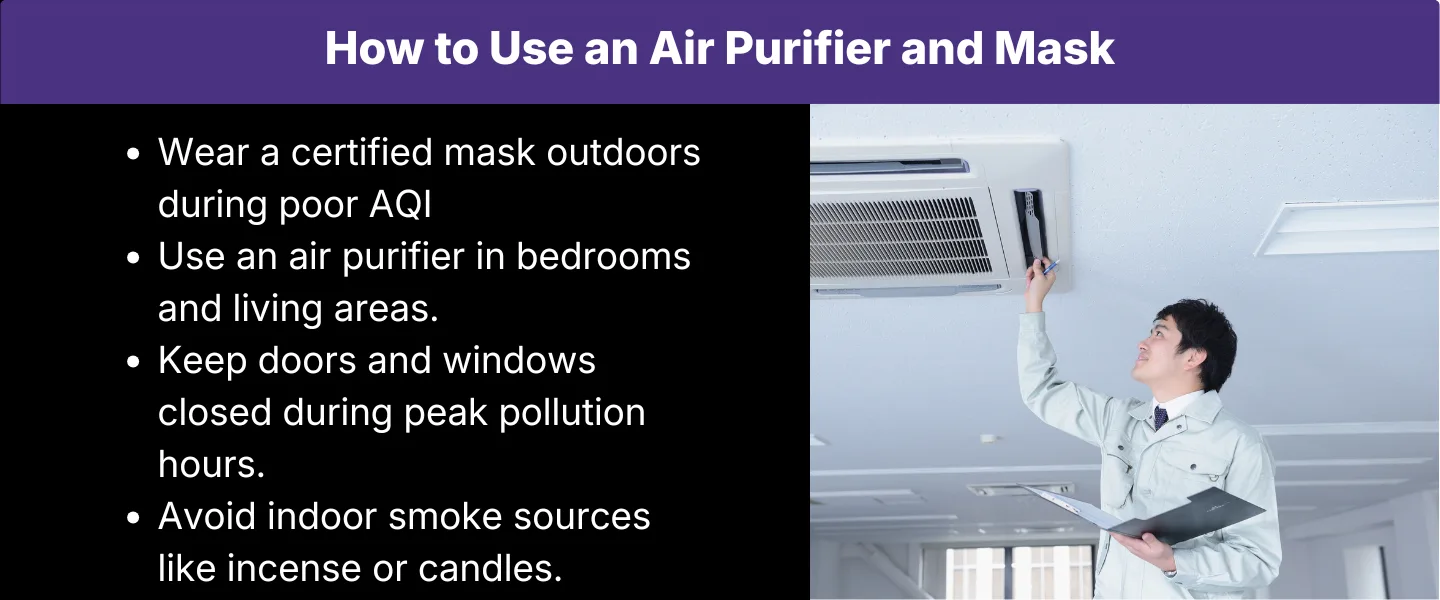
To Achieve True Safety:
Wear A Certified Mask Outdoors On Poor AQI Days
Use An Air Purifier For Indoor Air In the Bedroom and Living Areas
Keep Doors and Windows Closed When Air Pollution Is At Its Highest
Avoid Smoke Sources Such As Incense or Candles
The combined use of air purifiers and wearable protection (masks) provides a more realistic answer to the question of how well masks protect against severe air pollution compared to using either alone.
Choosing the Right Products in India
India consistently ranks among the world’s most polluted countries, with average PM2.5 exposure far above WHO guidelines, national data show that India’s average PM2.5 levels india is in 5th place were many times the recommended safe limit, making protective measures like masks and purifiers important for lung health.
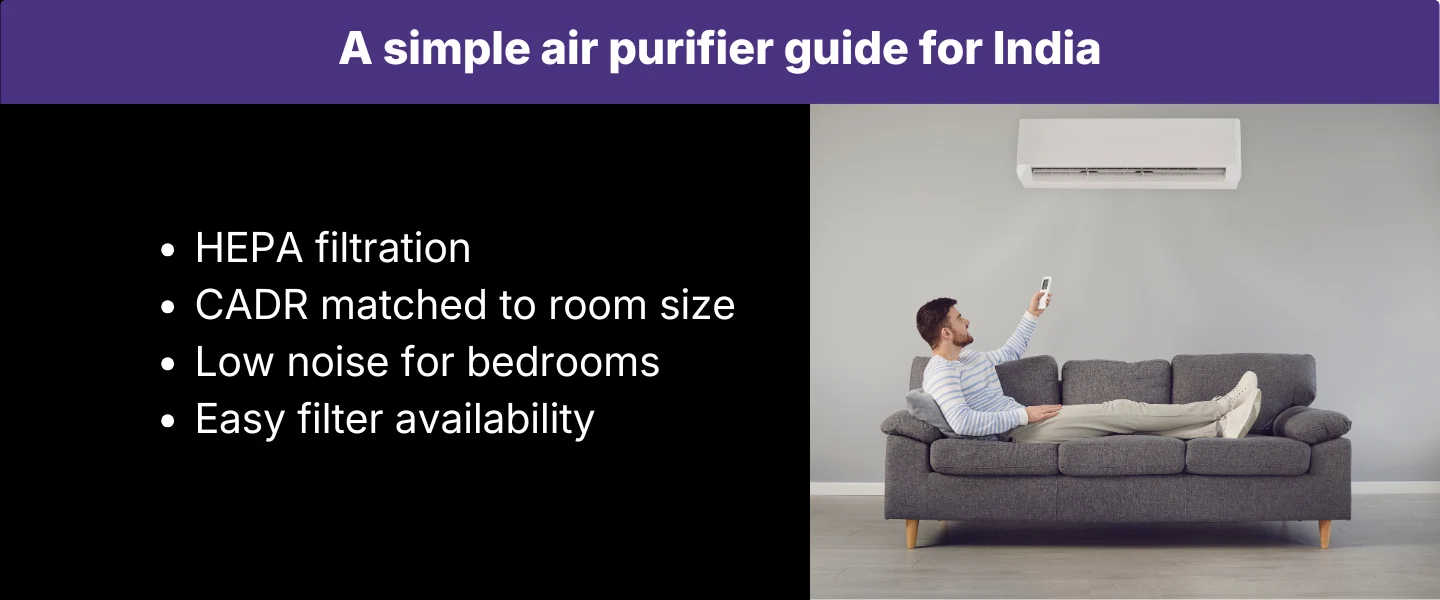
A basic guide for understanding air purifiers for use in India should focus on the following features:
A HEPA filtor
A CADR (Clean Air Delivery Rate) that is suited to the size of your room
Quiet operation - particularly at night when you are sleeping
Available replacement filters
When it comes to masks, the best filtration masks for air pollution are those that are tested and certified and fit well over your face.
Price is a consideration, but high-performing and certified air filter masks are more important.
Final Thoughts
HEPA-filtered air purifiers refresh the air that you breathe indoors when using an air purifier, and it also helps the person enter fewer pollutants through the air when you wear a mask outdoors.The combination of using an indoor air purifier and wearing outdoor masks is the safest way to protect the lungs in cities with heavy air pollution, in combination with developing smart exposure habits.
You can also talk to your physician about developing a personalised prevention plan using all of these tools if you have asthma, chronic obstructive pulmonary disease, or other chronic respiratory symptoms.
FAQs
1. Do air purifiers work for high AQI?
Yes, they significantly reduce indoor PM2.5 levels but do not affect outdoor air.
2. Is an N95 enough for pollution?
Yes, a properly fitted N95 provides strong protection for daily outdoor exposure.
3. Which is better: a mask or an air purifier?
Neither alone. Masks protect outdoors, purifiers protect indoors.
4. Can I run an air purifier all day?
Yes, continuous use is safe if filters are maintained properly.
5. Are reusable pollution masks effective?
They are effective only if filters are replaced regularly, and the fit remains tight.
Read also
References
Disclaimer: The information shared in this blog is meant for general educational purposes only and should not be taken as medical advice. Always consult a qualified healthcare professional for diagnosis, treatment, or medical guidance related to your health. The content is based on reliable sources, but it may not be suitable for every individual’s condition. We do not assume responsibility for any actions taken based on this information. Readers are encouraged to exercise caution and use their discretion when making healthcare decisions.













Comments