

National Blood Donor Month





Last updated on 19 Jan 2026
Key Takeaways
|
"A Small Act That Can Save Lives"
Most people only think about blood when a family member needs it urgently. One phone call turns into ten calls. People start asking, “Do you know anyone with O negative?” That panic is real, and it happens in Indian hospitals more often than we admit. The sad part is this: blood shortages are not rare. It is a regular problem.
That is why National Blood Donor Month matters. It reminds us that blood does not come from machines. It comes from people. When more of us donate blood, hospitals stay ready, and more patients get the chance to recover.
As National Blood Donor Month 2026 approaches, this blog explains what blood donation means, who can donate, what myths to ignore, and why this awareness month matters for India.
What Is National Blood Donor Month and Why It Matters
Every January, National Blood Donor Month provides an opportunity to raise awareness about blood donation and what it means to be a blood donor. Many countries use National Blood Donor Month to promote blood donation, as there is generally a decrease in blood supply following holidays, travel, and seasons when many people are ill.
The need for blood in India continues uninterrupted. Hospitals are in constant need of blood for the following reasons: Road accidents and emergency cases, all types of surgery, complications during childbirth, cancer treatment, and severe anaemia and blood diseases.
Because of this, National Blood Donor Month in India is more than just a social campaign; it effectively addresses actual hospital needs and encourages individuals to donate blood before a crisis occurs.
The WHO states that blood transfusion saves lives, but many patients still do not get timely access to safe blood due to shortages. This explains why National Blood Donor Month matters.
National Blood Donor Month 2026 theme and National Blood Donor Month colour
A theme is frequently used in awareness campaigns to keep the message on target. While the themes of each organisation for National Blood Donor Month 2026 may differ, the overall purpose is to encourage more donations and raise awareness about blood donation.
Most importantly, the colour that is most often associated with National Blood Donor Month is red. This colour symbolises both urgency and life. Thus, the majority of campaigns promoting blood donation will use red because it is immediately identifiable with blood donation and patient care.
Blood Donation Awareness Month 2026 may also be running at this time and will work in concert with the blood donation organisations to enhance the availability of blood products.
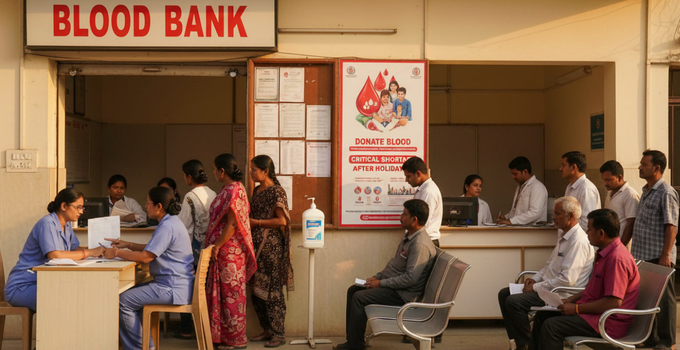
Blood donation: How blood donation saves lives
It is commonly believed that blood donations are primarily used to help people who have been injured in accidents. Although this is a valid reason, it’s only part of the reason many of us donate blood every day.
The reality is:
When an accident occurs, and a person is bleeding out rapidly, they need a transfusion quickly.
Women can experience excessive bleeding during labour and need a blood transfusion immediately.
Patients receiving cancer treatment may require additional blood and/or platelet transfusions as part of their care.
Children with thalassemia often rely on regular blood transfusions to remain alive.
Patients undergoing surgical procedures often require blood transfusions to recover.
Therefore, you’re supporting both patients when you donate blood. Blood banks can also take your blood donation and separate it into components, meaning more than one individual will receive help from your donation.
Who can donate blood: Basic eligibility in simple terms
Most healthy adults can donate blood. People often avoid donation because they feel unsure, but blood banks screen donors carefully before taking blood.
In general, those who can donate blood include:
Healthy adults (usually 18 years and above, based on local rules)
People with safe haemoglobin levels
People who do not have active infections
People with stable weight and good overall health
You should postpone donation if you:
Have fever, cough, or active infection
Recently underwent surgery
Recently got a tattoo or piercing (based on screening rules)
Feel weak or have very low haemoglobin
If you are unsure, do not guess. Visit a donation centre and allow the staff to guide you through the screening process.
India’s e-RaktKosh (MoHFW) also states that one unit of donated blood can save up to three lives. This supports why blood donor awareness month 2026 should focus on regular donation.

Benefits of donating blood: What donors actually gain
People often ask what donors get out of the process. Blood donation does not work like a health supplement, but it offers real value.
The Benefits of donating blood include:
Basic screening checks before donation, such as BP and haemoglobin
Improved health awareness and routine monitoring
Emotional satisfaction from helping patients
Most people also feel proud because they know they contributed directly to patient care.
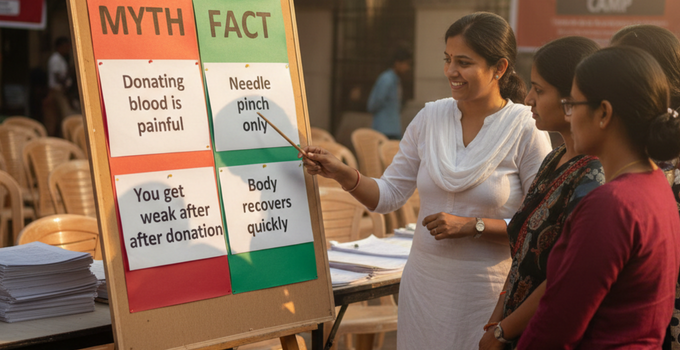
Blood donation facts and myths: What to believe and what to ignore
Many people avoid donating because of myths that sound believable but are incorrect. Let us clear the most common ones.
Myth 1: Blood donation makes you weak for a long time
Fact: Your body replaces the donated blood over time. You may feel tired briefly, but long-term weakness does not happen in healthy donors.
Myth 2: Donating blood causes infection
Fact: Certified blood banks use sterile disposable needles. Donation does not spread infection when done through authorised centres.
Myth 3: Only rare blood groups matter
Fact: Every group matters. Blood banks require stable supply across all blood types.
Myth 4: Women should not donate blood
Fact: Women can donate blood if they meet the eligibility criteria, especially haemoglobin levels.
These Blood donation facts and myths matter because myths keep people who would otherwise donate from donating.
Blood drive: Why camps increase donation numbers
Planned events organised by a group (hospitals, universities, corporate entities, community organisations) where people can donate blood. These events are very helpful as they provide an easy opportunity for individuals to donate blood.
These blood donation events are very effective for three primary reasons:
Less distance between individuals wishing to donate blood and the actual site to donate blood.
Individuals are provided with assistance to overcome any hesitation.
Blood donation events provide an opportunity to donate in groups with family and friends.
Blood donation campaigns during National Blood Donor Month often promote blood donation events because they are an effective way to increase the number of donors.

National Blood Donor Month Red Cross Awareness
Many people trust the Red Cross because it supports health services and emergency response globally. During National Blood Donor Month, the Red Cross may run campaigns that include blood drives, donor registrations, and awareness events.
The role of the Red Cross matters because it:
Promotes safe blood donation practices
Supports community mobilisation
Encourages volunteer-based donation networks
Strong systems depend on regular and voluntary donations, not last-minute panic donations.
FAQs (People Also Ask)
1) What is National Blood Donor Month?
National Blood Donor Month is an awareness campaign that encourages people to donate blood regularly and to recognise the role of Blood donors in saving patients' lives. It focuses on building a steady blood supply so hospitals can respond quickly during emergencies and treatments.
2) When is National Blood Donor Month 2026?
National Blood Donor Month 2026 will be observed during the same annual period as National Blood Donor Month campaigns. Different organisations may run blood donation programmes throughout the month to improve blood availability.
3) Why is National Blood Donor Month in India important?
National Blood Donor Month matters in India because hospitalsneed blood every day for accidents, surgeries, pregnancy complications, and cancer care. Many blood banks face shortages, so awareness helps increase volunteer donations and saves lives.
4) Who can donate blood in India?
In most cases, eligible donors include healthy adults who meet the age, weight, and haemoglobin requirements. Blood banks also check blood pressure and overall health before taking blood to ensure safe donation.
5) What are the benefits of donating blood?
The Benefits of donating blood include basic health screening before donation and the satisfaction of helping patients directly. Many donors also develop greater health awareness by tracking their fitness and eligibility.
Conclusion
“ National Blood Donor Month is about readiness, not emergencies “
The purpose of National Blood Donor Month is to ensure an adequate supply of blood for hospitals before an emergency occurs. The effectiveness of blood banks is determined by how well Blood donors donate in a timely manner. When donation becomes second nature and donors donate regularly, all aspects of patient treatment become more efficient, safer, and quicker.
A simple way for you to make a direct difference in your local area is by donating blood. By donating blood, you not only contribute to building stronger hospitals and supporting the families of those receiving treatment, but you also help save their lives.
Read Also
References
World Health Organisation. Blood safety and availability. WHO; 2025 May 30 [cited 2026 Jan 19]. Available from: https://www.who.int/news-room/fact-sheets/detail/blood-safety-and-availability
Nair SC, Mammen JJ. Repeat voluntary non-remunerated blood donor is the best quality indicator for blood safety. Indian J Med Res. 2015;141(6):749-752.
Ministry of Health and Family Welfare, Government of India.
Donate blood. e-RaktKosh: Centralised Blood Bank Management System.
MoHFW; [cited 2026 Jan 19]. Available from: https://eraktkosh.mohfw.gov.in/BLDAHIMS/bloodbank/donateblood.cnt
Disclaimer: The content in this blog is for general informational purposes only and is not a substitute for professional medical advice, diagnosis, or treatment. Always consult your doctor or a registered dietitian before making any changes to your diet, especially if you have a medical condition or are taking prescribed medication. While the information is based on trusted sources, individual needs and results may vary. MrMed does not promote or endorse any specific food or treatment mentioned unless explicitly stated.












Comments