

Bone Marrow Transplant: Procedure, Cost, Types, Risks and Recovery





Last updated on 15 Jun 2026
A bone marrow transplant can feel like an overwhelming subject, equal parts hope and uncertainty. Whether you have just been told you need one or you are trying to understand the process for someone you love, you deserve clear, honest information.
This blog explains exactly what a bone marrow transplant involves, what it costs in India, the different types available, what the risks look like, and what recovery actually feels like, all in plain language.
Key Takeaways
|
What Is a Bone Marrow Transplant?
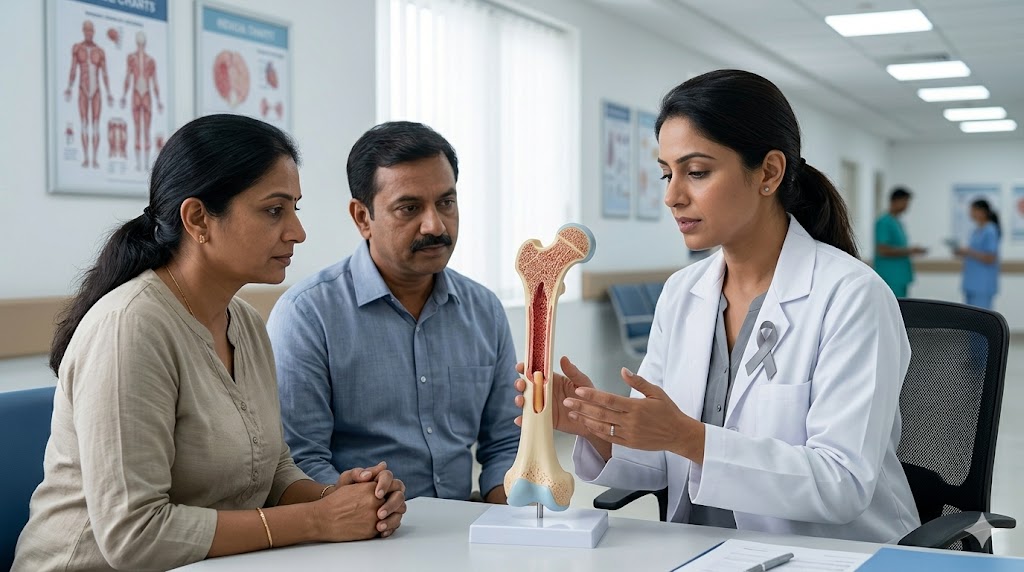
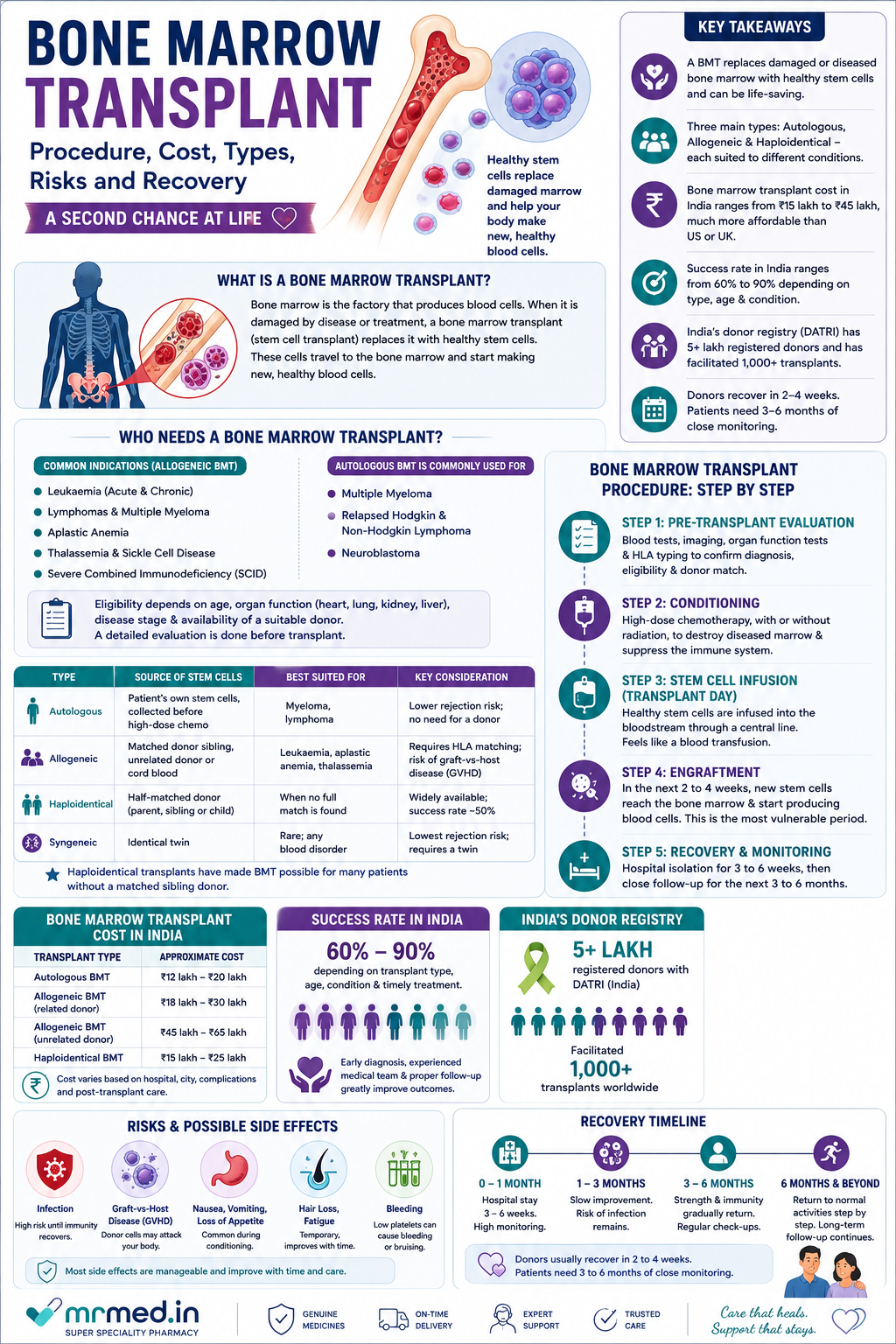
Bone marrow is the soft, spongy tissue inside your larger bones, such as the hips, spine, and breastbone. It produces the stem cells that develop into red blood cells, white blood cells, and platelets. When bone marrow is damaged by disease or by the chemotherapy used to treat it, the body loses its ability to make healthy blood cells.
A bone marrow transplant, also called a stem cell transplant, replaces that damaged marrow with healthy stem cells. These stem cells, once infused into the bloodstream, travel to the bone marrow and begin producing new, healthy blood cells. It is not a surgical operation in the traditional sense. For the patient, the infusion itself looks much like a blood transfusion. The complexity lies in everything that comes before and after.
Who Needs a Bone Marrow Transplant? Indications and Eligibility
Consultation for Bone Marrow Transplant is generally recommended for patients with a disease that affects the bone marrow's ability to function properly, & for patients requiring high-dose chemotherapy & needing to restore their bone marrow function.
Common allogeneic bone marrow transplant indications include:
Leukaemia (both acute and chronic)
Lymphomas & Multiple Myeloma
Aplastic Anemia
Thalassemia and Sickle Cell Disease
Severe Combined Immunodeficiency (SCID)
Autologous transplants are more commonly used for:
Multiple myeloma
Relapsed Hodgkin and non-Hodgkin lymphoma
Neuroblastoma
Criteria for Bone Marrow Transplantation eligibility vary according to age, organ function (particularly Heart, Lung, Kidney, & Liver), the stage of the disease, and the presence of a suitable donor. Most Indian Transplantation Centres conduct a detailed pre-transplant workup to establish transplant eligibility.
Types of Bone Marrow Transplant
Type | Source of Stem Cells | Best Suited For | Key Consideration |
Autologous | Patient's own stem cells, collected before high-dose chemo | Myeloma, lymphoma | Lower rejection risk; no need for a donor |
Allogeneic | Matched donor sibling, unrelated, or cord blood | Leukaemia, aplastic anaemia, thalassemia | Requires HLA matching; risk of graft-vs-host disease |
Haploidentical | Half-matched donor usually a parent, sibling, or child | When no full match is found | Widely available; success rate around 50% |
Syngeneic | Identical twin | Rare; any blood disorder | Lowest rejection risk requires a twin |
For most Indian patients without a matched sibling donor, haploidentical transplants have opened a viable path since biological parents or children are almost always a half-match.
A two-decade retrospective study from India, published in 2023, covering over 700 transplants across 23 different blood disorders, found that autologous BMT for myeloma and allogeneic BMT for aplastic anaemia and leukaemia are the most commonly performed procedures, with 93 per cent of allogeneic cases using a matched sibling donor.
Bone Marrow Transplant Procedure Steps
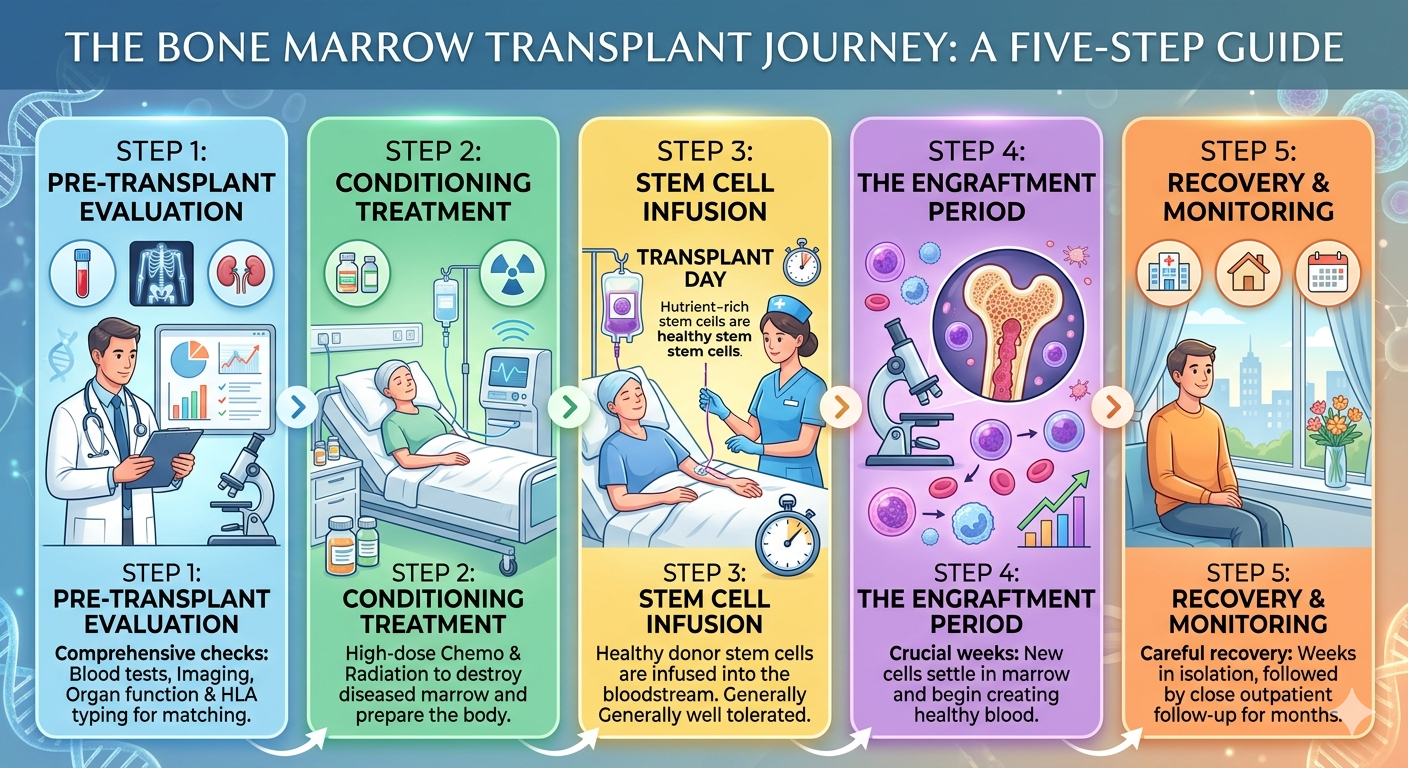
Understanding the process helps reduce anxiety. Here is what happens, step by step:
Step 1: Pre-transplant evaluation: Blood tests, imaging, organ function tests, and HLA typing to confirm diagnosis, eligibility, and donor match.
Step 2: Conditioning: High-dose chemotherapy, with or without radiation, to destroy the diseased marrow and suppress the immune system so it accepts donor cells.
Step 3: Stem cell infusion (transplant day): Healthy stem cells are infused into the bloodstream through a central line. This takes a few hours and is generally well tolerated.
Step 4: Engraftment: Over the next 2 to 4 weeks, the new stem cells migrate to the bone marrow and begin producing blood cells. This is the most vulnerable period.
Step 5: Recovery and monitoring: Patients remain in hospital isolation for 3 to 6 weeks, then continue close outpatient follow-up for 3 to 6 months.
Bone Marrow Transplant Cost in India
Depending on which kind of transplant you'll receive, which hospital you'll undergo the procedure at and whether you experience complications after a successful procedure, the cost of a procedure will vary.
The cost of a bone marrow transplant in India can range from approximately $15,000 to $38,000 (about ₹12.5 lakh to ₹31 lakh). If you were to have the same procedure done in the United States, you could expect to pay upwards of $200,000.
Transplant Type | Approximate Cost in India |
Autologous BMT | ₹12 lakh – ₹20 lakh |
Allogeneic BMT (related donor) | ₹18 lakh – ₹30 lakh |
Allogeneic BMT (unrelated donor) | ₹45 lakh – ₹65 lakh |
Haploidentical BMT | ₹25 lakh – ₹40 lakh |
For those seeking a low-cost option to receive a bone marrow transplant in India, several government hospitals (e.g., Tata Memorial Hospital in Mumbai; AIIMS in New Delhi; PGIMER in Chandigarh) offer subsidised rates.
Additionally, many NABH- and JCI-accredited private hospitals (e.g., Apollo, Fortis, Medanta, Max) achieve results equivalent to international standards for only a fraction of what these facilities charge their patients, utilising similar facilities across Western countries.
Medanta. Dr Satya Prakash Yadav, paediatric leukaemia and bone marrow transplant specialist in Gurugram, has consistently made affordability central to his clinical mission. His stated goal is to make BMT and cell therapy available and affordable to all who need them, with cost reduction as a primary focus of his research.
Bone Marrow Transplant Success Rate
The bone marrow transplant success rate in India has ranged from 60% to 90%. The success rates of allogeneic bone marrow transplants vary depending on the type of donor used. For instance, related donors (siblings) would have a success rate of 70% to 90%, while unrelated donors would have a lower success rate of 36% to 65%. However, the success rates for autologous bone marrow transplants range from 70% to 90%.
Bone marrow transplant death rates are affected by many different factors, including the patient's age, the patient's underlying condition, how well matched they are to their bone marrow donor, and the experience of the transplant centre where they are being treated.
Patients younger than 40 years old with a well-matched related donor who receive their transplants from experienced transplant centres will have a higher success rate than the global standard.
Can you live 20 years after a bone marrow transplant? Yes, many patients do! Survivors of bone marrow transplants have long-term survival data from leading transplant centres demonstrating that patients who achieve a complete remission and do not suffer serious complications such as graft-versus-host disease can expect to live active, fulfilling lives for decades after their transplant procedure.
Is bone marrow transplant 100% successful? No, and anyone who states otherwise should be approached with scepticism. The success of each patient's case will depend on several variables.
The most important factors in determining the success of a bone marrow transplant are selecting an experienced medical team to provide transplant care, optimising the patient's overall health prior to receiving the transplant, and properly following the monitoring protocol established by the transplant centre after the transplant procedure is completed.
Bone Marrow Transplant Side Effects and Risk Factors
Bone marrow transplant side effects range from mild and manageable to serious. The most common include:
Mucositis (mouth sores) during the conditioning phase of transplant
Fatigue, nausea, and hair loss
Increased risk of infection during the engraftment stage
Graft-vs-host disease in patients who receive an allogeneic transplant (when the donor's immune system attacks the recipient's organs)
Organ failure, which occurs in some, but not all, patients (liver, lung, and kidney failures)
Bone marrow transplant risk factors that affect outcomes include: older age, previous infections, poor organ function or failure from previous infections, the advanced stage of the disease being treated at time of transplant, and the amount of difference (mismatch) between the patient's immune cells and the donor immune cells.
Is a Bone Marrow Transplant Dangerous for the Donor?
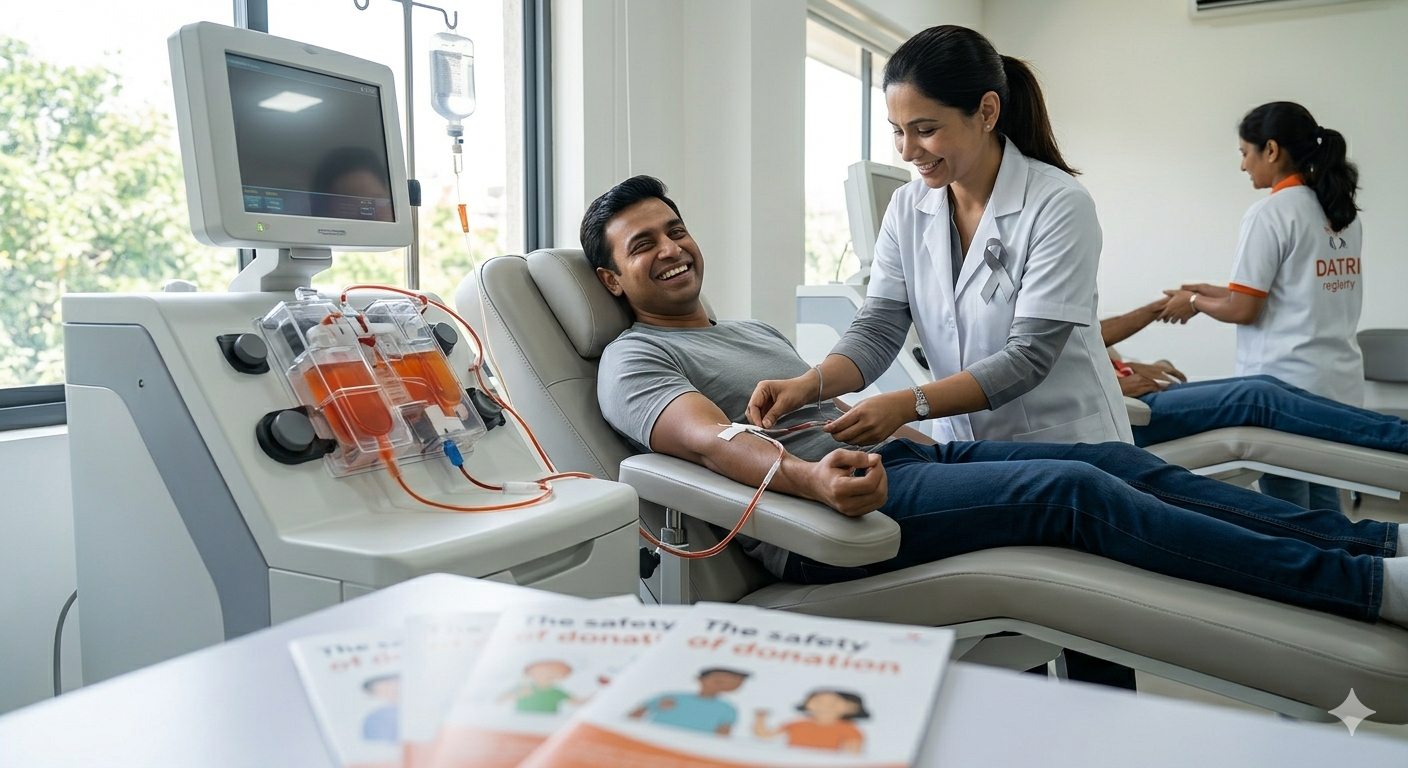
This is one of the most common concerns, and the honest answer is that donation is safe, but not entirely without discomfort.
Is bone marrow donation painful? For surgical harvest (under general anaesthesia), donors typically experience soreness and bruising at the collection site on the hip bone for 2 to 3 weeks. Mild soreness persists for about 2 to 3 days after peripheral blood stem cell (PBSC) donation.
Most donors return to their normal routine the following day. Serious complications, including infection, nerve pain, or anaesthesia reactions, are rare, occurring in fewer than 1 per cent of donors.
What are the risks of being a bone marrow donor? The risks are primarily related to anaesthesia (for surgical harvest) and include temporary soreness, fatigue, and, very rarely, sciatic-type nerve pain. Serious complications are exceptional at experienced centres.
Is bone marrow transplant safe for donors?
Yes. A donation does not permanently affect a donor's health. The marrow replenishes itself within 4 to 6 weeks.
Bone Marrow Donor Registry India
Finding a matched donor is often the biggest challenge in allogeneic transplants. India's bone marrow donor registry landscape has grown substantially:
DATRI (Data and Transplant Research Institute, Chennai), India's largest unrelated blood stem cell donor registry, founded in 2009, has over 5 lakh registered donors and has facilitated more than 1,000 transplants globally.
MDRI (Marrow Donor Registry India) another major registry facilitating HLA typing and donor matching.
International registries such as Be The Match (USA) and BMDW (Bone Marrow Donors Worldwide) are also accessible through Indian transplant centres for unrelated donor searches.
If you want to register as a donor, the process involves a simple HLA typing test through a saliva or blood sample.
An Indian single-centre study of 183 thalassemia BMT patients found that matched sibling donors were used in 87 per cent of cases, underscoring the need to expand registries such as DATRI to support many patients without a fully matched family donor.
Bone Marrow Transplant Recovery Time
What is the recovery after a bone marrow transplant? Recovery happens in phases:
In-Patient Recovery: 3 - 6 weeks in isolation (hospital) during the engraftment phase.
Early Home Recovery: 6-12 Weeks (6-12 Weeks)- Restricted Activity; Weekly Lab Work; Infection Precautions.
Full Recovery: Most patients will take 3 - 6 months to resume normal daily living after stem cell transplant; the average time frame for an autologous stem cell transplant is 3 - 4 months post-transplant; the average time frame for an allogeneic stem cell transplant is 6 - 12 months post-transplant.
Is bone marrow recovery painful?
The Recovery Phase can include Chronic Fatigue as well as General Discomfort, especially with the pre-transplant chemotherapy and engraftment periods; however, pain can be effectively managed with Medication and through consistent Pain Management and most patients have gradually increased their level of wellness beginning in Week 4 post-transplant.
FAQs
Q1. What is a bone marrow transplant in simple terms?
It is a procedure in which damaged bone marrow is replaced with healthy stem cells, either your own or a donor's, so your body can produce healthy blood cells again.
Q2. Is bone marrow donation painful for the donor?
There is some soreness in the hip for a few days to a few weeks, but it is manageable. Most donors return to normal within 2 to 4 weeks.
Q3. What is the success rate of a bone marrow transplant in India?
Between 60 and 90 per cent, depending on the type of transplant, the condition being treated, and the hospital. Related donor transplants typically have the best outcomes.
Q4. How long does recovery take after a bone marrow transplant?
Patients usually need 3 to 6 months to recover fully, with the first 6 weeks being the most critical. Autologous transplants generally allow for faster recovery than allogeneic ones.
Q5. Can a person live a normal life 20 years after a bone marrow transplant?
Yes. Many patients who achieve remission and avoid serious complications go on to live full, active lives for decades. Long-term survival is well-documented at experienced transplant centres.
Final Thoughts
Patients who receive a bone marrow transplant have the opportunity for positive changes in their health and quality of life. It is important to work with the appropriate doctor(s) and resources (DATRI and MDRI) to identify options for receiving a bone marrow transplant. This how-to guide will help provide you with information about the process.
Indian facilities for bone marrow transplants offer high-quality care at affordable prices compared to transplant facilities in other countries, and India also has one of the largest numbers of registered donors, with many experienced transplant doctors and staff members located throughout large cities and other locations across India.
Read Also
References
National Cancer Institute [Internet]. Bethesda: NCI; 2015 Apr 29 [cited 2026 Jun 05]. Stem cell and bone marrow transplants for cancer. Available from: https://www.cancer.gov/about-cancer/treatment/types/stem-cell-transplant
Rowad Health [Internet]. 2026 Mar 03 [cited 2026 Jun 05]. Bone marrow transplant in India: cost, hospitals and success rates. Available from: https://rowadhealth.com/cost/bone-marrow-transplant-cost-in-india/
DATRI India's Largest Blood Stem Cell Donors Registry [Internet]. Chennai: DATRI; 2019 May 07 [cited 2026 Jun 05]. How often can you donate bone marrow/blood stem cells? Available from: https://datri.org/bone-marrow-donation/
Disclaimer: This article is for general informational purposes only and is not a substitute for professional medical advice. Always consult a qualified haematologist or transplant physician before making any decisions related to bone marrow transplantation.















Comments