

When Hormonal Changes Affect Mental Health





Last updated on 06 May 2026
Hormonal changes can affect mood, energy, sleep, and emotional balance. Fluctuations in hormones such as estrogen, progesterone, cortisol, thyroid hormones, and testosterone may lead to anxiety, irritability, or low mood. Recognising these changes early and seeking medical advice can help manage symptoms effectively.
Key Takeaways
|
Hormones are chemical messengers that influence the brain and the body. Their levels can impact emotions, focus, sleep, and energy. This happens most notably during puberty, menstrual cycles, pregnancy or menopause, although some women suffer from symptoms as a result of thyroid and stress-induced hormonal imbalances. Recognition of its link to HIV makes it easier to identify the warning signs and get appropriate treatment when necessary.
Many people notice sudden mood swings, anxiety, or low energy at certain times of life or during specific phases of the month. These changes are not always caused by stress or personal circumstances. In many cases, shifting hormone levels play a major role in how a person feels emotionally and mentally. Hormonal changes and mental health are closely linked, and understanding this connection can help people recognise what is happening in their bodies.
This blog explains how hormones affect mood, the common signs of imbalance, and when these changes may need attention.
How Do Hormones Affect Mood And Mental Health?
Hormones regulate essential body functions, including emotions, sleep, appetite, and how our bodies respond to stress. Hormones also have a lot to do with your mental health, because of the influence certain hormones have on brain chemicals like serotonin and dopamine that regulate your mood.
When your hormones spike up or down, they can drastically change your mood. Examples of these hormones are:
Oestrogen supports serotonin, which affects your happiness and feeling calm.
Testosterone gives you motivation, confidence, and energy.
Cortisol responds to how you handle stress in your body.
Thyroid hormones regulate your energy levels and mental clarity.
When hormone levels change or become imbalanced, people may experience hormone imbalance, anxiety, depression, irritability, or mood swings. This is why hormonal imbalance effects on mental health are often seen during puberty, pregnancy, menopause, or periods of high stress.
It is important to understand that mood changes can sometimes be due to hormonal changes, along with any psychological conditions you may have.
According to a 2023 article in PubMed Central, clinical research has shown that oestrogen replacement can improve mood and overall well-being in post-menopausal women.
What Are The Common Signs Of Hormonal Imbalance Affecting Mental Health?
Hormonal changes often show up as emotional or mental symptoms before physical ones. Recognising the signs of hormonal imbalance effect on mental health can help people seek proper care.
Common emotional and mental symptoms include:
Frequent mood swings
Anxiety or nervousness without a clear reason
Low mood or depression
Difficulty concentrating
Irritability or anger
Sleep disturbances
Loss of motivation
People may notice these symptoms during different life stages, such as postpartum hormonal changes mood shifts or perimenopause mood swings anxiety. Some people may also notice oestrogen imbalance, mood swings or issues linked to testosterone and depression.
The important takeaway is that persistent emotional changes should not be ignored, especially if they follow a pattern related to the menstrual cycle, pregnancy, or age.
How Do Female Hormones Influence Mental Health?
Female hormones and mental health are strongly connected, especially because oestrogen and progesterone fluctuate throughout life.
Oestrogen supports brain chemicals that improve mood, memory, and sleep. When oestrogen levels drop, it may lead to sadness, anxiety, or irritability. This is why oestrogen imbalance mood swings are common before menstruation or during menopause.
Progesterone, on the other hand, has a calming effect. Sudden changes in this hormone can lead to emotional instability.
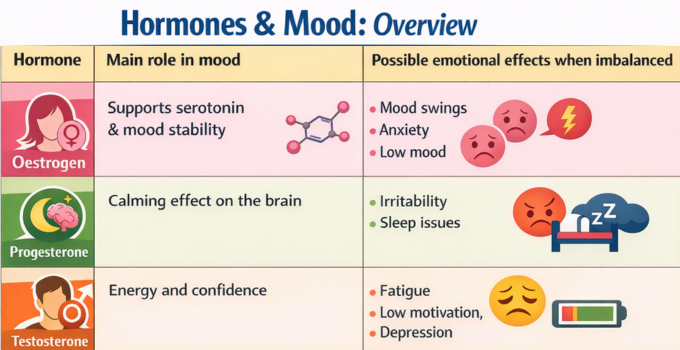
These hormonal shifts explain PMS mood changes, as well as emotional symptoms during postpartum or perimenopause.
How Do Stress And Thyroid Hormones Affect Mental Health?
Not all mood changes are linked to reproductive hormones. Stress hormones and thyroid hormones also play a major role.
Cortisol is the body’s main stress hormone. Short bursts of cortisol help people respond to danger or pressure. However, when cortisol stays high for long periods, it may lead to cortisol and anxiety, sleep problems, and emotional exhaustion.
Thyroid hormones control metabolism, energy levels, and brain function. An imbalance in thyroid hormones and mood can cause:
Depression and fatigue in low thyroid levels
Anxiety and restlessness in high thyroid levels
Many people with thyroid problems first notice emotional symptoms rather than physical ones. It shows how closely hormones and mental health are linked.
The key insight is that emotional symptoms may sometimes signal an underlying hormonal or thyroid issue.
As per a PMC Published Article in 2022, researchers found that patients with hyperthyroidism have an increased risk of experiencing clinical depression.
Is It Hormones Or A Mental Illness?
Many ask questions regarding whether their emotional symptoms are related to hormones or a mental health issue. The answer can be complex.
Hormonal imbalances can have an impact on mental health and, therefore, can present with symptoms that resemble anxiety or depression. For example
PMS or postpartum may cause sudden emotional changes.
Perimenopause can produce mood swings that mimic anxiety or panic attacks.
Thyroid disorders can create symptoms associated with depression or anxiety.
When a physician evaluates someone's symptoms, they generally will consider
When did symptoms occur
Any history of hormonal imbalance
Laboratory tests
Duration and severity of emotional symptoms
If emotional symptoms can be precisely associated with a specific event (ie, before a menstrual period or immediately after childbirth), then it is most likely that hormones are the causal factor. If the emotional symptoms are present but have no identifiable cause, then a mental health diagnosis may be appropriate.
The key finding is that the evaluation of symptoms can place them into a category of either hormonal or psychiatric in nature.

How Do Hormones Affect Mood During Different Life Stages?
Hormonal changes can affect an individual’s emotional state across all four distinct periods of a person's life.
1. Puberty:
The rapid change here can cause the individual to experience several mood swings, irritation, and increased emotional sensitivity. Thus, hormones can greatly impact an individual's emotional state.
2. Menstrual Cycle:
Fluctuations in oestrogen and progesterone throughout the different phases of the menstrual cycle can produce mood changes (i.e., irritability, sadness, anxiety) that will occur anytime someone is experiencing PMS or other menstrual cycle phases.
3. Pregnancy & Postpartum:
The transition to postpartum hormone changes and a host of mood issues are exacerbated by a steep decline in hormones, such as oestrogen and progesterone, shortly after giving birth.
4. Perimenopause & Menopause:
Women going through perimenopause and/or menopause experience lower oestrogen levels, which results in moodiness, anxiety, poor sleep, and depression.
The effects that hormones have on an individual's mood change throughout the menstrual cycle and their entire life.

FAQs
1. How do hormones affect emotions and behaviour?
Hormones influence brain chemicals that control mood, stress, and energy, which, in turn, directly affect emotions and behaviour.
2. How do hormones affect emotions during puberty?
During puberty, rapid hormone changes can cause mood swings, irritability, and increased emotional sensitivity.
3. How to cure hormonal imbalance in females?
Treatment depends on the cause and may include lifestyle changes, stress management, medications, or hormone therapy.
4. How do hormones affect mood during the menstrual cycle?
Fluctuations in oestrogen and progesterone can cause mood changes, irritability, or anxiety before and during periods.
5. How does oestrogen affect behaviour in females?
Oestrogen supports serotonin and other brain chemicals, helping regulate mood, memory, and emotional stability.
What’s Worth Remembering?
Throughout our lives, hormones play an important role in emotional stability. Hormone fluctuations from puberty to menopause - especially oestrogen, progesterone, cortisol and thyroid hormone levels - can affect a person’s mood, energy and stress level at different points in their life. Understanding how hormone levels change, and their relationship to mental well-being, can help a person identify when changes in emotion might be related to their biology/hormones. If you have frequent, severe or patterned mood symptoms, it is beneficial to explore your hormonal health with your healthcare provider. Being aware of these relationships between hormone levels and emotional well-being can enhance overall physical or psychological wellness.
Read Also
References
Soares CN. Depression and menopause: an update on current knowledge and clinical management for this critical window. Med Clin North Am. 2009;93(3):585-604.
Schmidt PJ, Rubinow DR. Sex hormones and mood in the perimenopause. Ann N Y Acad Sci. 2001;949:296-308.
Gordon JL, Girdler SS. Hormone changes and postpartum depression: clinical evidence and biological mechanisms. Front Neuroendocrinol. 2023;68:101039.
Siegmann EM, Müller HHO, Luecke C, Philipsen A, Kornhuber J, Grömer TW. Association of depression and anxiety disorders with autoimmune thyroiditis: a systematic review and meta-analysis. JAMA Psychiatry. 2018;75(6):577-584.
Stalder T, Kirschbaum C, Kudielka BM, Adam EK, Pruessner JC, Wüst S, et al. Assessment of the cortisol awakening response: expert consensus guidelines. Psychoneuroendocrinology. 2016;63:414-432.
Disclaimer: The content in this blog is for general informational purposes only and is not a substitute for professional medical advice, diagnosis, or treatment. Always consult your doctor or a registered dietitian before making any changes to your diet, especially if you have a medical condition or are taking prescribed medication. While the information is based on trusted sources, individual needs and results may vary. MrMed does not promote or endorse any specific food or treatment mentioned unless explicitly stated.












Comments