

Dialysis vs Kidney Transplant: Which Is the Right Option?





Last updated on 09 Apr 2026
Kidney failure is a serious illness in which the kidneys stop functioning properly. Consequently, the individual will require ongoing treatment for the remainder of their life. The primary options most frequently utilised by individuals with kidney failure are either kidney dialysis or transplantation.
When both forms of therapy are compared by patients and their physicians, patients can make an informed decision about which solution best meets their needs, based on their individual medical conditions, overall lifestyle, and future expectations.
Key Takeaways
1. Dialysis and transplant are the two main kidney failure treatment options. |

What Is Dialysis and Transplant?
When your kidneys no longer function properly, kidney dialysis provides a way to filter waste products, excess fluid, and salts from your blood.
Transplantation of a healthy kidney from a living or deceased donor into a recipient who is in need of a new functioning kidney is called kidney transplantation.
Types of Kidney Dialysis
There are two main types:
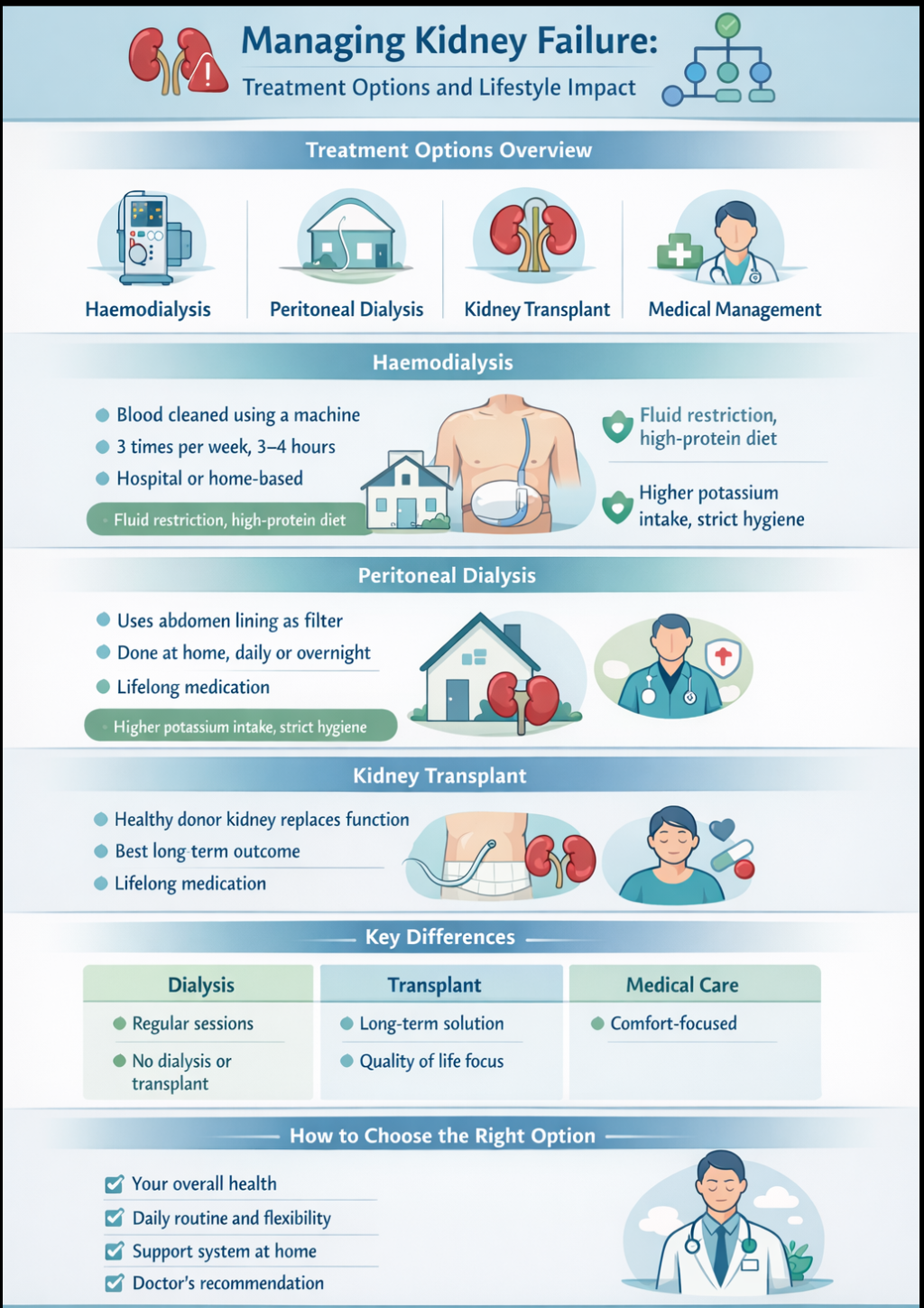
1. Hemodialysis
Blood is filtered through a machine outside the body and then returned to the body.
2. Peritoneal Dialysis
A special fluid is used inside the abdomen to remove waste.
These are the 2 main types of kidney dialysis used in treatment.
Dialysis Procedure Step by Step
Blood is extracted from the body with a tube and transported through a dialysis machine, where waste products and excess fluid are filtered from the bloodstream before clean blood is returned to the body. Dialysis will typically occur every 2-3 days based on overall health and need.
Dialysis Frequency Per Week
According to Dr Georgi Abraham, a senior nephrologist and former President of the Indian Society of Nephrology, dialysis is a life-saving treatment but is often used as a bridge until a suitable kidney transplant becomes possible.
Most of our patients need dialysis two to three times weekly, with each session lasting from 3–5 hours. Sometimes home dialysis is preferred.
Dialysis Side Effects
While life-saving, dialysis has some side effects:
• Fatigue and weakness.
• Low blood pressure.
• Muscle cramps.
• Infection risk.
• Sleep problems.
Dialysis Life Expectancy
Dialysis life expectancy varies significantly among patients. Many people live for years on dialysis, but long-term survival is generally lower compared to a transplant.
Kidney Transplant: How It Works

According to an article published in PubMed, in India, only 10% of patients receive any form of renal replacement therapy (dialysis or transplant).
A kidney transplant involves placing a healthy kidney from a donor into the body. The new kidney takes over the function of filtering blood.
Kidney Transplant Eligibility Criteria in India
Not everyone is eligible. Doctors assess:
• Overall health condition.
• Age and fitness for surgery.
• Absence of severe infections or cancer.
• Ability to take lifelong medications.
Kidney Transplant Recovery Time
Typically, recovery occurs as follows: the first four to six weeks are for initial healing, and full recovery can take several months. The patient will be required to take medications for life to prevent rejection of the organ.
Risks of Kidney Transplant
There are some risks associated with transplantation:
Organ rejection.
A higher risk of infection from taking immunosuppressant medications.
Side effects of long-term medications.
Dialysis vs Kidney Transplant: Key Differences

According to the article published in 2016, Kidney transplantation remains the treatment of choice for ESRD due to better survival and quality of life compared with dialysis.
Factor | Dialysis | Kidney Transplant |
Function | Artificial filtering | Replaces kidney |
Frequency | Multiple times weekly | One-time surgery |
Lifestyle | Restricted | More flexible |
Survival Rate | Lower long-term | Higher survival rate |
Cost (Long-term) | Ongoing expense | High initial cost but lower long-term cost |
Kidney Transplant vs Dialysis Survival Rate
The research indicates that kidney transplant procedures in India yield better survival rates than extended dialysis, particularly for younger, healthy patients.
Dialysis vs Transplant: Quality of Life
• Dialysis: Time-consuming, lifestyle constraints.
• Transplant: More energy, fewer restrictions.
A transplant gives you a much better quality of life.
Dialysis vs Kidney Transplant Cost
Dialysis costs in India
• ₹2000 - 5000 per session.
• Monthly costs can add up very quickly.
Kidney transplant costs in India
• 5 - 10 lakh (one-time procedure).
• Ongoing medicine costs (more expensive).
A transplant will also eventually be more cost-effective than continued dialysis treatments.
Home Dialysis Cost in India
Although a home dialysis setup typically has a higher initial cost, the improved convenience results in far fewer hospital visits, offsetting the higher cost.
Is Kidney Transplant Better Than Dialysis?
According to Dr Sunil Shroff, a leading transplant surgeon in India, early evaluation for kidney transplant improves outcomes, as patients who receive transplants sooner tend to have better recovery and survival rates.
Transplantation is a superior method of treating kidney disease than hemodialysis or peritoneal dialysis because of:
Increased longevity.
Improved quality of life.
The freedom to enjoy life with fewer limitations.
Nevertheless, individuals who cannot receive a transplant will need the necessary treatment via hemodialysis or peritoneal dialysis immediately.
Best Treatment for Kidney Failure
The optimal solution in the management of kidney failure is:
The patient's overall health.
Availability of a suitable organ donor.
Financial considerations.
The advice of a medical practitioner.
FAQs
1. Can a kidney transplant replace dialysis?
Transplantation can eliminate the requirement for dialysis, provided that your transplant is successful.
2. Why do doctors prefer dialysis?
When no immediate transplant is available or the patient does not qualify for a transplant, physicians will then use dialysis treatment.
3. What are the 2 main types of kidney dialysis?
There are two major types of dialysis, hemodialysis and peritoneal dialysis.
4. Is life better after a kidney transplant?
Once you have undergone a kidney transplant, most patients report higher energy levels, greater freedom to engage in activities, and improved quality of life.
Final Thoughts
The decision between dialysis and kidney transplantation requires evaluation of three factors: the patient's medical condition, daily activities, and future objectives. The process of dialysis provides essential medical support which is accessible to people, but renal transplantation delivers superior patient outcomes and better living standards for those who meet its eligibility requirements.
The right choice should always be made in consultation with a qualified nephrologist. Making better decisions becomes easier when you plan early and learn about your available options.
Read Also
References
Singh AK, et al. Epidemiology of chronic kidney disease in India. J Assoc Physicians India. 2013 https://pmc.ncbi.nlm.nih.gov/articles/PMC3848478/
Shroff S, et al. Current trends in kidney transplantation in India. Indian J Urol. 2016 https://pmc.ncbi.nlm.nih.gov/articles/PMC4970385/
Indian Journal of Nephrology. Kidney transplant survival rates. 2024 https://indianjnephrol.org/kidney-transplantation-in-indiapast-present-and-future/
Disclaimer:
This article is for general informational purposes only and does not replace medical advice. Kidney failure treatment decisions, including dialysis or transplant, vary for each person. Always consult a qualified nephrologist or healthcare professional before choosing a treatment. Do not start, stop, or change any treatment without medical guidance.



















Comments