

What Causes Epilepsy? Uncovering the Hidden Triggers and Risk Factors





Last updated on 02 Jan 2026
Epilepsy is one of the world’s most common neurological disorders, yet its underlying origins are often misunderstood. While seizures may appear suddenly, the condition usually develops due to a combination of genetics, brain structure changes, and environmental or lifestyle factors.
Understanding why epilepsy occurs is crucial for early diagnosis, better treatment, and improved quality of life for patients and families. This detailed guide breaks down the science behind epilepsy, the hidden triggers, and the risk factors that make certain individuals more vulnerable.
How the Brain Produces Seizures: The Basic Mechanism
The prevalence of epilepsy in India is estimated at around 5.33 per 1,000 people (≈ 0.53%) based on a meta-analysis of community studies.
Inside the brain, billions of neurons communicate using electrical signals. In a healthy system, these impulses remain balanced. Epilepsy develops when this balance is disrupted, causing bursts of abnormal electrical activity that result in seizures.
These events may be brief or prolonged, mild or severe, depending on the region of the brain affected. Many underlying biological and structural issues contribute to this electrical instability, and understanding them helps clarify the many causes behind seizure disorders.
Major Medical and Neurological Causes
One of the most significant causes of epilepsy is physical damage or disease that affects brain tissue. When the brain’s structure changes, the electrical pathways can become unstable, increasing the likelihood of seizures.
1. Brain Injuries
Traumatic brain injuries from falls, accidents, or sports incidents are strongly linked to seizure disorders. When a person develops seizures months or years after a head injury, it is known as post-traumatic epilepsy. This is a condition commonly seen in individuals with penetrating injuries, repeated concussions, or severe internal bleeding within the skull.
2. Infections
Infectious causes remain a significant factor: in one Indian community study, neurocysticercosis (NCC) accounted for 25% of active epilepsy cases.
Certain infections, such as meningitis, viral encephalitis, and cerebral malaria, can irritate brain tissue and lead to long-term seizure disorders. Even after the infection is treated, scarring may persist, disrupting neural communication.
3. Stroke
Strokes are one of the leading epilepsy risk factors for epilepsy, especially in older adults. When blood flow to the brain is suddenly interrupted, the resulting damage can provoke abnormal electrical activity. Seizures after a stroke may begin immediately or appear long after recovery.
Whether benign or malignant, tumours can exert pressure on nearby brain regions, altering their electrical properties. Many individuals diagnosed with tumours experience seizures as an early symptom, prompting further investigation.
Genetic Foundations and Family History
Dr Shivraj Hunge, Consultant Neurologist, Jupiter Hospital, Pune, notes that genetic factors are very important: “epilepsy runs in families due to inherited gene mutations ... but diagnosis is often delayed.”
While structural causes are common, epilepsy and genetics are closely linked as well. Some people inherit genetic mutations that affect how their neurons fire. Others inherit a general predisposition that makes seizures more likely when exposed to certain triggers.
Genetic influences may affect:
The brain’s electrical channels
Neurotransmitter balance
How the brain develops
Sensitivity to environmental stressors
Some epilepsy syndromes seen in children and young adults have clear genetic patterns, although not all cases are inherited directly. Even without a family history, a person may still develop seizures due to spontaneous gene mutations. Genetics also helps explain why two people exposed to the same trigger may react differently.
Developmental and Structural Abnormalities
Some individuals are born with brain malformations that increase seizure risk. These abnormalities may form during pregnancy due to infection, poor nutrition, lack of oxygen, or genetic variations. Conditions like cortical dysplasia, tuberous sclerosis, and neurofibromatosis create irregular brain pathways that can become seizure-prone early in life.
Similarly, complications during birth, such as low oxygen levels, prolonged labour, or neonatal infections, can injure the developing brain and make children more vulnerable to epilepsy later in life.
Lifestyle and Environmental Triggers
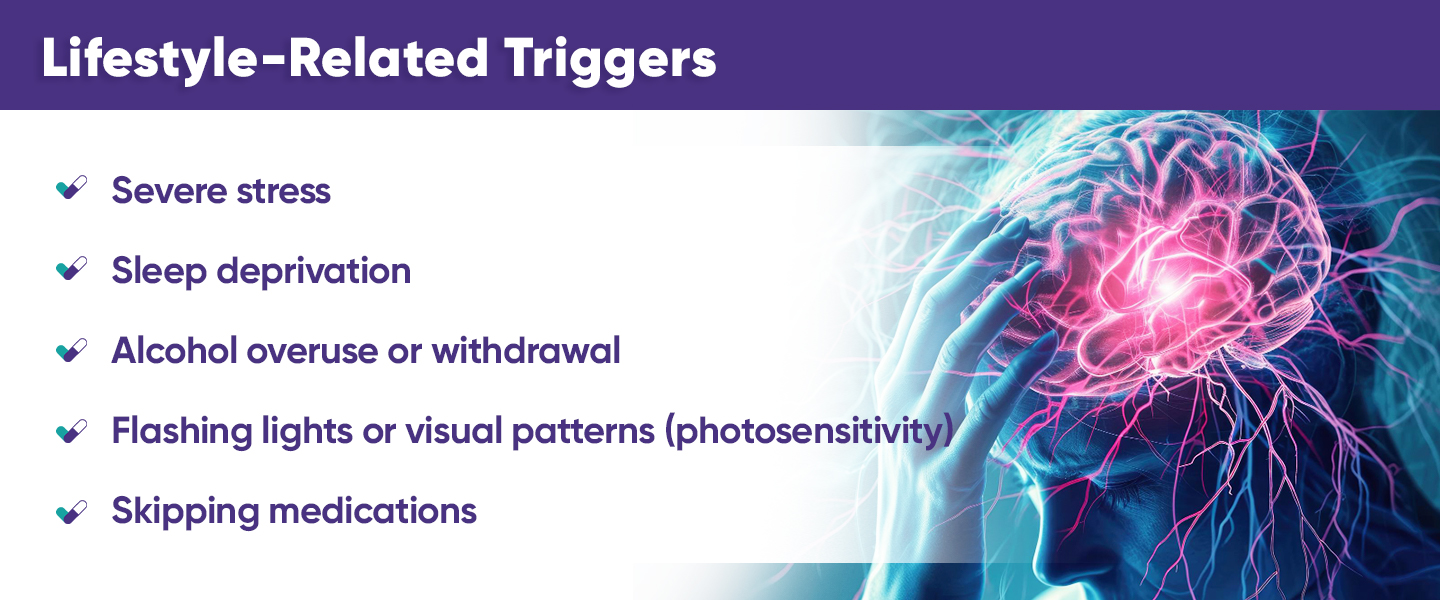
While not direct causes, certain triggers are known to provoke seizures in individuals with existing susceptibility. Understanding what triggers epilepsy can help prevent episodes and improve long-term management.
1. Stress
Emotional or physical stress can alter hormone levels and alter brain activity. Many individuals report a strong connection between stress and seizures, especially during periods of anxiety, extreme workload, or emotional disturbances.
2. Sleep Deprivation
Poor sleep quality or irregular sleep patterns can destabilise brain electrical rhythms. Sleep deprivation epilepsy is well-documented, and even one night of insufficient rest can increase seizure risk in prone individuals.
3. Alcohol and Substance Use
Alcohol withdrawal, binge drinking, and recreational drug use are known seizure triggers. Excessive consumption can interfere with neurotransmitters, while withdrawal causes abrupt changes in brain activity.
4. Flashing Lights and Sensory Stimulation
A small percentage of people experience seizures triggered by flashing lights, high-contrast visual patterns, or certain video games. These photosensitive responses are more common in younger individuals.
Metabolic and Health-Related Causes
Conditions like hypoglycaemia, hyponatremia, or other metabolic imbalances may provoke seizures and contribute to epilepsy risk.
The brain depends on balanced metabolism to function normally. When essential processes are disrupted, seizure activity may occur.
Common metabolic contributors include:
Low blood sugar
High or low sodium
Kidney or liver dysfunction
High fever (especially in children)
These conditions alter the brain’s chemical environment and may provoke seizures even in individuals with no previous neurological issues.
Post-Traumatic and Secondary Causes
Beyond direct injuries or infections, some people develop seizure disorders as a secondary outcome of other medical conditions. For example, long-term inflammation, immune disorders, or degenerative diseases like Alzheimer’s may increase susceptibility to seizures.
People with repeated concussions, such as athletes or military personnel, are at heightened risk for post-traumatic epilepsy, reinforcing the importance of early evaluation after head injuries.
Medication, Hormonal, and Toxic Exposures
Certain medications can lower seizure thresholds, especially when used in high doses or combined with other drugs. Hormonal changes, such as those occurring during menstruation, pregnancy, or menopause, may influence seizure patterns. Exposure to environmental toxins, including heavy metals, carbon monoxide, or industrial chemicals, also contributes to long-term neurological instability.
When the Cause Remains Unknown
Despite significant medical advances, the exact cause cannot always be identified. Up to one-third of people diagnosed with epilepsy fall into the category of idiopathic or unknown cause. Even in these cases, recognising triggers, managing lifestyle factors, and following a structured treatment plan can significantly reduce seizures and improve overall functioning.
FAQs
1. Can epilepsy be inherited from parents?
Yes, some forms involve genetic predispositions. However, not all individuals with a family history will develop epilepsy, and many cases occur without genetic links.
2. Does stress really trigger seizures?
Yes. High-stress levels alter brain chemistry and can provoke seizures in people with underlying neurological sensitivity.
3. Can lack of sleep cause seizures?
Absolutely. Sleep deprivation is a major trigger and can significantly increase seizure frequency, especially in individuals already diagnosed with epilepsy.
4. What is post-traumatic epilepsy?
It is a form of epilepsy that develops after a head injury. Seizures may begin weeks, months, or even years after the trauma.
5. Are flashing lights a common trigger?
Only a small group of people experience photosensitive seizures, but those who do tend to react to flashing or patterned lights, video games, or strobe effects.
Final Thoughts
Understanding why epilepsy develops involves examining structural, genetic, environmental, and lifestyle influences. While some causes are unavoidable, many triggers can be managed through awareness and preventive habits. Early diagnosis, medical guidance, and lifestyle adjustments empower individuals to reduce seizure frequency and lead a safer, more fulfilling life.
Read also
References
https://www.mayoclinic.org/diseases-conditions/epilepsy/symptoms-causes/syc-20350093
https://www.apollo247.com/health-topics/epilepsy/types-and-risk-factors-of-epilepsy
Disclaimer: The content in this blog is for general informational purposes only and is not a substitute for professional medical advice, diagnosis, or treatment. Always consult your doctor or a registered dietitian before making any changes to your diet, especially if you have a medical condition or are taking prescribed medication. While the information is based on trusted sources, individual needs and results may vary. MrMed does not promote or endorse any specific food or treatment mentioned unless explicitly stated.

















Comments