

Fruits to Skip for a Quicker Recovery from Cough and Cold





Last updated on 16 Feb 2026
Stuck with a nagging cough and cold that refuses to leave? You're doing everything right, taking your medicines, resting well, drinking kadha, but have you thought about what's in your fruit basket?
While fruits are packed with vitamins and antioxidants, not all of them work in your favour when you're battling a sore throat or chest congestion. Some fruits to avoid when you have a cough can actually worsen cough symptoms or increase throat irritation.
In this guide, we'll explore the cold and cough diet, discuss foods to avoid in cough, and help you understand which fruits bad for cough might be slowing you down.
Understanding the Cold and Cough Diet
When you're down with a cough or cold, what you eat matters. Your cold and cough diet should focus on foods that reduce inflammation, ease throat irritation, strengthen immunity, and prevent excess mucus buildup.
At the same time, certain foods to avoid in cough, especially specific fruits, can trigger discomfort or prolong recovery time. Being mindful of fruit choices during illness can significantly impact recovery speed.
Fruits That Worsen Cough Symptoms
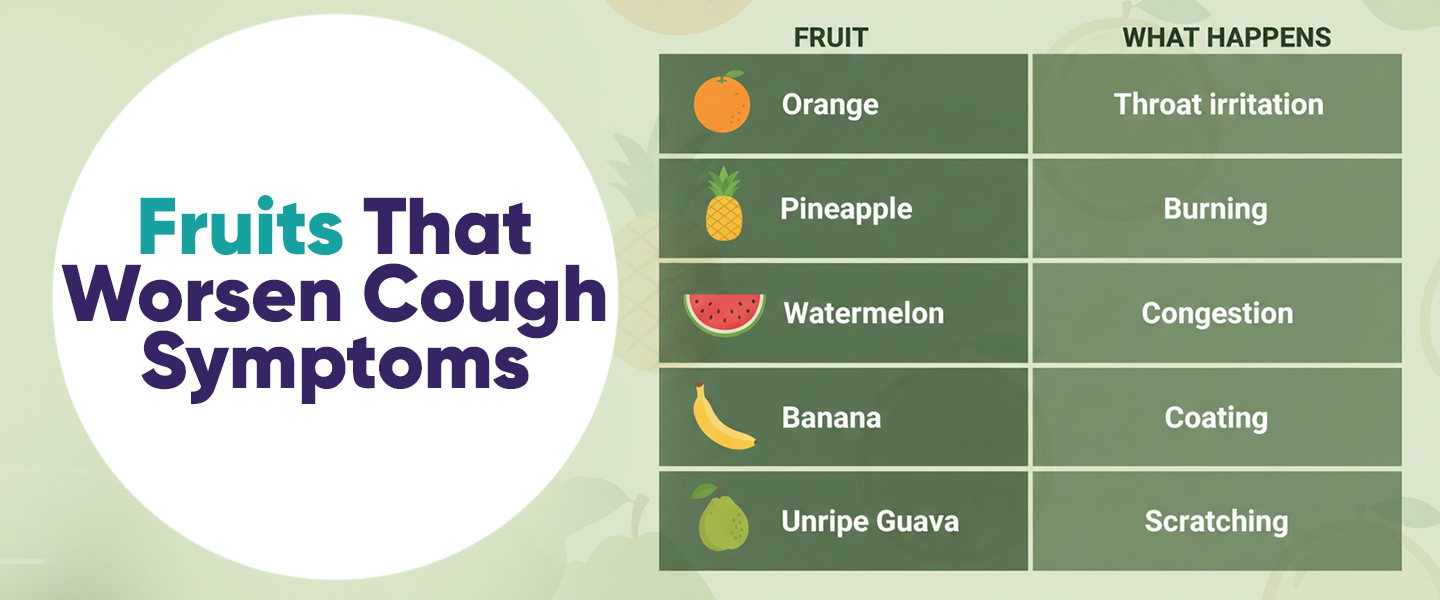
Here are the fruits that worsen cough symptoms you might want to skip temporarily:
Fruit | Why It May Cause Discomfort | What Happens |
Oranges & Citrus | High acidity irritates raw throats | Worsens sore throat, triggers coughing |
Pineapple | Acidic enzymes (bromelain) | Burning sensation in the throat |
Watermelon | Very cooling in nature | May increase congestion |
Banana | Creates thick mouthfeel | Texture coats the throat |
Unripe Guava | Rough, fibrous texture | Scratches inflamed throat |
Note: Effects vary by individual. Listen to your body!
Citrus Fruits and Cough: Myth or Fact?
Citrus fruits are rich in vitamin C and beneficial for immunity. However, their acidic nature can irritate your throat if you already have soreness or excessive mucus.
Citrus Fruit Guide:
Citrus Fruit | Vitamin C | Acidity Concern | Best Time |
Orange | High | Can irritate | After the acute phase |
Lemon | High | May burn | Mix with honey |
Mosambi | Moderate | Gentler | When less raw |
Pro Tip: If you need vitamin C during acute illness, try less acidic sources like papaya, strawberries, or amla.
Should You Avoid Bananas During a Cold?
The Banana-Mucus Myth
Research has debunked the idea that bananas increase mucus production. There's no biological mechanism for this. The sensation comes from the banana's texture coating your mouth temporarily, not actual mucus.
However, bananas are high-histamine foods. For a prolonged cough lasting over 14 days, reducing histamine foods may help. For most people with a simple 2-3 day cold, bananas are beneficial and supply crucial nutrients.
Which Fruits Increase Phlegm and Mucus?
Let's Know How Fruits Affect Mucus Production in your body
Cooling Effect: Watermelon and muskmelon's cooling properties can sometimes exacerbate mucus sensation.
Acid Factor: Acidic fruits may irritate and trigger more coughing.
Sugar Connection: Mangoes high sugar content may aggravate throat discomfort.
Fruits That May Worsen Mucus Sensation
Watermelon - Very cooling
Banana - Creates coating sensation
Mango - High sugar in excess
Cantaloupe - Cooling properties
Pineapple - Acidic
Remember: These don't create actual mucus, they may make symptoms feel worse.
Best Fruits to Eat When You Have a Cold
Here are the best fruits to eat when you have a cold:
1. Apples - Rich in quercetin, anti-inflammatory
2. Pomegranate - Contains flavonoids that stop virus growth. Studies show that daily intake may decrease cold duration by 40%
3. Papaya (Ripe) - Contains bromelain enzyme that breaks down mucus
4. Berries - High vitamin C, strengthen immunity
5. Amla - Richest natural source of vitamin C without acidity
Fruits and their Benifits of their consuption
Fruit | Key Benefit | Best Way to Consume |
Apple | Anti-inflammatory | Room temperature |
Pomegranate | Fresh juice | |
Papaya | Breaks down mucus | Ripe, soft pieces |
Berries | Immunity boost | Fresh or smoothies |
Amla | Vitamin C | Juice or pickled |
Dr Ranga Santosh Kumar, general Physician at Yashoda Hospital, Hyderabad, says the polyphenolic compounds in pomegranate may help ease throat irritation and relieve cough. However, the peel shows limited benefits, and more research is needed to confirm its effectiveness.
Fruits to Avoid According to Ayurveda
Fruits to avoid according to Ayurveda are linked to Kapha imbalance:
Banana - Increases Kapha
Watermelon - Extremely cooling
Orange - Creates acidity
Grapes - Too sweet
Pineapple - Sour and cooling
Ayurvedic tip: Eat warm, room-temperature fruits. Avoid refrigerated foods.
Modern interpretation: While traditional wisdom has value, individual variation matters most.
Role of Vitamin C in Cough Recovery
The role of vitamin C in cough recovery is crucial:
Strengthens immune defence
Reduces inflammation
Shortens illness by 8-14%
Provides antioxidant protection
Smart Vitamin C Sources
Food | Vitamin C | Throat-Friendly? |
Amla | 600-700mg/100g | Yes |
Papaya | 60mg/100g | Yes |
Strawberries | 58mg/100g | Yes |
Guava (ripe) | 228mg/100g | Yes |
A 2023 meta-analysis published in BMC Public Health found that vitamin C substantially decreased the severity of colds by 15-26%, though it didn't significantly reduce overall duration
Expert Tips: Using Fruits Wisely During Illness
Do's
Eat fruits at room temperature
Choose soft, ripe fruits
Pair with honey or warm water
Time it right - mid-morning best
Listen to your body
Don'ts
Don't mix fruits with dairy
Avoid unripe, hard fruits
Skip very cold smoothies
Don't overeat sugary fruits
Don't force yourself
Quick Recovery Guide
1. During Active Infection (Days 1-3)
Best: Ripe papaya, stewed apples, pomegranate juice
Avoid: All citrus, very cold fruits, and unripe fruits
2. Recovery Phase (Days 4-7)
Best: Above fruits plus berries, ripe banana (if tolerated)
Limit: Acidic fruits if throat sensitive
3. Post-Recovery
Excellent: All citrus fruits are now beneficial, a full variety
Who Should Be Extra Careful?
Children: Stick to soft fruits like papaya and stewed apples
Elderly: Prefer room-temperature over raw cold fruits
Asthma/Chronic Cough: Citrus can trigger allergies and increase histamine
Acid Reflux (GERD): Minimise all acidic fruits
Myth vs. Reality
MYTH: "Bananas create mucus in lungs"
REALITY: No scientific evidence supports this. The sensation relates to texture, not phlegm.
MYTH: "Never eat oranges during cold"
REALITY: Vitamin C helps immunity, but acidity can irritate during acute phase.
MYTH: "All fruits are good when sick"
REALITY: Individual responses vary greatly.
FAQs
1. Which fruits are bad for cough and cold?
Very acidic (citrus, pineapple), extremely cooling (watermelon), and those creating a thick mouthfeel may temporarily worsen symptoms.
2. Should you avoid bananas during a cold?
For most people, no. The mucus-forming claim is a myth. Trust your body's response.
3. Is it okay to eat oranges when you have a sore throat?
Better to limit citrus during throat discomfort. Save for when inflammation reduces.
4. What fruits help reduce mucus?
Apples, papaya, and pomegranates are well-tolerated.
5. Does Ayurveda recommend avoiding fruits in cough?
Yes, cooling fruits like bananas and watermelon should be avoided per Ayurveda.
6. Can fruits delay recovery?
Only if they cause personal discomfort or trigger reflux.
7. Best time to eat fruits when sick?
Mid-morning or afternoon, always room temperature.
Wrapping Up: Your Smart Fruit Strategy
Your fruit choices can genuinely impact recovery time, but it's not about strict rules, it's about smart choices tailored to your body's needs. Being mindful of what you eat during a cough or cold can help ease symptoms and support faster recovery.
Next time you're fighting a cold, remember: that ripe papaya or warm stewed apple might be your best friend, while that cold orange juice can wait a few more days.
Heal smart, eat right, bounce back stronger!
Read Also
References
https://www.healthline.com/health/what-to-eat-when-you-have-the-flu
Mammari, N., Albert, Q., Devocelle, M., Kenda, M., Kočevar Glavač, N., Sollner Dolenc, M., Mercolini, L., Tóth, J., Milan, N., Czigle, S., Varbanov, M., & On Behalf Of The Oemonom (2023). Natural Products for the Prevention and Treatment of Common Cold and Viral Respiratory Infections. Pharmaceuticals (Basel, Switzerland), 16(5), 662. https://doi.org/10.3390/ph16050662
Disclaimer: The content in this blog is for general informational purposes only and is not a substitute for professional medical advice, diagnosis, or treatment. Always consult your doctor or a registered dietitian before making any changes to your diet, especially if you have a medical condition or are taking prescribed medication. While the information is based on trusted sources, individual needs and results may vary. MrMed does not promote or endorse any specific food or treatment mentioned unless explicitly stated.












Comments