

What Are The Most Common Diseases in India During Different Seasons?





Last updated on 24 Mar 2026
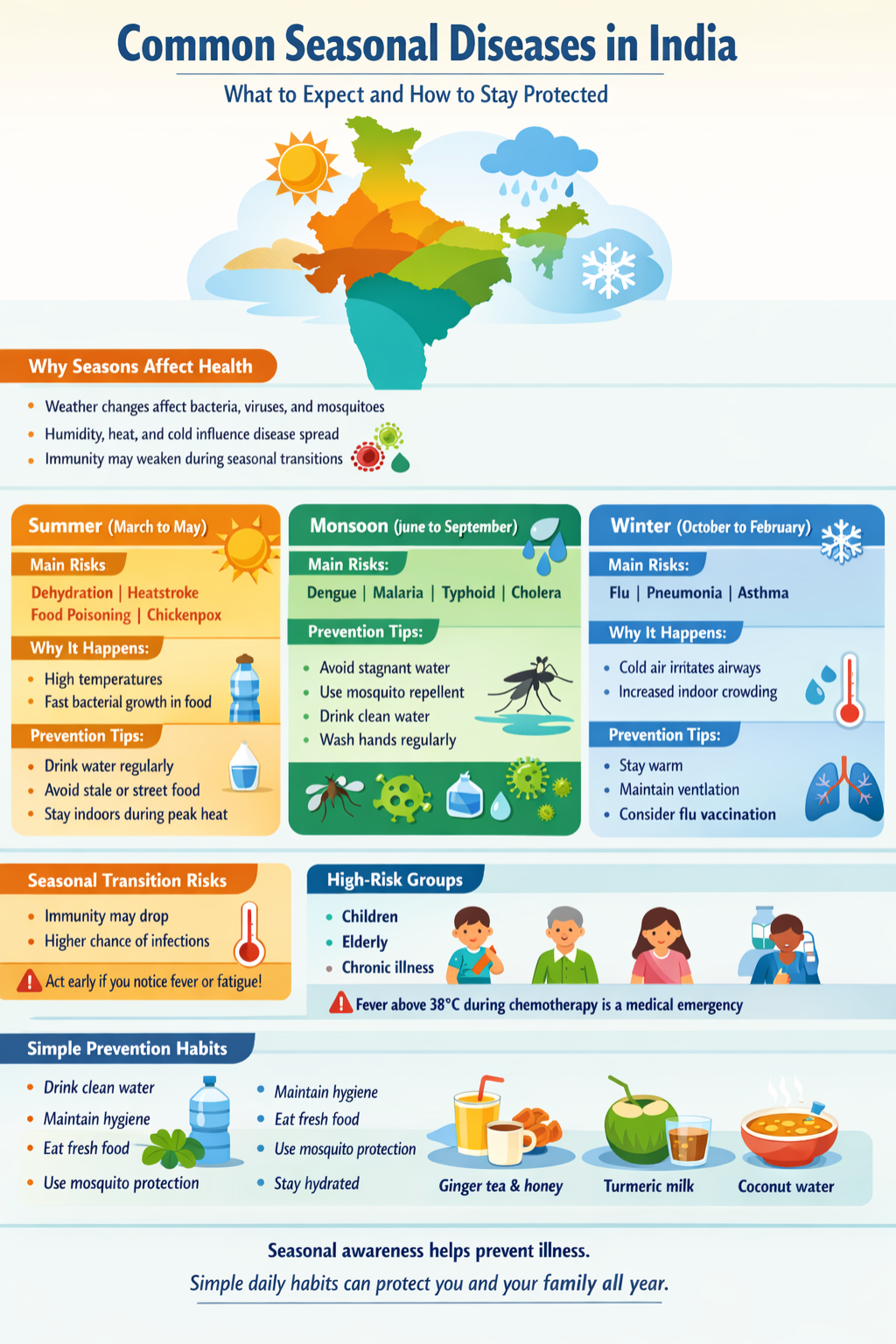
Seasonal changes in India influence disease patterns, increasing the risk of infections like dengue during the monsoon, respiratory illnesses in winter, and dehydration in summer. Understanding these trends helps prevent early and provide timely care. Simple habits such as hygiene, safe water use, and mosquito protection significantly reduce the risk of seasonal illnesses.
Key Takeaways
|
Every year, as the seasons shift across India, so does the pattern of illness. The rains bring mosquitoes. The cold brings coughs. The heat strains the body in ways that are easy to underestimate. For most people, this is a minor inconvenience. But if you or someone you love is already managing a serious illness, seasonal infections carry a different kind of weight.
This article walks you through what to expect, season by season, and what you can practically do to keep yourself and your family protected.
Why seasons matter for health in India
India's climate is not uniform, and neither is the disease burden it creates. Each season creates conditions that favour the growth of certain pathogens. High humidity supports bacterial and fungal growth. Standing water breeds mosquitoes. Cold, dry air irritates the respiratory tract. Understanding these patterns helps you stay one step ahead.
This matters even more for people on chemotherapy or long-term medication, whose immune systems may already be working harder than usual. A seasonal infection that resolves in a few days for most people can disrupt treatment cycles, cause hospitalisation, or delay doses. Awareness is not alarmist. It is protective.
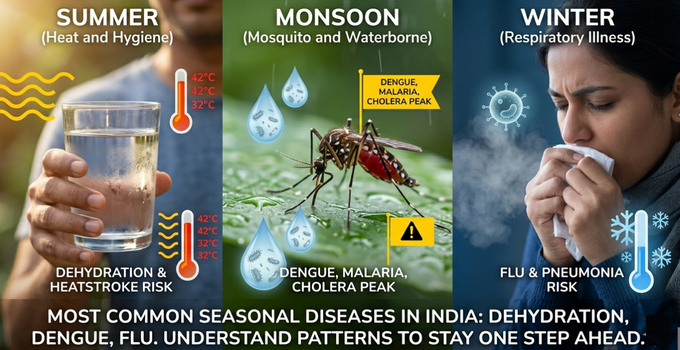
Summer (March to May): heat and hygiene
Summer in India brings a different set of risks. The heat itself becomes the hazard, alongside a rise in food-borne infections driven by the speed at which bacteria multiply in warm conditions.
Heatstroke and dehydration are the most direct concerns. When the body loses more fluid than it takes in, blood pressure drops, organs come under strain, and people become confused or faint. For people already on medication that affects fluid balance or kidney function, dehydration carries a higher risk and can affect how drugs are absorbed and processed.
Food poisoning rises sharply in summer. Stale or improperly stored food becomes a major source of gastroenteritis, Salmonella, and other gut infections. Symptoms like vomiting, diarrhoea, and abdominal cramping can cause rapid fluid loss and disrupt treatment schedules.
Chickenpox, caused by the varicella-zoster virus, peaks in March and April in many parts of India. While it is usually mild in healthy adults, it can be severe in immunosuppressed individuals. If you are on chemotherapy and you have not had chickenpox or the vaccine, let your oncologist know.
What helps during summer: drink water consistently through the day rather than waiting to feel thirsty, refrigerate food promptly, avoid eating from street vendors during peak heat, and take particular care if stepping outdoors between noon and four in the afternoon.
Monsoon (June to September): the busiest season for illness
The monsoon season sees the sharpest rise in infections across India. Waterlogging, humidity, and disrupted sanitation create conditions for a wide range of diseases to spread quickly.
1. Mosquito-borne diseases
Mosquito-borne diseases pose the greatest risk during this period. Dengue, malaria, and chikungunya all peak between July and September, when stagnant water gives mosquitoes ideal breeding grounds. Dengue causes high fever, severe joint and muscle pain, and fatigue that can last for weeks. Malaria brings cyclic fever with chills and rigors. Chikungunya is marked by joint pain so sharp that it can significantly restrict movement. All three require early diagnosis and close monitoring.
2. Water-borne diseases
Water-borne diseases rise sharply too. Typhoid and cholera spread through contaminated water and food. Hepatitis A follows a similar route. These infections affect the gut and liver, cause prolonged weakness, and can complicate treatment in people already managing chronic conditions. The key risk period is during and immediately after heavy rainfall, when water sources are most likely to be contaminated.
3. Airborne infections
Airborne infections like the common cold and seasonal flu also become more common as humidity fluctuates and people spend more time in crowded, poorly ventilated spaces. For someone already on chemotherapy, even a mild flu can be flu-significant.
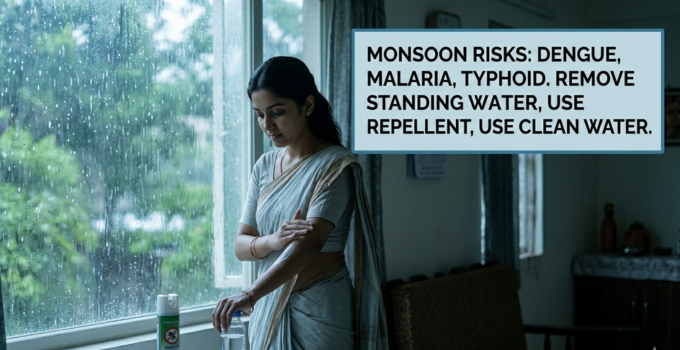
What helps during monsoon: remove standing water around your home, use a mosquito repellent daily, avoid drinking water of uncertain origin, and wash hands frequently, especially before meals and after being outdoors.
Winter (October to February): respiratory season
As temperatures drop, respiratory infections become the dominant health concern. The cold, dry air irritates the mucosal lining of the nose and throat, making it easier for viruses to take hold.
Influenza spreads widely during the winter months and can escalate quickly in people with weakened immunity. Symptoms include fever, body aches, fatigue, cough, and congestion. Unlike the common cold, flu can leave people bedridden for a week or more and carries a real risk of secondary bacterial pneumonia.
Pneumonia itself becomes more common in winter, particularly among older adults, very young children, and people on immunosuppressive treatment. It can develop as a standalone infection or as a complication following the flu or a prolonged cold.
Chronic respiratory conditions like asthma also worsen during winter, triggered by cold air, dust, and indoor allergens. People who manage these conditions alongside other illnesses often find winter the most demanding time of year.
What helps during winter: stay warm without overheating indoor spaces, maintain ventilation, avoid crowded spaces during flu outbreaks, keep prescribed inhalers accessible, and consider an annual flu vaccine, especially if you are immunocompromised. Speak to your doctor about whether a pneumococcal vaccine is appropriate for you.
Seasonal transitions: a time to be watchful
The weeks when one season shifts into another are often when people are most vulnerable. The body takes time to adjust to changes in temperature and humidity, and immune defences can dip in the process. The October transition into winter and the May-June shift into monsoon are both worth paying extra attention to.
If you or a family member starts showing fever, unusual fatigue, or respiratory symptoms during these periods, act early. Do not wait for
symptoms to become severe before reaching out to your doctor.
Home remedies and healthcare tips
As the monsoon starts, it can cause health problems. Natural ways can help with common issues.
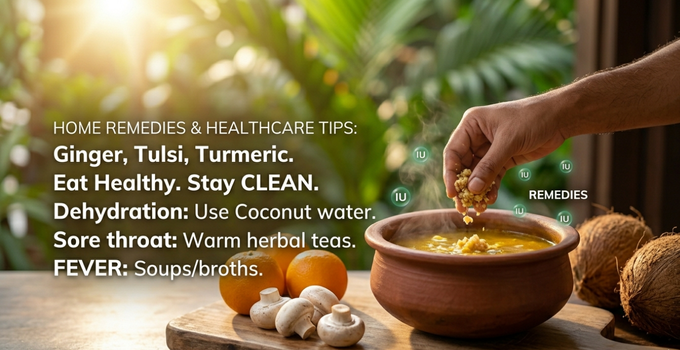
Natural remedies, like ginger tea and honey, can help with a sore throat when it is rainy. Drinking turmeric milk can strengthen your body's resistance to common colds. It's important to drink enough fluids, such as herbal teas, to avoid dehydration.
Be sure to eat healthy foods to help prevent seasonal illnesses.
Staying clean and safe can help reduce the risk of infection. Choose coconut water to stay hydrated and replace your electrolytes.
For a sore throat or body pain, warm herbal teas with ginger and tulsi work well.
If you feel hot and have a fever, drinking soups or broths is a great option. These will keep you hydrated and help you feel better quickly.
Frequently Asked Questions (FAQs)
1. What are the common illnesses that occur in India during the monsoon?
Common monsoon illnesses in India include dengue, malaria, chikungunya, typhoid, and viral illnesses such as flu and diarrhoea. Water contamination and mosquito breeding during the rains increase the risk of these diseases.
2. Are there certain vaccines you should get for diseases that come during the monsoon?
Vaccines such as typhoid, hepatitis A, and influenza can help prevent some monsoon-related infections. It is best to consult a doctor to check which vaccines are suitable based on age and health condition.
3. What are the common seasonal illnesses that can impact children?
Children commonly face colds, flu, stomach infections, dengue, and hand, foot, and mouth disease during seasonal changes. Their developing immunity makes them more vulnerable to infections during the monsoon.
4. When is the right time to see a doctor for seasonal symptoms?
You should see a doctor if you develop symptoms such as high fever, persistent vomiting, dehydration, breathing difficulty, or weakness. Early medical care is important if symptoms last more than two to three days or worsen quickly.
Staying ahead of the season
Being prepared is not about worry. It is about giving your body, and the people you care for, the best possible conditions to stay well. That means knowing what each season brings, making small, consistent adjustments to diet, hygiene, and routine, and staying in touch with your medical team when anything feels off.
At MrMed, we work with a wide range of partners to deliver to 4,000+ towns in India. We see, every day, how much the small things matter, such as having the right medicine at the right time, knowing what to watch for, and feeling that someone steady is in your corner.
We create a way. For you.
Read Also
References
World Health Organisation. Dengue and severe dengue [Internet]. 2024 [cited 2026 Mar 21]. Available from: https://www.who.int/news-room/fact-sheets/detail/dengue-and-severe-dengue
Centers for Disease Control and Prevention. Seasonal influenza (flu) [Internet]. 2024 [cited 2026 Mar 21]. Available from: https://www.cdc.gov/flu
National Health Service. Heat exhaustion and heatstroke [Internet]. 2023 [cited 2026 Mar 21]. Available from: https://www.nhs.uk/conditions/heat-exhaustion-heatstroke/
UNICEF India. Water, sanitation and hygiene (WASH) in India [Internet]. 2023 [cited 2026 Mar 21]. Available from: https://www.unicef.org/india
Disclaimer: The content in this blog is for general informational purposes only and is not a substitute for professional medical advice, diagnosis, or treatment. Always consult your doctor or a registered dietitian before making any changes to your diet, especially if you have a medical condition or are taking prescribed medication. While the information is based on trusted sources, individual needs and results may vary. MrMed does not promote or endorse any specific food or treatment mentioned unless explicitly stated.














Comments